
Превращайте аналитические выводы ИИ в реальные действия

В тренде
Categories
Google and UK Collaborate to Address Aviation’s Climate Impact
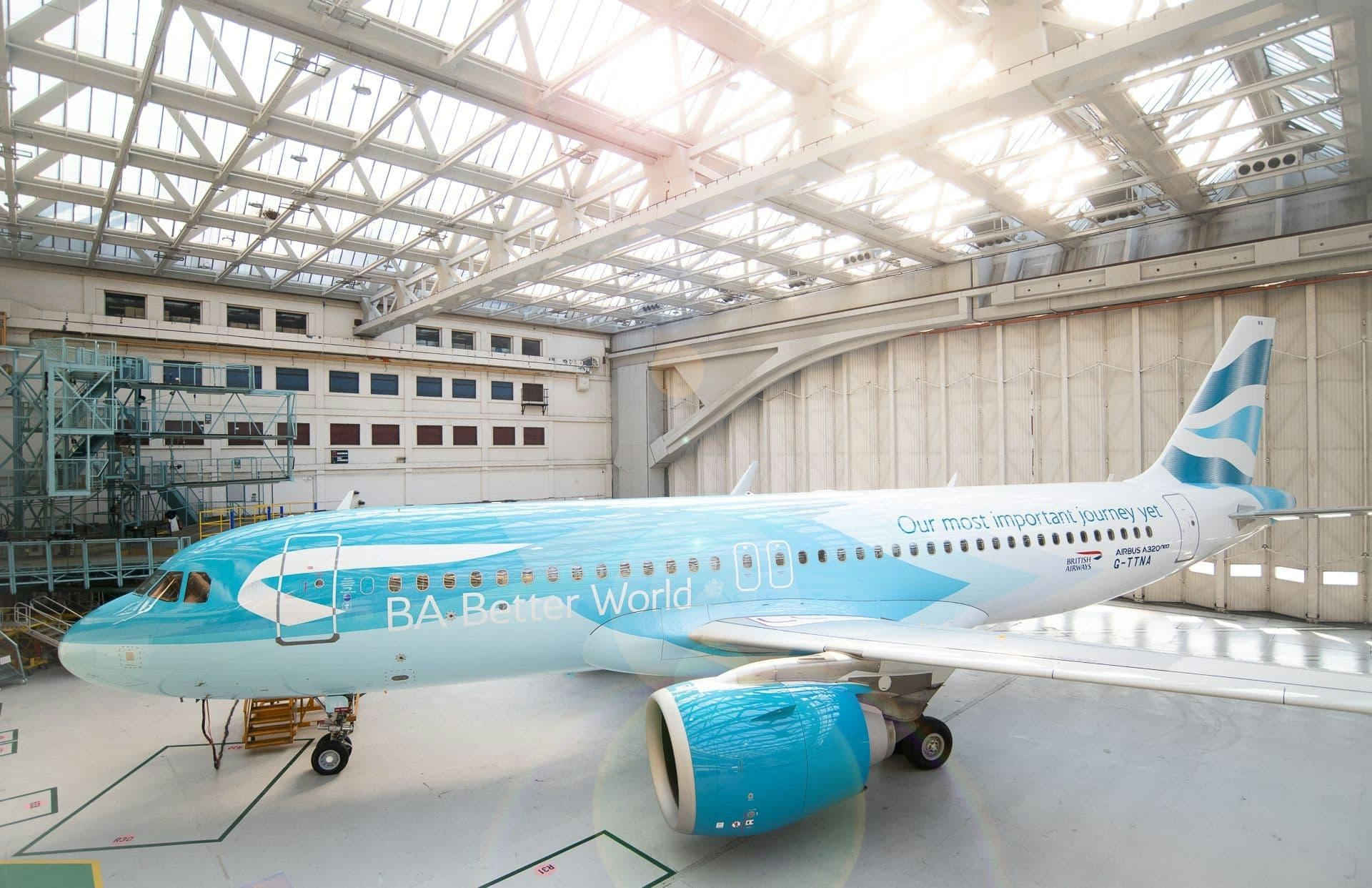
Google and UK Collaborate to Address Aviation’s Climate Impact
Contrails, the white streaks trailing behind aircraft, form when water vapor condenses around microscopic pollutant particles emitted by airplane engines. Once considered a benign aspect of air travel, these condensation trails are now recognized as a significant contributor to global warming. According to Google and its partners, contrails account for approximately one third of aviation’s total climate impact by trapping heat in the atmosphere and accelerating climate change.
Operation Blue Skies: A Collaborative Research Initiative
In response to this environmental challenge, Google has partnered with the UK government and leading aviation organizations to launch Operation Blue Skies, a 30-month research program aimed at reducing aviation’s climate footprint. The initiative will concentrate on the northeastern Atlantic Ocean, where hundreds of commercial flights will participate in trials over the next two winters.
The program’s primary approach involves making subtle adjustments to flight altitudes to reduce contrail formation. Air traffic controllers will guide aircraft to avoid atmospheric conditions conducive to contrail development. Central to this effort is Google’s artificial intelligence technology, which will provide real-time forecasts predicting when and where contrails are likely to form, enabling more informed routing decisions.
Potential Impact and Future Implications
Operation Blue Skies aims to demonstrate that even minor modifications in flight paths can yield measurable environmental benefits. Scientific estimates attribute between 1% and 2% of global warming to contrails, underscoring the importance of targeting their reduction within the aviation sector. By combining advanced AI capabilities with close cooperation among technology companies, government agencies, and the aviation industry, the initiative seeks to establish a model for sustainable air travel.
If successful, the findings from Operation Blue Skies could influence broader policy and operational changes worldwide, contributing to efforts to mitigate aviation’s role in climate change on a global scale.

Etihad Airways Suspends Airbus A380 Flights on Key Route

Aditya Birla Group Seeks Approval for Aircraft Leasing in GIFT City

Qatar Airways Highlights Innovation and Connectivity at Arabian Travel Market 2026

Hong Kong's Five-Year Plan Includes Andrew Fan's Aircraft Parts Processing Hub Proposal

ACIA Aero Leasing Delivers ATR72-600 to Air Nostrum

RTX Appoints Jill Albertelli as Head of Pratt & Whitney

TAT Technologies Joins Beyond Aero Hydrogen Aircraft Program

AURAK Study Highlights Barriers to Air Taxi Adoption in Emerging Economies

Xiamen Air Selects Altitude for 787 Maintenance at Heathrow

Etihad and Swissport Extend Global Partnership
