Изображение

AeroGenie — Ваш интеллектуальный второй пилот.

Спрашивайте что угодно. Анализируйте все. Действуйте незамедлительно.

В тренде

Categories

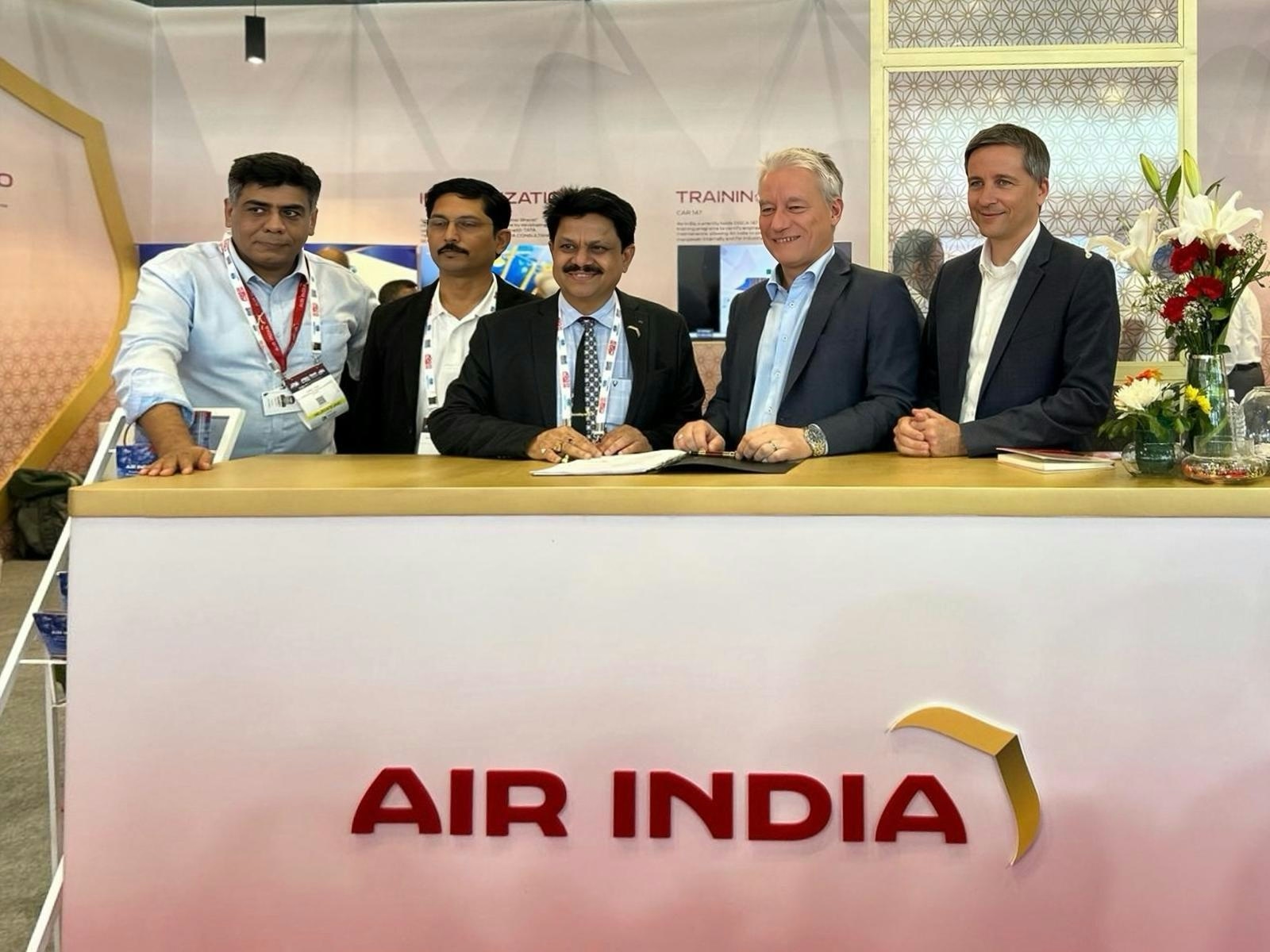
HAECO and Air India Sign Line Maintenance Agreement
March 13, 2026By ePlane AI
HAECO and Air India Sign Line Maintenance Agreement
0
0
HAECO
Air India
Line Maintenance

HAECO and Air India Renew Line Maintenance Agreement at Shanghai Pudong Airport

HAECO has secured a new three-year contract with Air India to provide technical ground handling services at Shanghai Pudong International Airport (PVG), extending their collaboration through 2029. The agreement encompasses line maintenance support for Air India’s wide-body fleet, including Boeing 777, Boeing 787, and Airbus A350 aircraft.

Strengthening a Longstanding Partnership

This renewed partnership builds upon a relationship that began in 2014, when HAECO first offered technical support to Air India at PVG. Although services were temporarily suspended in 2020 due to the COVID-19 pandemic, the resumption of Air India’s scheduled flights to Shanghai in February has enabled HAECO to reestablish its role as the airline’s trusted line maintenance provider. In addition to its work at PVG, HAECO has previously supported Air India with base maintenance and non-technical transit flight services in Hong Kong.

Gerald Steinhoff, Chief Commercial Officer of HAECO, emphasized the company’s commitment to the partnership, stating, “We are delighted to once again support Air India at Shanghai Pudong International Airport, building on a long-standing relationship that dates back more than a decade. Drawing on more than 75 years of MRO expertise and a well-established operational network, HAECO is well positioned to support Air India’s growing operations with the highest standards of safety, quality, and operational excellence.”

Operational Scope and Challenges

HAECO’s global operations span Hong Kong, mainland China, Europe, and the United States, offering a comprehensive range of maintenance, repair, and overhaul (MRO) services covering airframes, components, and engines. The company currently provides line maintenance support to over 140 airlines worldwide through a network of 19 stations across Hong Kong and the Chinese mainland.

Despite the promising outlook, the renewed agreement presents several operational challenges. Integrating differing maintenance cultures and processes between HAECO and Air India will require meticulous coordination to ensure seamless service delivery. Both companies must uphold strict compliance with international aviation standards while managing the logistical complexities inherent in coordinating maintenance activities across multiple locations. Furthermore, the partnership’s success will depend on effectively leveraging predictive maintenance technologies to enhance service quality and reliability.

Market analysts suggest that this agreement could improve operational efficiency and reduce maintenance costs for Air India. However, it may also prompt competitors in the line maintenance sector to intensify efforts to secure similar contracts, potentially heightening competition for Air India’s future maintenance requirements.

As HAECO and Air India advance their collaboration, their ability to navigate these operational and market dynamics will be critical to fully realizing the benefits of the partnership.

More news
American Airlines Reduces Airbus A321XLR Order, Issues $1 Billion in Bonds for New Aircraft

American Airlines Reduces Airbus A321XLR Order, Issues $1 Billion in Bonds for New Aircraft

American Airlines Adjusts Fleet Strategy Amid Market Pressures American Airlines has announced a recalibration of its fleet expansion plans, reflecting a more measured approach to growth in a competitive and capital-intensive environment. The carrier has issued $1.14 billion in aircraft-backed bonds to finance the acquisition of 17 new aircraft, refinance existing loans on 15 jets, and strengthen its overall liquidity position. Concurrently, American has reduced its Airbus A321XLR order from 50 to 40 units, even as deliveries of the long-range narrowbody accelerate. Strategic Shift in Fleet Composition The decision to scale back the A321XLR order signals a cautious stance toward expanding the long-range narrowbody segment. The A321XLR remains integral to American’s network strategy, particularly for thinner transatlantic routes and extended domestic services. However, the airline appears to be aligning its fleet size more closely with evolving route economics, delivery timelines, and capital constraints. With a mainline fleet exceeding 1,000 aircraft and over 100 Boeing 737 MAX 8s already delivered, reducing the XLR order helps mitigate risks of overcapacity and preserves operational flexibility. This adjustment contrasts with the aggressive widebody expansion strategies pursued by rivals such as Delta Air Lines and United Airlines, both of which have more than 100 widebody aircraft on order. American’s decision to temper its narrowbody growth may limit its ability to compete in lucrative long-haul markets, where widebody jets dominate. Instead, the airline is increasingly relying on partnerships and the versatility of narrowbody aircraft to drive international growth. This strategic divergence raises questions about American’s long-term competitiveness and its capacity to keep pace with industry peers investing heavily in widebody fleets. Financing Fleet Modernization Through Bond Issuance The $1.14 billion bond issuance underscores American Airlines’ effort to modernize its fleet while managing cash flow prudently. By issuing aircraft-backed bonds secured by new and recently delivered jets, the airline can spread the costs of fleet renewal over time, preserving liquidity for ongoing operations and strategic initiatives. For investors, aircraft-backed debt offers the security of tangible assets with strong resale value, particularly when linked to newer, more fuel-efficient models. Nonetheless, the airline industry’s inherent volatility—including exposure to fuel price fluctuations and demand shocks—remains a concern, especially given American’s relatively high leverage compared to competitors like Delta. For shareholders, the bond sale presents a nuanced picture. While it facilitates fleet modernization and supports growth, it also involves refinancing or adding debt rather than reducing financial risk. Market observers may question whether American’s strategy of cautious fleet expansion combined with increased debt reliance will enable it to compete effectively over the long term, particularly as competitors continue to invest heavily in widebody capacity. American Airlines’ recent actions reflect a complex balancing act between fleet renewal and financial discipline, as the carrier seeks to adapt its aircraft portfolio amid intensifying industry competition and evolving investor expectations.
Global Travel Trends for 2026: AI, Sustainable Aviation, and the Growing Adventure Retiree Demographic

Global Travel Trends for 2026: AI, Sustainable Aviation, and the Growing Adventure Retiree Demographic

Global Travel Trends for 2026: AI, Sustainable Aviation, and the Growing Adventure Retiree Demographic For decades, the travel industry prioritized speed and distance, emphasizing how far and how fast people could go. In 2026, however, the paradigm has shifted significantly. The value of travel is increasingly measured by the quality of connections and experiences rather than mere destinations. Whether aboard a luxury transatlantic flight or a small-ship cruise through northern fjords, this year marks a pivotal moment where the journey itself has become the destination. The “Non-Negotiable” Holiday and the Rise of the Adventure Retiree Despite ongoing economic uncertainty and inflationary pressures, travel remains a “non-negotiable” priority for 72% of households worldwide. Many consumers are willing to reduce discretionary spending on dining and shopping to preserve their annual vacations. This trend has contributed to the emergence of the “Adventure Retiree,” a demographic of travelers aged 65 and older who now represent the fastest-growing segment in the industry. Far from seeking traditional quiet beach resorts, these retirees are pursuing more active and immersive experiences, such as trekking the Andes or diving in the Red Sea. Their expanding appetite for unique and adventurous travel is driving companies to innovate and differentiate their offerings. At the same time, this demographic shift intensifies competition and necessitates specialized services tailored to the needs and preferences of older, more adventurous travelers. AI as the Silent Concierge Following a year of experimentation with artificial intelligence in 2025, 2026 has seen AI become seamlessly integrated into the travel experience. The concept of the “Silent Concierge” has emerged as an invisible digital layer that anticipates travelers’ needs, automatically rebooking dinner reservations or adjusting hotel check-ins in response to flight delays. This frictionless integration is transforming travel by making it more personal and human, effectively eliminating many of the logistical challenges that have historically burdened travelers. Nonetheless, the adoption of AI is not without obstacles. Traditional industry players may resist these technological changes, and significant investments in both technology and staff training are required. As companies race to overhaul their operations and enhance traveler experiences, the market is closely observing which organizations will successfully adapt and which may fall behind. Aviation: Sustainable Skies and Enhanced Connectivity The aviation sector is poised for remarkable growth in 2026, with a record 5.2 billion passengers expected to take to the skies. For the first time, global aviation revenue is projected to exceed $1 trillion. Amid this expansion, the industry is undergoing a quiet but profound transformation. The widespread adoption of Low-Earth Orbit (LEO) satellite internet, exemplified by services like Starlink, has revolutionized in-flight connectivity. Passengers can now engage in 4K video calls from 35,000 feet, effectively turning aircraft into high-altitude offices. Concurrently, airlines are accelerating fleet modernization by replacing aging jets with ultra-efficient, narrow-body aircraft capable of longer routes. This shift is driven both by surging demand and the imperative to meet increasingly stringent climate targets. Sustainable aviation initiatives are gaining momentum, though not without resistance. Established airlines, often focused on profitability, may be reluctant to invest in costly environmental upgrades. Nevertheless, growing consumer demand for eco-friendly travel is compelling the industry to adapt. Market leaders and competitors alike are racing to offer greener options, signaling a gradual but significant shift toward sustainability in aviation. Looking Ahead As artificial intelligence, sustainability, and the adventure retiree demographic reshape global travel, the industry faces a landscape of unprecedented opportunities alongside complex challenges. Companies that embrace innovation and respond effectively to evolving traveler expectations will shape the next era of travel—one in which the journey holds as much significance as the destination.
Can AI Replace Air Traffic Controllers?

Can AI Replace Air Traffic Controllers?

Can AI Replace Air Traffic Controllers? Artificial intelligence (AI) is increasingly recognized as a transformative force in air traffic control, yet experts and officials concur that it should not supplant human controllers. The safety of aviation depends on a combination of data analysis, predictive capabilities, sound judgment, and accountability—qualities that remain indispensable in managing the United States’ highly complex airspace. The Federal Aviation Administration (FAA) oversees more than 45,000 daily flights carrying nearly 3 million passengers across an expanse exceeding 29 million square miles. While advanced technology is vital to managing such a vast system, human expertise is essential to navigate the uncertainties that arise when weather conditions, equipment issues, pilot actions, airport operations, and emergencies converge in real time. Balancing Modernization and Human Expertise The ongoing debate over modernizing air traffic control highlights the need to balance technological innovation with human oversight. Congress has allocated $12.5 billion toward upgrading the system, which the FAA describes as a “down payment,” while Transportation Secretary Sean Duffy is advocating for an additional $10 billion to fund advanced software and infrastructure improvements. Reflecting a widespread caution among officials, Duffy has emphasized that AI should function as a supportive tool rather than a replacement for human controllers. This stance is widely shared by industry observers and regulators, who agree that AI can enhance the system but must not become its foundation. AI’s Role in Predictive Analytics The most promising application of AI in air traffic control lies in predictive analytics. Sophisticated software can integrate airline schedules, airport capacity, weather forecasts, and FAA traffic data to anticipate congestion before it leads to delays. For instance, the FAA is developing SMART, an AI-driven system designed to forecast and manage air traffic conflicts up to two hours in advance. Such technology can suggest minor schedule adjustments—shifting flights by a few minutes—to alleviate bottlenecks, a task well suited to machines capable of processing extensive datasets rapidly. The FAA’s NextGen program has already introduced advancements such as digital communication, satellite-enabled surveillance, and enhanced information management. However, the Government Accountability Office has cautioned that many FAA systems remain outdated and require urgent modernization, with some critical upgrades still years away. AI’s effectiveness depends on reliable infrastructure; it cannot compensate for obsolete radios, wiring, or inadequate telecommunications networks. The Imperative of Human Oversight Air traffic control differs fundamentally from other AI applications like recommending movies or sorting advertisements. Controllers make critical decisions that ensure aircraft maintain safe separation, runways remain secure, and passenger lives are protected. The Bureau of Labor Statistics highlights the profession’s high stress levels and the demand for unwavering concentration. According to the FAA’s workforce plan, the agency employed 14,264 controllers in fiscal year 2024 and hired an additional 1,811, yet it remains approximately 3,500 controllers short of its target staffing levels. Many controllers are working mandatory overtime and six-day weeks, fueling concerns that AI might eventually be used to justify reducing personnel. Despite these anxieties, regulators and industry leaders emphasize that AI should be deployed to alleviate controller fatigue and support decision-making rather than as a rationale for cutting staff. Both the National Academies and the FAA stress that staffing models must prioritize safety and operational efficiency. A Human-Centric Vision for Aviation AI The FAA’s strategy for integrating AI centers on safety, regulatory standards, and rigorous oversight, as detailed in its AI safety assurance roadmap. Similarly, Europe’s aviation regulator, the European Union Aviation Safety Agency (EASA), advocates a human-centric approach in its Artificial Intelligence Roadmap 2.0. Meanwhile, competition for FAA AI contracts is intensifying, with companies such as Palantir, Thales, and various startups vying to deliver cutting-edge solutions. Ultimately, the objective is not to replace air traffic controllers but to equip them with enhanced tools that promote safer and more efficient skies. AI’s role is to augment human judgment, not to supplant it.
LATAM Chooses Rolls-Royce Trent Engines for Three Boeing 787s After Previous Issues

LATAM Chooses Rolls-Royce Trent Engines for Three Boeing 787s After Previous Issues

LATAM Reaffirms Partnership with Rolls-Royce for Boeing 787 Engines LATAM Airlines has announced its decision to equip three new Boeing 787 Dreamliners with Rolls-Royce Trent 1000 engines, marking a renewed commitment to the British engine manufacturer after a period of diversification in its widebody fleet. The Chilean carrier, an early adopter of the 787 powered by Trent engines, previously faced challenges related to engine availability and durability that affected operational efficiency. In response, LATAM had incorporated additional Dreamliners fitted with GE Aerospace engines to reduce reliance on a single supplier. The latest agreement signals a strategic shift back to Rolls-Royce, reflecting significant improvements in the Trent 1000 design. The new Trent 1000 XE variant incorporates enhancements to the high-pressure turbine, aimed at increasing durability and extending the engine’s time on wing. LATAM’s chief executive, Roberto Alvo, emphasized the enduring relationship with Rolls-Royce and the evolution of the Trent 1000 engine since its introduction in 2012. He highlighted that the updated engines would support the airline’s goals of improving operational efficiency and providing flexibility for future network expansion. Market Context and Industry Implications LATAM’s decision comes amid a period of limited recent demand for 787s powered by Rolls-Royce engines. Boeing’s data had not indicated any Trent engine selections for nearly three years, although some customers choose not to publicly disclose their engine preferences. A notable exception occurred in March, when a deal for eight 787-9s equipped with Trent engines was reported. LATAM remains the largest operator of Boeing 787s in Latin America, with a fleet comprising 39 aircraft—10 787-8s and 29 787-9s, including both owned and leased jets. This development unfolds against a backdrop of broader industry challenges and shifting market dynamics. Geopolitical tensions between the United States and China continue to pose risks to Boeing’s delivery schedules and order book, particularly in the Asia-Pacific region, potentially influencing airlines’ fleet planning decisions. Market reactions to LATAM’s engine selection are expected to be mixed. Some investors may focus on Rolls-Royce’s robust aftermarket business and recent improvements in profitability, despite ongoing supply-chain concerns and the company’s history of technical difficulties. Others may remain cautious, recalling the earlier issues with Trent engines that initially prompted LATAM’s diversification strategy. Competitors are also adapting to evolving trends in the engine market. Persistent reliability problems with Pratt & Whitney’s GTF engines have increased demand for maintenance services from providers such as MTU Aero Engines. Meanwhile, Ethiopian Airlines’ recent exercise of options for six additional 787-9s underscores sustained market interest in the Dreamliner platform, a factor that may have influenced LATAM’s decision to expand its own 787 fleet. By recommitting to Rolls-Royce for its latest Dreamliners, LATAM is positioning itself to leverage technological advancements and capitalize on emerging market opportunities while navigating the complexities of a rapidly evolving global aviation environment.
Merlin Secures $80 Million in PIPE to Advance Autonomous Flight Development

Merlin Secures $80 Million in PIPE to Advance Autonomous Flight Development

Merlin Secures $80 Million PIPE to Advance Autonomous Flight Development Merlin, Inc. (Nasdaq: MRLN), a Boston-based developer specializing in autonomous flight technology for both defense and civil aviation sectors, has secured $80 million through a private investment in public equity (PIPE) from an existing institutional investor. This infusion of capital strengthens Merlin’s financial position as the company progresses toward critical program milestones and prepares for commercial deployment. Strengthening Financial Position to Support Growth With this new financing, combined with its existing cash reserves of approximately $107 million, Merlin’s total anticipated cash resources will reach around $183 million. The company intends to leverage this capital to enhance the scalability of its AI-driven autonomous flight platform, accelerate regulatory approval processes, expand program capacity, and support both current and prospective customer contracts. Merlin’s autonomy software is aircraft-agnostic, designed to enable both legacy and next-generation aircraft to operate with reduced or fully autonomous control. The platform aims to provide comprehensive “takeoff-to-touchdown” autonomy solutions tailored for complex aviation environments, addressing a broad spectrum of military and civilian mission requirements. Matt George, Merlin’s CEO and founder, emphasized the significance of the investment, stating, “This investment reflects the continued conviction of a long-term partner who knows our business well and has seen our progress firsthand. We have a clear program roadmap and a defined path to revenue, and this capital provides additional flexibility to accelerate execution against both, unlocking growth opportunities that were previously out of reach.” Details of the PIPE Transaction and Market Position The PIPE transaction involves the issuance of 8 million shares of common stock alongside warrants to purchase an additional 4 million shares at a strike price of $6.67 per share. These warrants carry a five-year term. The deal is expected to close on or about May 1, 2026. Cantor Fitzgerald & Co. acted as the lead placement agent, with TD Cowen serving as co-placement agent. Legal counsel was provided by Latham & Watkins LLP for Merlin and Jones Day for the placement agents. The securities are being issued in a private transaction under exemptions from registration requirements and have not been registered under the Securities Act of 1933 or applicable state laws. Merlin has committed to filing a registration statement with the U.S. Securities and Exchange Commission to facilitate the resale of the issued shares and those underlying the warrants. Merlin currently holds over $100 million in awarded contracts from defense customers and has conducted hundreds of autonomous flights at test sites worldwide. As investment in autonomy and AI-enabled systems grows within the defense and aerospace sectors, Merlin positions its platform as a scalable solution capable of retrofitting existing aircraft while supporting the development of next-generation autonomous aircraft. Challenges and Industry Context Despite its progress, Merlin faces significant challenges, including navigating complex regulatory hurdles to obtain FAA certification, demonstrating safety and reliability in a highly scrutinized industry, and competing with other autonomous flight developers such as Reliable Robotics. The broader market is expected to witness increased investor interest in advanced air mobility, with competitors likely to accelerate research and development efforts and pursue strategic partnerships to maintain technological leadership. Merlin remains focused on advancing safe and reliable autonomy to address national security and operational challenges in aviation, continuing its efforts toward program expansion and commercialization.
New Drone Technology Enhances Aircraft Paint Maintenance

New Drone Technology Enhances Aircraft Paint Maintenance

New Drone Technology Enhances Aircraft Paint Maintenance AkzoNobel has introduced a significant advancement in aircraft paint maintenance through the latest iteration of its Aerofleet Coatings Management system. Building on the initial launch in 2023, the updated service now incorporates a second drone-based inspection tool, the Iris CMX, which offers unprecedented precision and predictability for airlines managing their fleets. Innovative Drone Inspection Tools Developed in collaboration with drone specialist Donecle, the Iris CMX is equipped with a three-in-one contact-based sensor capable of directly measuring dry film thickness, color, and gloss. This targeted measurement approach provides highly accurate and quantitative data, improving the consistency and repeatability of coating inspections. The Iris CMX complements the existing Iris GVI drone, which performs a full-surface visual analysis by capturing up to 600 high-definition images while flying a predetermined grid over the aircraft. These images are then processed by AkzoNobel’s coatings management software to detect any coating defects or signs of wear. By deploying both drones simultaneously, with trained teams operating on opposite sides of the aircraft, a comprehensive inspection of a narrowbody plane can be completed in approximately 30 minutes. This dual-drone system enables airlines to make repainting decisions based on precise data rather than relying solely on elapsed time or flight hours, potentially reducing unnecessary maintenance and associated costs. Patrick Bourguignon, Director of AkzoNobel’s Automotive and Specialty Coatings business, highlighted the advantages of the enhanced system: “Aerofleet Coatings Management has always been about giving airlines greater confidence in when and why they maintain or repaint their aircraft. The addition of the Iris CMX brings precise, consistent measurement into the process to strengthen the data that underpins our predictive models. It also allows us to support expert assessment with more objective, consistent and repeatable inspections, while improving the speed and efficiency of the inspection process.” Comprehensive Data Integration and Industry Impact The upgraded Aerofleet system now integrates three core data streams: flight and environmental data—including route profiles, UV exposure, and humidity—full-surface visual analysis from the Iris GVI drone, and targeted, high-precision measurements from the Iris CMX drone. This comprehensive approach is particularly beneficial for large fleets, typically comprising 100 or more aircraft, enabling airlines to optimize maintenance schedules, reduce downtime, and enhance operational efficiency. Over time, these improvements may also contribute to a reduced environmental footprint. Despite the clear benefits, the adoption of advanced drone technology presents challenges. Airlines must navigate regulatory hurdles, manage high initial investment costs, and integrate new systems with existing maintenance operations. Nevertheless, market response has been largely positive, with increasing adoption rates and the formation of new partnerships between airlines and technology providers. In turn, competitors are accelerating their research and development efforts and investing in similar drone technologies to maintain their market positions. With a longstanding reputation in paints and coatings and a presence in over 150 countries, AkzoNobel continues to drive innovation in sustainable solutions for the aviation industry. As the sector evolves, the integration of advanced digital tools such as Aerofleet is poised to redefine standards in aircraft maintenance and operational efficiency.
China Southern Places $21 Billion Order for Airbus Jets Amid Boeing Delays

China Southern Places $21 Billion Order for Airbus Jets Amid Boeing Delays

China Southern Places $21 Billion Order for Airbus Jets Amid Boeing Delays Major Order Strengthens Airbus Position in China Airbus has secured a significant order for 137 A320neo-family aircraft from Chinese carriers, reinforcing the European manufacturer’s presence in one of the world’s most competitive aviation markets. Announced on Wednesday by China Southern Airlines, the deal comes at a time when Boeing is grappling with delivery delays and uncertainty surrounding future contracts with Chinese customers. China Southern, headquartered in Guangzhou and one of China’s three principal state-owned airlines, will acquire 102 jets, while its subsidiary Xiamen Airlines will purchase 35. The combined order, valued at a list price of $21.37 billion, includes undisclosed discounts customary for transactions of this scale, according to a company statement. The agreement remains subject to approval by shareholders and relevant government authorities. Deliveries for China Southern are planned between 2028 and 2032, with Xiamen Airlines receiving aircraft from 2029 through 2032. The airline’s board emphasized that the new fleet would support key national initiatives such as the Greater Bay Area development and the Belt and Road Initiative, while simultaneously modernizing the fleet and enhancing the carriers’ competitive edge. Strategic Shift Amid Boeing Challenges and Geopolitical Tensions The timing of this order signals a strategic pivot by China Southern towards Airbus, influenced in part by Boeing’s ongoing delivery setbacks. Industry analysts highlight that persistent geopolitical tensions between the United States and China have complicated Boeing’s ability to secure new contracts in the region. This development may compel Boeing to reconsider its strategy in the Asian market, where Airbus is steadily expanding its footprint. Market responses indicate that Airbus is poised to benefit from increased orders and a growing market share in China, while Boeing’s position remains precarious. The deal also coincides with slow progress for China’s domestically produced C919 narrowbody airliner, which delivered only three units in the first quarter of 2026. China Southern’s preference for the established A320neo model could further challenge the competitiveness of China’s homegrown aircraft programs. Broader Industry Implications China Southern’s order follows similar commitments from other state-owned carriers. In March, China Eastern Airlines, based in Shanghai, placed an order for 101 A320neo jets. Last year, Airbus secured orders for 148 A320 aircraft from various Chinese airlines and a state-owned aircraft leasing company, including Beijing-based Air China. As China’s aviation sector continues its rapid expansion, this latest order highlights the evolving dynamics of the global aircraft market. Airbus is consolidating its leadership in China, while Boeing confronts mounting obstacles in maintaining its market share.
Rolls-Royce and easyJet Complete Hydrogen Engine Test

Rolls-Royce and easyJet Complete Hydrogen Engine Test

Rolls-Royce and easyJet Complete Groundbreaking Hydrogen Engine Test Rolls-Royce and easyJet have successfully completed a pioneering ground test of a modified Pearl 15 jet engine powered entirely by hydrogen at full takeoff thrust. Conducted at NASA’s Stennis Space Center in Mississippi, the test demonstrated the engine’s capability to operate on 100% hydrogen throughout a simulated flight cycle, including start-up, takeoff, cruise, and landing phases under realistic conditions. This achievement marks a significant advancement in the aviation industry’s efforts to develop sustainable fuel alternatives. A Milestone in Hydrogen-Powered Aviation The companies described the test as an industry first, representing a crucial step in validating hydrogen as a viable aviation fuel. This milestone culminates a four-year demonstration program involving Rolls-Royce, easyJet, and several partners. Earlier phases of the program included running a Rolls-Royce AE2100 engine on green hydrogen in the UK in 2022 and testing a Pearl engine combustor on hydrogen at the German Aerospace Center in 2023. David Morgan, easyJet’s Chief Operating Officer, highlighted the rapid progress achieved through the partnership with Rolls-Royce, noting that the project advanced hydrogen technology from concept to full engine build and successful testing within a few years. He emphasized that the test represents an important step toward easyJet’s goal of net zero carbon emissions and the broader decarbonization of the aviation sector. Technical Insights and Industry Implications The test program yielded valuable data on hydrogen combustion, fuel and control systems, and engine integration. Engineers also evaluated fault scenarios and maximum-power operation, providing critical insights into the safety and performance of hydrogen in a modern jet engine. Adam Newman, Chief Engineer of the Rolls-Royce Hydrogen Demonstrator Program, stated that the findings offer the clearest industry understanding to date of hydrogen’s behavior in aero gas turbines. He affirmed Rolls-Royce’s conviction that gas turbines will play a key role in aviation’s transition to lower emissions. Despite this breakthrough, significant challenges remain before hydrogen-powered commercial aircraft can become widespread. The complexity and cost of hydrogen fuel systems, the need for extensive new infrastructure for hydrogen production, storage, and refueling, as well as regulatory approval and stringent safety standards, present formidable obstacles. Nonetheless, the successful test is expected to stimulate greater investor interest in sustainable aviation technologies and may accelerate hydrogen research and development across the industry. Future Prospects and Strategic Context The Pearl 15 engine, originally developed by Rolls-Royce for business jets such as the Bombardier Global 5500 and 6500, served as the test platform. Insights gained from this program will inform future projects, including Rolls-Royce’s next-generation UltraFan engine, which aims to deliver higher efficiency and reduced emissions. Support for the program included contributions from the UK’s Health and Safety Executive Science and Research Centre, which assisted in building and testing the pressurized hydrogen infrastructure, and Tata Consultancy Services, which provided engineering support. Hydrogen remains a central element of easyJet’s long-term emissions reduction strategy, alongside investments in newer Airbus A320neo-family aircraft, sustainable aviation fuels, and operational improvements. The UK-based airline, which carried over 100 million passengers in 2025 and operates a fleet of more than 350 aircraft across 1,000 routes, continues to prioritize technologies that facilitate the transition to greener aviation.
A More Efficient Method for Timing Piston Engines

A More Efficient Method for Timing Piston Engines

A More Efficient Method for Timing Piston Engines Innovative Solution for Magneto Timing The Aerosync Timer, a newly introduced tool, offers aircraft mechanics and owners a more precise and convenient method for timing magnetos on piston-powered aircraft. Traditionally, this process has involved securing timing instruments to the propeller using tape or adhesives, which often results in sticky residue and potential damage to the aircraft’s finish. The Aerosync Timer eliminates these issues with a custom-engineered, 3D-printed case that slides onto the propeller blade and fastens securely with a Velcro strap. After timing is completed, the device can be swiftly removed, leaving the aircraft’s surface unblemished. David Lowry, who developed the tool alongside his son Jason, explained the motivation behind the design: “We wanted to simplify the timing process while increasing the reliability of the results. By combining a high-quality digital inclinometer with a custom-fit housing, we’ve created a tool that stays exactly where you put it without the need for tape.” The device incorporates a digital angle finder within its proprietary casing, providing a precise and repeatable method for engine timing. Industry Context and Broader Implications The launch of the Aerosync Timer aligns with a wider industry trend focused on enhancing the efficiency and accuracy of piston engine maintenance. However, achieving substantial improvements in engine performance often demands significant technological innovation. For instance, recent advancements such as Geely’s hybrid powertrain, which achieves a thermal efficiency of 48.4 percent, exemplify the level of progress required to push the boundaries of piston engine capabilities. Market responses to such innovations can be varied. Established engine manufacturers may approach new tools and methodologies with caution, as these often require adjustments to long-standing production processes and technologies. In turn, competitors may respond by increasing investment in research and development or pursuing strategic partnerships to maintain their market position. These competitive dynamics are not confined to aviation; similar patterns are observable in other sectors, including maritime, where the adoption of dual-fuel engines has spurred calls for enhanced regulatory frameworks to encourage the use of cleaner fuels. Economic and regulatory challenges also significantly influence the adoption of new technologies. The maritime industry’s experience demonstrates that overcoming these barriers typically necessitates coordinated efforts among manufacturers, regulators, and industry stakeholders to ensure that innovations are both practical and sustainable. The Aerosync Timer is currently priced at $159 and is available for purchase on eBay. As the aviation sector continues to pursue more efficient and reliable engine maintenance solutions, tools like the Aerosync Timer may contribute to setting new industry standards, contingent upon the willingness of manufacturers and regulators to embrace evolving technologies. For more information, visit eBay.com.
NARTP and Digital Twin Consortium Partner to Develop Multi-Agent AI Digital Twins for Aviation

NARTP and Digital Twin Consortium Partner to Develop Multi-Agent AI Digital Twins for Aviation

NARTP and Digital Twin Consortium Collaborate to Develop Multi-Agent AI Digital Twins for Aviation The Digital Twin Consortium® (DTC) has announced a strategic partnership with the National Aerospace Research & Technology Park (NARTP) to design, develop, and validate multi-agent digital twin systems tailored for the aviation industry. This collaboration seeks to address the increasing complexity of air traffic management, cybersecurity challenges, and the integration of autonomous operations by harnessing advanced artificial intelligence (AI) and edge computing technologies. Advancing AI and Edge Computing in Aviation The initiative integrates AMD’s edge high-performance computing (HPC) capabilities, Rowan University’s DEHub, and DTC’s composability frameworks to enable AI intelligence directly at the edge. A central challenge lies in delivering AI inference with deterministic latency while preserving data sovereignty, all the while aggregating insights across enterprise and cloud environments without compromising security. To meet this challenge, the partnership proposes an architecture that deploys local large language model (LLM) inference on AMD Ryzen AI NPU/GPU hardware, facilitating secure coordination between edge and cloud agents. The backbone of this system is formed by DTC’s dual Digital Twin and Agent CPT frameworks, combined with DEHub’s Pythia HPC supercomputer, which supports physics-informed AI and component-level digital twin validation. This collaboration emerges amid a rapidly evolving aviation landscape, where traditional instrument flight rules (IFR) and visual flight rules (VFR) traffic converge with urban air mobility solutions such as electric vertical takeoff and landing vehicles (eVTOL), high-density unmanned aircraft systems (UAS), and integrated autonomous operations. Existing air traffic management (ATM) tools are increasingly inadequate to manage these complexities. Multi-agent digital twins offer a promising approach to optimize traffic flow, enhance airport resource management, and strengthen cybersecurity measures within aviation. The partnership will focus on defining performance metrics and identifying architectural frameworks to unlock these capabilities industry-wide. Leveraging Strategic Assets and Expertise NARTP’s proximity to the Federal Aviation Administration’s (FAA) William J. Hughes Technical Center, along with access to live aviation testbeds, provides a robust environment for operational validation. The NARTP Strategic Innovation Center serves as a conduit between FAA research, industry, and academia, offering structured access to testbed validation, technology integration, and data collection without requiring organizations to maintain their own infrastructure. The Digital Twin Consortium contributes its standards expertise and working group support, with aviation now a key focus within its Mobility and Transportation Working Group. Rowan University’s DEHub, through its Pythia supercomputer, bridges academic research and operational deployment, under the coordination of DTC Ambassador Dr. Antonios Kontsos. The technical stack supporting this initiative includes AMD Ryzen AI’s hybrid neural processing unit (NPU) and integrated GPU edge compute, enabling local deployment of large language models and specialized edge AI models. XMPro’s Multi-Agent Generative Systems (MAGS) orchestrate AI agents and digital twin workflows in real time, ensuring sensitive aviation data remains on-premise while allowing selective cloud scaling. Rowan University’s DEHub and Pythia supercomputer provide on-premise HPC resources with physics-informed AI, real-time sensor integration, and robotics testbeds for large-scale digital twin validation. Challenges and Industry Implications Despite the promising outlook, the partnership faces challenges including regulatory compliance, integration with legacy aviation systems, and the imperative to maintain robust data privacy and security. The market is expected to respond with increased interest from aviation companies eager to adopt digital twin technologies, while competitors may accelerate their own AI-driven innovations. Recent advancements in digital twin applications across sectors such as healthcare and retail highlight a broader industry trend toward leveraging these technologies for enhanced operational efficiency and improved decision-making. This collaboration positions NARTP and the Digital Twin Consortium at the forefront of next-generation aviation technology, with the potential to establish new standards for safety, efficiency, and innovation within the industry.
line










