Изображение

AeroGenie — Ваш интеллектуальный второй пилот.

Спрашивайте что угодно. Анализируйте все. Действуйте незамедлительно.

В тренде

Categories

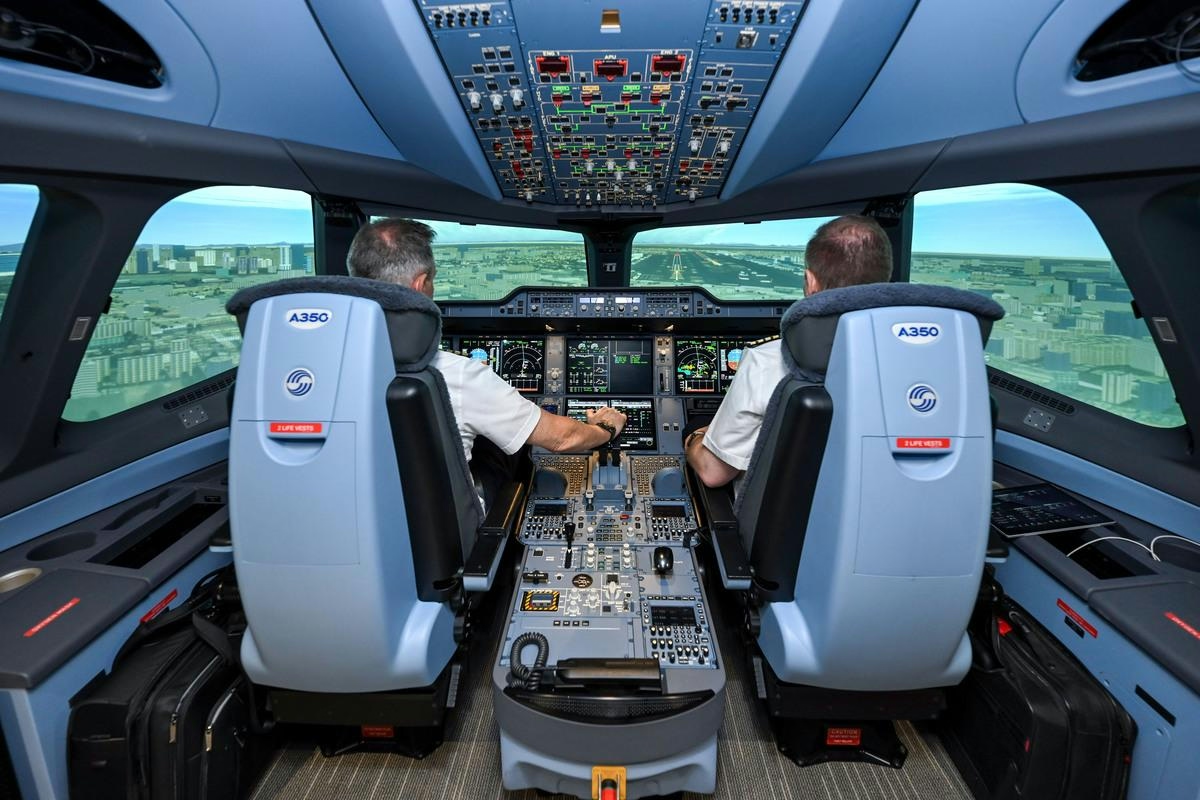
Heading365 Expands Lufthansa Training Partnership with New A350 and A380 Simulators
April 12, 2026By ePlane AI
Heading365 Expands Lufthansa Training Partnership with New A350 and A380 Simulators
0
0
Heading365
Lufthansa Aviation Training
A350 And A380 Simulators

Heading365 Expands Lufthansa Training Partnership with New A350 and A380 Simulators

April 12, 2026 – Germany — Heading365, an Austria-based provider specializing in Flight Management System (FMS) training solutions, has announced an expansion of its partnership with Lufthansa Aviation Training (LAT) through the introduction of new A350 and A380 FMS Trainer PRO platforms. This development enhances LAT’s access to advanced pre-simulator FMS training specifically designed for widebody aircraft, underscoring both companies’ dedication to raising pilot training standards.

Enhancing Pilot Training and Operational Efficiency

The integration of these high-fidelity simulators aims to improve pilot preparedness and operational efficiency by enabling trainees to acquire essential experience prior to engaging with full-flight simulators. As Lufthansa continues to grow its widebody fleet, including increased orders for A350 and A380 aircraft, the demand for sophisticated and effective training solutions is expected to rise. This expansion presents significant opportunities for Heading365, while simultaneously intensifying competition within the aviation training sector.

Challenges and Industry Implications

Despite the promising prospects, Heading365 faces considerable challenges in ensuring that its new simulators meet Lufthansa’s stringent training requirements and integrate smoothly into existing training frameworks. Compliance with rigorous industry regulations and the expectations of aviation authorities and airline partners will be critical to the successful implementation of these systems.

The market is anticipated to respond rapidly to this advancement. Competing training providers may accelerate upgrades to their simulator technologies or pursue new collaborations with manufacturers to maintain competitiveness. Furthermore, rival airlines are likely to enhance their own training capabilities, thereby elevating the overall standards of quality and innovation across the industry.

Fluctuations in market conditions, alongside Lufthansa’s ongoing adjustments to capacity and flight schedules, may also impact the demand for new training resources. Heading365 will need to maintain agility to ensure its solutions remain aligned with the evolving operational requirements of its partners.

This expanded collaboration highlights the strategic importance of partnerships in advancing pilot training and supporting the safe, efficient operation of next-generation aircraft. As the aviation sector continues to adapt to emerging technologies and challenges, initiatives such as this are set to play a crucial role in shaping the future of pilot education.

More news
Six Lesser-Known Features of the Airbus A380 Cabin

Six Lesser-Known Features of the Airbus A380 Cabin

Six Lesser-Known Features of the Airbus A380 Cabin The Airbus A380 has long been celebrated for its luxurious bars, private suites, onboard showers, and expansive cabin space. However, the aircraft’s true innovation extends beyond these visible luxuries into more subtle design elements. Unlike most airliners, which are primarily defined by their passenger cabins, the A380’s interior architecture is distinguished by a meticulous division of space that balances passenger experience, crew workflow, operational control, and fatigue management. This multi-layered approach continues to captivate aviation experts and enthusiasts alike, even years after the end of the A380’s production. With its two full-length passenger decks and unparalleled floor area, the A380 remains unique among commercial jets. This extraordinary scale has enabled Airbus and airline designers to incorporate hidden thresholds, sealed-off workspaces, and cleverly segmented zones—features that typically go unnoticed by passengers but are vital to the aircraft’s smooth operation. Luxury and logistics are inextricably linked on the A380. The calm and effortless atmosphere enjoyed by passengers in premium seats is supported by a parallel, unseen world of operational complexity. As airlines and manufacturers adapt to evolving inflight entertainment and connectivity systems, uphold sustainability standards, and respond to changing passenger expectations regarding wellbeing and comfort, these lesser-known cabin features face new challenges. Airlines must carefully assess the costs and benefits of maintaining such innovations, while competitors seek to develop comparable solutions to remain competitive. The “Harry Potter” Cupboard: A Hidden Command Center Among the A380’s most intriguing secrets is a small compartment located beneath the forward staircase on certain aircraft, notably those operated by Emirates. Known among crew members as the “Harry Potter cupboard,” this space appears to passengers as unused storage but actually functions as a purser’s office. It serves as a private workstation where the senior cabin crew member manages paperwork, coordinates cabin operations, and in some cases, controls aspects of the inflight entertainment system. This concealed office is more than a charming curiosity; it exemplifies the complexity involved in managing a flying hotel with multiple cabins, large crews, and intricate service routines. In contrast to many modern aircraft, where dedicated crew workspaces have been sacrificed to increase seating capacity, the A380’s vast volume allows for operational niches that seem almost anachronistic in today’s density-driven aviation market. The cupboard beneath the stairs stands as a testament to the A380’s original vision—not merely as a passenger transport platform but as a sophisticated, layered workspace. As airlines continue to evaluate the relevance of such features amid shifting market demands and technological progress, the A380’s hidden design elements serve as a reminder of an era when cabin innovation prioritized both passenger comfort and crew efficiency. In an industry increasingly focused on maximizing space and minimizing costs, the superjumbo’s secret spaces remain a distinctive legacy of thoughtful aircraft design.
Supply Chain Disruptions Drive Up Prices of Agricultural Goods, Say Rural Retailers

Supply Chain Disruptions Drive Up Prices of Agricultural Goods, Say Rural Retailers

Supply Chain Disruptions Drive Up Prices of Agricultural Goods, Say Rural Retailers Rural retailers across New Zealand are raising alarms over escalating prices of essential agricultural goods, attributing the surge to ongoing supply chain disruptions exacerbated by conflict in the Middle East. Leading suppliers, including Farmlands and PGG Wrightson, report that farmers are already experiencing the financial strain as increased costs from manufacturers and suppliers are being transferred down the supply chain. Rising Costs and Supply Chain Challenges Farmlands, a prominent farmer-owned co-operative, has observed price increases across a broad spectrum of imported products such as palm kernel expeller (PKE), fertiliser, animal feeds, and plastic-based items. Scott Brown, Farmlands’ general manager of strategy, explained that the company has proactively increased orders and inventory levels to anticipate further price hikes, though supply availability remains stable for the time being. Brown highlighted that the price pressures stem not only from direct increases in fuel and fertiliser costs but also from secondary effects impacting products reliant on fuel for manufacturing and transportation, including plastics and resins. He warned that these inflationary pressures are likely to extend to other general goods as the cost increases permeate through various sectors. Manufacturers are compelled to pass on higher expenses related to shipping, production, and delivery. Brown emphasized Farmlands’ efforts to negotiate favorable terms with suppliers to mitigate the impact on farmers and growers, but acknowledged that these disruptions are expected to persist. He urged farmers to engage early with their representatives to plan and manage the anticipated price rises, noting that even a swift resolution of geopolitical tensions would not immediately alleviate the strain on global supply chains. Industry Response and Broader Implications PGG Wrightson, another key player in New Zealand’s agricultural retail sector, echoed these concerns. The company pointed to the recent surge in crude oil prices as a significant driver of increased global shipping and local distribution costs, which are being reflected in retail prices. They noted that the rise in crude oil prices also affects products and packaging derived from plastic. While efforts are underway to minimize price increases where possible, the company acknowledged the challenges in fully absorbing these costs. Although neither Farmlands nor PGG Wrightson is currently facing major supply delays, both are actively collaborating with suppliers to identify alternative sources, particularly as export restrictions on key commodities tighten in some countries. The situation is further complicated by rising production costs, especially for fertiliser, which are expected to cascade through the supply chain and ultimately contribute to higher food prices. Market dynamics may compel retailers to adjust pricing strategies, either by passing on increased costs to consumers or by reducing profit margins to maintain competitiveness. Prolonged disruptions, such as the closure of critical shipping routes, could exacerbate instability in global grain supplies and prompt additional regulatory interventions, thereby intensifying the uncertainty confronting New Zealand’s agricultural sector.
Top Airlines for Short-Haul Widebody Business Class in 2026

Top Airlines for Short-Haul Widebody Business Class in 2026

Top Airlines for Short-Haul Widebody Business Class in 2026 Short-haul air travel is experiencing a notable transformation, particularly across Asia and the Middle East, where widebody aircraft are increasingly deployed on routes lasting less than five hours. In these highly competitive markets, business class has evolved beyond its traditional role as a long-haul luxury, becoming a critical differentiator even on brief journeys. Airlines are now striving to offer fully flat beds, direct aisle access, and premium cabin finishes, thereby elevating passenger expectations for comfort and consistency. Innovations in Asia’s Regional Business Class As 2026 approaches, competition in the short-haul widebody segment is intensifying globally. In Asia, Cathay Pacific is preparing a significant overhaul of its regional widebody business class with the introduction of its new Aria Studio product. Historically, Cathay’s Airbus A330 fleet has featured a fragmented and outdated business class experience, with many aircraft still equipped with 2-2-2 recliner seats that fall short of current industry standards. This has placed Cathay at a disadvantage compared to competitors offering fully flat beds and direct aisle access. The forthcoming Aria Studio seat, designed in a reverse herringbone layout with a 1-2-1 configuration, will provide direct aisle access for every passenger, substantially enhancing both comfort and privacy. Cathay Pacific plans to retrofit 20 existing Airbus A330-300s and install the new cabins on 30 incoming Airbus A330-900s, ensuring widespread availability across its regional network. For premium travelers in Asia, where seamless connections between short and long-haul flights are common, this consistency in product quality is essential for overall satisfaction. Shifting Dynamics in North America Meanwhile, the competitive landscape in North America is evolving rapidly. American Airlines faces increasing challenges in maintaining its leadership in short-haul widebody business class, primarily due to a limited backlog of new widebody aircraft orders. This situation risks leaving American behind Delta Air Lines and United Airlines, both of which are making substantial investments in their premium offerings. Delta has strategically prioritized premium services, supported by strong financial performance that underscores its market leadership. United Airlines is also advancing, notably through the installation of SpaceX Starlink connectivity across its widebody fleet, promising enhanced in-flight connectivity for business travelers. Alaska Airlines is emerging as a notable contender as well, unveiling new business class suites featuring fully lie-flat seats and "restaurant-quality" menus on its long-haul flights. This initiative signals Alaska’s commitment to attracting premium travelers and further intensifies competition among U.S. carriers. Industry Trends and Passenger Expectations These developments reflect a broader industry trend in which airlines are investing heavily in premium services and technological advancements to attract and retain high-value customers. As carriers such as Cathay Pacific, Delta, United, and Alaska Airlines redefine the short-haul widebody experience, passengers can anticipate a new era of comfort, connectivity, and consistency—even on flights lasting only a few hours. By 2026, delivering a true long-haul experience on short-haul routes is poised to become the new industry standard.
BOC Aviation Signs Lease Agreement with SKY Airline

BOC Aviation Signs Lease Agreement with SKY Airline

BOC Aviation Signs Lease Agreement with SKY Airline BOC Aviation has finalized a purchase and leaseback agreement with Chilean low-cost carrier SKY Airline for three Airbus A321XLR aircraft. This deal marks SKY Airline as a new customer for the global aircraft lessor. The aircraft, equipped with Pratt & Whitney GTF engines, are slated for delivery in 2026 and 2027 and will be placed on long-term operating leases. Strategic Partnership and Fleet Expansion Steven Townend, Chief Executive Officer and Managing Director of BOC Aviation, expressed satisfaction in welcoming SKY as a new client, highlighting the airline’s commitment to expanding its fleet with the latest generation of fuel-efficient aircraft. Townend emphasized the significance of the Airbus A321XLR, noting that these aircraft represent the first of this model scheduled for delivery into BOC Aviation’s portfolio. From SKY Airline’s perspective, CEO Daniel Belaunde underscored the importance of the partnership in supporting the airline’s growth trajectory. He pointed out that the addition of the Airbus A321XLR will enable SKY to broaden its network, offering more direct and affordable travel options while maintaining a focus on efficiency, sustainability, and delivering a high-quality customer experience. Company Profiles and Market Context Headquartered in Singapore and listed on the Hong Kong Stock Exchange (HKEx code: 2588), BOC Aviation manages a diverse portfolio of 815 aircraft and engines, either owned, managed, or on order. As of the end of 2025, its fleet was leased to 87 airlines across 46 countries and regions, supported by offices in Dublin, London, New York, and Tianjin. SKY Airline operates exclusively Airbus A320neo and A321neo aircraft, making it the only airline in South America with a 100% neo fleet. Since commencing operations in 2001, SKY has transported over 70 million passengers and currently serves seven countries across the Americas. The airline has achieved a reduction in emissions per seat of approximately 30% since 2018. In January 2026, SKY was recognized by OAG and Cirium as the most punctual airline in Latin America and was named among the world’s 25 safest low-cost airlines by Airline Ratings. Industry Implications and Leasing Sector Dynamics This agreement arrives amid a challenging environment for aircraft lessors, who must navigate financial and operational risks in a highly competitive market. Airlines are increasingly cautious about expanding their fleets, compelling lessors to balance growth ambitions with prudent risk management. The addition of SKY Airline, a reputable and expanding carrier, is expected to strengthen BOC Aviation’s portfolio and market position. Competitors such as AerCap may respond by adjusting their leasing strategies, potentially offering more competitive terms or innovative financing solutions as lessors compete for market share. This transaction highlights ongoing shifts within the aircraft leasing sector, where efficiency, sustainability, and adaptability remain central to the strategic priorities of both lessors and airlines.
Aviation Ministry Partners with Microsoft to Use AI in Improving Travel

Aviation Ministry Partners with Microsoft to Use AI in Improving Travel

Aviation Ministry Partners with Microsoft to Use AI in Improving Travel Advancing Egypt’s Digital Transformation in Aviation In a significant move aligned with Egypt’s broader digital transformation strategy, the Ministry of Civil Aviation is intensifying efforts to integrate cutting-edge digital technologies throughout its operations. Minister of Civil Aviation, Samah el-Hefny, highlighted the ministry’s dedication to harnessing technological innovation alongside workforce development as fundamental components for achieving sustainable growth within the sector. This strategic vision was articulated during a recent meeting at the ministry’s headquarters, where Minister el-Hefny welcomed a delegation from Microsoft led by Naim Yazbeck, President for the Middle East and Africa. The meeting also included Eng. Amr Negaty, Permanent Undersecretary of the Ministry. Discussions focused on expanding collaboration in information technology and digital transformation, with particular emphasis on the ongoing partnership between EgyptAir and Microsoft. Leveraging Artificial Intelligence to Enhance Travel Experience Central to this collaboration is the deployment of artificial intelligence (AI) technologies aimed at improving the travel experience. The initiative supports EgyptAir’s strategy to adopt advanced digital tools designed to boost operational efficiency and elevate service quality for passengers. By integrating AI-driven solutions, the ministry seeks to modernize its aviation services and align with global industry standards. However, this partnership unfolds within a rapidly evolving and highly competitive AI landscape. Microsoft, despite its substantial investments in AI—including its Copilot platform—faces scrutiny regarding the tangible returns on these investments. The company’s dependence on external AI models, such as those developed by Anthropic, has raised questions about its capacity to keep pace with leading industry players like Anthropic and Alphabet (Google). Market responses to Microsoft’s AI ventures have been mixed, with some analysts expressing doubt over whether the company can effectively narrow the gap with competitors who are simultaneously advancing their own sophisticated AI models to capture greater market share. Addressing Workforce Implications Amid Digital Transformation Beyond competitive dynamics, the broader implications of AI adoption in aviation present challenges related to workforce roles traditionally reliant on direct, in-person interactions. As digital transformation accelerates, the Ministry of Civil Aviation remains attentive to the necessity of equipping its workforce with new skills to fully leverage these technologies while managing potential shifts in employment patterns. Minister el-Hefny reaffirmed the ministry’s commitment to digital innovation as a catalyst for progress. By investing strategically in both technological capabilities and human capital, the ministry aims to ensure that Egypt’s aviation sector remains competitive and adaptable to the evolving demands of the global aviation industry.
Major Airlines Cut Flights Amid Strait of Hormuz Crisis and Rising Fuel Costs

Major Airlines Cut Flights Amid Strait of Hormuz Crisis and Rising Fuel Costs

Major Airlines Cut Flights Amid Strait of Hormuz Crisis and Rising Fuel Costs The global aviation industry is facing significant disruption as the ongoing crisis in the Strait of Hormuz severely impacts fuel supplies and drives jet fuel prices to unprecedented levels. Leading carriers such as United Airlines, Delta Air Lines, Air France, Ryanair, Cathay Pacific, Air India, and Scandinavian Airlines (SAS) have announced substantial flight reductions in response to escalating costs, supply shortages, and widespread operational challenges. Impact of the Strait of Hormuz Closure on Aviation Fuel Markets The Strait of Hormuz, a critical maritime passage responsible for nearly 20% of the world’s oil trade, has been effectively closed, triggering the most severe aviation fuel shock in decades. The abrupt suspension of tanker traffic from the Middle East has thrown global fuel markets into disarray, exposing the aviation sector’s vulnerability to geopolitical tensions. This disruption has led to a dramatic surge in jet fuel prices, placing immense financial pressure on airlines already grappling with post-pandemic recovery. Airlines Implement Flight Reductions and Cost Mitigation Strategies The repercussions have been immediate and profound. United Airlines has reduced approximately 5% of its scheduled flights, prioritizing the suspension of less profitable routes and certain international services. Delta Air Lines has signaled the possibility of further capacity cuts should fuel prices remain elevated. Scandinavian Airlines has already canceled around 1,000 flights in April alone, attributing the decision to soaring oil and jet fuel costs. According to the International Air Transport Association (IATA), the average global price of jet fuel has surged to $209 per barrel, more than doubling from $99 at the end of February. United Airlines CEO Scott Kirby has cautioned that sustained high fuel prices could impose an additional $11 billion in annual expenses on the airline industry. Aviation analysts warn that if the crisis persists, more carriers may be compelled to reduce flights and curtail services, intensifying the strain on global air travel. Acute Fuel Shortages in Europe and Asia Europe is confronting one of its most severe aviation fuel crises in recent memory. Airports across the continent have issued urgent alerts warning that jet fuel shortages could reach critical levels within weeks unless supply routes are restored. The region’s heavy dependence on Gulf refineries, with much of its fuel transiting the Strait of Hormuz, has left smaller airports particularly exposed due to limited storage capacity and few alternative supply options. In response, governments are enacting emergency measures, including fuel rationing and contingency planning, to prevent widespread flight cancellations during the peak travel season. Asia is experiencing a similarly acute challenge. Many countries in the region rely on the Strait of Hormuz for up to 85% of their crude oil imports. In an effort to secure domestic fuel supplies amid tightening availability, China has suspended jet fuel exports, further constraining global supply and exacerbating shortages at regional airports. Uncertain Prospects for the Aviation Industry The crisis remains deep and complex, with no immediate resolution in sight. Industry experts caution that the fallout could persist for months, potentially reshaping global travel patterns permanently. With jet fuel prices at historic highs and supply chains under unprecedented pressure, airlines are preparing for continued operational turbulence. Passengers worldwide are likely to face higher fares, reduced flight options, and ongoing uncertainty as the aviation sector navigates this challenging period.
MC-21 Aircraft for 270 Passengers to Feature New PD-24 Engine

MC-21 Aircraft for 270 Passengers to Feature New PD-24 Engine

MC-21 Aircraft for 270 Passengers to Feature New PD-24 Engine A new extended version of the MC-21-500 aircraft, designed to accommodate up to 270 passengers, is set to be equipped with the advanced PD-24 engine, delivering approximately 24 tons of thrust. This development was recently unveiled at the Russian Venture Forum in Kazan, underscoring Russia’s ambitions to enter the long-haul aviation market with a domestically produced airliner. Design and Technical Specifications The MC-21-500 is projected to achieve a flight range of up to 9,000 kilometers, positioning it as a contender in the international long-haul segment. The PD-24 engine remains under development and is part of a broader family of engines featuring thrust variants of 24, 26, 28, and 35 tons, all sharing a common gas generator. This unified engine architecture allows simultaneous progress on the PD-24 alongside the larger PD-35 program. Ilya Shatilin, founder of the aviation project Frequent Flyers, highlighted that the MC-21-500 will incorporate a composite airframe, which is expected to enhance both efficiency and overall performance. The MC-21 designation appears to reflect a strategic approach to unification within the aircraft family, akin to Boeing’s 757 and 767 models, which share numerous components, control systems, and cockpit designs. This approach aims to streamline pilot training and maintenance processes. Challenges and Market Outlook Despite these advancements, the MC-21 program faces significant challenges, particularly in securing certification. Demonstrating the PD-24 engine’s reliability under demanding operating conditions remains a critical hurdle, as evidenced by the rigorous certification tests recently conducted for the PD-8 engine by United Engine. Regulatory approval will be essential for the aircraft’s successful entry into both domestic and international markets. Market reception to the MC-21-500 and its new engine technology is expected to be cautious. Airlines may hesitate to adopt the aircraft due to the relative novelty of the PD-24 engine, favoring established technologies with proven reliability. Competitors are likely to respond by emphasizing the dependability and efficiency of their own engines or by accelerating the development of next-generation powerplants. Nonetheless, the MC-21-500’s competitive pricing and anticipated fuel efficiency could make it an appealing option for airlines aiming to modernize their fleets. Should the aircraft meet its performance and certification objectives, it may present a compelling alternative in the long-haul market, potentially altering the competitive dynamics within the sector. As development progresses, the MC-21-500 will remain under close scrutiny from industry observers, airlines, and competitors, representing a significant milestone in Russia’s efforts to expand its footprint in the global commercial aviation industry.
Decarbonizing aviation: Cleared for take-off

Decarbonizing aviation: Cleared for take-off

Decarbonizing Aviation: Cleared for Take-Off Accelerating Climate Action in Aviation As global scrutiny intensifies over the aviation sector’s environmental impact, leading organizations are stepping up efforts to reduce carbon emissions. Deloitte LLP, through its WorldClimate initiative, has committed to achieving net-zero greenhouse gas emissions by 2030, significantly ahead of the Paris Agreement’s 2050 target. A cornerstone of this strategy is the adoption of sustainable aviation fuel (SAF) for business travel. Deloitte has secured agreements with major US carriers, including American Airlines, Delta Air Lines, and United Airlines, aiming to prevent approximately 5,000 metric tons of carbon dioxide emissions—equivalent to around 16,000 one-way flights between New York and Los Angeles. Deloitte’s investment in SAF is intended not only to reduce emissions within its own operations but also to stimulate broader market demand, thereby enhancing the accessibility and affordability of sustainable fuels. As a founding member of the Sustainable Aviation Buyers Alliance (SABA), an initiative launched by RMI and the Environmental Defense Fund, Deloitte is actively working to accelerate SAF production, promote technological innovation, and establish clearer corporate environmental reporting standards related to SAF usage. Challenges and Industry Dynamics Despite these advances, the journey toward decarbonizing aviation remains complex and fraught with obstacles. Regulatory resistance has surfaced, particularly in Europe, where airline lobby groups such as Airlines for Europe (A4E) and the European Regions Airline Association (ERA) have called for revisions to the European Commission’s ReFuelEU regulations on SAF. These groups cite concerns over the feasibility and cost implications of the current rules, reflecting broader industry apprehension about the pace and practicality of regulatory targets. Market responses to decarbonization initiatives have been mixed. While programs like the UK’s Project Sonata and the Federal Aviation Administration’s (FAA) approval of a ‘Zero Engine Taxi’ certification plan indicate progress, setbacks persist. The withdrawal of funding for the UK’s Meteorological Airborne Laboratory and the absence of new aircraft designs incorporating technologies from the EU’s Clean Sky program highlight ongoing challenges in reaching key milestones. Competition within the sustainable aviation sector is also intensifying. Joby Aviation is currently under investigation by the US International Trade Commission for alleged import violations following a complaint from rival Archer Aviation, underscoring the high stakes and rapid evolution of this emerging market. Conversely, companies such as Aura Aero have made notable progress, securing firm orders for hybrid-electric aircraft and signaling growing interest in alternative propulsion technologies. Collaborative Efforts and Future Outlook Amid these challenges, collaborative initiatives continue to gain traction. Deloitte, in partnership with Shell and leaders in the road freight industry, is exploring additional avenues to decarbonize transportation. The company stresses the importance of connecting ecosystem participants—including innovators, regulators, and thought leaders—to accelerate the transition toward a sustainable and abundant energy future. As the aviation industry confronts regulatory, technological, and market hurdles, the commitment of organizations like Deloitte, alongside ongoing advancements in SAF and related innovations, will be pivotal in achieving substantial emissions reductions.
AIR.PA Shares Fall April 11 Amid Q1 Delivery Decline Despite Record Orders

AIR.PA Shares Fall April 11 Amid Q1 Delivery Decline Despite Record Orders

AIR.PA Shares Decline Amid Q1 Delivery Shortfall Despite Record Order Intake Airbus shares (AIR.PA) experienced a decline on April 11 following the release of first-quarter delivery figures that fell short of expectations, despite the company securing a record volume of new orders. The stock closed at €169.5, marking a year-to-date decrease of approximately 16.8%, as investors remained cautious ahead of the official Q1 results announcement scheduled for April 28. Delivery Performance and Order Backlog In the first quarter of 2026, Airbus delivered 114 aircraft, a significant reduction from the 136 units handed over during the same period last year. This decline was largely driven by a slowdown in deliveries of the A320neo family, a cornerstone of Airbus’s product lineup. Contrasting with the delivery shortfall, Airbus reported a surge in new orders, with 331 aircraft booked in March alone. Key contracts included substantial commitments from AerCap, China Eastern Airlines, and Juneyao Air, propelling the company’s backlog to an unprecedented 9,037 aircraft. This robust demand encompasses both narrowbody and select widebody models, highlighting the resilience of Airbus’s order book despite operational challenges. The disparity between the strong order intake and the slower delivery pace has contributed to negative market sentiment. To achieve its full-year delivery target of approximately 870 aircraft, Airbus must accelerate production to around 84 deliveries per month, a marked increase from the Q1 average. This ramp-up places considerable pressure on suppliers and final assembly lines, raising concerns about the company’s capacity to meet its ambitious production goals within the year. Impact on Swiss Investors and Regional Airlines For Swiss investors, exposure to Airbus shares listed in Paris introduces EUR-CHF currency risk, which may either mitigate gains or exacerbate losses depending on exchange rate fluctuations. While most Swiss brokers provide access to Euronext, total returns will be influenced by currency movements, making hedging strategies advisable, particularly if the Swiss franc strengthens. The delivery schedule of Airbus aircraft is of particular relevance to Swiss International Air Lines and the broader Lufthansa Group, both of which operate significant fleets of A220 and A320neo aircraft. Any sustained delays in deliveries could affect capacity planning and ticket pricing on Swiss routes. Investors should monitor delivery trends closely through the summer months, as consistent handovers to European carriers would support aftermarket revenues and reinforce Airbus’s long-term service business. Operational Challenges and Competitive Pressures Ongoing delays linked to Pratt & Whitney engine inspections continue to constrain availability within the A320neo family, posing a risk to Airbus’s ability to close the delivery gap. Further setbacks could provide an opening for competitors such as Boeing to capture additional market share. Additionally, shortages in seats, cabin interiors, and sub-tier components have the potential to stall near-complete aircraft, complicating Airbus’s cash conversion cycle. Currently, the company’s inventory days stand near 244, with a cash conversion cycle exceeding 205 days. Improvements in these areas would enhance cash flow and support higher delivery volumes. Valuation Metrics and Market Outlook Trading at €169.5 per share, Airbus holds a market capitalization of approximately €133.8 billion. The stock is valued at 25.6 times trailing earnings and 1.85 times enterprise value to sales, offering a dividend yield of 1.18%. Free cash flow yield is estimated at around 3.0%, while return on equity remains near 21.2%. The company maintains moderate leverage, with a debt-to-equity ratio close to 0.62. As Airbus contends with supply chain constraints and strives to accelerate production, investors will be closely monitoring updates on manufacturing rates, supplier stability, and engine availability during the forthcoming Q1 earnings call. The company’s success in narrowing the delivery shortfall will be pivotal in determining whether the recent share price weakness represents a strategic buying opportunity or signals deeper operational challenges.
PlaneEnglish Introduces Volo Flight Simulator with AI Air Traffic Control for ARSim

PlaneEnglish Introduces Volo Flight Simulator with AI Air Traffic Control for ARSim

PlaneEnglish Introduces Volo Flight Simulator with AI Air Traffic Control for ARSim April 11, 2026 – PlaneEnglish, a prominent provider of aviation radio communication training solutions, has announced the launch of Volo™ (Beta), an innovative in-app flight simulator environment featuring AI-powered air traffic control (ATC) integrated within its ARSim platform. Scheduled for release in April 2026, Volo is designed to offer pilots a cohesive training experience, enabling them to engage in full flight scenarios while practicing ATC communications within a single, unified interface. Advancing Flight Training Through Artificial Intelligence The integration of advanced artificial intelligence in Volo represents a notable advancement in flight training technology. By replicating real-world air traffic scenarios, the AI-driven ATC system aims to enhance the realism and effectiveness of pilot training. However, incorporating such sophisticated AI technology into existing flight training frameworks presents several challenges. Ensuring the accuracy and reliability of simulations is critical, particularly when modeling the complexities of real-world airspace. Furthermore, addressing regulatory and safety concerns is essential to meet industry standards and secure approval from aviation authorities. Context Within the Aviation Industry Volo’s introduction aligns with a broader industry movement toward the adoption of AI in aviation training and operations. Recent developments, including initiatives like Navi AI and American Airlines’ deployment of AI to optimize flight routes and reduce contrails, underscore the growing interest in leveraging artificial intelligence to improve both efficiency and safety in aviation. Despite the potential benefits of AI-driven training, market responses have been varied. Some traditional flight training providers remain cautious about the efficacy of AI-based simulations compared to established methods. This skepticism may drive competitors to enhance their own simulators with AI capabilities or to develop new AI-based training solutions in order to maintain their market position. PlaneEnglish’s Volo seeks to address these concerns by delivering a comprehensive and realistic training environment that equips pilots to navigate the demands of modern airspace. As the aviation sector continues to embrace technological innovation, the success of AI-powered solutions like Volo will depend on their ability to provide reliable, high-quality training while adhering to regulatory requirements and industry expectations. For further information about Volo and the ARSim platform, interested parties are advised to contact PlaneEnglish directly.
line










