
Превращайте аналитические выводы ИИ в реальные действия

В тренде
Categories
How AI Is Transforming Air Travel and Combat
How AI Is Transforming Air Travel and Combat
Artificial intelligence is rapidly reshaping the aviation sector, extending well beyond its initial applications as a flight aid. This evolution was highlighted during an October 2023 panel on the Future of Army Aviation in Washington, D.C., where military leaders and industry executives examined the profound changes AI is driving in both civilian and military aviation. Just a year after the launch of ChatGPT, AI has become a pivotal topic across industries, and its influence on aviation is now unmistakable.
Advancements in Civilian Air Travel
In the realm of civilian aviation, AI is significantly enhancing the passenger experience and streamlining airport operations. Automated identification systems powered by AI have accelerated security procedures, in some cases reducing boarding times to under a minute. Air traffic controllers increasingly rely on AI-driven data analytics to optimize flight paths, manage airspace congestion, and respond promptly to shifting weather conditions. These improvements not only boost operational efficiency but also contribute to safer and more reliable air travel.
Aircraft manufacturing and maintenance are also undergoing transformation through AI. The development of digital twins—virtual replicas of aircraft—enables manufacturers to analyze performance metrics, detect potential flaws, and predict maintenance requirements with greater accuracy. This proactive approach enhances safety standards, expedites diagnostics, and reduces operational costs.
While fully autonomous passenger flights remain a future prospect, AI is already assisting pilots by providing real-time data interpretation, dynamic rerouting, and hazard detection. Companies such as Wisk Aero and eHang are pioneering autonomous, short-range air taxis, signaling a future where urban air mobility could become a routine aspect of transportation.
AI in Air Combat: Innovations and Ethical Considerations
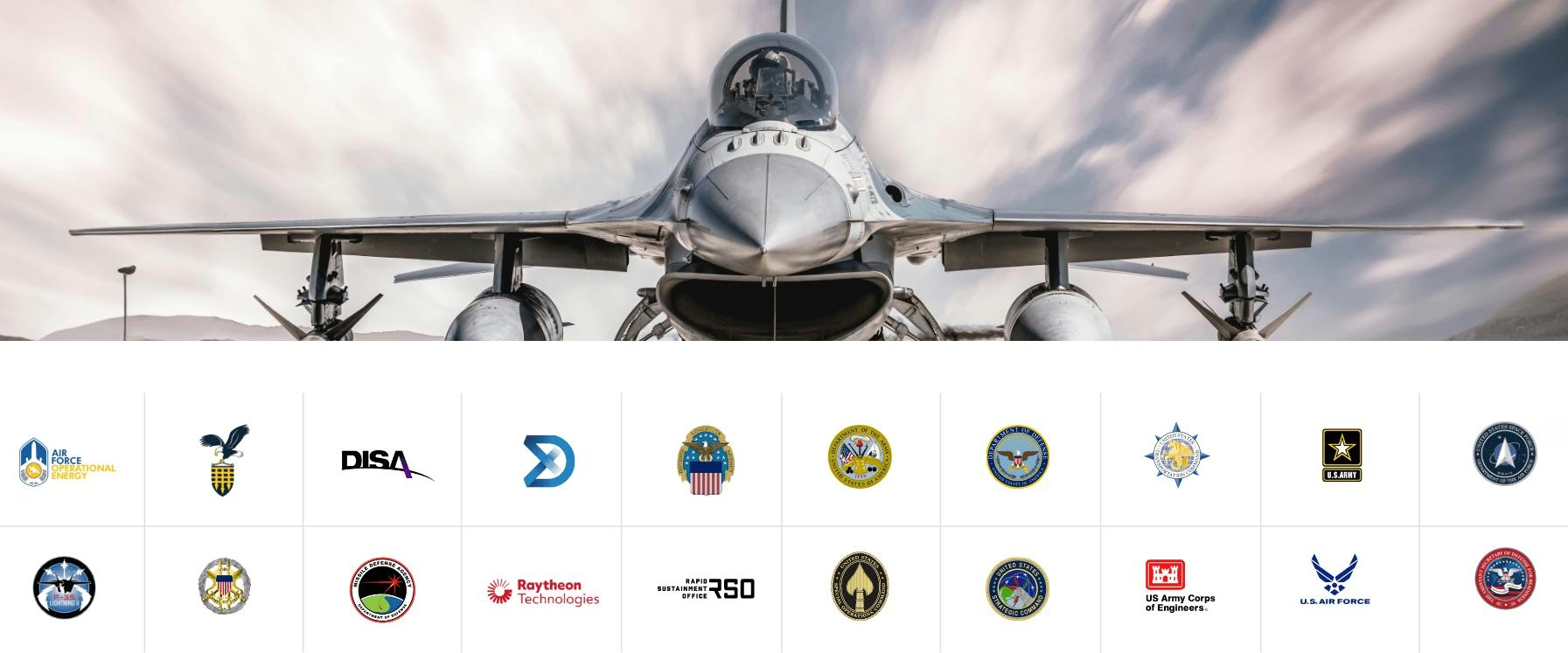
The military aviation sector is experiencing equally transformative changes driven by AI. The United States and China are leading the development of AI-controlled aircraft. The U.S. has conducted its first dogfight between an AI-piloted F-16 and a human pilot, while China is converting older J-6 jets into autonomous, armed drones. These developments suggest a future in which human-machine collaboration will be central to air combat strategies.
However, the integration of AI into military aviation raises significant ethical and regulatory challenges. The emergence of autonomous weapon systems has ignited international debate, prompting calls for stricter oversight and clearer rules of engagement. Defense companies emphasize AI’s role in enhancing situational awareness and supporting human decision-making, while committing to compliance with international laws and norms.
Market Dynamics and Industry Competition
The swift adoption of AI in aviation has intensified competition among technology firms. Companies are racing to develop AI-powered flight management systems that are both reliable and transparent, aiming to gain consumer trust and secure regulatory approval. Despite these efforts, challenges remain. Regulatory bodies are scrutinizing AI’s implications for privacy and safety, and public skepticism persists, particularly concerning data security and the prospect of autonomous flight.
In response, industry players are investing in technologies that prioritize transparency and reliability, seeking to address regulatory concerns and alleviate public apprehension.
The Path Forward
AI stands poised to revolutionize both civilian and military aviation by delivering unprecedented efficiency, safety, and capabilities. As the industry advances, it must carefully navigate complex regulatory, ethical, and societal challenges. The future of flight will depend not only on technological innovation but also on the aviation sector’s ability to foster trust and ensure the responsible integration of artificial intelligence.

Etihad Airways Suspends Airbus A380 Flights on Key Route

Aditya Birla Group Seeks Approval for Aircraft Leasing in GIFT City

Qatar Airways Highlights Innovation and Connectivity at Arabian Travel Market 2026

Hong Kong's Five-Year Plan Includes Andrew Fan's Aircraft Parts Processing Hub Proposal

ACIA Aero Leasing Delivers ATR72-600 to Air Nostrum

RTX Appoints Jill Albertelli as Head of Pratt & Whitney

TAT Technologies Joins Beyond Aero Hydrogen Aircraft Program

AURAK Study Highlights Barriers to Air Taxi Adoption in Emerging Economies

Xiamen Air Selects Altitude for 787 Maintenance at Heathrow

Etihad and Swissport Extend Global Partnership
