Изображение

Превращайте аналитические выводы ИИ в реальные действия

Присоединяйтесь к списку ожидания AeroGenie уже сегодня!

В тренде

Categories

How Delta Manages 100,000 Bags Daily at Atlanta’s Hartsfield-Jackson Airport
May 26, 2026By ePlane AI
How Delta Manages 100,000 Bags Daily at Atlanta’s Hartsfield-Jackson Airport
0
0
Delta Air Lines
Baggage Handling
Hartsfield-Jackson Airport

How Delta Manages 100,000 Bags Daily at Atlanta’s Hartsfield-Jackson Airport

Coordinating a Complex Operation

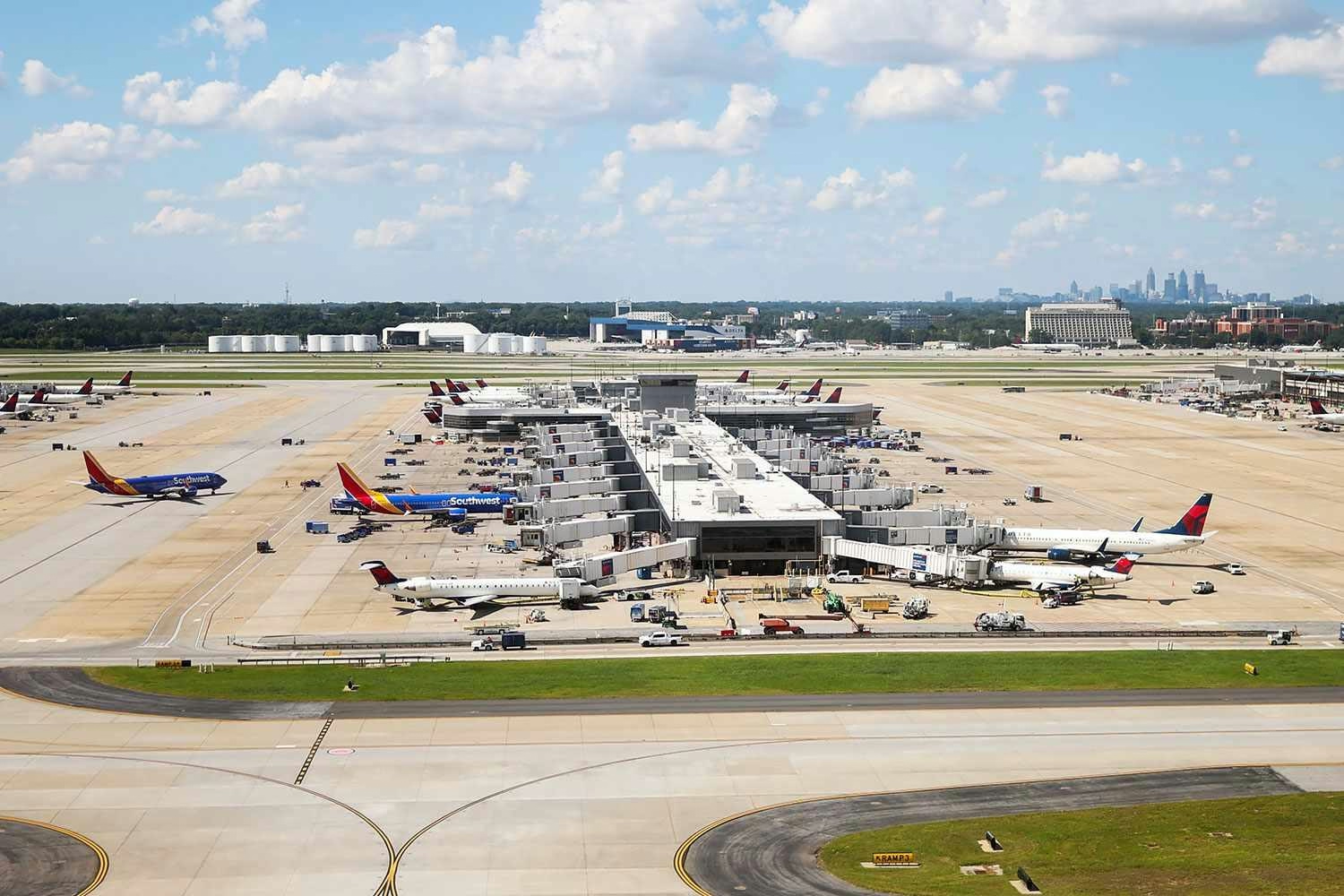
At Hartsfield-Jackson Atlanta International Airport, the world’s busiest by passenger volume, Delta Air Lines handles an extraordinary volume of luggage each day. Before a plane even reaches the gate, ramp agents like Mike Davis are already in motion, navigating the busy space between terminal and taxiway. Driving baggage tugs and equipped with handheld scanners, these agents verify each bag’s barcode to ensure it is routed correctly for its next destination. On an average day, Delta manages over 100,000 bags in Atlanta alone, with approximately 75 percent of those connecting to other flights. Each piece of luggage is touched by an average of nine employees during its journey, underscoring the complexity and scale of the operation.

Leveraging Artificial Intelligence for Efficiency

To manage this immense logistical challenge, Delta has developed a proprietary artificial intelligence system designed to optimize baggage handling. The AI functions similarly to a ridesharing algorithm, assigning tasks to tug drivers by prioritizing which bags require immediate attention and calculating the most efficient routes between gates. Paul Buckley, Delta’s director of operations in Atlanta, explained that the new system has brought consistency to the process. “In our old dispatching system, we gave the drivers the bags they were to handle, and they would choose the order. Some were better than others,” he said. “Now we have consistency, because we know exactly what order we’re delivering them in.”

For ramp agents like Davis, the AI system simplifies their workload by eliminating the need to plan routes or prioritize bags manually. “I don’t have to focus on crunching numbers and trying to figure out my own route. It does all that for me,” Davis said. “It tells me which gate. All I got to do is just get there.”

Challenges and Industry Implications

Despite its advantages, the AI system is not without challenges. Davis noted that the algorithm sometimes assigns him tight connections that push the limits of feasibility. “There’s been times where I knew that I wasn’t going to make a connecting flight. However, I still took the chance and went to that gate and the plane was still there. So lucky for me, lucky for the customer,” he recalled. Maintaining the system’s high efficiency is critical, especially as passenger volumes fluctuate and technical issues occasionally arise.

Delta’s investment in AI-driven baggage handling reflects a broader trend within the airline industry, as carriers seek to enhance operational efficiency and reduce costs. Market analysts have observed Delta’s approach closely, with competitors exploring similar technologies to improve their own baggage operations.

As the summer travel season intensifies, Delta’s ability to process more than 100,000 bags daily through Atlanta’s intricate network remains a significant logistical achievement—one increasingly reliant on artificial intelligence and the commitment of frontline employees like Mike Davis.

More news
MTU Maintenance Secures MRO Agreement with EVA Air for CFM56-5B Engines

MTU Maintenance Secures MRO Agreement with EVA Air for CFM56-5B Engines

MTU Maintenance Secures MRO Agreement with EVA Air for CFM56-5B Engines MTU Maintenance has entered into a long-term exclusive contract with Taiwan’s EVA Air to provide maintenance, repair, and overhaul (MRO) services for the airline’s CFM56-5B engines, which power its fleet of 17 Airbus A321-200 aircraft. Under this agreement, all engine shop visits will be conducted at MTU Maintenance Zhuhai, the group’s dedicated facility specializing in narrowbody aircraft engines. Additionally, EVA Air will benefit from access to MTU Maintenance Lease Services’ engine lease pool, ensuring spare engine support during maintenance periods. Strategic Expansion in the Asia-Pacific Market This contract marks MTU Maintenance’s re-entry into the Taiwanese market and underscores its ambition to become the leading engine MRO provider in the Asia-Pacific region. The company’s last similar agreement with a Taiwanese carrier was signed in 2016. Gert Wagner, President and CEO of MTU Maintenance Zhuhai, emphasized the significance of the partnership, stating, “EVA Air is one of the most prominent airlines in Asia-Pacific, and our network is fully prepared to support them. Having surpassed our 5,000th shop visit milestone in Zhuhai in 2025, we are now focused on making this location the top choice for narrowbody engine MRO in the APAC market. This contract is a significant step toward that goal.” For EVA Air, this agreement represents a strategic shift, as it is the first time the airline has selected an independent provider for comprehensive engine maintenance on exclusive terms. Previously, EVA Air relied solely on original equipment manufacturers for engine MRO services. Steve Liu, Executive Vice President of Engineering & Maintenance at EVA Air, remarked, “EVA Air holds its service providers to the highest standards. Throughout our discussions, MTU Maintenance’s technical expertise and extensive capabilities convinced us they are the right partner to ensure reliable and expert service for our CFM56-5B engines.” Challenges and Industry Implications The agreement comes amid a highly competitive MRO market, presenting several challenges for MTU Maintenance. The company must uphold its high service standards while managing increased workloads and aligning maintenance schedules with EVA Air’s operational demands. The financial commitments associated with such a long-term, exclusive contract also require careful oversight to ensure sustained value for both parties. Industry analysts suggest that this deal may invite closer scrutiny from EVA Air and competitors regarding MTU’s capacity to consistently deliver quality service as its client base expands. Competitors are expected to intensify efforts to secure similar agreements with EVA Air or other airlines, potentially leading to heightened price competition and strategic realignments within the MRO sector. MTU Maintenance Zhuhai services not only the CFM56-5B and -7B engines but also their successor models, the LEAP-1A and -1B, as well as IAE’s V2500 and Pratt & Whitney’s PW1100G-JM GTF engines. In 2025, MTU relocated MRO production for the PW1100G-JM program to a new, state-of-the-art facility in Jinwan, establishing the world’s largest MRO shop for narrowbody engines with a projected annual capacity exceeding 700 shop visits once fully operational. Founded in 2001 as a 50/50 joint venture between China Southern Airlines and MTU Aero Engines, MTU Maintenance Zhuhai continues to expand its capabilities and regional presence, positioning itself as a key player in the evolving MRO landscape.
Cathay Group Orders Two Additional Airbus A350F Freighters

Cathay Group Orders Two Additional Airbus A350F Freighters

Cathay Group Expands Airbus A350F Freighter Fleet Hong Kong-based Cathay Group has confirmed a firm order for two additional Airbus A350F freighters, increasing its total commitment to eight aircraft of this new-generation cargo model. These freighters, to be operated by Cathay Cargo, are expected to significantly improve operational efficiency and connectivity across the airline’s extensive global network. Strategic Investment in Fleet Modernization Ronald Lam, Chief Executive of Cathay Group, highlighted the strategic importance of the acquisition, stating that the additional A350F freighters will enhance connectivity at the airline’s home hub and offer greater options for customers. He described the order as a future-ready investment that reflects the company’s confidence in its long-term growth prospects and supports Cathay Cargo’s ambition to become the world’s leading air cargo carrier. Benoît de Saint-Exupéry, Airbus Executive Vice President for Commercial Aircraft Sales, welcomed the continued partnership, emphasizing that Cathay’s endorsement of the A350F underscores the aircraft’s role as a new standard in freighter capacity and efficiency. He noted that the A350F’s operational and technical commonality with Cathay’s existing Airbus fleet will facilitate a seamless integration while advancing the airline’s decarbonization efforts. Market Context and Industry Challenges Cathay Group’s fleet expansion occurs amid intensifying competition in the freighter market. Notably, Air China Cargo recently finalized orders for four additional A350F aircraft, with options for six more, reflecting strong demand for this aircraft type. This competitive environment may encourage other carriers to accelerate fleet renewal programs or secure additional freighter orders to maintain or grow their market share. Despite the positive outlook, Cathay faces potential challenges related to ongoing supply chain disruptions and production delays that have impacted the global aerospace sector. Effective management of these risks will be essential for the airline to fully capitalize on the advanced capabilities of the A350F and reinforce its position in the global air cargo industry. With this latest order, Cathay Group continues to invest in modern, fuel-efficient aircraft, aiming to boost operational efficiency and advance its sustainability objectives in a rapidly evolving and competitive market landscape.
Lufthansa Adds 10 Airbus A350-900 Jets to Fleet

Lufthansa Adds 10 Airbus A350-900 Jets to Fleet

Lufthansa Expands Airbus A350-900 Fleet with New Order Lufthansa Group has confirmed a firm order for 10 additional Airbus A350-900 aircraft, reinforcing its ongoing strategy to modernize and enhance its fleet. This acquisition increases Lufthansa’s total commitment to the Airbus A350 Family to 75 aircraft, which includes 15 of the larger A350-1000 variant. Currently, the airline operates 43 A350s, with further deliveries planned over the coming years. Strategic Fleet Modernization and Investment The expansion of the A350 fleet forms a critical part of Lufthansa’s broader initiative to phase out older aircraft models. This approach aims to reduce maintenance and operating costs while significantly improving fuel efficiency. The new order is part of a larger multi-manufacturer agreement, which also encompasses Boeing aircraft, collectively valued at $7.7 billion. This substantial investment highlights Lufthansa’s dedication to operational efficiency and sustainability amid intensifying competition from carriers such as Condor, which are also expanding their fleets and route networks to challenge Germany’s largest airline. Airbus Partnership and Aircraft Capabilities Airbus emphasized that the order underscores Lufthansa’s sustained focus on acquiring modern, fuel-efficient long-haul aircraft. Benoit de Saint-Exupéry, Executive Vice President Sales of Airbus Commercial Aircraft, remarked on the enduring partnership between Airbus and Lufthansa, which dates back to the delivery of the airline’s first A300 in 1976. Since then, Lufthansa has operated a diverse range of Airbus models, including the A220, A320 Family, A330, A340, A350, and A380. The Airbus A350-900 is engineered for long-haul operations, capable of flying up to 18,000 kilometers non-stop. It incorporates advanced aerodynamics, lightweight composite materials, and Rolls-Royce engines, which collectively contribute to lower fuel consumption, reduced operating costs, and decreased carbon emissions compared to previous-generation aircraft. The cabin features Airbus’ Airspace design, providing updated onboard products and enhanced passenger comfort tailored for extended journeys. Commitment to Sustainability and Future Challenges Sustainability remains a central priority for both Lufthansa and Airbus. The A350 is currently certified to operate with up to 50 percent Sustainable Aviation Fuel (SAF), with Airbus targeting full compatibility with 100 percent SAF by 2030. Despite this progress, ongoing supply chain challenges affecting Airbus may influence the delivery schedule and integration of these new aircraft into Lufthansa’s operations. Nevertheless, the fleet renewal is anticipated to bolster Lufthansa’s competitive standing within the European aviation market. As of April 2026, the Airbus A350 Family had amassed over 1,550 firm orders from more than 65 customers worldwide, reflecting its strong market acceptance and demand.
China Delays Airbus Deliveries Amid Pressure Over Comac Jets

China Delays Airbus Deliveries Amid Pressure Over Comac Jets

China Delays Airbus Deliveries Amid Pressure Over Comac Jets Delivery Hold-Ups Reflect Certification Disputes China has been postponing approvals for Airbus SE aircraft deliveries, reflecting growing frustration over the protracted European certification process for Chinese-made jets. Sources familiar with the matter, speaking on condition of anonymity due to the sensitivity of the issue, revealed that the Civil Aviation Administration of China (CAAC) has withheld final clearances required for Airbus jets to enter service domestically for several months. This move has contributed to Airbus recording its lowest first-quarter commercial jet deliveries since 2009. Airbus attributes the slowdown partly to an “administrative” issue that stalled the transfer of nearly 20 aircraft to China, compounded by a panel quality problem affecting production of the A320neo family. These factors have disrupted the synchronization between Airbus’s production and delivery schedules, creating further bottlenecks. Airbus CEO Guillaume Faury has expressed optimism that deliveries to China will normalize by the end of June, though he declined to elaborate. Data from Cirium indicates that Airbus delivered only 16 aircraft to Chinese airlines in the first five months of 2024, a sharp decline from 47 during the same period last year. The ripple effects of these delays extend beyond China’s borders. For instance, Qantas has postponed plans for nonstop flights to London and New York after the delivery of its first A350-1000 was deferred to April 2027. Airbus has also cautioned some customers about potential further delays to A350 deliveries later this decade, raising concerns about supply chain issues linked to a recently acquired U.S. parts factory. The Strategic Implications of Comac’s Certification Push Central to the current tensions is China’s ambition to secure international certification for its domestically produced C919 jet, developed by the state-owned Commercial Aircraft Corporation of China (Comac). The C919, which accommodates up to 192 passengers and incorporates significant Western technology, is presently certified and operated only within China. Comac is actively pursuing certification from the European Union Aviation Safety Agency (EASA) to enable the aircraft to compete globally with Airbus’s A320 and Boeing’s 737 models. While the certification of a new aircraft type typically requires several years, Comac is seeking an accelerated process. Should the certification impasse continue, Airbus’s dominant position in China—the world’s second-largest aviation market—could be jeopardized. China represents Airbus’s largest customer base by fleet size, with projections estimating a demand for approximately 9,570 new aircraft over the next two decades. Boeing has also encountered challenges in China. Although the company recently secured a long-anticipated order for 200 jets during a summit between Chinese President Xi Jinping and U.S. President Donald Trump, the deal was smaller than expected and follows years of strained U.S.-China relations. Requests for comment from EASA, CAAC, and Comac went unanswered. Airbus reiterated that the delivery issues were administrative in nature and have since been resolved. The international certification of the C919 is pivotal to China’s strategy to penetrate the global commercial jet market, which remains dominated by Airbus and Boeing. Achieving Western approval would enable Comac to market the aircraft worldwide, extending its reach well beyond the domestic sphere.
AI to Dominate Discussions at 2026 RAAA Convention

AI to Dominate Discussions at 2026 RAAA Convention

AI to Dominate Discussions at 2026 RAAA Convention Artificial intelligence (AI) and its transformative potential for regional aviation will be the central focus of the 2026 Regional Aviation Association of Australia (RAAA) Convention, scheduled to take place in Cairns next month. The event will feature a keynote address and a panel discussion designed to clarify AI’s practical applications for delegates and examine its operational implications within the sector. Keynote Address and Panel Discussion Adam Spencer, a well-known radio and television personality, comedian, and mathematician, will deliver the keynote speech. Drawing on his expertise in AI systems and mathematics, Spencer will explore how AI is already reshaping aviation on a global scale. He will emphasize the evolution of AI from simple automation to adaptive intelligence, highlighting systems capable of identifying patterns, anomalies, and making predictions from extensive operational data. Spencer will outline the immediate benefits AI offers to regional aviation, particularly in enhancing operational efficiency, maintenance reliability, and decision-support tools. These advancements include predictive maintenance, dynamic fuel optimisation, natural language copilots for maintenance teams, and improved disruption management during adverse weather or scheduling conflicts. He noted that regional aviation stands to gain significantly from AI due to tight profit margins, staffing challenges, and geographically dispersed fleets. According to Spencer, the most significant impact will not initially be pilotless aircraft but smarter operations that provide major-airline-grade intelligence without the need for large-scale staffing. Following the keynote, Spencer will moderate a panel featuring prominent industry figures: Qantas Chief Technology, AI and Transformation Officer Rachel Yangoyan, Basair CEO and RAAA Director David Trevelyan, and CASA Executive Advisor Dr Reece Clothier. RAAA CEO Rob Walker stressed the importance of understanding both the opportunities and risks associated with AI integration. He remarked that while AI holds enormous potential benefits, it also introduces new risks that the sector must carefully navigate. Walker emphasized that a strong safety culture—characterized by consistency, predictability, and reliability—can coexist with the change and evolution that AI brings if implemented appropriately. Industry Context and Broader Implications The convention’s focus on AI aligns with wider industry discussions about the challenges and opportunities posed by rapid technological advancements. Recent debates at TOC Europe 2026 have underscored potential obstacles such as geopolitical disruptions and supply chain vulnerabilities that could affect AI adoption in aviation and related sectors. Market analysts at RBC Wealth Management have also observed that the surge in AI investment has led to crowded market positioning, with companies like Nvidia facing increased competition and potential margin pressures if major customers reduce AI spending. Furthermore, the race for AI dominance is influencing capital markets, as institutional investors seek to position themselves ahead of anticipated AI-related initial public offerings. Spencer assured that delegates would gain a practical understanding of where AI is currently effective and where expectations may exceed reality. His presentation will focus on operational applications already in use worldwide, the medium-term impact on regional operators, workforce considerations, safety and regulatory challenges, and the strategic risks of both under-reacting and over-reacting to AI. The 2026 RAAA Convention will be held at the Cairns Convention Centre from 16 to 18 June. Federal Infrastructure Minister Catherine King and Shadow Minister Bridget McKenzie are among the scheduled keynote speakers. Further details are available at raaaconvention.com.au.
Marine Equipment Center Resells Engines to Russian Airlines, Evading Sanctions

Marine Equipment Center Resells Engines to Russian Airlines, Evading Sanctions

Indian Firm Resells Airbus Engines to Russian Airlines, Evading Sanctions Circumventing Sanctions Through Complex Transactions An Indian company, Marine Equipments Centre Pvt. Ltd. (MEC), headquartered in Kochi, has come under international scrutiny for reselling two Airbus aircraft engines to a Russian airline, effectively bypassing Western sanctions and explicit contractual prohibitions. MEC acquired two CFM56-5B engines—critical components for the Airbus A320 family—from Luxembourg-based Vallair Asset Solutions for approximately $17 million. Within just two months, these engines were transferred to Rossiya Airlines JSC, a subsidiary of Aeroflot, for around $24 million. This transaction yielded MEC a profit of roughly $7 million, or 41%, in less than 60 days. The resale directly contravened contract clauses that forbade re-export to Russia, a restriction designed to uphold sanctions imposed following Russia’s invasion of Ukraine. Despite these clear limitations, MEC proceeded with the sale, facilitated by Aman Aviation & Aerospace Solutions Pvt. Ltd., an Indian intermediary. This case exemplifies the ongoing difficulties in enforcing sanctions on Russia’s aviation sector. The Broader Context of Sanctions Evasion As of April 30, 2026, Russian airlines continued to operate a fleet of 460 Airbus and Boeing aircraft, nearly matching pre-sanctions levels from 2021. Rather than grounding their aircraft, Russian carriers have relied heavily on an extensive network of intermediaries spanning India, Turkey, the United Arab Emirates, and Kazakhstan to procure essential parts and equipment. Trade data indicates that at least 30 exporters, including several Indian firms, have persisted in supplying aviation components to Russia, often at substantial markups. MEC’s chairman, Ajay Kumar, stated that the company ceased Russia-related transactions following directives from Indian authorities. However, MEC is not an isolated case; other Indian companies such as Chandsara Aviation and Shreegee have also exported parts to entities affiliated with Aeroflot and the S7 Group, generating millions in profits. Challenges and Industry Responses This incident highlights the complex environment companies face when navigating tightened international sanctions, particularly those targeting the shipping and aviation industries. Firms like MEC must manage evolving regulations, heightened scrutiny from global regulators, and the risk of reputational damage or sanctions from international partners. In response to such breaches, Western suppliers including FTAI Aviation and Vallair have intensified compliance measures to close loopholes exposed by these transactions. Competitors are adapting by seeking alternative supply chains and implementing more rigorous compliance protocols to avoid similar violations. Meanwhile, geopolitical tensions continue to influence the industry’s landscape. For instance, the United Kingdom’s recent decision to permit imports of diesel and jet fuel refined from Russian crude under a sanctions carve-out underscores the ongoing complexities and inconsistencies in global enforcement. As Western authorities tighten controls, the aviation sector faces increasing pressure to ensure compliance. Nevertheless, the persistence of intermediary networks demonstrates that the sanctions pipeline remains difficult to fully obstruct.
Orlando Airport Advances Testing of Flying Cars

Orlando Airport Advances Testing of Flying Cars

Orlando International Airport Advances Testing of Flying Cars Orlando International Airport is making significant strides toward the introduction of flying taxis, marking a pivotal development in the evolution of urban air mobility. Following initial announcements last September, the airport has accelerated testing of electric vertical takeoff and landing (eVTOL) vehicles, underscoring tangible progress in integrating this innovative technology into Central Florida’s transportation landscape. Collaborative Efforts and Technological Progress The airport’s initiative is part of a broader collaboration with the Florida Department of Transportation (FDOT) under the Federal Aviation Administration’s (FAA) Advanced Air Mobility and eVTOL Integration Pilot Program. FDOT is among eight transportation agencies nationwide selected to lead this program, which seeks to safely incorporate eVTOL aircraft into the National Airspace System. Companies such as BETA Technologies are actively testing aircraft capable of traveling up to 215 nautical miles while carrying four passengers, demonstrating the practical potential of these vehicles. FAA Deputy Administrator Chris Rocheleau highlighted the critical role of these partnerships, stating that they will enhance understanding of how to safely and efficiently integrate eVTOL aircraft into national airspace. He emphasized that the program will yield valuable operational insights necessary to establish safety standards for advanced air mobility operations. Infrastructure Development and Regulatory Framework FDOT’s current priorities include deploying eVTOL vehicles for cargo delivery, medical response, and passenger transport. To facilitate these applications, the Greater Orlando Aviation Authority is in the early stages of developing a vertiport and a dedicated research center at Orlando International Airport. CEO Lance Lytte remarked on the airport’s vision to become a true intermodal facility, acknowledging that while plans are well advanced, detailed challenges remain to be addressed. Despite this momentum, the path to commercial deployment faces considerable challenges. Regulatory complexities, safety concerns, and the need for substantial infrastructure development continue to pose significant hurdles. In response, the state of Florida has enacted supportive legislation; Governor Ron DeSantis recently signed House Bill 1093, enabling FDOT to fund vertiport construction statewide beginning July 1. Construction is already underway at FDOT’s SunTrax testing facility in Auburndale, signaling concrete progress. Industry Dynamics and Future Outlook The growing activity in Orlando is attracting heightened interest from investors and technology firms within the electric aviation sector. Competitors such as Vertical Aerospace, Joby Aviation, and Zuri are accelerating their development efforts and working closely with regulatory authorities to ensure compliance with safety standards. Each company faces distinct challenges and opportunities as the industry advances toward commercialization. Testing across all eight pilot sites is expected to intensify this summer, with the possibility of commercial operations commencing by year’s end. As Orlando positions itself at the forefront of this emerging technology, the coming months will be crucial in determining the pace at which flying taxis become accessible to travelers and residents alike.
FAA Expands Advanced Air Mobility Test Program with New States and Aircraft

FAA Expands Advanced Air Mobility Test Program with New States and Aircraft

FAA Expands Advanced Air Mobility Test Program with New States and Aircraft The Federal Aviation Administration (FAA) is undertaking a significant expansion of its three-year Advanced Air Mobility (AAM) test program, incorporating additional states and aircraft manufacturers into a nationwide initiative aimed at integrating air taxis, cargo drones, and other emerging aviation technologies. This expansion, announced on Tuesday, extends the program’s reach to 26 states, reflecting a broadening commitment to developing next-generation air transportation solutions. Broadening Participation and Regional Focus Initially, the U.S. Department of Transportation (DOT) designated eight lead participants in March but withheld the full list of states involved in AAM demonstrations. The Pennsylvania Department of Transportation (PennDOT) now leads a consortium comprising 18 states, with a focus on revitalizing regional air services, including routes akin to those supported by the Essential Air Service program. This consortium, known as the Multistate Collaborative eIPP (MSCE) National Integration Complex, includes states such as Massachusetts, Alaska, Illinois, Maine, Delaware, West Virginia, Wyoming, Tennessee, and California—a key hub for several AAM manufacturers. Other participants include North Carolina, New Mexico, Oregon, and Oklahoma, which were previously confirmed as lead participants or partners. Pivotal, a developer of personal electric vertical takeoff and landing (eVTOL) aircraft, has joined the consortium alongside PennDOT. The company emphasizes its commitment to ensuring that AAM technologies and services reach underserved regions across the United States, rather than concentrating solely on affluent urban centers. According to Pivotal, the MSCE aims to provide equitable access to these emerging aviation innovations for all Americans. Infrastructure, Stakeholders, and Industry Momentum The MSCE National Integration Complex functions as a cross-state testing “sandbox” designed to identify unmet needs in sectors such as cargo and medical logistics, while also assessing the economic viability of future AAM services. The initiative involves seven infrastructure providers, six universities, and over 30 stakeholder partners, collectively representing 68 sites with the potential to serve more than 50 million Americans. Four operators are actively participating: United Therapeutics, Republic Airways, the University of Pittsburgh Medical Center’s STAT MedEvac, and Nulton Aviation Tri State Charter. In parallel with the FAA’s program expansion, several industry players are intensifying their development efforts. Companies including Wisk Aero, Bombardier, Zuri, and Eve Air Mobility are accelerating flight test campaigns and advancing product development. Wisk Aero, for instance, is expanding its Gen 6 flight test campaign by introducing a second aircraft, while Eve Air Mobility has completed 59 test flights of its eVTOL prototype. These advancements are attracting heightened investor interest and increasing competition within the AAM sector. Challenges Ahead Despite the program’s growing momentum, it faces considerable challenges. Regulatory complexities, technological integration hurdles, and the need for effective coordination among an expanding array of stakeholders remain significant obstacles. The FAA and its partners must navigate these issues carefully to ensure that advanced air mobility technologies are successfully integrated and that their benefits are realized across diverse communities nationwide.
SpaceX’s Starlink Secures Contract with American Airlines

SpaceX’s Starlink Secures Contract with American Airlines

SpaceX’s Starlink Secures Contract with American Airlines A Strategic Partnership in In-Flight Connectivity SpaceX’s Starlink has secured a landmark contract with American Airlines to equip more than 500 Airbus aircraft with its satellite internet service. This agreement marks a significant advancement in the competitive in-flight connectivity market, as airlines increasingly seek to replace outdated Wi-Fi systems with faster, more reliable solutions. By adopting Starlink’s low-Earth orbit (LEO) network, American Airlines joins a growing number of carriers aiming to meet escalating passenger demands for seamless, high-speed internet access at cruising altitudes. The timing of this deal is particularly crucial for SpaceX, which is reportedly preparing to take Starlink public. Enterprise contracts such as this one are highly valued by investors, offering stable, multi-year revenue streams that underscore Starlink’s evolution from a consumer broadband provider to a dominant player in enterprise connectivity. Industry analysts estimate that Starlink’s standalone valuation could range between $50 billion and $100 billion, with aviation and other commercial contracts providing the recurring, high-margin income necessary to drive these figures upward. Industry Implications and Competitive Dynamics American Airlines’ commitment places it alongside United Airlines and Delta Air Lines in adopting next-generation satellite internet technology. United initiated this trend last year by announcing plans to retrofit its entire mainline fleet with Starlink, while Delta has chosen Amazon’s Kuiper Systems for its in-flight Wi-Fi, illustrating the intensifying competition within the sector. American’s agreement is among the largest to date, signaling a broader industry shift away from traditional geostationary satellite providers such as Viasat and Intelsat. These legacy companies are now under pressure to upgrade their networks or pursue mergers to remain competitive. Starlink’s technological advantage lies in its LEO satellites, which orbit approximately 340 miles above Earth—significantly closer than the 22,000-mile altitude of conventional geostationary satellites. This proximity enables faster data speeds and lower latency, directly addressing persistent issues of unreliable and slow internet service on aircraft. The improved connectivity is particularly valuable for business travelers who require uninterrupted access during flights. Deployment Challenges and Market Impact Although American Airlines has not disclosed a precise timeline for the rollout, industry insiders suggest that installations could commence as early as late 2026 and continue through 2028. Retrofitting over 500 aircraft involves complex modifications, including airframe adjustments, antenna installations, and obtaining regulatory certifications. Ensuring consistent, reliable connectivity across such a vast fleet while integrating with existing systems and navigating regulatory frameworks will be critical challenges for SpaceX as it scales its aviation services. Market response to the announcement has been largely positive. American Airlines’ endorsement is viewed as a significant validation of Starlink’s technology and a boost to SpaceX’s prospects ahead of its anticipated initial public offering. For airlines, enhanced Wi-Fi capabilities have the potential to transform in-flight connectivity from a cost center into a revenue-generating service. For SpaceX, enterprise clients such as airlines, shipping companies, and military operations represent higher-margin, lower-churn customers compared to residential subscribers. As competition intensifies in the in-flight connectivity arena, Starlink’s expanding portfolio and technological strengths are reshaping the market landscape, setting the stage for a high-stakes contest both in the skies and on financial markets.
High Lander Joins STEP Ecosystem to Advance Unmanned Innovation in the U.S.

High Lander Joins STEP Ecosystem to Advance Unmanned Innovation in the U.S.

High Lander Joins STEP Ecosystem to Advance Unmanned Innovation in the U.S. LISBON, May 2026 – High Lander has formally become a member of the STEP Ecosystem, a Houston-based American investment fund dedicated to fostering growth in the uncrewed systems (UxS) and counter-uncrewed aerial systems (C-UAS) sectors. The partnership was unveiled at Airspace World in Lisbon, where both organizations co-exhibited, establishing High Lander as the principal software provider within STEP’s expanding network of autonomous operations. STEP’s strategy transcends conventional investment by deliberately assembling a portfolio of interoperable companies spanning aerial, ground, and maritime domains. This integrated approach accelerates the development of comprehensive autonomous systems, with each portfolio company reinforcing the others. High Lander’s software now functions as the operational core for the aerial segment, overseeing the management, coordination, and deconfliction of UAV operations across the ecosystem. The collaboration is particularly targeted at the rapidly growing U.S. aviation market, leveraging High Lander’s technological solutions to facilitate large-scale airspace management and complex fleet operations. BG (ret.) Benny Mehr, Head of Strategy & Defense at STEP, emphasized the necessity of a robust and adaptable central operating system to unlock potential across defense, civilian, and critical infrastructure markets. He noted, “High Lander provides the definitive software backbone we needed. Integrating Vega for airspace management and Orion for multi-drone operations gives our ecosystem the operational intelligence required to lead autonomous aviation and homeland security deployments in the United States.” Software Backbone for Autonomous Aviation High Lander’s technology suite includes Vega UTM, a next-generation uncrewed traffic management platform that delivers automated strategic and tactical deconfliction for unified airspace. Complementing Vega is Orion Drone Fleet Management, a hardware-agnostic platform designed to enable automated, scalable multi-drone missions. Together, these platforms bridge the operational gap between localized drone activities and broader airspace safety requirements. Nonetheless, integrating Vega with other advanced systems, such as ThirdEye’s MeduzaX optical-detection platform, presents significant technical challenges. Achieving seamless interoperability will be essential as the ecosystem expands, particularly given the growing interest from national aviation authorities and defense-sector operators. This demand is further intensified by emerging threats, including Hezbollah’s increasing use of drones, which highlight the critical need for robust, integrated counter-UAS solutions. Establishing a U.S. Footprint and Navigating a Competitive Market Beyond securing a strategic foothold in Texas through its partnership with STEP, High Lander is actively establishing a long-term operational presence in the United States via live deployments in Tulsa. These real-world operations serve as vital proof points for scalability and integration, demonstrating capabilities such as automated flight plan approvals and real-time telemetry tracking within municipal and industrial environments. The U.S. counter-drone market is evolving rapidly, with expansion into regions like Romania intensifying competition and driving innovation. As rival companies enhance their unmanned systems to maintain or increase market share, High Lander’s capacity to integrate with native counter-UAS technologies and comply with FAA regulations will be pivotal. Alon Abelson, CEO and co-founder of High Lander, underscored the importance of integrated airspace management, stating, “The future of aviation relies on a fully integrated sky where crewed and uncrewed aircraft operate in harmony. By embedding our software into the STEP ecosystem and demonstrating this architecture in Lisbon, we are providing the essential digital infrastructure needed to manage complex airspaces safely and at scale. This collaboration offers a direct path for operators and municipalities to move from isolated testing to sustained, high-density drone operations.” As High Lander and STEP deepen their collaboration, their focus will remain on overcoming integration challenges, adhering to regulatory standards, and sustaining a competitive advantage in the rapidly evolving unmanned systems landscape.
line









