
Превращайте аналитические выводы ИИ в реальные действия

В тренде
Categories
IATA Identifies Four Priorities to Strengthen Aerospace Supply Chain
IATA Identifies Four Priorities to Strengthen Aerospace Supply Chain
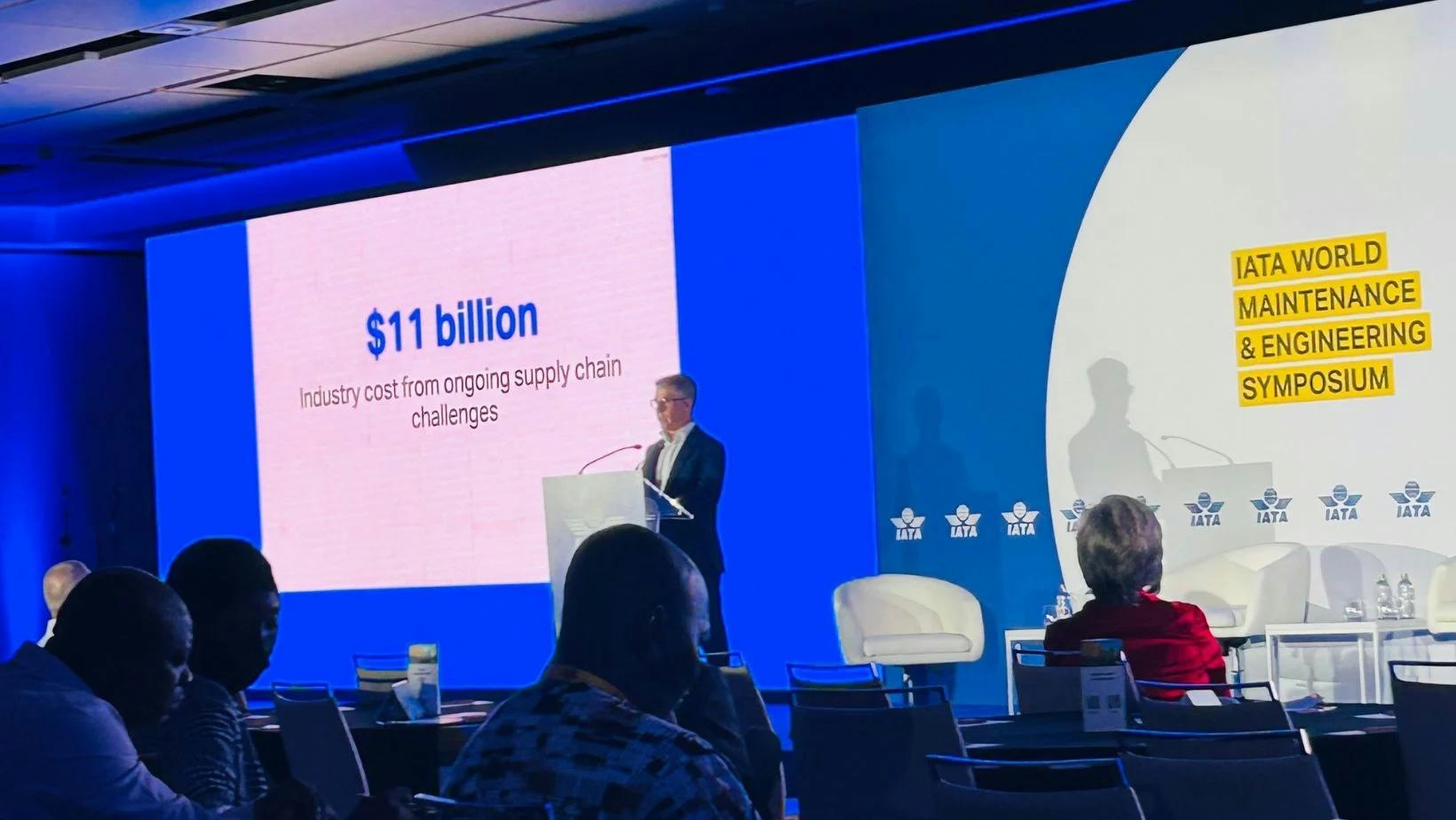
The International Air Transport Association (IATA) has called for enhanced collaboration within the aviation industry to tackle ongoing challenges affecting the aerospace supply chain. Speaking at the inaugural IATA World Maintenance and Engineering Symposium (WMES) in Madrid, Stuart Fox, IATA’s director of flight and technical operations, outlined four critical priorities designed to bolster supply chain resilience and reduce operational disruptions across the global fleet.
Addressing Persistent Supply Chain Challenges
Fox highlighted the increasing uncertainty faced by airlines, driven by issues such as aircraft delivery delays, concerns over engine durability, shortages of spare parts, and constrained maintenance capacity. He emphasized that airlines are often forced to operate without reliable information, stating, “Airlines can’t run global networks on guesswork, but too often that is what they’re being asked to do.”
To confront these challenges, IATA has identified four key areas of focus. The first is enhancing supply chain visibility, which calls for greater transparency from manufacturers regarding delivery schedules, repair turnaround times, and parts availability. Improved visibility would enable airlines to better plan maintenance activities and manage fleet operations more effectively.
The second priority involves opening up the aftermarket by promoting increased competition and broader access to third-party maintenance, repair, and overhaul (MRO) providers, alternative parts, and approved repairs. Fox argued that this approach would reduce waiting times and costs while providing operators with greater operational flexibility.
Thirdly, IATA stresses the importance of unlocking the value of data, digitalization, and artificial intelligence (AI). Closer integration between airline maintenance systems and external market intelligence is seen as essential for optimizing inventory management, identifying material shortages, and supporting informed repair-or-replace decisions. However, Fox cautioned that the effectiveness of AI depends heavily on the quality of the underlying data.
The fourth priority focuses on building human capacity. With projections indicating a need for 710,000 new maintenance technicians over the next two decades, Fox called for the evolution of recruitment, training, and licensing processes to attract a more diverse and capable talent pool.
Industry Pressures and Calls for Coordinated Action
These priorities emerge amid a complex landscape of additional pressures, including technology-related disruptions that can result in revenue losses, geopolitical and operational challenges, and the imperative to comply with increasingly stringent sustainability requirements. The market is responding with a growing demand for resilient supply chains and adaptable fulfillment networks. Competitors are concentrating on operational efficiency, leveraging technology to enhance supply chain coordination, and investing in energy-efficient infrastructure to meet environmental goals.
Fox acknowledged the magnitude of these challenges but maintained an optimistic perspective, urging all stakeholders—including original equipment manufacturers (OEMs), suppliers, MROs, lessors, regulators, and airlines—to collaborate on practical solutions. He remarked, “The supply chain is under real pressure, but this is not a reason for pessimism. It is a reason for action.” While recognizing that the four priorities are not exhaustive solutions, he emphasized their importance as foundational steps toward achieving the resilient aerospace supply chains essential for global connectivity.
In addition to these recommendations, IATA called on regulators to adopt realistic and globally coordinated timelines for new aircraft equipment and avionics mandates. Fox stressed that compliance deadlines must take into account equipment certification, availability, installation capacity, and broader supply chain conditions. “This is not about delaying safety,” he explained, “It is about making safety deliverable.”

Hong Kong's Five-Year Plan Includes Andrew Fan's Aircraft Parts Processing Hub Proposal

ACIA Aero Leasing Delivers ATR72-600 to Air Nostrum

RTX Appoints Jill Albertelli as Head of Pratt & Whitney

TAT Technologies Joins Beyond Aero Hydrogen Aircraft Program

AURAK Study Highlights Barriers to Air Taxi Adoption in Emerging Economies

Xiamen Air Selects Altitude for 787 Maintenance at Heathrow

Etihad and Swissport Extend Global Partnership
Sepehran Airlines B737 Returns to Mashhad After Tyre and Engine Issues

Etihad Deploys Widebody Fleet to Meet Strong Demand
Korean Air Finalizes $36.2 Billion Deal with Boeing
