
Превращайте аналитические выводы ИИ в реальные действия

В тренде
Categories
IATA Says Airlines Hesitant to Accept Aircraft Deliveries Amid Tariff Uncertainty
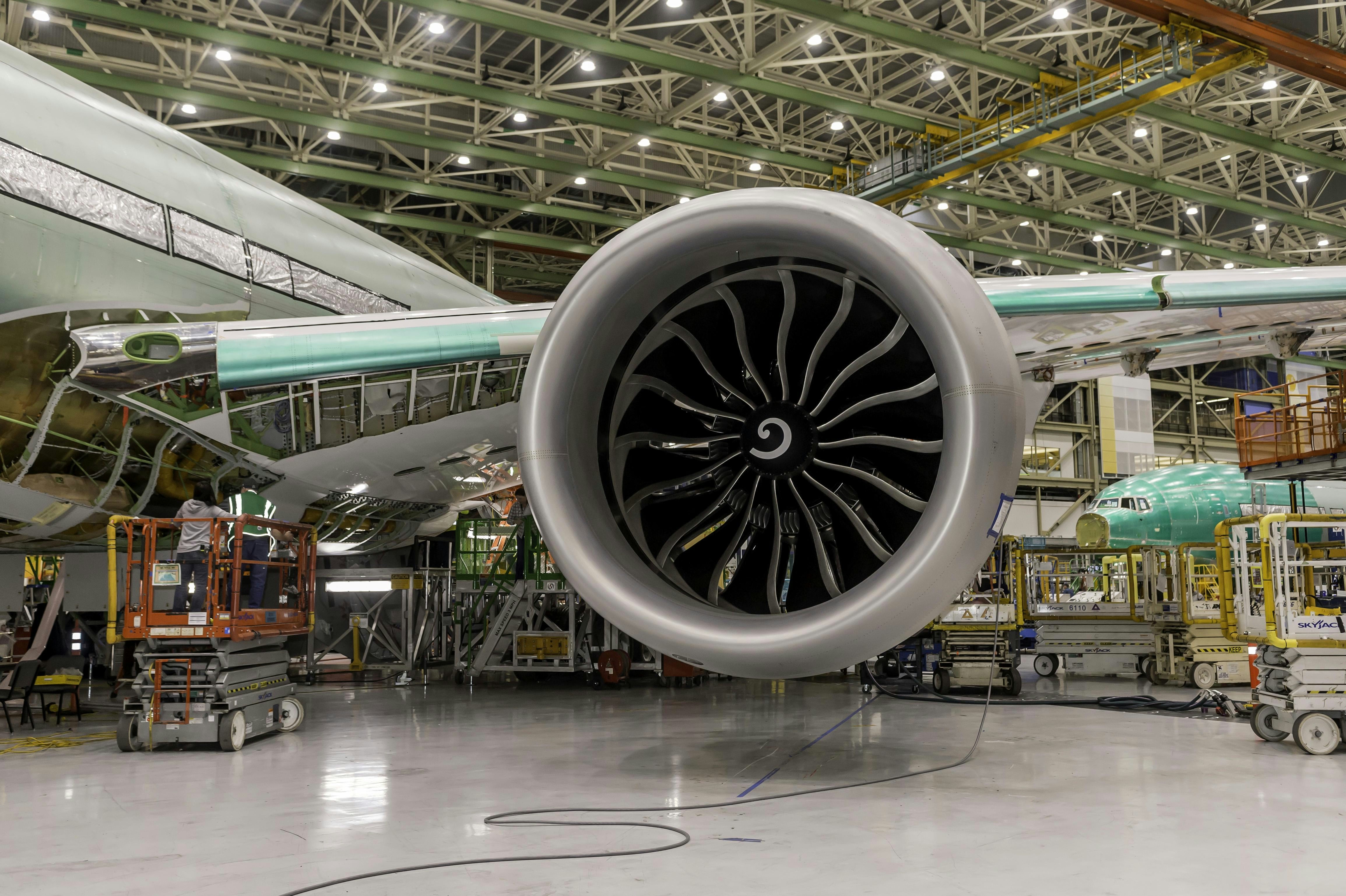
Airlines Hesitant to Accept Aircraft Deliveries Amid Tariff Uncertainty, Says IATA
SINGAPORE, July 16 – Airlines are increasingly reluctant to accept new aircraft deliveries as ongoing tariff uncertainties escalate costs and disrupt established supply chains, International Air Transport Association (IATA) Director-General Willie Walsh stated on Wednesday.
Broad Impact of Tariffs on the Aerospace Industry
Addressing a media roundtable in Singapore, Walsh highlighted that the repercussions of tariffs extend well beyond major manufacturers such as Boeing and Airbus. He stressed that the entire aerospace industry, along with most airlines worldwide, is affected by these trade tensions. “It’s not just going to be a major Boeing and Airbus issue. It’ll impact all aspects of the aerospace industry and have an impact on most, if not all, airlines as well,” Walsh remarked.
The shifting tariff environment is compelling aviation businesses to reevaluate their vendor relationships and diversify supply chains. Airlines and aerospace companies are increasingly seeking alternative suppliers in countries less impacted by new duties. This strategic pivot involves reassessing sources for parts, maintenance, and servicing, as well as reconsidering aircraft procurement based on the country of manufacture.
Challenges in the Air Cargo Sector and Industry-Wide Adjustments
The air cargo sector is also confronting significant challenges as manufacturers and retailers modify their supply chains in response to tariff pressures. Cargo airlines must navigate altered trade flows, which necessitates adjustments in network planning, capacity deployment, and aircraft acquisition strategies. As trade routes and volumes shift, carriers are compelled to adapt swiftly to sustain operational efficiency and competitiveness.
Industry analysts observe that these ongoing adjustments may have enduring consequences for the global aviation market. Procurement strategies and long-term fleet planning could be fundamentally reshaped as airlines and cargo operators grapple with tariff-related uncertainties. The persistent ambiguity surrounding tariffs continues to influence decision-making across the sector, driving stakeholders to seek ways to mitigate risks and manage costs amid a rapidly evolving trade landscape.

Etihad Airways Suspends Airbus A380 Flights on Key Route

Aditya Birla Group Seeks Approval for Aircraft Leasing in GIFT City

Qatar Airways Highlights Innovation and Connectivity at Arabian Travel Market 2026

Hong Kong's Five-Year Plan Includes Andrew Fan's Aircraft Parts Processing Hub Proposal

ACIA Aero Leasing Delivers ATR72-600 to Air Nostrum

RTX Appoints Jill Albertelli as Head of Pratt & Whitney

TAT Technologies Joins Beyond Aero Hydrogen Aircraft Program

AURAK Study Highlights Barriers to Air Taxi Adoption in Emerging Economies

Xiamen Air Selects Altitude for 787 Maintenance at Heathrow

Etihad and Swissport Extend Global Partnership
