
Превращайте аналитические выводы ИИ в реальные действия

В тренде
Categories
Increase in Power Bank Incidents Highlights Need for Stricter Onboard Regulations
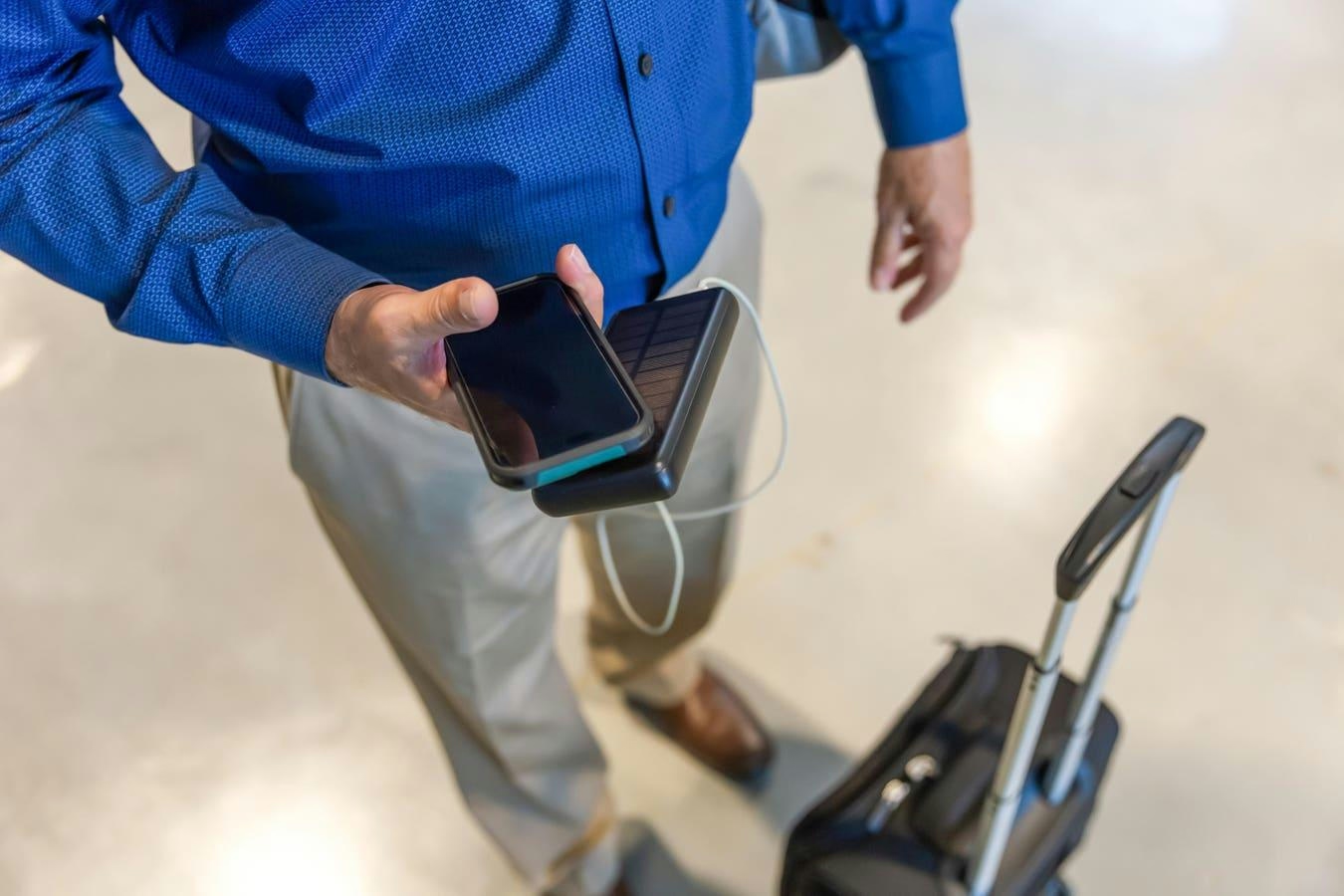
Increase in Power Bank Incidents Highlights Need for Stricter Onboard Regulations
Rising Incidents of Lithium-Ion Battery Failures on Aircraft
Portable chargers, commonly referred to as power banks, have become the leading cause of lithium-ion battery thermal runaway incidents aboard passenger aircraft, according to a recent report by UL Standards & Engagement (ULSE). The "Lithium-ion Battery Incidents in Aviation: 2025 Data Review" documents a 15% year-on-year increase in overall thermal runaway events, with incidents involving portable chargers surging by 42%. This significant rise has resulted in power banks surpassing e-cigarettes as the most frequently implicated devices in onboard battery-related emergencies.
The report aggregates data voluntarily submitted by over 40 airlines through ULSE’s Thermal Runaway Incident Program. It reveals an average of 2.36 passenger-related battery incidents per week in 2025, up from 2.05 incidents per week in the previous year. These events have imposed substantial costs on commercial passenger airlines, estimated at $7.3 million between 2021 and 2024, accounting for operational disruptions, equipment damage, and related losses.
Industry and Regulatory Responses
In light of the escalating risks, major airlines including United, Delta, American, and Southwest have implemented stricter policies governing the carriage and use of portable chargers. Many carriers now enforce tighter restrictions on both the quantity and capacity of power banks permitted onboard. While the Federal Aviation Administration (FAA) allows rechargeable batteries under 100 watt-hours (Wh) for personal use and limits passengers to two spare batteries with capacities between 101 and 160 Wh, individual airlines frequently impose additional constraints to further reduce potential hazards.
This increased regulatory scrutiny is also influencing consumer behavior and the electronics market. Heightened awareness of airline restrictions is prompting travelers to select power banks that meet safety standards, while manufacturers are responding by enhancing product safety features and ensuring compliance with evolving airline and regulatory requirements to maintain competitiveness.
Challenges in Passenger Awareness and Safety Education
Despite these efforts, ULSE president and CEO Jeff Marootian highlighted that passenger awareness remains a critical challenge. He noted, "Every incident is a safety risk, and the trend line is moving in the wrong direction." The report underscores the urgent need for the aviation industry to intensify educational initiatives aimed at informing travelers about the safe handling and storage of rechargeable devices during flights. It calls for a combined approach of regulatory enforcement and public awareness campaigns to effectively address the growing number of onboard battery incidents.

Etihad Airways Suspends Airbus A380 Flights on Key Route

Aditya Birla Group Seeks Approval for Aircraft Leasing in GIFT City

Qatar Airways Highlights Innovation and Connectivity at Arabian Travel Market 2026

Hong Kong's Five-Year Plan Includes Andrew Fan's Aircraft Parts Processing Hub Proposal

ACIA Aero Leasing Delivers ATR72-600 to Air Nostrum

RTX Appoints Jill Albertelli as Head of Pratt & Whitney

TAT Technologies Joins Beyond Aero Hydrogen Aircraft Program

AURAK Study Highlights Barriers to Air Taxi Adoption in Emerging Economies

Xiamen Air Selects Altitude for 787 Maintenance at Heathrow

Etihad and Swissport Extend Global Partnership
