
Превращайте аналитические выводы ИИ в реальные действия

В тренде
Categories
India Linked to Supply Chains Supplying Sanctioned Aircraft Parts to Russia
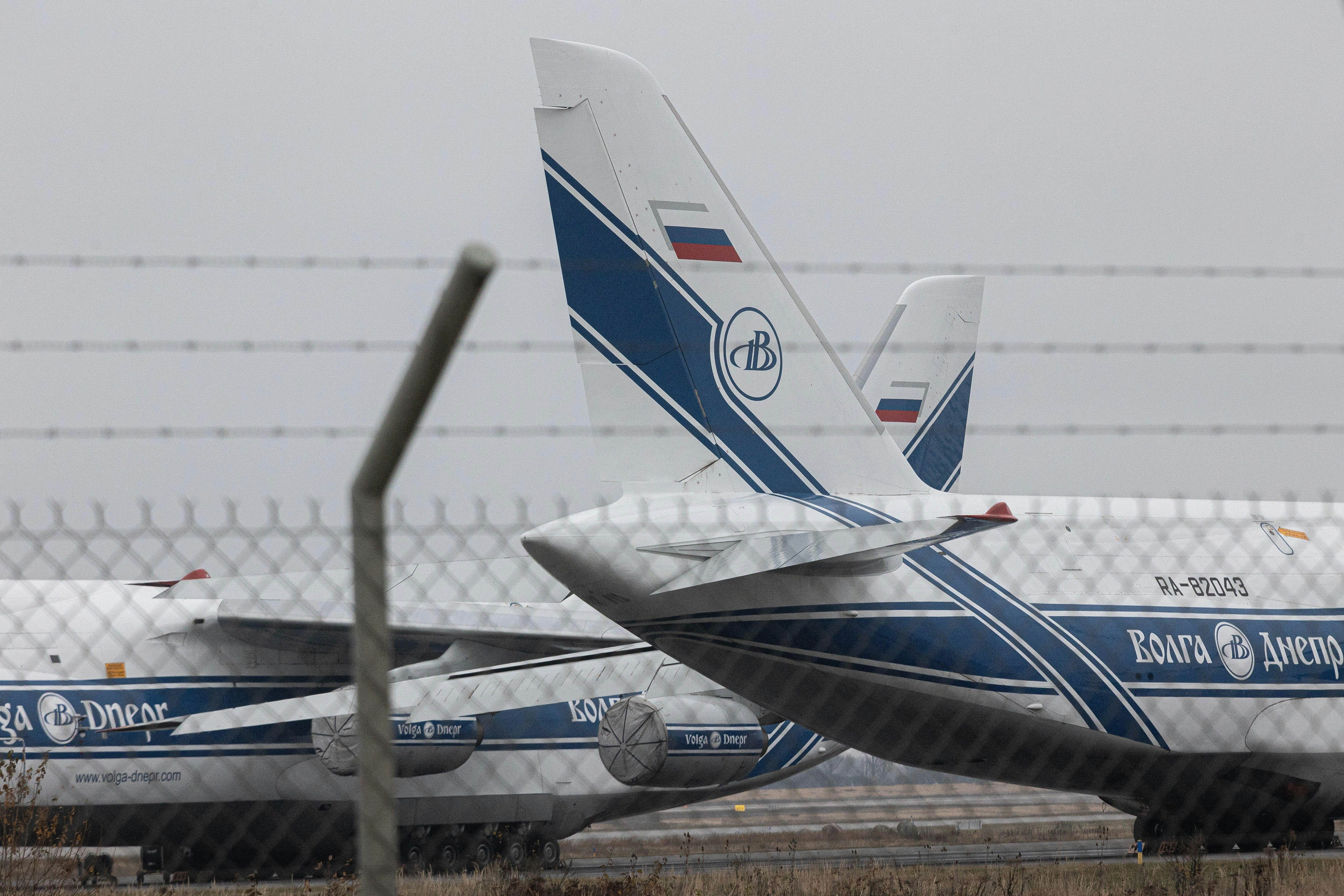
India Linked to Supply Chains Supplying Sanctioned Aircraft Parts to Russia
Sustaining Russian Aviation Amid Sanctions
Despite extensive international sanctions imposed following Russia’s full-scale invasion of Ukraine, the country has managed to maintain its commercial aviation sector at near pre-war operational levels. According to The Moscow Times, as of May 2024, Russia’s domestic passenger fleet remains largely functional, comprising 838 aircraft, including 460 models from Airbus and Boeing. This resilience is largely attributed to complex international re-export networks that continue to funnel restricted Western aircraft components into Russia.
Data from Big Trade Data reveals that over the past year, at least 30 companies across China, India, Turkey, the United Arab Emirates, Thailand, Kyrgyzstan, and Kazakhstan have exported aviation parts to Russia. China alone accounted for approximately $961 million in aviation component exports between March 2022 and February 2024, marking a fourfold increase compared to the four years prior to the invasion.
India’s Role in the Supply Chain
Indian firms have emerged as significant contributors within these supply chains. The Marine Equipments Centre, based in Cochin, notably expanded its aviation parts trade in the years preceding the conflict, importing $1.3 million and exporting $172,000 worth of components. Following the imposition of Western transport sanctions, the company began selling parts at elevated prices, primarily to Aeroflot group companies. Initial shipments were directed to Pobeda Airlines, and within two months, engines were transferred to Rossiya Airlines, an Aeroflot subsidiary, for $23.6 million—despite contractual clauses explicitly prohibiting re-export to Russia. In total, the Cochin-based firm supplied $37 million in components to Aeroflot and its subsidiaries, alongside an additional $4.4 million to other Russian carriers.
The illicit supply chain extends beyond major propulsion units, encompassing auxiliary power units, landing gear shock absorbers, multi-functional display blocks, and even cabin galley coffee machines. These alternative acquisition channels have enabled Russia’s internal and international passenger flight capacities to reach 122 million seats in 2024, effectively matching levels seen in 2021.
International Scrutiny and Industry Impact
These activities have increasingly drawn scrutiny from Western governments, raising serious questions about compliance with sanctions and exposing Indian firms to reputational risks. Potential disruptions in global supply chains loom as market reactions could trigger volatility in the stock prices of implicated companies and prompt shifts in international trade policies. Competitors may respond by diversifying their supply chains and intensifying adherence to international regulations.
While the broader fleet of standard Boeing and Airbus models remains resilient, the Airbus A320neo family has experienced a sharp decline, with active aircraft numbers dropping by approximately three-quarters. This decline is largely attributed to the specialized maintenance required for Pratt & Whitney engines, which cannot be legally serviced for Russian operators.
Industry analysts, including Alexander Lanetsky of Lithuanian consulting firm Friendly Avia Support UAB, observe that early forecasts predicting a rapid collapse of Russian aviation underestimated the adaptability of these re-export networks. Alexander Burilkov, a Russia specialist at Leuphana University of Lüneburg, emphasizes that the primary objective remains to ensure the longest possible operation of Boeing and Airbus aircraft models.
Meanwhile, Russia’s attempts to replace Western aerospace technology with domestic alternatives have encountered significant technical setbacks, underscoring the country’s continued dependence on complex international supply chains to sustain its aviation sector.

Etihad Airways Suspends Airbus A380 Flights on Key Route

Aditya Birla Group Seeks Approval for Aircraft Leasing in GIFT City

Qatar Airways Highlights Innovation and Connectivity at Arabian Travel Market 2026

Hong Kong's Five-Year Plan Includes Andrew Fan's Aircraft Parts Processing Hub Proposal

ACIA Aero Leasing Delivers ATR72-600 to Air Nostrum

RTX Appoints Jill Albertelli as Head of Pratt & Whitney

TAT Technologies Joins Beyond Aero Hydrogen Aircraft Program

AURAK Study Highlights Barriers to Air Taxi Adoption in Emerging Economies

Xiamen Air Selects Altitude for 787 Maintenance at Heathrow

Etihad and Swissport Extend Global Partnership
