Изображение

Получите тройной прирост дохода от обработки коммерческих предложений с помощью ИИ!

Присоединяйтесь к нам на 30-минутную онлайн-демонстрацию автоматизации составления коммерческих предложений.

В тренде

Categories

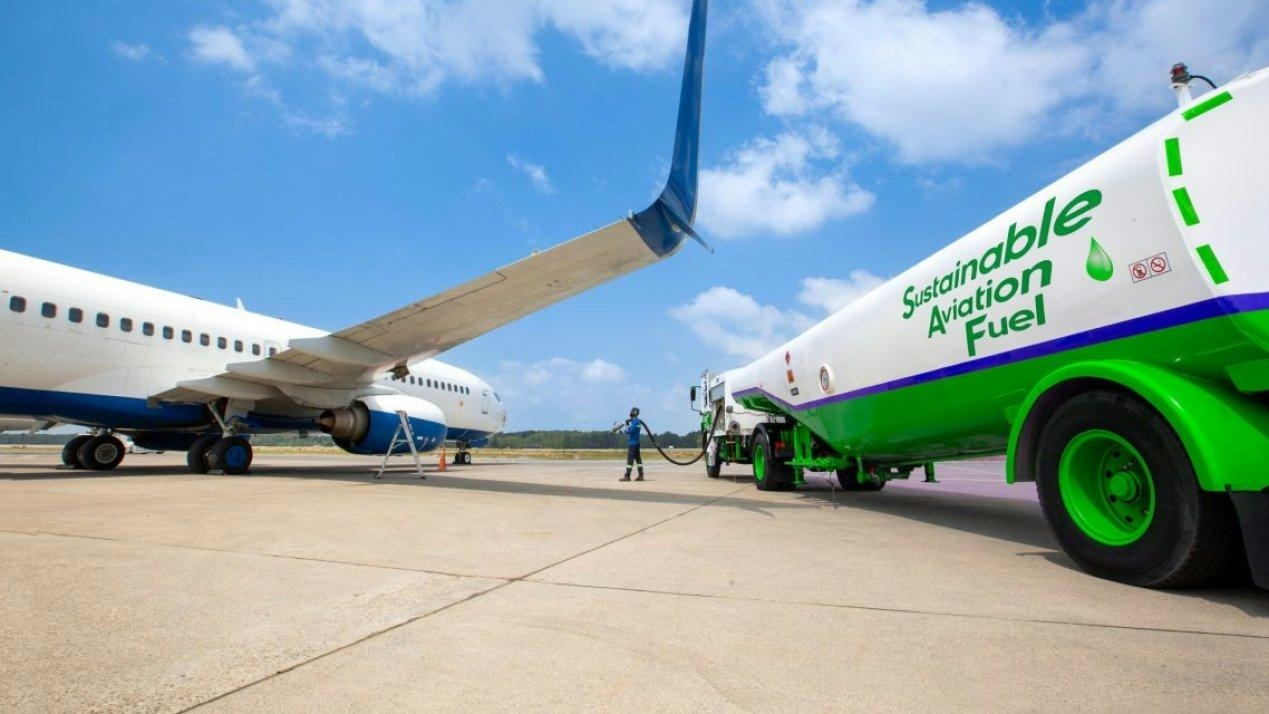
Mexico to Host Forum on Sustainable Aviation Fuel with 2026 Rollout Target
May 5, 2026By ePlane AI
Mexico to Host Forum on Sustainable Aviation Fuel with 2026 Rollout Target
0
0
Sustainable Aviation Fuel
Bioturbosina
Mexico Aviation Policy

Mexico to Host Forum on Sustainable Aviation Fuel with 2026 Rollout Target

Government Initiative to Advance Sustainable Aviation Fuels

Mexico’s federal government has announced plans to convene its fifth technical forum on sustainable aviation fuels (SAF), with the objective of integrating bioturbosina into the national aviation supply chain and enabling low-emission flights by 2026. This initiative is spearheaded by the Ministry of Infrastructure, Communications and Transportation through Aeropuertos y Servicios Auxiliares (ASA) and the Federal Civil Aviation Agency, in coordination with the Ministry of Energy. Authorities emphasize that the forum will serve as a platform to align public policy and accelerate the transition toward cleaner aviation fuels.

The event is scheduled to take place at the International Training Center of ASA (CIIASA) “Ing. Roberto Kobeh González” and will gather international stakeholders to discuss critical topics such as policy frameworks, certification processes, technological advancements, financing mechanisms, demand generation, and SAF production. A particular focus will be placed on fostering regional integration across Latin America. The government aims to facilitate collaboration among regulators, producers, and airlines to coordinate deployment strategies and strengthen the SAF value chain.

ASA’s Role and Pilot Projects

As Mexico’s primary aviation fuel supplier, ASA has reaffirmed its commitment to sustainability and the decarbonization of air transport. The agency highlights its logistical capacity to incorporate SAF into the national fuel supply, a capability deemed essential as domestic production scales up or imports become available. In line with this, ASA is developing a pilot blending project at the Mexico Fuel Station, designed to enable the incorporation of bioturbosina into aircraft fuel supplies within the current year. This pilot will validate logistics, technical standards, and regulatory compliance necessary for SAF integration, paving the way for Mexico’s first green flights.

Since 2024, ASA has collaborated with stakeholders across the aviation and energy sectors, international organizations, and research institutions to secure feedstock availability and ensure production aligns with international sustainability standards. These standards are critical for certification and cross-border supply. The government has established seven strategic workstreams—covering infrastructure, certification, regulation, innovation, technology, feedstocks, and financing—to address challenges such as certification pathways, capital investment requirements, and scaling production.

Challenges Amid Global Market Pressures

Despite these efforts, Mexico’s ambitions for SAF face considerable challenges. Global demand for sustainable aviation fuels has surged, particularly in Europe, where airlines have tripled their SAF usage to comply with EU mandates. This increased demand has affected U.S. soybean oil prices and compelled American producers to rely more heavily on domestic feedstocks, driving up vegetable oil prices and underscoring the volatility of the global fuel market. The 2026 global fuel crisis and rising jet fuel prices have further exposed the aviation industry’s vulnerabilities, forcing airlines to consider fare increases of at least 20% to maintain financial viability.

Currently, SAF accounts for only 0.7% of the aviation sector’s fuel consumption, constrained by high costs, limited infrastructure, and ongoing sustainability concerns. The sector’s decarbonization trajectory remains uncertain, prompting calls for a multi-faceted approach that includes cautious SAF adoption, carbon offsetting, and investment in advanced e-fuels and domestic supply chains.

Industry Outlook and International Perspectives

The International Air Transport Association (IATA) has warned that aircraft delivery delays and the costs associated with environmental compliance will continue to exert pressure on airlines throughout 2026. IATA Director General Willie Walsh highlighted that supply chain disruptions have compelled airlines to operate older, less fuel-efficient aircraft, resulting in increased fuel consumption and maintenance expenses. IATA estimates that delivery delays added over $11 billion in costs in 2025, with approximately two-thirds attributable to fuel and maintenance.

As Mexico prepares to host its SAF forum and advance its 2026 rollout plans, the country confronts a complex landscape of both opportunities and obstacles in its pursuit of sustainable aviation.

More news
SPH Aviation Launches 'iQuantara' to Advance Indigenous Defense Drone Technology in India

SPH Aviation Launches 'iQuantara' to Advance Indigenous Defense Drone Technology in India

SPH Aviation Launches 'iQuantara' to Advance Indigenous Defense Drone Technology in India Gurugram-based SPH Aviation Pvt Ltd. has officially launched iQuantara, a new defense-focused brand dedicated to advancing indigenous drone technologies tailored to India’s evolving security and surveillance requirements. This strategic initiative marks SPH Aviation’s formal entry into the defense and aerospace sector, aligning closely with India’s national objective of achieving self-reliance in critical defense technologies. A Strategic Focus on Indigenous Drone Solutions Building upon its prior defense initiatives, SPH Aviation has rebranded its efforts under iQuantara to reflect a more focused and expansive vision for scaling homegrown drone solutions. The brand will concentrate on the design, development, and deployment of next-generation integrated unmanned aerial systems (UAS) specifically engineered for Indian defense applications. These systems are intended to support a wide range of operations including surveillance and intelligence gathering, TACC3I (Tactical Command, Control, Communications, Computers, Cyber, and Intelligence) systems, swarm-based missions, border monitoring, GIS-based mapping, logistics support, emergency management, and autonomous UAV operations. Leveraging SPH Aviation’s established expertise in drone innovation, manufacturing, and training, iQuantara aims to deliver impactful solutions aligned with national priorities. The company plans to manufacture over 500 drones within the next year, with ambitions to scale production capacity to 1,000 units annually. In parallel, iQuantara will intensify its research and development efforts to enhance critical technologies such as telemetry, remote control systems, data exchange protocols, and autopiloting capabilities, all of which are essential to India’s push for indigenous defense production. Navigating a Competitive Global Landscape The launch of iQuantara comes amid heightened global competition in defense drone technology. Established international players such as Kratos Defense & Security Solutions, AeroVironment, Anduril Industries, and Shield AI currently dominate the sector, posing significant challenges for emerging entrants like iQuantara. Meanwhile, global market activity continues to intensify: Japan’s Terra Drone has expanded its stake in drone defense, French companies Thales and ArianeGroup are advancing deep strike capabilities, and Australia has committed $5 billion towards counter-drone investments. Investor confidence in defense-linked enterprises remains robust, as evidenced by AEVEX’s successful debut on the New York Stock Exchange, indicating a favorable market environment for innovative companies such as iQuantara. To accelerate innovation and deployment, iQuantara is collaborating closely with defense research and development agencies as well as premier Indian Institutes of Technology (IITs). This initiative also reflects the broader ambitions of AITMC Venture to evolve from a sector-specific drone solutions provider into a multi-domain technology player supporting both civilian and strategic applications. Lt. Gen (Dr) RK Anand, Chief Executive Officer of iQuantara, emphasized the brand’s forward-looking vision: “iQuantara has been envisioned as a platform to develop indigenous drone technologies capable of addressing the dynamic needs of modern defense operations. Our focus is on building reliable, integrated, mission-ready systems that are designed, developed, and manufactured in India. With our experience in defense services, I see strong potential for indigenous drone systems to transform defense preparedness.” Dr. Preet Sandhu, Founder and Managing Director of AVPL International and Promoter of iQuantara, highlighted the company’s strategic evolution: “The launch of iQuantara marks a significant milestone in AITMC Venture’s journey as we expand from agricultural drone applications into the defense sector. With our strong foundation in drone technology and skilling, this progression supports India’s self-reliance in deep-tech areas while fostering a future-ready innovation ecosystem. Over the next five years, we plan to invest ₹75 crores and aim to capture 15% of the defense market.” As India continues to strengthen its domestic defense manufacturing ecosystem, iQuantara seeks to contribute by developing reliable, scalable, and indigenously built drone platforms, positioning itself at the intersection of national ambitions and intensifying global competition.
AIESL Nagpur MRO Employees Protest New NOC Policy

AIESL Nagpur MRO Employees Protest New NOC Policy

AIESL Nagpur MRO Employees Protest New NOC Policy Amid Industry Uncertainty Workers Oppose Restrictive Exit Policy At the Air India Engineering Services Limited (AIESL) Maintenance, Repair, and Overhaul (MRO) facility in Nagpur, employees have initiated a sit-in protest against a newly implemented internal policy mandating a No Objection Certificate (NOC) before staff can apply for employment elsewhere. The facility, which services Air India and other carriers at Dr. Babasaheb Ambedkar International Airport, has become the focal point of a labor dispute that may have wider repercussions across the aviation sector. The protesting employees gathered outside the General Manager’s office, contending that the new Office Order contravenes their original employment contracts. Previously, staff were permitted to resign by either serving a notice period or paying notice pay. The introduction of the NOC requirement, they argue, imposes an additional barrier that restricts their freedom to pursue new career opportunities. One protester emphasized the collective nature of the issue, stating, “We are employees, not hostages. This fight isn’t just for 3-4 people, it’s for the future of every employee.” Intervention by Labor Authorities The dispute has attracted the attention of the Deputy Chief Labor Commissioner in Nagpur, who issued a formal directive to AIESL affirming that resignation is a legal right. The directive clarified that no employee can be compelled to remain employed once the notice period has been served or notice pay has been provided. Despite this, employees allege that management continues to delay the processing of resignations by imposing procedural obstacles, including the withholding of relieving letters, NOCs, and additional approvals. These delays have reportedly caused significant professional and financial difficulties for the affected workers. Implications for the Aviation Industry The unrest at the AIESL Nagpur facility emerges amid a period of heightened sensitivity within the aviation industry. Labor disruptions at a critical MRO center raise concerns about potential operational impacts, particularly as airlines and maintenance providers contend with challenges such as rising fuel costs and supply chain disruptions linked to global geopolitical tensions. Industry stakeholders and investors are closely monitoring the situation, apprehensive about possible effects on maintenance schedules and safety standards. Competitors may also be evaluating the dispute for potential shifts in market dynamics or opportunities arising from AIESL’s operational difficulties. Employees frame their protest as a defense of career advancement and individual rights, arguing that the new NOC policy places skilled aviation professionals at a disadvantage in an already competitive job market. One worker remarked, “This isn’t just a matter of 3-4 employees. It’s a question of the future of all young people and employees who want to advance through their hard work and skills.” As the standoff continues, its resolution may establish a precedent for employment practices within India’s aviation maintenance sector, influencing both workforce mobility and industry stability.
Duncan Aviation Completes Two Gulfstream G650 144-Month Inspections

Duncan Aviation Completes Two Gulfstream G650 144-Month Inspections

Duncan Aviation Completes Two Gulfstream G650 144-Month Inspections Duncan Aviation has recently concluded simultaneous 144-month inspections on two Gulfstream G650 aircraft at its facilities in Lincoln, Nebraska, and Battle Creek, Michigan. The 144-month inspection represents one of the most extensive maintenance procedures in an aircraft’s lifecycle. It involves the removal of all exterior access panels, the complete interior, and the landing gear, allowing technicians to conduct a comprehensive nose-to-tail examination. Comprehensive Maintenance and Client-Centered Service Operators typically use the extended downtime required for these inspections to undertake additional upgrades, including interior refurbishments, exterior paintwork, and cabin enhancements. Duncan Aviation’s three maintenance, repair, and overhaul (MRO) centers—located in Battle Creek, Lincoln, and Provo—are fully equipped to support the Gulfstream G650. Each facility boasts specialized tooling, ample hangar space, and dedicated Gulfstream teams. The technicians, all factory-trained at FlightSafety, bring extensive hands-on experience to these complex inspections. Matthew Benns, director of maintenance, who was present in Provo during the 144-month inspection of his G650, praised the level of client engagement. He highlighted the open and honest communication, noting that his priorities were genuinely understood and addressed. Benns emphasized the consistent focus on safety and meeting the principal’s expectations throughout the process. Similarly, Lee Noble, accountable manager of Sybajet and a long-standing Duncan Aviation client, coordinated an exterior paint project alongside the inspection to reduce aircraft downtime. Noble explained that combining the two services at the Lincoln facility avoided multiple trips from the United Arab Emirates and minimized the aircraft’s time out of service. He commended Duncan Aviation for its technical expertise, high-quality work, and reliable adherence to schedules and budgets, having utilized all three MRO locations for various services including paint, interior refurbishment, warranty work, and inspections. Industry Context and Competitive Challenges All three Duncan Aviation MRO centers have completed interior refurbishments for the G650, with Lincoln and Provo also delivering new paint schemes. On-site design centers provide professional guidance, collaborating closely with clients to develop bespoke interiors and exterior finishes tailored to individual preferences. These accomplishments come amid intensifying competition within the business aviation maintenance sector. Competitors such as ExecuJet Malaysia and Cutter Aviation have recently obtained MRO approvals for the Gulfstream G650ER, potentially prompting them to enhance their service offerings and leverage established relationships with Gulfstream. This evolving competitive landscape may lead to increased scrutiny of Duncan Aviation’s pricing structures and service reliability as clients evaluate their options. Furthermore, the aerospace industry’s growing emphasis on supply-chain integrity—driven by concerns over counterfeit parts and supply-chain fraud, as underscored by organizations like DUST Identity—poses additional challenges. Ensuring the authenticity of components and strict compliance with safety standards will remain paramount for Duncan Aviation as it strives to uphold its reputation and maintain client trust in a rapidly changing market.
Soji AI and Active Partners Explore AI Applications for MRO Records

Soji AI and Active Partners Explore AI Applications for MRO Records

Soji AI and Active Partners Collaborate to Enhance AI Integration in Aircraft MRO Records Soji AI and Active Partners have announced a strategic partnership aimed at advancing the application of artificial intelligence to improve the efficiency of aircraft and engine delivery, re-delivery, inspections, and transitions. Central to this collaboration is the integration of Soji AI’s platform, which converts fragmented aircraft data into automated workflows and actionable insights, into Active Partners’ operational framework. Transforming Aircraft Maintenance and Records Management By implementing Soji AI’s technology, Active Partners anticipates significant reductions in downtime, optimized resource allocation, and enhanced value delivery to its clients, including aircraft owners, lease managers, and operators. Rob de Klerk, Director of Technical Services at Active Partners, described the partnership as a pivotal step in the company’s digital transformation. He emphasized that the adoption of AI-driven engineering management not only improves efficiency and reliability but also establishes new benchmarks for innovation and safety within the aviation sector. De Klerk highlighted that the collaboration goes beyond mere digitization of documents; it streamlines manual document searches and accelerates record processing by identifying inconsistencies at earlier stages. The partnership is designed to empower engineers with validated information, thereby reducing reliance on manual interpretation of raw data. Florian Falk, CEO of Soji AI, underscored the broader industry trend toward intelligent, AI-powered operations. He noted that the decision by Active Partners to adopt Soji AI’s platform reflects a shift away from traditional, document-heavy processes toward scalable, digital-first aircraft lifecycle management. Falk stressed that human-AI collaboration remains central to the solution, with engineers maintaining final decision-making authority. The partnership aims to demonstrate how AI can be effectively embedded within certified environments to support this transition. Challenges and Industry Implications Despite the promising outlook, the partnership faces several challenges in scaling AI applications for maintenance, repair, and overhaul (MRO) records. Key obstacles include ensuring that existing infrastructure can support AI agents in production settings and addressing issues related to data scarcity. Furthermore, as the aviation industry increasingly explores AI-driven solutions, there is potential skepticism regarding the tangible operational return on investment, especially in the context of complex fleet management decisions. The competitive landscape is expected to intensify as rivals enhance their own AI capabilities, focusing on real-time workflow adjustments and improved data integration for AI agents. This environment underscores the necessity for robust and scalable solutions capable of delivering measurable improvements in operational efficiency and safety. As Soji AI and Active Partners advance their collaboration, their efforts may serve as a benchmark for the wider adoption of AI in aviation MRO, potentially setting new standards for digital transformation and operational excellence across the industry.
Trip.com AGC 2026 Highlights Need for Data Quality, Interoperability, and Governance in AI Era

Trip.com AGC 2026 Highlights Need for Data Quality, Interoperability, and Governance in AI Era

Trip.com AGC 2026 Highlights Need for Data Quality, Interoperability, and Governance in AI Era The aviation industry faces an urgent imperative to improve data quality, interoperability, and governance as artificial intelligence (AI) increasingly reshapes the sector. This message was underscored by industry leaders at the Trip.com Airline Global Conference (AGC) 2026 held in Amsterdam, where experts emphasized the critical challenges posed by fragmented and poor-quality data in an AI-driven environment. Data Fragmentation and Its Consequences Filip Filipov, chief executive of aviation data provider OAG, highlighted the persistent problem of data fragmentation within the aviation ecosystem. He explained that the issue is not merely broken data but rather the lack of connectivity between disparate data sources. This fragmentation becomes particularly problematic as AI systems automate and accelerate processes, amplifying the impact of errors. Filipov illustrated this with a recent incident involving a transatlantic flight operated by a regional turboprop aircraft that was incorrectly entered into booking systems. The erroneous data quickly propagated through global distribution systems (GDSs), travel agencies, and metasearch platforms, causing widespread confusion before the mistake was rectified. He warned that as AI enables more complex and rapid transactions such as searches, bookings, and cancellations, similar errors could spread even more rapidly and have far-reaching consequences. The scope of the data challenge extends beyond flight schedules and fares to include critical operational areas such as crew management, gate assignments, cancellations, payments, and credit card processing. As AI becomes more deeply integrated into these functions, the risks associated with poor data quality are magnified, potentially disrupting multiple facets of airline operations. The Imperative of Data Readiness and Governance The concerns raised at the conference reflect broader industry-wide issues regarding data readiness for AI adoption. Research from Cloudera reveals that only 7% of enterprises consider their data fully prepared for AI, underscoring a significant gap in readiness. For companies like Trip.com, which are pursuing hyperlocalization strategies and leveraging AI-driven interfaces to maintain competitive advantage, ensuring data quality, governance, and interoperability is paramount. Filipov stressed that the aviation sector must prioritize not only the accuracy of data but also its interconnectedness and accessibility. He cautioned that without these improvements, AI systems will produce flawed outcomes, encapsulated in the adage “rubbish in, rubbish out.” Furthermore, he identified governance as a critical pillar for the future, emphasizing the need for robust frameworks to ensure compliance, security, and trust as AI models grow more sophisticated and companies expand into diverse regulatory environments. Market analysts expect that the increasing focus on AI will drive heightened scrutiny of data governance and compliance within the travel industry. Airlines and travel companies are likely to make significant investments in data quality and AI governance to remain competitive in a rapidly evolving landscape. As the aviation sector stands on the threshold of an AI-driven transformation, the Trip.com AGC 2026 conference delivered a clear directive: addressing data quality, interoperability, and governance is essential for harnessing the full potential of artificial intelligence while mitigating associated risks.
Tecalemit Aerospace Group Marks 100 Years of Innovation in Fluid Circulation

Tecalemit Aerospace Group Marks 100 Years of Innovation in Fluid Circulation

Tecalemit Aerospace Group Marks 100 Years of Innovation in Fluid Circulation Founded over a century ago, the French-based Tecalemit Aerospace Group has become a global leader in the development and manufacturing of advanced piping systems designed for the most demanding environments. The group’s expertise encompasses flexible, semi-rigid, and rigid piping solutions, serving key players in aerospace, space, defense, and nuclear sectors by securing and optimizing critical fluid circulation systems. Integrated Strategy and Technological Excellence Tecalemit Aerospace Group’s competitive advantage stems from the seamless integration of its subsidiaries, which collectively manage the entire value chain—from raw materials to finished products. The core company, Tecalemit Aerospace, specializes in high-technology piping systems, while Tecalemit Aerospace Composites contributes advanced braiding technologies that enhance both durability and weight efficiency, crucial for aerospace applications. Complementing these capabilities, Tecalemit Tubes manufactures precision tubes from high-performance materials such as aluminum, titanium, Inconel, and stainless steel. The group’s integrated design office plays a pivotal role, enabling not only manufacturing but also collaborative co-design of bespoke solutions. Whether operating under “Build to Print” or “Build to Specification” frameworks, Tecalemit Aerospace Group tailors its products to meet the exacting requirements of industry leaders including Airbus, Safran, Dassault Aviation, and ArianeGroup. Navigating Industry Challenges and Commitment to Quality Operating within highly strategic and complex markets, Tecalemit Aerospace Group contends with a dynamic environment shaped by geopolitical tensions, supply chain disruptions, and rapid technological evolution. The group must continuously adapt to fluctuations in global demand, economic volatility, and international trade uncertainties. Across the sector, competitors have responded with strategic initiatives such as talent acquisitions and mergers, exemplified by recent moves from firms like Spencer Fane and CNH Industrial, highlighting the critical importance of agility and innovation. Tecalemit Aerospace Group employs 500 staff members across specialized industrial sites located in France—Lyon, Luceau, and Chârost—and Morocco, in Casablanca. These facilities are equipped with state-of-the-art technological infrastructure, ensuring both operational responsiveness and technical excellence. This network enables the group to serve all segments of the aerospace and space industries, including civil and military aviation, helicopters, business jets, launch vehicles, and missile systems. Joining Tecalemit Aerospace means becoming part of a century-old French group deeply embedded in sectors where precision, reliability, and innovation are essential. As the aerospace industry continues to evolve amid global uncertainties and technological shifts, Tecalemit Aerospace Group remains steadfast in its commitment to excellence, adaptability, and supporting its clients in meeting the challenges of the future.
VTU Advances Aerospace Industry Collaboration

VTU Advances Aerospace Industry Collaboration

VTU Advances Aerospace Industry Collaboration Strengthening Academic-Industry Partnerships Visvesvaraya Technological University (VTU) is intensifying its collaboration with the aerospace sector through a recent delegation visit led by Vice Chancellor Dr. S. Vidyashankar. The team toured the Center for Invention, Innovation, Incubation and Training (CIIIT) and Indamer Aviation’s Aerospace Maintenance, Repair, and Overhaul (MRO) facilities in Nagpur. This initiative highlights VTU’s strategic focus on bridging the gap between academia and industry, aiming to equip students and faculty with skills aligned to the rapidly evolving aerospace landscape. At CIIIT, an institution established by Tata Technologies in partnership with the Government of Maharashtra, the delegation examined industry-oriented models designed to foster innovation, entrepreneurship, and technology-driven education, particularly benefiting students in the Gadchiroli region. Discussions centered on collaborative opportunities in emerging domains such as artificial intelligence, aerospace and defence technologies, unmanned aerial vehicle (UAV) systems, smart manufacturing, battery management systems, quantum communication, and advanced materials. The delegation explored potential avenues for joint research projects, faculty development programs, student internships, innovation centres, and industry-integrated skilling initiatives to enhance the capabilities of VTU-affiliated institutions. The subsequent visit to Indamer Aviation’s MRO facilities provided the delegation with valuable insights into aviation maintenance, repair, and overhaul operations, underscoring the sector’s increasing demand for hands-on technical expertise. This exposure is expected to inform VTU’s curriculum development and training programs, ensuring alignment with industry requirements. Navigating Global Challenges and Opportunities VTU’s efforts to deepen industry collaboration occur against a backdrop of a complex and dynamic global aerospace environment. Geopolitical tensions, such as those impacting Boeing’s operations in the Asia-Pacific region amid U.S.-China frictions, present potential challenges for Indian institutions seeking to expand international partnerships. Market volatility is also evident; for example, Unimech Aerospace has experienced mixed technical signals despite a recent upgrade in its investment rating, reflecting broader uncertainties within the industry. In parallel, competitor strategies are evolving rapidly. Initiatives like NASA’s Aeronautics Flight Accelerator aim to accelerate the development of revolutionary aerospace technologies through strengthened industry partnerships. Additionally, international collaborations, exemplified by the joint mission of the European Space Agency (ESA) and the Japan Aerospace Exploration Agency (JAXA) to study asteroid Apophis, highlight the growing importance of global cooperation in aerospace research and innovation. Addressing these developments, Dr. Vidyashankar emphasized the critical role of robust collaboration among universities, industries, and innovation centres. He stated, “Experiential learning, interdisciplinary research, and technology-driven education are vital to nurturing future-ready technologists, researchers, and entrepreneurs.” As VTU advances its academic-industry engagement, it remains cognizant of both the opportunities and challenges presented by the global aerospace sector. The university reaffirms its commitment to developing industry-ready talent through practical training and fostering international collaboration.
Malaysia Targets RM55 Billion Aerospace MRO Market by 2030

Malaysia Targets RM55 Billion Aerospace MRO Market by 2030

Malaysia Targets RM55 Billion Aerospace MRO Market by 2030 Malaysia’s aerospace maintenance, repair, and overhaul (MRO) industry has set an ambitious goal to reach RM55 billion in revenue by 2030, as outlined in the Malaysia Aerospace Industry Blueprint (MAIB) 2030. This target would position Malaysia to capture approximately 25% of the Asia-Pacific MRO market, which is expected to exceed US$60 billion by the end of the decade. Strategic Focus and Industry Development Deputy Investment, Trade and Industry Minister Sim Tze Tzin, speaking at the MRO Southeast Asia 2026 event, emphasized Malaysia’s current standing as the third largest MRO player in the Asia-Pacific region. He highlighted a strategic shift towards higher-value segments within the industry, particularly component and engine maintenance, to secure a larger share of the rapidly expanding aviation market. Under the MAIB 2030 framework, the government is prioritizing the enhancement of critical industry enablers such as infrastructure, talent development, and technology adoption. Key initiatives include the regeneration of Subang Airport and the expansion of the Selangor Aero Park ecosystem, both designed to support scalable growth for MRO operators and Tier-1 aerospace suppliers. Sim also underscored the government’s commitment to workforce development, aiming to create over 30,000 high-skilled jobs by 2030. Efforts to accelerate the integration of advanced technologies, including predictive maintenance and digitalized MRO tools, are central to this vision. Challenges and Competitive Landscape Despite these positive developments, Malaysia faces significant challenges in achieving its RM55 billion target. The country must navigate intense competition from established MRO providers in the Middle East, a region poised to become the second fastest-growing MRO market globally. This competitive pressure has spurred increased investment in local MRO capabilities, exemplified by Malaysia Aviation Group’s recent expansion at Kuala Lumpur’s Sultan Abdul Aziz Shah Airport. Meanwhile, regional competitors are strengthening their market positions through strategic partnerships and expansions, such as GMF’s collaborations with Aerotranscargo and Air One Technics. On the geopolitical front, Sim noted that the ongoing conflict in West Asia has had a limited impact on Malaysia’s aerospace sector to date. While airlines may face challenges from rising jet fuel prices, the availability of aircraft components remains stable, and maintenance demand continues to grow in line with industry expansion. Industry Collaboration and Outlook The MRO Southeast Asia 2026 event, hosted by Malaysia Airports Holdings Bhd in partnership with Aviation Week Network, convened over 350 participants from across the global aviation supply chain. The gathering provided a platform to discuss growth opportunities and challenges within Southeast Asia’s aerospace sector, reinforcing Malaysia’s commitment to advancing its position in the global MRO market.
Trip.com Group Highlights AI and Digital Identity at Airline Global Conference

Trip.com Group Highlights AI and Digital Identity at Airline Global Conference

Trip.com Group Highlights AI and Digital Identity at Airline Global Conference Embracing Artificial Intelligence to Transform Travel On May 13, 2026, Trip.com Group hosted its flagship Airline Global Conference (AGC) in Amsterdam, gathering leaders from the aviation and travel industries to explore how technology, trust, and collaboration are driving the future of travel. The event, held at Passenger Terminal Amsterdam, convened airline partners, airports, global distribution systems, technology firms, corporate travel executives, and organizations such as the International Air Transport Association (IATA) to discuss the next phase of industry growth. The conference’s theme, “Co-Creating Value: Leading the Future of Travel Through Intelligence, Trust, and Partnership,” placed artificial intelligence (AI) at the forefront of the conversation. Xing Xiong, Chief Operating Officer of Trip.com Group, delivered the keynote address titled “Travelling Into the New World,” emphasizing AI’s accelerating influence in reshaping the online travel agency (OTA) landscape. He outlined how Trip.com is harnessing AI to improve internal efficiencies and elevate customer service on a large scale. Xiong also highlighted the transformative potential of Agentic AI within the aviation sector. Amy Wei, Senior Product Director at Trip.com, demonstrated practical AI applications, including TripGenie, an AI-powered assistant designed to personalize and streamline the traveler experience. Wei underscored the importance of human-AI collaboration in customer service, noting that this synergy fosters trust and reduces uncertainty for users navigating complex travel arrangements. Advancing Digital Identity for Seamless Travel In addition to AI innovations, Trip.com Group is advancing digital identity initiatives in partnership with IATA. The companies are piloting a Customer ID digital identity project that leverages secure credentials stored in mobile wallets such as Google Wallet and Apple Wallet. This technology enables travelers to autofill booking details with a single click, aiming to reduce friction, minimize errors, and enhance user control over personal data. The initiative reflects a broader industry movement toward seamless, end-to-end digital travel experiences. Nick Careen, IATA’s Senior Vice President of Operations, Safety, and Security, emphasized the significance of digital identity as a key enabler of smoother travel. He noted that the pilot with Trip.com explores how wallet-based credentials can simplify the booking process while empowering travelers with greater data autonomy. Industry Challenges and Strategic Outlook Despite its technological advancements, Trip.com Group faces considerable challenges. The company is currently under regulatory scrutiny, including an antitrust investigation in China that has recently impacted its stock performance. Moreover, evolving market demands around digital identity and AI require continuous adaptation to maintain competitive advantage. The competitive landscape is intensifying, with rivals such as Amadeus expanding their offerings in biometric identity and AI-driven solutions. Additionally, the growing sophistication of AI-enabled fraud presents new cybersecurity risks, complicating Trip.com’s strategic planning. Trip.com Group and its partners remain engaged in evaluating the future development and phased rollout of the Customer ID functionality, potentially involving select user groups in upcoming stages. As the travel industry continues to evolve, Trip.com’s focus on AI and digital identity highlights both the opportunities and complexities that lie ahead.
Boeing 737 MAX Software Issues Prompt Changes in Global Aviation Safety

Boeing 737 MAX Software Issues Prompt Changes in Global Aviation Safety

Boeing 737 MAX Software Issues Prompt Changes in Global Aviation Safety The Boeing 737 MAX crisis has fundamentally altered global aviation safety standards by revealing significant deficiencies in software transparency and regulatory oversight. Central to the controversy was the Maneuvering Characteristics Augmentation System (MCAS), a software feature that Boeing failed to fully disclose to pilots, airlines, and regulatory authorities. This lack of transparency came to light following two catastrophic crashes—Lion Air Flight 610 in Indonesia and Ethiopian Airlines Flight 302—that resulted in the deaths of 346 people and led to the unprecedented global grounding of the 737 MAX fleet for nearly 20 months. Concealed Software and Catastrophic Consequences MCAS was engineered to automatically lower the aircraft’s nose to prevent aerodynamic stalls. However, Boeing’s failure to inform flight crews about the system left pilots unprepared to recognize or counteract its malfunction. In both fatal incidents, erroneous activation of MCAS repeatedly forced the aircraft into unrecoverable dives. These tragedies exposed not only critical design flaws but also systemic failures in Boeing’s communication and the regulatory approval process. Regulatory Scrutiny and Industry-Wide Reform The aftermath of the 737 MAX disasters prompted comprehensive reforms throughout the aviation industry. The Federal Aviation Administration (FAA) and other global regulators revised certification protocols, imposing stricter software testing requirements, enhanced pilot training standards, and demanding greater transparency from manufacturers. Airlines worldwide instituted extensive retraining programs before reintroducing the 737 MAX into service. Boeing itself faced intense regulatory scrutiny, criminal investigations, and substantial financial penalties. The company continues to grapple with ongoing lawsuits, including investor class actions linked to the safety crisis. Additionally, LOT Polish Airlines publicly accused Boeing of concealing safety issues to secure sales, further intensifying regulatory and market pressures. Market Impact and Competitive Landscape The crisis has significantly affected Boeing’s market position. The company’s stock price has experienced volatility amid safety concerns, legal challenges, and delays in implementing FAA-mandated software updates. Despite temporary delivery suspensions, Boeing continues to supply aircraft and anticipates new 737 MAX certifications later this year. Meanwhile, competitor Airbus has maintained its market share as Boeing works to rebuild confidence and comply with regulatory demands. Long-Term Implications for Aviation Safety The 737 MAX crisis underscored the critical importance of full information sharing among manufacturers, regulators, and operators. While devastating, the incident has established new standards for transparency and accountability within the aviation sector. The aircraft’s return to service in late 2020 followed an exhaustive recertification process, marking one of the most scrutinized comebacks in aviation history.
line










