
Превращайте аналитические выводы ИИ в реальные действия

В тренде
Categories
Modernizing Aviation for the 21st Century

Modernizing Aviation for the 21st Century
Modernizing the aviation industry is an imperative that demands immediate attention. Each day, between 2.6 and 2.9 million Americans depend on air travel to sustain economic activity. Despite this critical role, much of the sector remains anchored to antiquated systems and bureaucratic inefficiencies, which hinder progress, elevate costs, and may jeopardize safety.
Challenges in Current Aviation Systems
A significant concern lies in the Federal Aviation Administration’s (FAA) persistent use of paper-based recordkeeping for essential safety documentation—a practice that harks back to the 1950s. In an age dominated by digital innovation, this outdated method is not only inefficient but also introduces avoidable risks. The recent identification of 126 airplane engines containing fraudulent parts, flagged by the FAA to European airlines, highlights the vulnerabilities of the current system. Paper records are more susceptible to forgery and difficult to monitor, creating a critical weak point within the aviation supply chain.
The urgency for modernization is compounded by broader industry pressures. Global supply chain disruptions, ongoing geopolitical tensions such as those in the Middle East, and the necessity for substantial investment in emerging technologies place additional strain on aviation stakeholders. While the sector continues to experience robust growth, concerns linger over the financial implications of discriminatory taxes and mandates for sustainable aviation fuel (SAF), particularly across Europe.
Industry Response and Legislative Efforts
Competitors within the industry are actively pursuing innovation. Companies like Textron and Gulfstream are harnessing automation and artificial intelligence to enhance operational efficiency and maintain competitive advantage. Regulatory developments, including the FAA’s recent updates to real-time weather analysis guidance, further underscore the evolving landscape and the need for agility and forward-thinking approaches.
In response to these challenges, legislative measures have become essential. The Aviation Supply Chain Safety and Security Digitization Act, recently passed by the House with strong bipartisan backing, seeks to modernize FAA safety documentation by implementing digital certificates. This transition promises to improve traceability and reduce the risk of counterfeiting, thereby strengthening both efficiency and security throughout the supply chain.
How aviation is regulated is as critical as the regulations themselves. The adoption of smarter, more adaptive systems is necessary to lower costs, eliminate obsolete procedures, and preserve the United States’ leadership in aviation safety and innovation. With millions of Americans relying on air travel daily, the stakes remain high. Having secured House approval, the bill now awaits Senate action to ensure the U.S. aviation industry is equipped to meet the demands and opportunities of the 21st century.
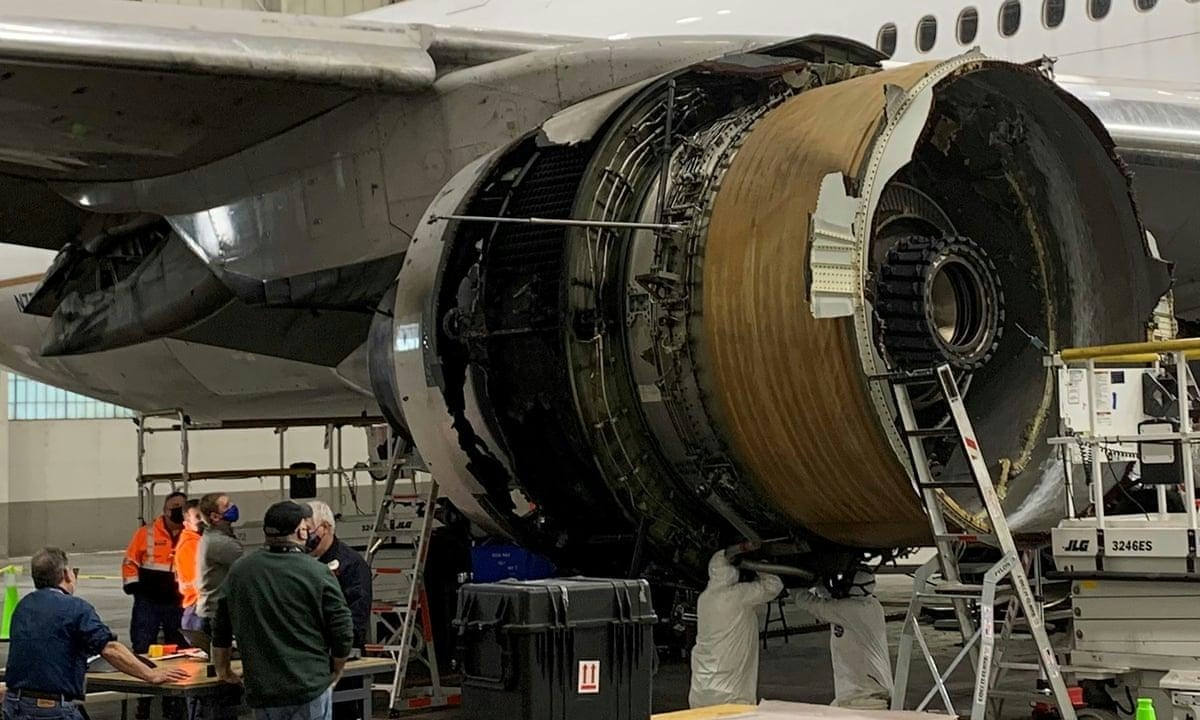
Passenger Captures Boeing 777 Engine Fire in Flight
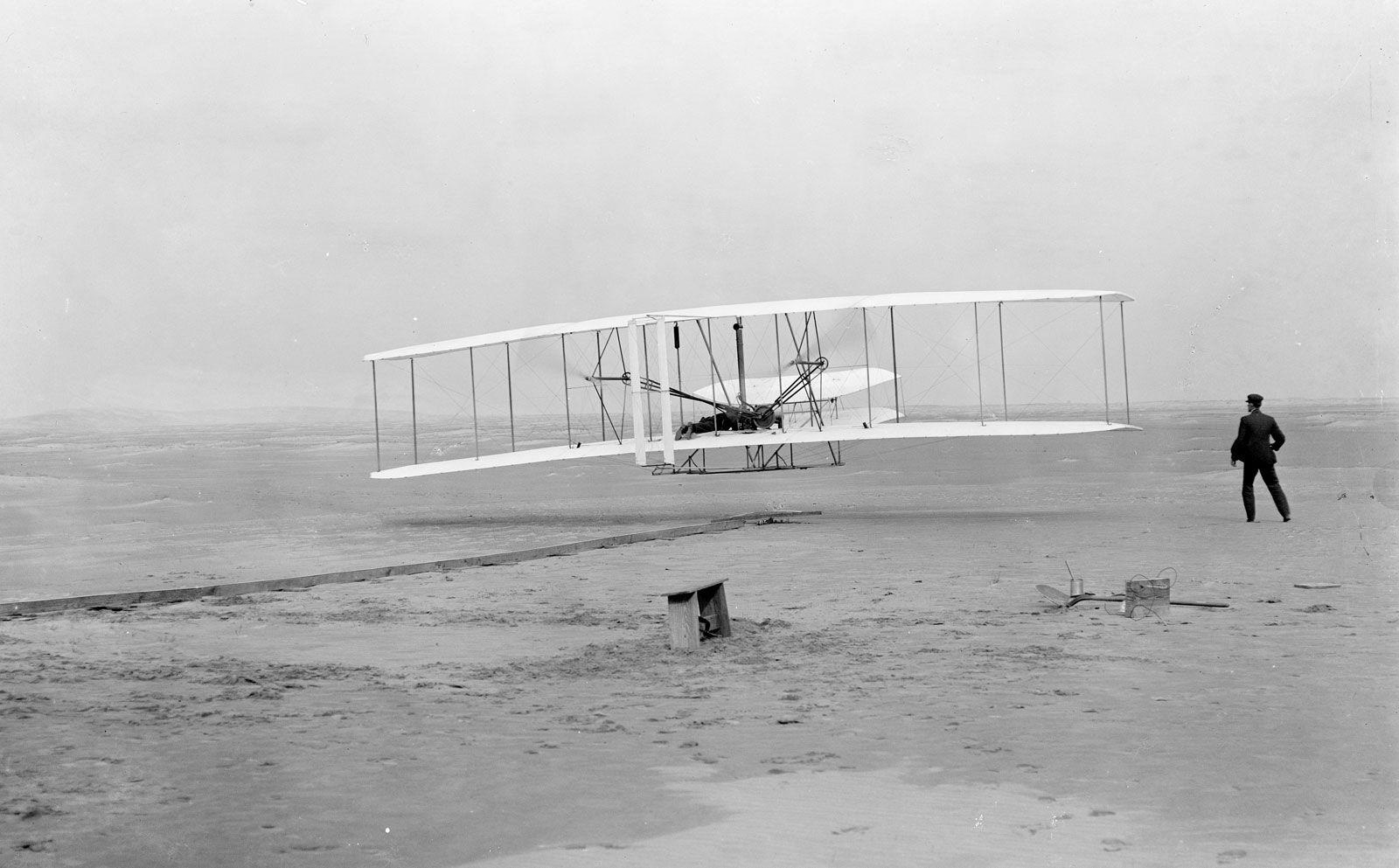
The Role of Aerospace Innovation in American History
Salary Comparison of Airbus A350 and Boeing 777 Captains in 2026

United Airlines Receives Its 69th and 70th Airbus A321neo Aircraft

Government Removes TDS on Aircraft Lease Rentals at IFSCs
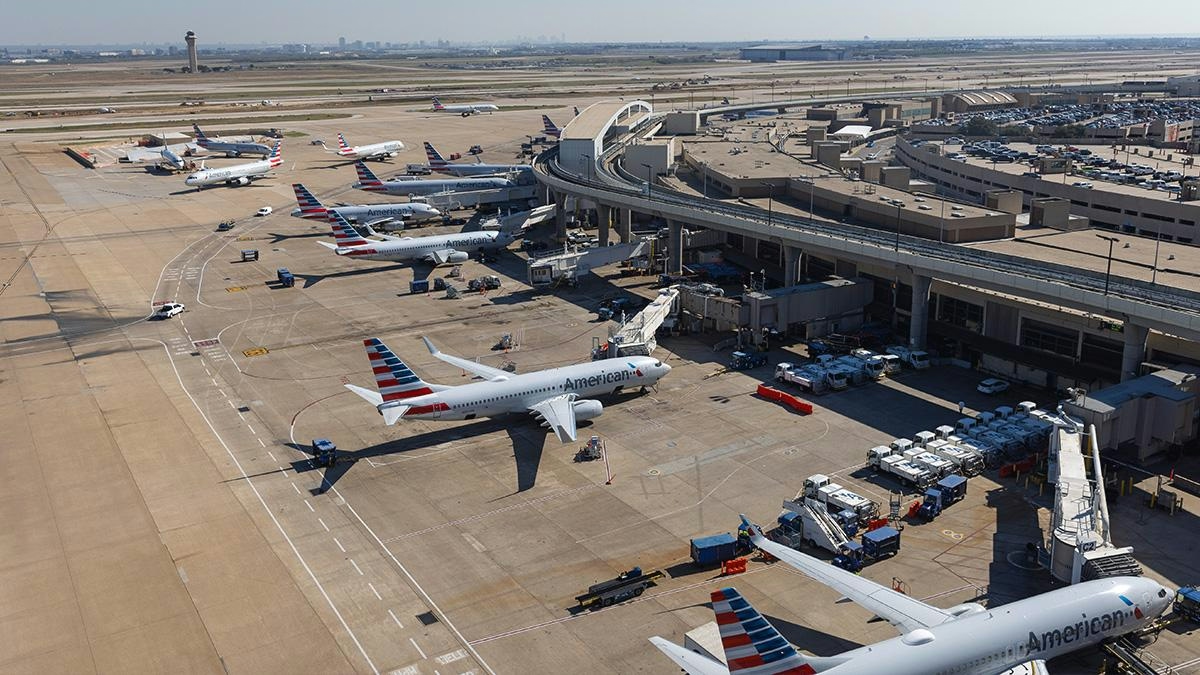
American Airlines to Operate Largest Aircraft Between New York and Dallas/Fort Worth Once

Farnborough and Paris Air Shows 2026 Highlight Advances in Global Aviation

Preliminary Report Did Not Identify Engine Failure Before Skydiving Plane Crash That Killed 12

Airlines Introducing Innovative Business Class Seats in 2026
Airbus Navigates Jet Demand and Production Challenges Amid Global Travel Recovery
