
Превращайте аналитические выводы ИИ в реальные действия

В тренде
Categories
MTU Aero Engines Reports Q1 Gains Amid Geopolitical Challenges
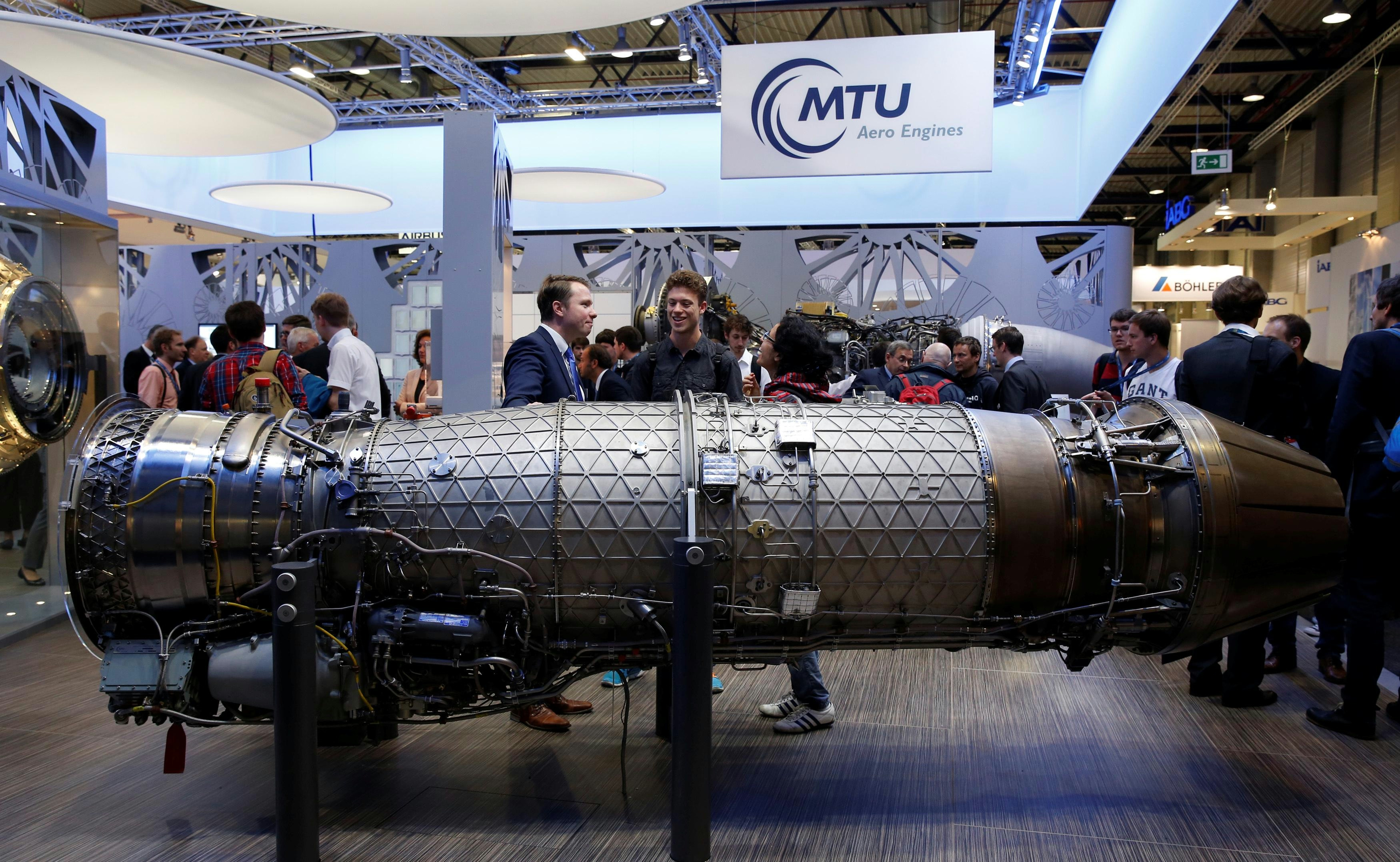
MTU Aero Engines Reports Q1 Gains Amid Geopolitical Challenges
Germany’s MTU Aero Engines delivered a strong financial performance in the first quarter of 2026, demonstrating resilience amid ongoing geopolitical tensions. The company reported adjusted revenues of €2.2 billion, marking a 7% increase compared to the same period last year. Adjusted operating profit rose by 6% to €320 million, while the adjusted EBIT margin held steady at 14.2%. Adjusted net income also saw a modest increase of 3%, reaching €229 million.
Performance Across Divisions
MTU’s growth was driven by robust results in both its military and commercial aftermarket segments. The military division experienced a significant 25% rise in adjusted revenue, reaching €142 million and surpassing market expectations. This surge was largely attributed to strong demand for the EJ200 engine, which powers the Eurofighter, and the TP400-D6 engine used in the A400M military transport aircraft. Conversely, the commercial engine segment faced a 5% decline in revenue to €479 million year-on-year. However, when measured in US dollars, commercial engine revenues remained stable. The commercial maintenance, repair, and overhaul (MRO) business demonstrated continued strength, with revenues increasing by 8% to €1.6 billion, underscoring sustained aftermarket demand.
Addressing investors, CEO Johannes Bussmann highlighted the impact of geopolitical tensions, particularly the conflict involving Iran, which has contributed to rising jet fuel prices and increased supply chain risks for airlines. While some carriers have announced moderate capacity reductions, Bussmann emphasized that these are expected to primarily affect older, less fuel-efficient aircraft. Demand for modern, fuel-efficient planes and engines remains robust, with no indication of weakening aftermarket activity.
Outlook and Order Backlog
MTU reaffirmed its full-year guidance, forecasting adjusted revenues between €9.2 billion and €9.7 billion, up from €8.7 billion in 2025. Adjusted EBIT is projected to range from €1.35 billion to €1.45 billion, supported by anticipated growth across all business segments and a strong order book.
At the end of March, the company’s order backlog stood at €31.6 billion, a 7% increase from the previous year, effectively securing production capacity for the next three years. The Pratt & Whitney GTF engine family, particularly the PW1100G-JM, along with the V2500 engine, constitute the largest portion of this backlog. The GTF fleet management program remains on track, with MRO output rising 23% in the first quarter. Improved supply chain conditions have shortened turnaround times, and airlines report that longstanding issues grounding parts of their fleets are beginning to ease. The GTF engine, which has been in service for over a decade accumulating more than 50 million flight hours and an order book of 8,000 units, continues to be a cornerstone of MTU’s commercial operations.
Expansion into Advanced Propulsion Technologies
Beyond its core business, MTU has expanded its footprint in advanced propulsion technologies through the acquisition of AeroDesignWorks. This move enhances the company’s capabilities in propulsion systems for uncrewed aircraft systems, reflecting a strategic commitment to innovation in emerging aerospace sectors.
Despite the challenging geopolitical environment, MTU Aero Engines’ diversified portfolio and strong aftermarket performance have positioned the company for sustained growth throughout 2026.

Bangladesh Launches Initiative to Become Regional Aviation Hub
Russia Transports PD-8 Engine to India for International Certification

Kyrgyzstan to Adopt EMPIC GmbH Software for Flight Safety Oversight

Why Hawaiian Airlines Is Waiting Until 2028 To Add A Premium Economy Cabin To Its Airbus A330 Fleet

Engine Fault Causes Royal Navy Helicopter Crash Fatality

Joby Aviation Begins Texas Air Taxi Test Flights Amid Stock Decline

Iberia Receives Full Approval for Airbus A350 Heavy Maintenance

NetJets to Construct Terminal and Hangar at Dallas Love Field

Using AI in Aircraft Purchases

CIAM Unveils RPD-150T Engine to Replace Rotax 150 hp Model
