
Превращайте аналитические выводы ИИ в реальные действия

В тренде
Categories
Nacelle Upgrade Enhances Bell Boeing V-22 Readiness
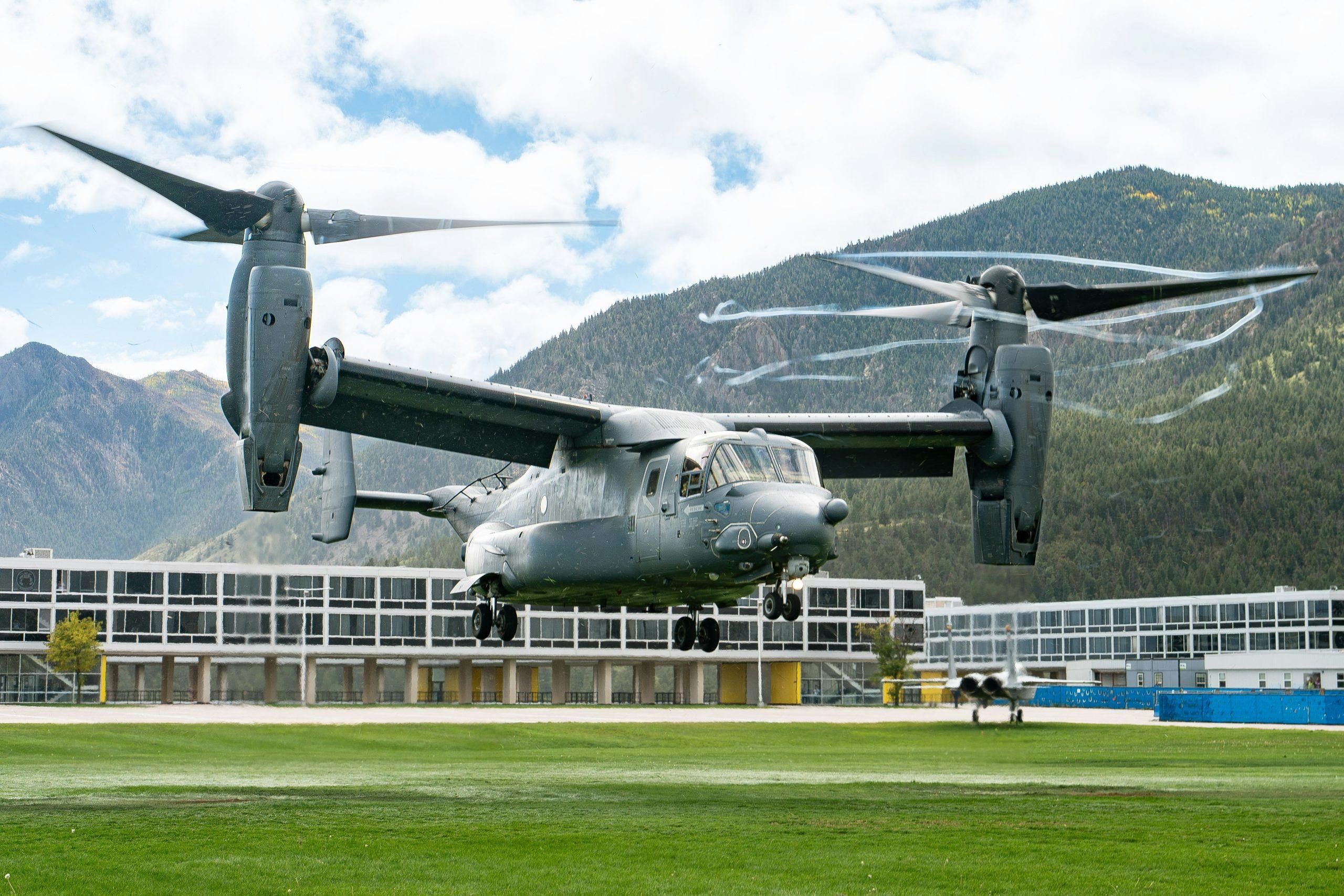
Nacelle Upgrade Enhances Bell Boeing V-22 Readiness
Operational Improvements and Maintenance Efficiency
Bell Textron Inc., a subsidiary of Textron Inc., has announced substantial advancements in the operational readiness and maintenance efficiency of the Bell Boeing V-22 Osprey following the implementation of its Nacelle Improvement (NI) Program. This upgrade focuses on the nacelle, a critical component housing the power systems that enable the V-22’s distinctive vertical takeoff, landing, and forward flight capabilities. Since its introduction, the NI Program has accumulated over 10,000 flight hours with Air Force Special Operations Command (AFSOC) CV-22 Ospreys.
The initial installation of the NI upgrade occurred in 2021 on one of nine CV-22s operated by the 20th Special Operations Squadron at Cannon Air Force Base. Since then, the program has achieved a 75% reduction in maintenance hours, saving more than 24,000 hours—equivalent to over 1,000 days of maintainer labor. This efficiency gain has enabled personnel to focus on other critical priorities. According to the V-22 Joint Program Office, these improvements have contributed to a more than 10% increase in CV-22 readiness, resulting in a greater number of mission-capable aircraft available for training and operational deployment, while also enhancing overall safety.
Technical Enhancements and Broader Military Adoption
The NI Program modernizes the V-22’s nacelles by simplifying wiring systems, reinforcing structural components, and integrating feedback from fleet maintainers. These upgrades are intended to bolster the reliability, readiness, and sustainability of the Osprey fleet for the next three decades. Performance data validated through AFSOC’s operational experience has encouraged wider adoption of the NI upgrade across the U.S. military.
The U.S. Marine Corps has recently announced plans to fully replace the nacelles on its entire V-22 fleet, aiming to further improve readiness and safety standards. Concurrently, the U.S. Army is preparing to introduce its first tiltrotor aircraft, incorporating advanced manufacturing techniques and digital integration to support next-generation vertical lift capabilities.
In related developments, Collins Aerospace has secured contracts to supply five systems for the Bell MV-75 Future Long Range Assault Aircraft (FLRAA) tiltrotor. This platform, selected by the prime contractor, represents a key component of the Army’s ongoing modernization efforts.
Legal Context and Program Outlook
Legal proceedings have also influenced the V-22 program’s trajectory. Boeing, Bell Textron, and Universal Stainless & Alloy Products Inc. recently succeeded in having state-law product defect claims dismissed in a Pennsylvania court concerning a V-22 Osprey crash. However, the court permitted the claims to be refiled under the federal Death on the High Seas Act, maintaining the case’s viability at the federal level.
As the V-22 Osprey continues to evolve through targeted upgrades and inter-service collaboration, it remains a vital asset in U.S. military vertical lift operations. Ongoing enhancements are focused on maximizing mission readiness, safety, and the long-term sustainability of this unique aircraft.

Etihad Airways Suspends Airbus A380 Flights on Key Route

Aditya Birla Group Seeks Approval for Aircraft Leasing in GIFT City

Qatar Airways Highlights Innovation and Connectivity at Arabian Travel Market 2026

Hong Kong's Five-Year Plan Includes Andrew Fan's Aircraft Parts Processing Hub Proposal

ACIA Aero Leasing Delivers ATR72-600 to Air Nostrum

RTX Appoints Jill Albertelli as Head of Pratt & Whitney

TAT Technologies Joins Beyond Aero Hydrogen Aircraft Program

AURAK Study Highlights Barriers to Air Taxi Adoption in Emerging Economies

Xiamen Air Selects Altitude for 787 Maintenance at Heathrow

Etihad and Swissport Extend Global Partnership
