
Превращайте аналитические выводы ИИ в реальные действия

В тренде
Categories
Naidu Says Government Working to Expedite AI-171 Crash Report
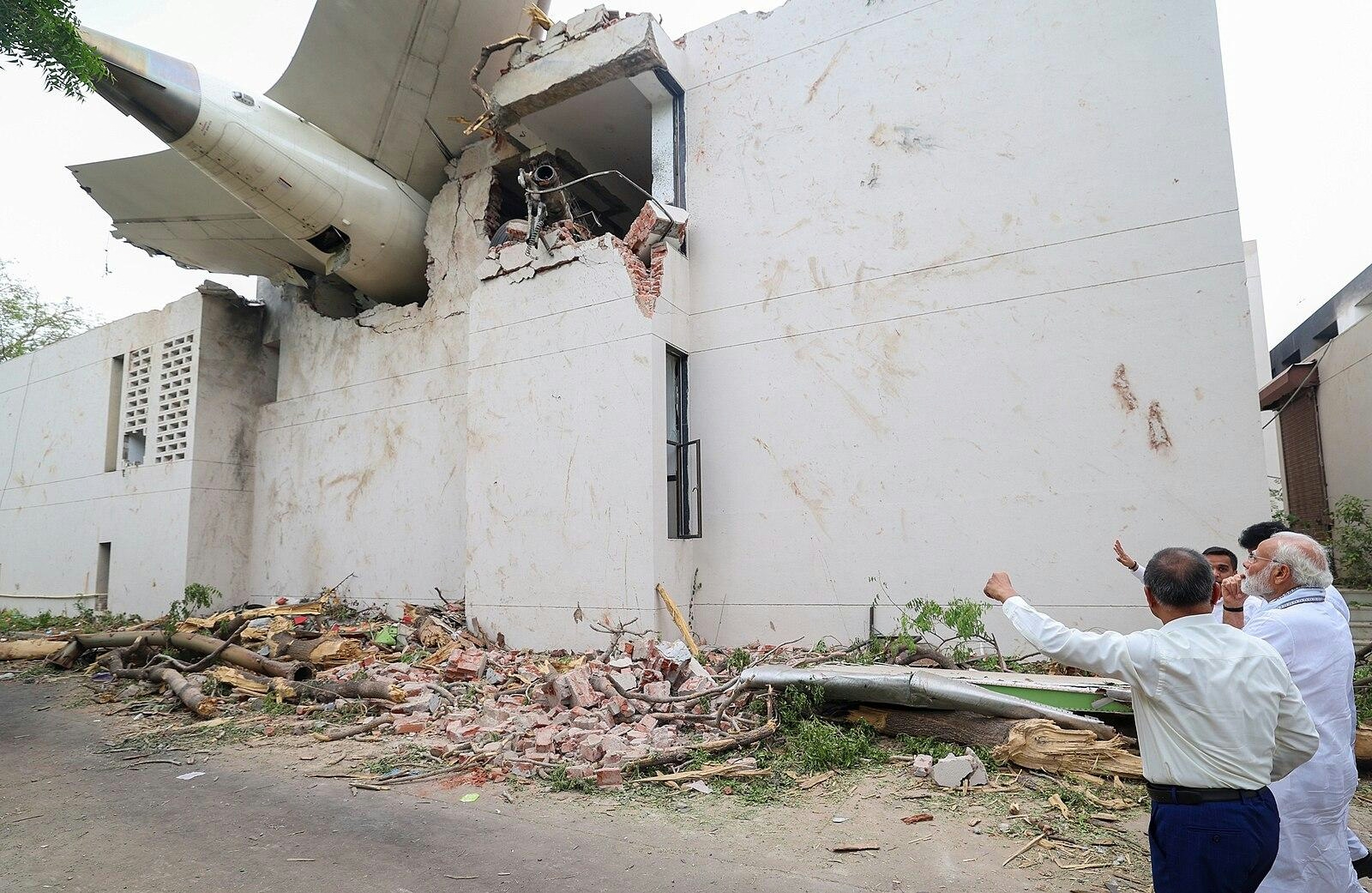
Government Accelerates Investigation into AI-171 Crash While Emphasizing Accuracy
Civil Aviation Minister K Rammohan Naidu announced on Friday that the government is actively working to expedite the final report on the Air India flight AI-171 crash, which tragically claimed 260 lives in Ahmedabad on June 12, 2025. Speaking after attending the fourth convocation of Gati Shakti Vishwavidyalaya (GSV), Naidu underscored the importance of balancing the urgency of the investigation with the need for thoroughness and factual accuracy.
“The investigation is ongoing. We are making every effort to complete it and release the final report as soon as possible,” Naidu stated. “But we must be mindful that rushing the process could lead us away from the truth.” He assured that the Aircraft Accident Investigation Bureau (AAIB) has been fully supported with the necessary resources to conduct a comprehensive and meticulous probe.
Addressing the families of the victims, Naidu emphasized that justice depends on a careful and factual investigation. “Our primary focus is to ascertain the actual facts. We are relying entirely on the AAIB and supporting it fully. Our hope is that the report is finalized at the earliest,” he said.
Complexities and Broader Implications of the Investigation
The AAIB informed the Supreme Court on July 14 that a draft final report is expected by October. The bureau highlighted that investigations involving international flights must comply with the Chicago Convention and Annex 13 of the International Civil Aviation Organisation’s regulations, reflecting the complexity and stringent regulatory standards involved.
Expediting the investigation of such a high-profile accident presents significant challenges, including the need for comprehensive data analysis, adherence to international protocols, and managing public expectations. The AI-171 crash has intensified scrutiny of aviation safety standards and increased demands for transparency in accident investigations. In response, industry competitors are enhancing their safety measures and, in some cases, advocating for regulatory reforms that could support technological advancements.
Naidu also drew attention to the rapid transformation of India’s civil aviation sector. He noted that the country has expanded its airport infrastructure from 74 airports in 2014 to 165 today, a pace unmatched globally. Highlighting the sector’s growth, he remarked that three passenger aircraft take off every minute in India, and over 50,000 passengers are handled by Indian airports every two hours.
This rapid expansion, Naidu explained, necessitates a new generation of skilled professionals. He cited the recent introduction of a harmonized curriculum for aircraft maintenance engineering, developed within four months following a memorandum of understanding between GSV and the Directorate General of Civil Aviation (DGCA).
The minister’s comments come amid a broader governmental push for effective governance and standardized data practices, as artificial intelligence and digital technologies increasingly reshape public administration. The ongoing AI-171 investigation underscores the critical need for robust oversight and transparent processes to maintain public trust and ensure the safe integration of advanced technologies in aviation.
As the government moves toward finalizing the AI-171 crash report, Naidu reaffirmed the commitment to both speed and accuracy, assuring the public that uncovering the truth and delivering justice for the victims remain the paramount objectives.

Hong Kong's Five-Year Plan Includes Andrew Fan's Aircraft Parts Processing Hub Proposal

ACIA Aero Leasing Delivers ATR72-600 to Air Nostrum

RTX Appoints Jill Albertelli as Head of Pratt & Whitney

TAT Technologies Joins Beyond Aero Hydrogen Aircraft Program

AURAK Study Highlights Barriers to Air Taxi Adoption in Emerging Economies

Xiamen Air Selects Altitude for 787 Maintenance at Heathrow

Etihad and Swissport Extend Global Partnership
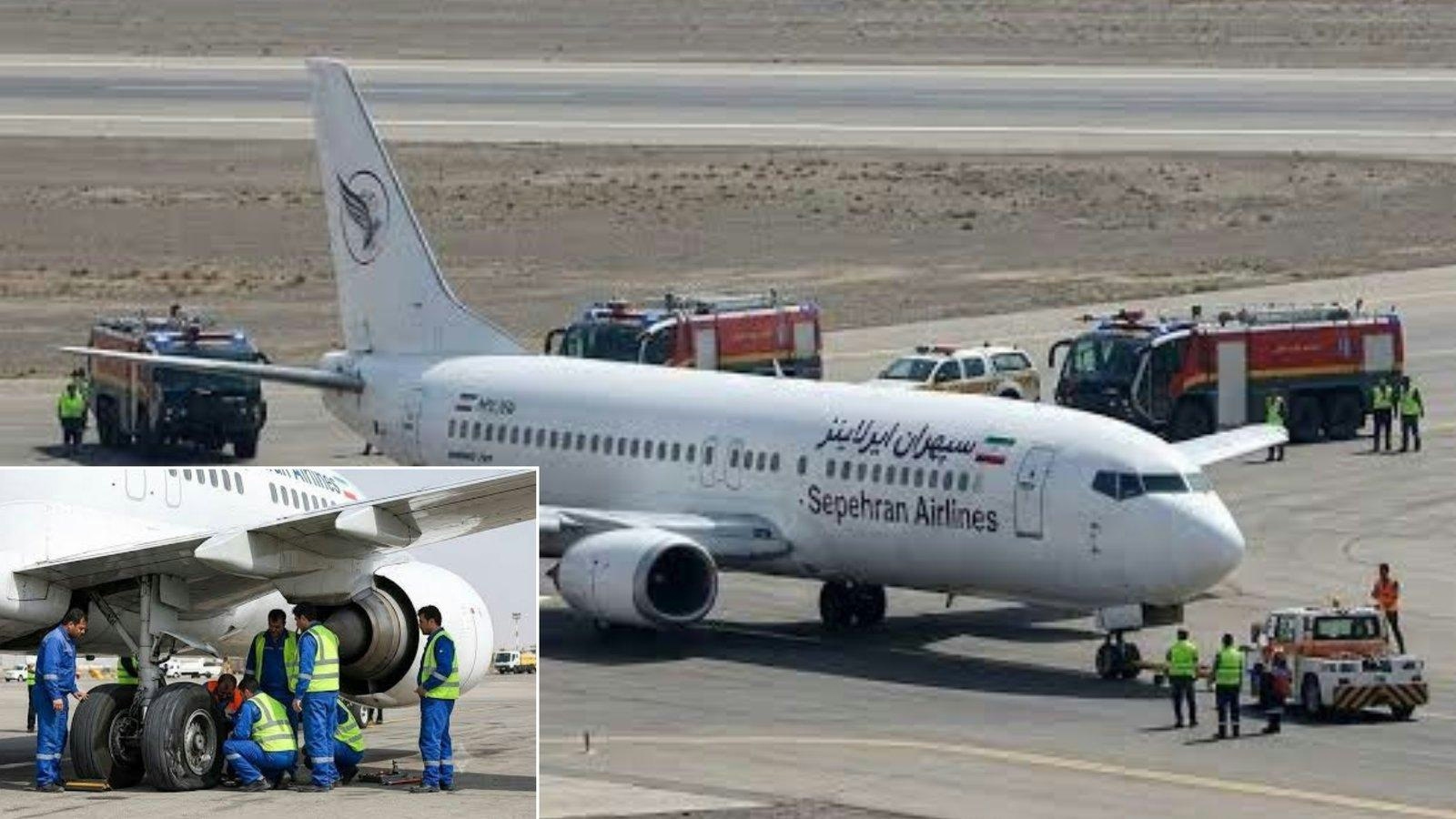
Sepehran Airlines B737 Returns to Mashhad After Tyre and Engine Issues

Etihad Deploys Widebody Fleet to Meet Strong Demand

Korean Air Finalizes $36.2 Billion Deal with Boeing
