
Превращайте аналитические выводы ИИ в реальные действия

В тренде
Categories
New York City Plans Electric Air Taxi Vertiports
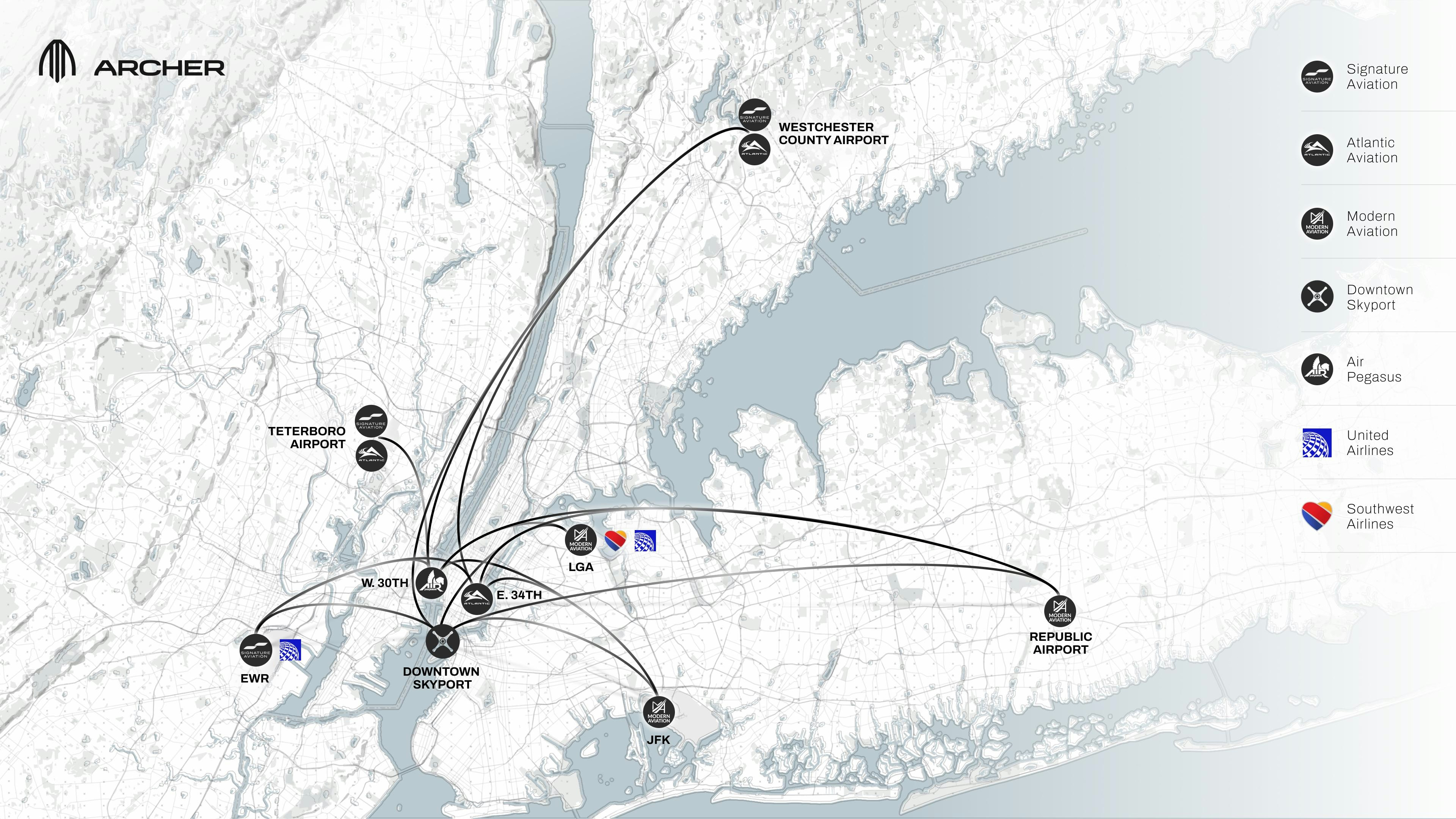
New York City Advances Plans for Electric Air Taxi Vertiports
The New York City Economic Development Corporation (NYCEDC) is progressing with an ambitious initiative to transform two Manhattan heliports into vertiports designed for electric air taxis. The targeted sites include the city-owned East 34th Street Heliport along the East River and the Downtown Skyport near Wall Street. The project aims to have operations commence potentially within the current year, contingent upon Federal Aviation Administration (FAA) certification. Operators will be required to complete the necessary electrification infrastructure within one year following FAA approval, according to an NYCEDC spokesperson.
Infrastructure Development and Operational Challenges
The conversion of these heliports into vertiports involves close coordination among air taxi operators, the local utility provider Con Edison, and existing helicopter services. Kevin Cox, CEO of VertiPorts by Atlantic—which manages the East 34th Street Heliport—acknowledged that while full electrification will require time, initial electric vertical takeoff and landing (eVTOL) flights could begin at select locations by the end of the year. Cox, whose company also oversees vertiport operations in California and Florida, emphasized the gradual nature of the transition.
Vertiports, as defined by the FAA, are specialized facilities equipped to support vertical takeoff and landing aircraft. Planned upgrades include evaluating each site’s capacity to support charging infrastructure, enhancing electrical power supply, and installing multiple charging systems to accommodate various operators. Despite these plans, the rollout faces significant challenges. Workforce shortages, particularly among skilled electricians, may impede the pace of infrastructure development. Additionally, regulatory hurdles remain, as electric air taxis must undergo rigorous testing and certification before they can carry passengers.
Market Dynamics and Industry Developments
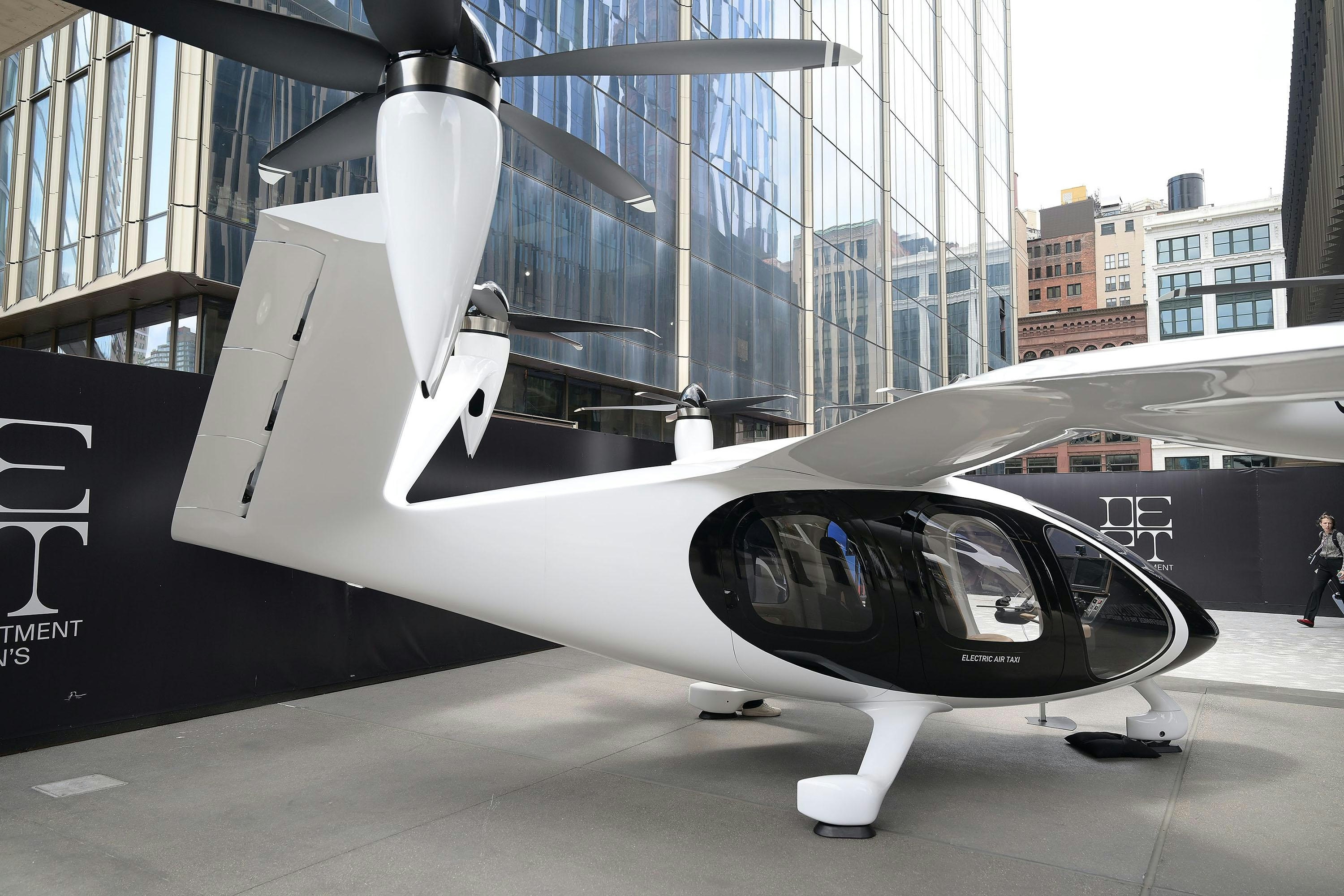
The urban air mobility sector is witnessing intensifying competition, with companies such as Joby Aviation, Archer Aviation, and Beta Technologies vying to launch commercial eVTOL services. Both Joby and Archer intend to begin operations in New York this year under the FAA’s eVTOL Integration Pilot Program, which has designated eight sites across six states, including New York and New Jersey.
Public response to the emerging air taxi services is mixed. While some consumers welcome the prospect of faster and cleaner urban transportation, others raise concerns regarding safety and environmental impact. In response, industry players are ramping up marketing efforts and investing heavily in technology to establish a competitive edge in this nascent market.
Kevin Cox highlighted the growing international interest in air taxi programs, noting that cities grappling with severe traffic congestion or limited transportation options are particularly eager to explore the potential benefits. He described the FAA’s pilot program as a “tipping point” for early adopters, reflecting a broader recognition of the transformative potential of eVTOL aircraft for urban communities.
In April, Joby Aviation conducted a high-profile demonstration in New York City, flying from John F. Kennedy International Airport to the Downtown Skyport as well as the West 30th Street and East 34th Street heliports. Cox praised the demonstration as an effective showcase of the aircraft’s quiet operation, efficiency, speed, and low emissions.
Joby Aviation’s recent acquisition of Blade Air Mobility’s passenger business, including its Manhattan terminal network, further strengthens its position in New York’s evolving air mobility landscape. Meanwhile, the Downtown Skyport, managed by a state-owned entity, continues to develop the infrastructure necessary to support electric air taxi operations, underscoring New York City’s ambition to become a leader in next-generation urban transportation.

Etihad and Swissport Extend Global Partnership
Sepehran Airlines B737 Returns to Mashhad After Tyre and Engine Issues

Etihad Deploys Widebody Fleet to Meet Strong Demand
Korean Air Finalizes $36.2 Billion Deal with Boeing
Australia’s RFDS Queensland Section Orders Six King Air 260Cs

Korean Air Finalizes Order for 103 Boeing Jets and Engines
Embraer E195-E2 Features Distinctive Engine Placement Among Regional Jets
What Passengers Can Expect on Boeing’s New 777X Jet

How Ethiopian Airlines Became Africa’s Leading Carrier Amid Gulf Competition
Joby Aviation Extends Autonomous Flight Capabilities with Cross-Country Tour
