Изображение

Превращайте аналитические выводы ИИ в реальные действия

Присоединяйтесь к списку ожидания AeroGenie уже сегодня!

В тренде

Categories

Parata Air Plans U.S. Expansion with New Widebody Fleet for Long-Haul Low-Cost Flights
October 26, 2025By ePlane AI
Parata Air Plans U.S. Expansion with New Widebody Fleet for Long-Haul Low-Cost Flights
0
0
Parata Air
Long-Haul Low-Cost
Airbus A330-200

Parata Air Plans U.S. Expansion with New Widebody Fleet for Long-Haul Low-Cost Flights

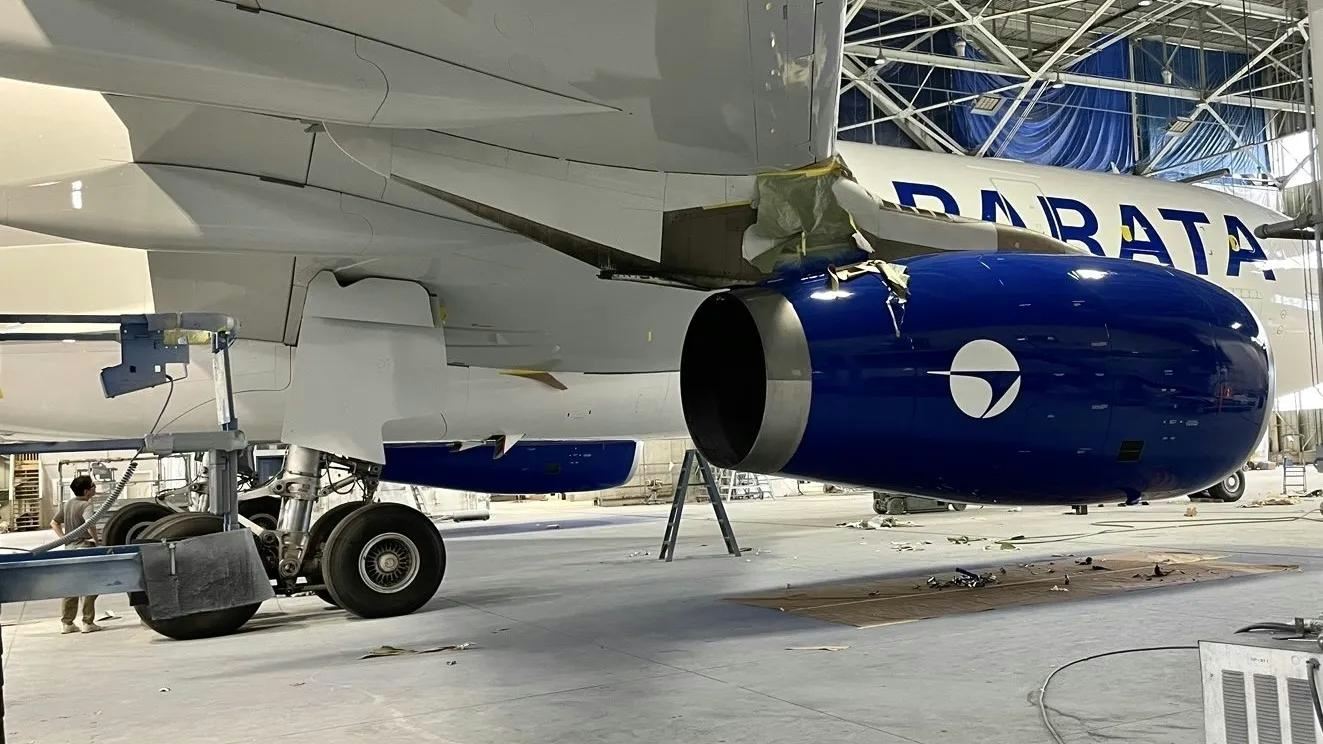
South Korea’s Parata Air, recently relaunched after a period of financial difficulty, is preparing to enter the transpacific market with ambitious plans to operate scheduled Airbus A330-200 flights from Seoul Incheon to Los Angeles and Las Vegas starting in March 2026. The airline has formally applied to the U.S. Department of Transportation (DOT) for approval to launch these services. If granted, Parata would become the third Korean long-haul low-cost carrier connecting North America and East Asia, joining Air Premia and Trinity Airways, and positioning itself as a direct competitor to established carriers such as Korean Air and Asiana Airlines on key West Coast routes.

From Bankruptcy to Strategic Rebirth

Parata Air’s current incarnation follows the collapse of Fly Gangwon in 2023. The airline was acquired by South Korean manufacturing company Winix Inc., which rebranded the carrier as Parata Air in 2024 and invested over 300 billion won to revive its operations. By September 2025, Parata had obtained a new Air Operator Certificate and resumed domestic services, including routes between Jeju and Seoul Gimpo as well as Jeju and Yangyang. The airline has adopted a hybrid business model that combines elements of low-cost and full-service carriers, aiming to appeal to a new generation of travelers who prioritize affordability without sacrificing safety and premium service features. The name “Parata,” derived from the Korean word for “blue,” reflects the airline’s youthful and modern identity, symbolizing clarity and promise.

Fleet Strategy and International Expansion

Parata Air currently operates a modest but varied fleet, consisting of Airbus A320-200 aircraft for domestic and short-haul flights and Airbus A330-200 widebodies for high-density domestic routes and planned long-haul services. The widebody aircraft are presently used on domestic trunk routes to familiarize crews and refine operational procedures ahead of the airline’s international expansion. Parata’s strategy for 2026 includes launching services to Japan, Vietnam, and the United States.

In its application to the U.S. DOT, Parata detailed plans to commence flights to Los Angeles and Las Vegas on March 29, 2026, under the US–Korea Open Skies agreement. The airline intends to deploy two Korea-registered A330-200 aircraft for these routes, with technical support provided by Lufthansa Technik and other approved maintenance partners.

Competitive Landscape and Market Challenges

The Seoul–Los Angeles route is one of the most competitive long-haul corridors globally, with established carriers such as Air Premia, Asiana Airlines, and Korean Air operating daily or near-daily flights. Las Vegas, a popular destination for Korean tourists and business travelers, is currently served daily by Korean Air. Parata’s entry into this market promises a more affordable, nonstop alternative, potentially reshaping fare dynamics.

However, Parata’s expansion occurs within a complex and rapidly evolving market environment. The recent failure of PLAY, an Icelandic low-cost carrier that faced operational difficulties, highlights the risks confronting new entrants in the long-haul low-cost segment. Additionally, competitors like IndiGo are intensifying competition by deploying Airbus A321XLR aircraft on long-haul routes, while Air Austral’s retirement of its A220 fleet due to technical challenges underscores the operational risks associated with introducing new aircraft types. Meanwhile, Breeze Airways’ aggressive fleet expansion signals a sector in flux, where operational resilience and strategic flexibility are essential for success.

Market Potential and Outlook

Parata Air’s planned U.S. expansion seeks to capitalize on growing demand for affordable, nonstop flights connecting Asia’s expanding outbound travel market with major U.S. leisure and business destinations. Should the airline succeed, it could stimulate fare competition and increase accessibility to transpacific travel. Nonetheless, recent industry developments illustrate that establishing sustainable long-haul low-cost operations remains a challenging endeavor, marked by both significant opportunities and considerable risks.

More news
Inside Boeing’s 747 Flying Laboratory for Jet Engine Testing

Inside Boeing’s 747 Flying Laboratory for Jet Engine Testing

Inside Boeing’s 747 Flying Laboratory for Jet Engine Testing GE Aerospace, a prominent American manufacturer, is advancing aviation technology by developing the world’s largest jet engine for Boeing’s forthcoming 777X aircraft. To test this colossal engine, GE employs a uniquely modified Boeing 747-400, designated as the Flying Test Bed (FTB). This specialized aircraft serves as a critical platform for evaluating and validating new commercial jet engines under authentic flight conditions. The Flying Test Bed: A Crucial Testing Platform Originally acquired from Japan Airlines in 2010, the 32-year-old 747-400 replaced GE’s earlier 747-100, which had been in service since 1992. The FTB is equipped with an extensive network of cables running throughout the cabin, connecting numerous test sensors, computer stations, and large data-collection units that occupy much of the aircraft’s first floor. This sophisticated instrumentation allows engineers to collect and analyze vast quantities of data during flight, ensuring comprehensive assessment of engine performance. Over the years, the 747 testbed has been instrumental in certifying engines that now power a range of aircraft, including the Airbus A320, Boeing 737, and China’s Comac narrowbody jets. Its current focus is the GE9X engine, notable for its immense size—its fan diameter nearly matches the fuselage width of a Boeing 737. Rated at 110,000 pounds of thrust, the GE9X holds the world record for the highest thrust produced by a commercial jet engine, achieving 134,300 pounds during testing. Ongoing Challenges and the Path to Certification Although the GE9X received Federal Aviation Administration (FAA) certification in 2020, it continues to undergo rigorous testing aboard the 747 FTB. This ongoing evaluation is vital as the engine is intended for the 777X, an aircraft program that has experienced significant delays. Currently seven years behind schedule, the 777X’s development has been hampered by quality control issues, production setbacks, and supply chain disruptions at Boeing. The aircraft is now projected to enter service in 2027, with Lufthansa designated as its launch customer. Testing advanced engines like the GE9X on the 747 FTB presents considerable challenges. The process requires exhaustive evaluation under a wide range of conditions, including extreme temperature fluctuations and high-speed thrust scenarios. The complexity of these tests can lead to delays, as engineers must verify that the engines perform reliably across all conceivable environments. The use of a 747 as a flying laboratory highlights the significant engineering obstacles involved and underscores the necessity of a coordinated global effort to integrate cutting-edge technologies into future engine platforms. GE’s deployment of the 747 FTB reflects the high technical demands and competitive pressures inherent in modern jet engine development. As the aviation industry anticipates the 777X’s eventual debut, the 747 flying laboratory remains central to the certification and refinement of the next generation of commercial aircraft engines.
Safran Considers Expanding Operations in India Amid Growing Aviation Demand

Safran Considers Expanding Operations in India Amid Growing Aviation Demand

Safran Considers Expanding Operations in India Amid Growing Aviation Demand Strategic Expansion in a Booming Market French aerospace conglomerate Safran is contemplating a substantial expansion of its footprint in India, aiming to extend its activities beyond its established focus on aircraft engines. The company intends to capitalize on the country’s rapidly expanding aviation sector, which has seen Indian airlines place unprecedented orders for new aircraft. Safran now regards India as a strategic priority across multiple business segments, including propulsion systems, aerospace equipment, and cabin interiors. JS Gavankar, CEO and Country Head of Safran India, emphasized the significance of the Indian market, stating that the country’s aviation growth is compelling enough to engage every division within Safran. Indian carriers have collectively ordered more than 2,000 aircraft, generating sustained demand for aeroengines, aviation components, cabin solutions, and maintenance services. Broadening the Scope of Operations Currently, Safran’s operations in India primarily focus on aircraft engines and aerospace equipment. However, the company is actively exploring opportunities to deepen its involvement across the entire aviation value chain. Particular attention is being given to aviation interior solutions and maintenance, repair, and overhaul (MRO) services. Gavankar highlighted the enormous demand for these services, driven by the expanding passenger base and the volume of aircraft orders. Although Safran has not revealed specific timelines or investment amounts related to this expansion, it has set ambitious growth targets. The company aims to triple its global revenue to over €3 billion by 2030, with half of this growth expected to originate from its Indian operations. Additionally, Safran plans to double its supplier network within India and increase sourcing from Indian aerospace suppliers fivefold by 2030, thereby integrating them more deeply into its global supply chain. Aligning with India’s Aviation Ambitions India’s efforts to boost domestic aircraft manufacturing and related services align closely with Safran’s strategic objectives. The expansion of local airlines is anticipated to drive demand not only for aircraft but also for interiors, seating systems, cabin equipment, and other aviation products. This synergy presents a significant opportunity for Safran to strengthen its presence in the region. Market response to Safran’s India strategy has been encouraging. The company recently signed a memorandum of understanding with IndiGo for over 1,000 LEAP-1A engines and secured an order from BOC Aviation for up to 300 LEAP engines, underscoring robust demand for its products. Nonetheless, Safran’s expansion faces challenges common to the aerospace industry, including supply chain pressures, parts shortages, labor constraints, and rising input costs. Competitors such as Boeing and Airbus are also intensifying their activities in India, confronting similar regulatory complexities and operational challenges. Despite these obstacles, Safran maintains a positive outlook, supported by increased European defense spending and growing demand in the Middle East and Asia, which bolster its broader aerospace and defense strategy. By deepening its commitment to India, Safran is positioning itself to play a pivotal role in the country’s evolving aviation landscape, leveraging both local growth prospects and global market dynamics.
Jetstream Delivers First Saab 340B(F) Cargo Plane to Alaska Operator Ryan Air

Jetstream Delivers First Saab 340B(F) Cargo Plane to Alaska Operator Ryan Air

Jetstream Delivers First Saab 340B(F) Cargo Aircraft to Alaska Operator Ryan Air Ryan Air, an Anchorage-based carrier owned by Saltchuk Aviation, has taken delivery of its first Saab 340B(F) cargo aircraft from Jetstream Aviation Capital. The aircraft, bearing serial number 340B-329, was officially handed over on August 4 and will be deployed to support both scheduled and charter cargo operations across more than 80 communities in western Alaska. This acquisition marks a significant expansion of Ryan Air’s fleet and operational capabilities in the region. Strategic Importance and Operational Challenges Jetstream Aviation Capital, a Florida-based aircraft lessor, emphasized the broader significance of the delivery in a recent statement. The company described the addition as more than a mere expansion of Ryan Air’s fleet, highlighting it as a shared commitment to facilitating the vital transport of cargo and supplies throughout western Alaska. The Saab 340B(F) will play a crucial role in sustaining the connectivity and supply chains essential to these remote communities. The integration of the Saab 340B(F) introduces several operational challenges. Both Jetstream and Ryan Air are prioritizing compliance with Federal Aviation Administration (FAA) regulations, particularly concerning the aircraft’s hybrid-electric engine. Safety considerations related to this relatively new propulsion technology remain paramount. Furthermore, the logistical complexities of operating in Alaska’s remote and often harsh environment add layers of difficulty in transporting, maintaining, and deploying the aircraft effectively. Industry Implications and Fleet Enhancement The performance and efficiency of the Saab 340B(F)’s hybrid-electric engine are being closely monitored by industry observers. Its successful adoption could herald a broader shift toward hybrid-electric technologies in regional cargo aviation, prompting competitors to explore similar innovations or consider fleet upgrades to remain competitive. Ryan Air operates under FAA Part 135 certification, offering both cargo and passenger services with a diverse fleet that includes Cessna, CASA, Pilatus, and Saab aircraft. The introduction of the Saab 340B(F) is expected to significantly enhance the airline’s capacity and reliability, ensuring the continued delivery of essential goods to some of Alaska’s most isolated communities.
Azorra Expands Fleet with Addition of A330-200 Aircraft

Azorra Expands Fleet with Addition of A330-200 Aircraft

Azorra Expands Fleet with Addition of A330-200 Aircraft Azorra has broadened its wide-body aircraft portfolio through the acquisition of an Airbus A330-200 (MSN 1161) from TrueNoord. Currently leased to Maldivian Airlines, the national carrier of the Maldives, this transaction introduces a new airline customer and operating jurisdiction to Azorra’s expanding global network. Strategic Growth in Wide-Body Segment This acquisition follows Azorra’s recent expansion into the wide-body market, marked by earlier purchases of Airbus A330s and Boeing 777-300ERs throughout 2023. Over the past three years, the lessor has actively managed its fleet by extending leases and transitioning aircraft to new operators, demonstrating a deliberate strategy aimed at sustainable portfolio growth. With the addition of the A330-200, Azorra’s portfolio now includes 194 owned and managed aircraft, six of which are wide-body models. The company has emphasized its ongoing focus on identifying opportunities that deliver strong long-term value and robust demand, while maintaining a disciplined approach to fleet management. Market Implications and Operational Considerations Integrating the newly acquired A330-200 into Azorra’s existing fleet presents potential challenges, including ensuring regulatory compliance across jurisdictions and managing associated operational costs. This move coincides with heightened demand for A330 aircraft, positioning Azorra in alignment with a broader industry trend favoring wide-body models. Market analysts suggest that this expansion may intensify competition among wide-body operators, compelling rivals to reevaluate their fleet strategies or enhance service offerings to maintain market share. Azorra’s continued investment in wide-body aircraft highlights its commitment to adapting to shifting market dynamics and addressing the diverse needs of its global customer base.
Abelo Acquires Six Turboprop Aircraft

Abelo Acquires Six Turboprop Aircraft

Abelo Expands Fleet with Acquisition of Six Turboprop Aircraft Turboprop aircraft lessor Abelo has announced the acquisition of six aircraft—four ATR 72-600s and two DHC8-400s—previously managed by Aergo Capital. This transaction broadens Abelo’s global customer base by introducing five new operators to its portfolio, including Emerald Airlines, Binter Canarias, National Jet Express, Citilink, and Philippine Airlines. Strategic Growth and Industry Context Stephen Gorman, Chief Executive of Abelo, described the acquisition as a significant milestone in the company’s growth strategy, emphasizing the strengthened position it provides in key turboprop assets. He also expressed optimism about future collaborations with Aergo Capital. Aergo’s Chief Executive, Paul Sheridan, confirmed that the sale was conducted on behalf of financial institutions MUFG, DBJ, and KDB, whose aircraft were under Aergo’s management. The acquisition occurs amid a challenging market environment for turboprops, which face increasing competition from regional jets. Jets are often preferred for their higher speeds and suitability for longer routes, while turboprop engines typically produce greater noise levels, complicating operations in noise-sensitive and urban airport settings. Market Implications and Competitive Dynamics Industry analysts suggest that Abelo’s fleet expansion may attract closer regulatory scrutiny due to the company’s growing influence in the turboprop sector. Competitors are likely to respond by adjusting their fleet strategies to preserve market share in a landscape marked by evolving operational and environmental considerations. Nonetheless, Abelo’s latest move highlights its commitment to consolidating its presence in the turboprop market and extending its reach across diverse geographic regions.
Lufthansa and Boeing Discuss Future of Delayed 777X Deliveries

Lufthansa and Boeing Discuss Future of Delayed 777X Deliveries

Lufthansa and Boeing in Dispute Over Delayed 777X Deliveries Intensifying Negotiations Amid Certification Setbacks Lufthansa, the German flag carrier and launch customer of Boeing’s 777X, is escalating discussions with the American aircraft manufacturer regarding the delivery and acceptance of several early-built 777X aircraft. Persistent certification delays have cast uncertainty over the airline’s extensive fleet renewal strategy, prompting Lufthansa to consider rejecting some of the earliest produced 777-9 jets. The airline is also demanding significant upgrades to other units before they can be integrated into commercial operations. During a recent analyst call, Lufthansa Group CEO Carsten Spohr expressed serious reservations about the suitability of these early production aircraft, concerns that mirror those previously voiced by Emirates. Spohr revealed that Lufthansa is assessing which of the stored 777X airframes can be modernized—potentially with Boeing’s financial assistance—and which should be refused outright due to the extensive modifications required. The airline’s position underscores the operational and financial challenges posed by accepting unmodified aircraft that may compromise efficiency and increase costs. Challenges Facing the 777X Program The Boeing 777X, designed as the world’s largest twin-engine jet featuring fuel-efficient GE9X engines and innovative folding wingtips, has experienced one of the most protracted development delays in recent commercial aviation history. Years of certification setbacks have resulted in multiple test and early production aircraft being placed in storage. These airframes now require substantial structural alterations, flight-control system updates, and intensive maintenance before they can enter passenger service. For Lufthansa, accepting these aircraft without modification would entail higher operating costs and weight penalties, undermining the anticipated efficiency gains of the new model. Spohr emphasized the airline’s willingness to take delivery of modernized aircraft, provided Boeing offers financial support to offset the costs associated with necessary upgrades. Lufthansa is also seeking compensation or revised delivery schedules to mitigate the operational disruptions caused by the delays. Impact on Lufthansa’s Fleet Strategy and Industry Implications The ongoing 777X delays have compelled Lufthansa to adjust its long-term fleet strategy amid the largest renewal program in its history. To bridge capacity gaps, the airline has increased orders for Airbus A350-900s and Boeing 787-9 Dreamliners. Additionally, Lufthansa is reportedly initiating a competitive evaluation among manufacturers for new widebody aircraft, with potential orders for Airbus A350-1000s or Boeing 777-9s slated for delivery from 2033. This dispute highlights broader challenges confronting Boeing as it seeks to bring the 777X to market. Certification delays and the extensive rework required on early-built aircraft have raised questions about the jet’s performance, particularly as some U.S. carriers pivot toward point-to-point routes rather than traditional hub-and-spoke networks. The resolution of Lufthansa’s negotiations will be closely monitored by the global aviation industry, as it may establish a precedent for how Boeing manages early fleet commitments amid ongoing certification difficulties. Should a financial agreement prove elusive, Lufthansa may further pivot its long-haul orders toward alternative widebody platforms, presenting additional risks to Boeing’s flagship program. Successfully resolving these issues is critical to restoring confidence in the 777X and ensuring its eventual commercial success.
Abu Dhabi Aviation Reports 28% Revenue Increase to Dh4.66 Billion, Plans Dh674 Million Asset Sale

Abu Dhabi Aviation Reports 28% Revenue Increase to Dh4.66 Billion, Plans Dh674 Million Asset Sale

Abu Dhabi Aviation Reports 28% Revenue Increase to Dh4.66 Billion Abu Dhabi Aviation (ADA), a prominent aviation services group listed on the Abu Dhabi Securities Exchange, has announced a significant 28% rise in revenue, reaching Dh4.66 billion for the first half of 2026. This robust financial performance underscores the company’s strong market position amid a dynamic and competitive regional aviation sector. Alongside this growth, ADA’s board has approved the sale of Dh674 million worth of non-core real estate and financial assets. This strategic divestment is intended to streamline the company’s portfolio and sharpen its focus on core aviation activities, particularly maintenance, repair, and overhaul (MRO) operations. The assets earmarked for sale were classified as held for sale as of June 30, reflecting ADA’s commitment to concentrating resources on its primary business segments. The group concluded the reporting period with a net cash position of Dh900 million, providing a solid financial foundation to support future investments and operational resilience. Strategic Focus Amid Industry Challenges Despite the encouraging revenue growth, ADA faces several challenges common to the global aviation industry. The company must navigate ongoing fuel price volatility and labor shortages, which continue to affect operational costs and capacity. The Middle East aviation market is expanding rapidly, driven by increased demand for operational digitization and next-generation infrastructure. However, this growth has intensified competition among regional carriers and service providers, placing additional pressure on market share. ADA’s decision to divest non-core assets aligns with a broader regional trend of aviation firms optimizing operations and investing in advanced technologies. Competitors are expected to respond by enhancing their own core aviation services, potentially heightening competitive pressures. Furthermore, the persistent shortage of skilled pilots and technicians in the region poses a significant challenge to sustaining growth and maintaining service quality, as companies vie for limited talent pools. ADA’s leadership has emphasized its intent to capitalize on emerging opportunities in operational efficiency and digital transformation. The company aims to navigate the evolving regulatory and economic landscape while leveraging its strong financial position to maintain momentum in a rapidly changing environment. Market observers will be closely monitoring how ADA adapts to these sector challenges and executes its strategic refocus in the coming months.
Aircraft and Engine Shortages Disrupt Aviation Supply Chain

Aircraft and Engine Shortages Disrupt Aviation Supply Chain

Aircraft and Engine Shortages Disrupt Aviation Supply Chain A comprehensive report from aviation investment banking firm Cassel Salpeter & Co. reveals that a global shortage of aircraft, engines, and spare parts is profoundly impacting the aviation industry. Commercial aircraft backlogs have now exceeded 17,000 units, representing approximately 12 years of production at current manufacturing rates. Among these challenges, engine supply has emerged as the most critical bottleneck, significantly constraining industry growth and operational capacity. Supply Chain Pressures and Economic Impact The aviation sector is grappling with intense demand driven by fleet expansion, recovering passenger traffic, and robust cargo markets. Manufacturers and suppliers are struggling to meet these needs, resulting in substantial cost increases for airlines. The report projects that supply chain-related expenses will surpass $11 billion in 2025 alone, encompassing higher maintenance costs, increased engine leasing, and the need for greater spare parts inventory. Engine shortages are particularly severe, especially for next-generation GTF and LEAP engines, which require more frequent maintenance due to durability concerns. Engine overhaul turnaround times have dramatically lengthened, rising from 60–90 days in 2019 to between 180 and 240 days today. This delay has left approximately 60 completed Airbus aircraft grounded without engines in 2025, while over 3,500 commercial engines await critical components such as castings and forgings. These constraints are compelling airlines to extend the operational life of older aircraft beyond their planned retirement dates. This extension increases demand for engine leasing, spare parts, and maintenance services, while simultaneously reducing operational flexibility. Global spending on maintenance, repair, and overhaul (MRO) is expected to grow from $136 billion in 2025 to $193 billion by 2036, with engine-related MRO costs alone projected to reach $103 billion. Broader Supply Chain Fragility and Industry Adaptation The supply chain challenges extend beyond engines and airframes. A persistent shortage of aircraft windows, affecting both commercial airliners and business jets, has further exposed vulnerabilities within the aerospace supply chain. Melrose Industries, the owner of the primary manufacturer of these windows, aims to restore full production capacity by the end of 2026. Meanwhile, airlines and repair facilities are implementing conservation measures to manage the shortage, highlighting the need for sustained industry efforts to resolve ongoing disruptions. In response to limited aircraft and engine availability, airlines are increasingly turning to aftermarket solutions. The market for Used Serviceable Material (USM) is anticipated to grow from $8 billion in 2025 to over $10.8 billion by 2033. Similarly, the Parts Manufacturer Approval (PMA) market is projected to expand from $11.8 billion to more than $16.1 billion by 2034. Demand for Designated Engineering Representative (DER) repairs is also rising, as operators seek to extend component life and reduce dependence on original equipment manufacturers. To mitigate these challenges, airlines are adopting strategies such as extending fleet life, increasing spare engine inventories, diversifying suppliers, and securing long-term maintenance agreements. Despite these efforts, supply chain constraints are expected to persist for several years, placing ongoing pressure on the industry to innovate and adapt in order to maintain operational resilience.
EasyJet to Be Acquired by US Private Equity Firm Apollo for £5.7 Billion

EasyJet to Be Acquired by US Private Equity Firm Apollo for £5.7 Billion

EasyJet to Be Acquired by Apollo Global Management for £5.7 Billion EasyJet has reached an agreement to be acquired by the US private equity firm Apollo Global Management in a deal valued at £5.7 billion. The airline confirmed the transaction on Thursday, with Apollo’s offer pricing EasyJet shares at £7.15 each. This development follows the withdrawal of rival bidder Castlelake, which had previously proposed a £5 billion offer, effectively ending the prospect of a bidding war just before the final offer deadline. Details of the Acquisition and Shareholder Arrangements Apollo’s bid, submitted last month, exceeded Castlelake’s earlier proposal, prompting EasyJet’s board to recommend acceptance of the higher offer after Castlelake chose not to increase its bid. Under the terms of the agreement, EasyJet’s founder Stelios Haji-Ioannou and his family will retain their stake in the company. Other shareholders will be given the option to sell or transfer their holdings, subject to a cap of 49.9%. Additionally, an “EU Trust” shareholder group will hold up to a 5% stake, a structure designed to ensure compliance with European Union regulations on foreign ownership. Apollo’s own stake will also be limited to 49.9%. The acquisition is expected to conclude by the end of March 2027, pending regulatory approvals. Apollo has committed to maintaining EasyJet’s UK and EU headquarters and supporting the airline’s current strategic plans, which include long-term sustainable growth alongside ongoing fleet and business expansion. Regulatory and Market Challenges Ahead Despite board support, the deal faces potential hurdles, particularly regulatory scrutiny under the EU’s Foreign Subsidies Regulation, which could complicate the approval process. Market reactions have reflected some uncertainty, with EasyJet’s shares trading below Apollo’s offer price, indicating investor concerns about the likelihood of the deal’s completion. Industry analysts have observed that the acquisition could significantly impact the competitive dynamics within the European aviation sector, although responses from competitors remain uncertain. Apollo’s pledge to uphold EasyJet’s existing strategy and invest in its future growth will be closely monitored by regulators and market participants as the transaction advances. If finalized, this takeover would represent one of the largest private equity acquisitions in the European airline industry in recent years, potentially reshaping EasyJet’s trajectory amid a rapidly changing market environment.
Kazakhstan Conducts First Passenger eVTOL Flight

Kazakhstan Conducts First Passenger eVTOL Flight

Kazakhstan Conducts First Passenger eVTOL Flight A Milestone in Urban Air Mobility Astana has witnessed a landmark event in the development of urban air mobility with Kazakhstan’s first passenger flight aboard an autonomous electric vertical takeoff and landing (eVTOL) aircraft. The Committee of Civil Aviation (CCA) announced that on August 6, a passenger was successfully transported in an EH216-S, a two-seat autonomous eVTOL developed by Chinese manufacturer EHang. The demonstration flight took place over a designated area in Astana as part of the Games of the Future 2026, marking Kazakhstan’s initial foray into real-world testing of air taxi technology. The EH216-S is engineered for short-distance passenger transport, capable of traveling up to 35 kilometers at speeds of 130 kilometers per hour without a pilot onboard. This demonstration follows a series of government initiatives aimed at fostering an urban air mobility ecosystem. In May, Kazakh authorities unveiled plans to establish regulations governing eVTOL aircraft, vertiports, and unmanned air traffic management. Pilot air taxi routes connecting Alatau, Almaty, and Konayev are targeted for launch as early as 2027. Developing Infrastructure and Expanding Applications Initial operations are expected to include demonstration and sightseeing flights ranging from five to thirty minutes over Kazakhstan’s natural and cultural landmarks. Looking ahead, officials envision autonomous aircraft playing a vital role in emergency medical response, medicine delivery, firefighting, logistics, and passenger transport—sectors where rapid deployment and speed are essential. Kazakhstan’s ambitions extend beyond operational deployment. The government aims to localize eVTOL production through international partnerships, positioning the country as both an early adopter and a regional manufacturing hub for advanced air mobility technologies. The Ministry of Transport, in collaboration with other agencies, is actively developing the legal and infrastructural framework necessary for urban air mobility. Legislative amendments have already been enacted to regulate eVTOL operations, vertiports, and unmanned air traffic management, establishing a foundation for the safe integration of these aircraft into the national transport network. Context and Challenges in the Emerging eVTOL Market Unlike traditional helicopters, eVTOL aircraft utilize electric propulsion, which offers quieter operation and potentially lower costs for short-distance travel. Industry experts view eVTOLs as a component of the broader Advanced Air Mobility (AAM) movement, a new transportation paradigm designed to complement existing road and air networks. Globally, countries including the United Arab Emirates, China, and the United States are piloting or preparing commercial eVTOL services, initially focusing on airport transfers, tourism, emergency medical services, and connecting remote communities. Despite the promising outlook, Kazakhstan’s eVTOL market faces significant challenges. Regulatory complexities, high development costs, battery technology limitations, airspace integration, and public acceptance remain critical hurdles that could influence the pace of adoption. The recent demonstration flight has heightened interest in advanced air mobility, encouraging competitors to advance their eVTOL technologies and expand their market presence. Strategic partnerships and regional collaborations are anticipated as industry stakeholders seek to accelerate commercial deployment and enhance connectivity. While commercial passenger services are still several years away and contingent upon further testing and regulatory progress, Kazakhstan’s inaugural passenger eVTOL flight represents a pivotal shift from conceptual planning to practical experimentation, potentially transforming short-distance transportation in the near future.
line









