
Превращайте аналитические выводы ИИ в реальные действия

В тренде
Categories
PMA Parts and DER Repairs in the Aviation Supply Chain
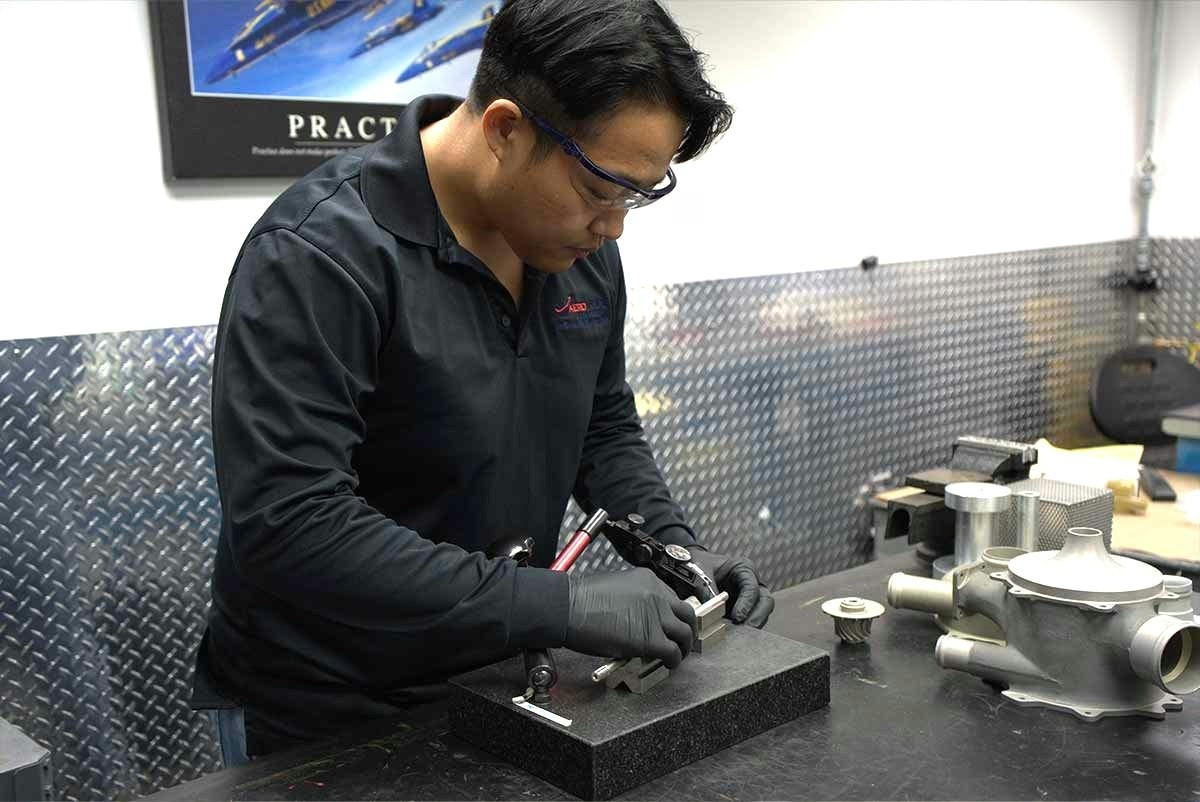
PMA Parts and DER Repairs Gain Traction Amid Aviation Supply Chain Challenges
The global aviation supply chain is facing unprecedented strain due to widespread shortages and rising costs. Jim Scott, CEO and Co-founder of Artemis Aerospace, highlights the growing significance of Parts Manufacturer Approval (PMA) parts and Designated Engineering Representative (DER) repairs in addressing these challenges, while also engaging with ongoing industry debates surrounding their adoption.
Rising Costs and Supply Constraints
The aviation sector is grappling with relentless price increases driven by inflation, geopolitical tensions, and tariffs imposed by the United States. These factors have contributed to tighter supply and significant delays in aircraft production and parts availability. Industry analysts warn that these disruptions could cost airlines more than $11 billion by 2025. The shortage of maintenance engineers, intensified by pandemic-related furloughs, retirements, and a lack of new entrants, further exacerbates the situation, compelling airlines to extend the operational life of older aircraft.
A recent MarketResearch.com report values the global commercial aircraft PMA market at $11.4 billion in 2024, with projections reaching $14.9 billion by 2030, reflecting a compound annual growth rate of 3.6%. The United States accounts for $2.6 billion of this market, while China is expected to grow more rapidly, reaching $2.9 billion by 2030 with a 5.3% growth rate. Other significant markets include Japan, Canada, and Germany, all demonstrating steady expansion. Demand for DER-related services is also increasing in tandem.
Shifting Industry Dynamics and Regulatory Assurance
The growing reliance on PMA parts and DER repairs represents a notable shift in an industry historically dominated by original equipment manufacturers (OEMs). Scott notes that both PMA parts and DER repairs were once considered last-resort options but have now become integral components of the aviation supply chain. He observes that the perception of these alternatives as inferior is outdated and unwarranted.
OEMs have traditionally maintained control through intellectual property rights, design data, and maintenance schedules, often bundling services to encourage airlines to remain within their ecosystems. This has reinforced the belief that alternatives are less reliable or responsible. However, Scott contends that such a stance is no longer viable given current market realities.
In response to supply chain pressures, major industry players are adapting their strategies. Pratt & Whitney is pursuing vertical integration and employing data-driven materials forecasting to enhance supply chain control and increase parts production. GE Aerospace is investing in inventory management and localizing parts to reduce turnaround times and improve repair efficiency. Meanwhile, Airbus and Boeing advocate for broadening the supplier base to alleviate persistent bottlenecks.
Despite some lingering skepticism, Scott emphasizes the robustness of regulatory frameworks governing PMA parts and DER repairs. He asserts that these components and services are subject to stringent oversight, with safety remaining paramount. Regulatory authorities such as the Federal Aviation Administration (FAA), Civil Aviation Authority (CAA), and European Union Aviation Safety Agency (EASA) enforce rigorous approval processes. PMA parts must comply with strict airworthiness and quality assurance standards, while DERs are authorized to make critical engineering decisions on behalf of the FAA.
As the aviation industry continues to navigate supply chain disruptions, PMA parts and DER repairs have evolved from contingency measures into essential tools for sustaining fleet reliability and meeting increasing passenger demand.

Etihad Airways Suspends Airbus A380 Flights on Key Route

Aditya Birla Group Seeks Approval for Aircraft Leasing in GIFT City

Qatar Airways Highlights Innovation and Connectivity at Arabian Travel Market 2026

Hong Kong's Five-Year Plan Includes Andrew Fan's Aircraft Parts Processing Hub Proposal

ACIA Aero Leasing Delivers ATR72-600 to Air Nostrum

RTX Appoints Jill Albertelli as Head of Pratt & Whitney

TAT Technologies Joins Beyond Aero Hydrogen Aircraft Program

AURAK Study Highlights Barriers to Air Taxi Adoption in Emerging Economies

Xiamen Air Selects Altitude for 787 Maintenance at Heathrow

Etihad and Swissport Extend Global Partnership
