Изображение

Превращайте аналитические выводы ИИ в реальные действия

Присоединяйтесь к списку ожидания AeroGenie уже сегодня!

В тренде

Categories

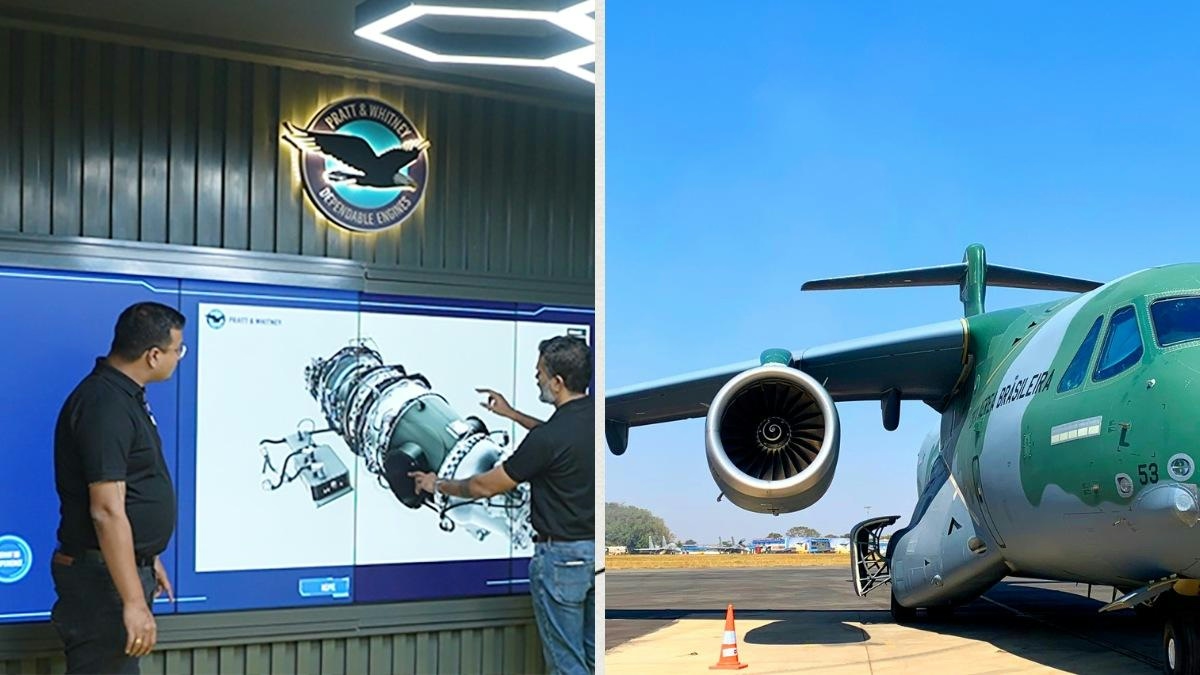
Pratt & Whitney Celebrates 100 Years in New Delhi, Highlights India Partnership and Future Aviation Innovations
January 15, 2026By ePlane AI
Pratt & Whitney Celebrates 100 Years in New Delhi, Highlights India Partnership and Future Aviation Innovations
0
0
Pratt & Whitney
India Aviation Market
Aviation Innovation

Pratt & Whitney Celebrates 100 Years in New Delhi, Emphasizes India Partnership and Future Innovations

In December 2025, Pratt & Whitney, a business unit of RTX, commemorated its centennial anniversary in New Delhi, marking a century since Frederick Rentschler revolutionized aviation with the introduction of the air-cooled R-1340 Wasp radial engine. This 1925 innovation shifted the industry away from liquid-cooled engines and established foundational engineering principles that continue to guide the company’s operations today.

Strengthening Ties with India’s Expanding Aviation Market

At the centennial event, Pratt & Whitney President Shane Eddy highlighted the company’s enduring partnership with India, which has spanned over seventy years. Eddy emphasized the company’s philosophy that “the best airplanes are designed around the best engines,” linking this approach to broader themes of economic growth and national security. He noted that Pratt & Whitney’s customers play a vital role in connecting people, fostering economic development, and defending freedom.

India’s aviation sector has emerged as the world’s third largest by passenger traffic, experiencing annual growth rates between 7 and 10 percent. The domestic market is dominated by single-aisle aircraft, while government initiatives aimed at enhancing regional connectivity have increased demand for turboprops and smaller planes. In response to this growth, Pratt & Whitney and its parent company RTX have significantly expanded their footprint in India, employing over 8,000 people across engineering, supply chain, manufacturing, digital capabilities, and training functions. Approximately 900 of these employees work directly for Pratt & Whitney.

RTX currently sources more than half a billion dollars annually from Indian suppliers, a figure expected to increase in the coming years. Over the past five years, the company has invested around $250 million in developing training, engineering, operations, and digital centers throughout India. Notable facilities include the Collins India Operations Center in Bengaluru and a Customer Training Center in Hyderabad, which serves clients across Asia and the Middle East. Engineering and digital teams distributed across the country support Pratt & Whitney’s global engine programs.

Eddy also praised the maturity of India’s aerospace supply base, describing it as a self-sustaining engine of growth. He pointed to collaborations with Indian startups that have enhanced Pratt & Whitney’s digital capabilities, citing the co-development of “Percept,” an AI-based tool that supports operational efficiency.

Navigating Industry Challenges Amidst Global Competition

Pratt & Whitney’s centennial celebration coincides with a period of intensified competition and evolving market dynamics. Airbus, a major competitor, has raised concerns regarding the availability of Pratt & Whitney engines for future aircraft, highlighting potential supply chain constraints. These challenges are compounded by forecasts in the global business aviation engine market, where significant deliveries are expected from the Williams FJ44, Honeywell HTF7000, and Pratt & Whitney Canada PT6 series. Such trends may impact Pratt & Whitney’s market position and influence its strategic partnerships both within India and internationally.

Despite these headwinds, Pratt & Whitney remains steadfast in its commitment to innovation and collaboration in India. Eddy underscored the importance of the company’s highly skilled technical teams in the country, which provide a strong foundation for expanding its presence and strengthening the supply chain.

Looking ahead, Pratt & Whitney aims to leverage its deep-rooted partnerships in India and ongoing technological advancements to navigate the rapidly evolving global aviation landscape as it embarks on its next century.

More news
Kissimmee Gateway Airport Highlights Future of Flight at Advanced Air Mobility Event

Kissimmee Gateway Airport Highlights Future of Flight at Advanced Air Mobility Event

Kissimmee Gateway Airport Highlights Future of Flight at Advanced Air Mobility Event KISSIMMEE, Fla. — Kissimmee Gateway Airport took center stage on Tuesday as it hosted a pivotal event focused on advanced air mobility (AAM), drawing industry leaders, technology innovators, and public officials to explore the transformative potential of this emerging sector. The gathering underscored the airport’s role in shaping the future of transportation and economic development in Central Florida. Advancing Electric Aviation and Infrastructure The event, held at the Signature Aviation Hangar, convened representatives from Signature Aviation, BETA Technologies, and Bell Dancy Industries, alongside State Senator Kristen Arrington and Florida Representatives Leonard Spencer and Jose Alvarez. Shaun Germolus, Director of Aviation for the City of Kissimmee, served as emcee, guiding discussions centered on the rapid advancement of electric vertical takeoff and landing (eVTOL) aircraft—often referred to as flying taxis—and the critical infrastructure needed to support their integration into commercial aviation. Participants emphasized the importance of collaborative partnerships, infrastructure investment, and legislative backing to prepare communities for the commercial deployment of electric aviation. Senator Arrington highlighted the significance of recent legislation in propelling these innovations forward, noting that Kissimmee Gateway Airport is strategically positioned to lead this effort. She remarked, “Flying taxis are part of the future of transportation, and more people in the air means fewer people on our roads.” Germolus reinforced the airport’s commitment to laying the groundwork for AAM, stating that the convergence of industry leaders, technology partners, and government officials at Kissimmee Gateway Airport reflects growing interest and cooperation in this field. He stressed that such collaboration is essential for Central Florida to capitalize on the opportunities presented by this emerging technology. Current Developments and Future Challenges While the event focused on future prospects, attendees were informed that electric aviation is already progressing at Kissimmee Gateway. BETA Technologies is conducting ongoing testing of its ALIA electric aircraft at Signature Aviation, where electric aircraft charging infrastructure has also been installed. These initiatives position the airport at the forefront of evaluating the systems necessary for future AAM operations. Despite this momentum, challenges remain. Tony Lefebvre, CEO of Signature Aviation, referenced a recent Aviation Week survey highlighting infrastructure capacity as a primary concern for airports preparing to accommodate increased AAM activity. The market’s growing enthusiasm is evident in milestones such as Volant Aerotech’s successful piloted transition flight and its $450 million capital raise, alongside advancements by competitors like Aerofugia in eVTOL technology and battery performance. Kissimmee Gateway’s strategic location, comprehensive aviation infrastructure, and proximity to innovation centers such as NeoCity make it an ideal site for aircraft demonstrations, pilot training, maintenance, and testing as the AAM industry evolves. City Manager Mike Steigerwald and Commissioner Jeanette Martínez emphasized that advanced air mobility represents more than a novel mode of travel; it holds the promise of attracting high-tech employers, generating well-paying jobs, stimulating private investment, and solidifying Kissimmee’s status as a regional hub for aerospace innovation. As electric aviation approaches commercial viability, Kissimmee Gateway Airport is positioning itself—and Central Florida—at the forefront of this next era in flight.
Qantas A380 Model with Engine Sells for Record Price

Qantas A380 Model with Engine Sells for Record Price

Qantas A380 Engine Sells for Record Price Amid Industry Shifts For Captain Richard Champion de Crespigny, the model of the Qantas Airbus A380—registration VH-OQA—that has stood in his home office for 15 years represents more than just an aircraft. It is a symbol of resilience and respect, recalling the harrowing day when he faced a catastrophic engine failure at 39,000 feet, endangering the lives of 469 people over Indonesia. Now, that very aircraft has re-emerged in the news as Qantas has sold one of its A380 engines for a record price, highlighting a significant financial transaction and broader transformations within the aviation sector. The Declining Role of the Airbus A380 The sale occurs amid growing uncertainty about the future of the Airbus A380. Despite its engineering achievements and capacity to carry hundreds of passengers, the A380 has struggled to secure a lasting role in airline fleets worldwide. Airbus attributes this to several factors, including the 2008 global financial crisis and a shift in industry preferences toward more fuel-efficient twin-engine jets. These smaller aircraft enable airlines to operate direct flights between secondary city pairs, bypassing traditional hub airports and offering greater operational flexibility. Qantas has been a prominent participant in this industry evolution. Its Project Sunrise initiative, which aims to launch non-stop ultra-long-haul flights using modified Airbus A350-1000ULR jets, exemplifies a strategic pivot toward meeting passenger demand for direct, point-to-point travel. This approach contrasts sharply with the hub-and-spoke model that once justified the A380’s size and range, signaling a fundamental change in airline route planning and fleet composition. Operational Challenges and Strategic Implications The A380’s legacy has also been complicated by operational challenges. Recent global inspections revealing wing cracks have raised safety and maintenance concerns, adding further uncertainty to the aircraft’s future viability. For Qantas, the record-breaking sale of the A380 engine is more than a financial milestone; it underscores the practical and strategic decisions airlines must make as they navigate evolving market conditions and technical issues. While Captain de Crespigny’s model remains a poignant reminder of a dramatic moment in aviation history, the sale of the A380 engine marks a significant turning point for Qantas and the wider industry. It symbolizes both the conclusion of an era for the A380 and the ongoing transformation of global air travel.
Malaysia Airlines Considers C919 for 2035 Fleet Plans

Malaysia Airlines Considers C919 for 2035 Fleet Plans

Malaysia Airlines Evaluates COMAC C919 for 2035 Fleet Renewal Malaysia Airlines is exploring the possibility of incorporating the Chinese-manufactured COMAC C919 into its narrowbody fleet renewal plans slated for the mid-2030s. However, airline executives stress that the aircraft must first secure certification from Western regulatory bodies before any formal order can be considered. Bryan Foong, chief executive of the airline business at Malaysia Aviation Group, explained that the C919 was not available in time to be included in the current fleet renewal program, which already defines narrowbody requirements through approximately 2035. “It is a credible fleet option, but it needs a bit more maturity,” Foong remarked. “At that time, the C919 was not ready, it missed the window.” He further emphasized that certification by the European Union Aviation Safety Agency (EASA), and ideally the US Federal Aviation Administration (FAA), would be essential for the aircraft’s acceptance in Malaysia and other international markets served by the airline. Foong also highlighted that Malaysia Airlines would conduct a thorough evaluation of the C919’s operational performance, economic viability, and the manufacturer’s capacity to provide comprehensive maintenance, repair, and overhaul (MRO) support throughout Southeast Asia. While the airline maintains regular communication with COMAC, which has established a representative office in Singapore, there are currently no active discussions regarding orders. Notably, COMAC’s smaller ARJ21 regional jet is already in service with carriers in Vietnam, Laos, and Cambodia. Fleet Strategy Amid Industry Challenges and Regional Competition Malaysia Airlines’ fleet planning occurs against a backdrop of significant industry challenges and evolving market dynamics. The global supply chain disruptions experienced in 2024, which affected Malaysia Airlines alongside other carriers, have underscored the critical importance of dependable aircraft delivery schedules and robust after-sales support. Looking toward 2035, the airline faces intensifying competition from both regional and international players. For instance, Royal Jordanian Airlines is expanding its fleet with Airbus A330 freighters, while Turkish Airlines is growing its third-party MRO business. Within Southeast Asia, competitors such as AirAsia are actively renewing their fleets and retiring older Airbus A320 models, reflecting a broader regional drive toward modernization and operational efficiency. For its current narrowbody renewal, Malaysia Airlines has committed to Boeing 737 MAX aircraft. According to ch-aviation data, the airline has firm commitments for twelve Boeing 737-10s and twenty-five additional Boeing 737-8s. The existing fleet comprises 94 aircraft, including three A330-200s, three A330-200 freighters, thirteen A330-300s, ten A330-900neos, seven A350-900s, eighteen Boeing 737-8s, and forty Boeing 737-800s. As Malaysia Airlines continues to assess future fleet options, the maturity of emerging aircraft models, regulatory approvals, and the resilience of global supply chains will remain pivotal factors shaping its long-term strategic direction.
Keilum Positioned to Benefit from Aircraft Engine Supercycle with Key NADCAP Certifications

Keilum Positioned to Benefit from Aircraft Engine Supercycle with Key NADCAP Certifications

Keilum Positioned to Benefit from Aircraft Engine Supercycle with Key NADCAP Certifications Strategic Positioning Amid Industry Growth Keilum, a specialist manufacturer of aircraft engine components, is well-positioned to leverage the ongoing expansion of the global aviation sector and persistent supply constraints in engine parts. The company’s distinctive technological advantage—being the sole Korean firm to hold all four major NADCAP special process certifications—combined with a solid base of long-term contracts, is expected to underpin its growth trajectory. A recent report by independent research firm ValueFinder, dated July 15, projects that the global operating aircraft fleet will double by 2044. The report also highlights continuing bottlenecks in engine parts production, forecasting an average annual growth rate of 5.5% in the global aircraft engine market through 2033. As of May, Boeing and Airbus collectively held a backlog of approximately 16,000 aircraft orders, equivalent to around 12 years of average industry production, underscoring sustained demand. Company Profile and Technological Edge Founded in 2009 and publicly listed on KOSDAQ since 2017, Keilum specializes in manufacturing aircraft engine parts and plant equipment. It distinguishes itself as Korea’s only Tier-1 supplier with a direct contract with France’s Safran and uniquely holds comprehensive NADCAP certifications across all four critical special processes—Electrical Discharge Machining (EDM), Heat Treatment (HT), Non-Destructive Testing (NDT), and Welding (WLD)—which are essential for producing high-temperature engine components. The company also possesses advanced capabilities in 5-axis Cubic Boron Nitride (CBN) creep feed grinding and designs its own CBN grinding wheels in-house. Financially, Keilum reported consolidated sales of 8.17 billion won in 2025. In the first quarter of the same year, the company posted sales of 2.66 billion won, an operating profit of 900 million won, and an operating margin of 3.3%. ValueFinder analyst Jeon Woobin emphasized Keilum’s order backlog of approximately 200 billion won, secured through long-term agreements with global clients including Safran and Hanwha Aerospace. This backlog represents roughly 2.4 years of consolidated sales for 2025 and, specifically for aircraft components, about eight years of sales within the engine division, providing strong revenue visibility. Growth Prospects and Challenges Jeon further noted that as CFM plans to increase production of its LEAP engines from 1,407 units in 2024 to 2,600 units by 2028, Keilum’s orders for Low Pressure Turbine (LPT) vanes are expected to rise correspondingly. The company’s profitability could see significant improvement if it successfully internalizes the Honeycomb Liner material process later this year and obtains NADCAP VPA coating certification by 2027. These developments would enable Keilum to expand its parts portfolio beyond LPT to include High Pressure Turbines (HPT) and Thermal Barrier Coating (TBC) modules, potentially elevating the operating margin of its engine division to over 16%. Despite these promising prospects, Keilum faces formidable competition from established global players such as RTX and MTU, which hold substantial market shares and offer extensive aftermarket services. As demand for advanced engine technologies intensifies, these competitors are expected to increase investment in research and development and broaden their service capabilities to maintain market dominance. Additionally, the cyclical nature of the aircraft engine market may temper investor enthusiasm, resulting in mixed market responses. The industry’s transition toward sustainability, including the adoption of green hydrogen and alternative fuels, presents both opportunities and challenges for Keilum. Successfully adapting to these evolving trends will be critical for the company to sustain its competitive advantage amid shifting market dynamics.
Navi Mumbai Airport to Launch International Flights with Abu Dhabi Service on Wednesday

Navi Mumbai Airport to Launch International Flights with Abu Dhabi Service on Wednesday

Navi Mumbai Airport to Launch International Flights with Abu Dhabi Service on Wednesday Navi Mumbai International Airport (NMIA) is poised to inaugurate its first international flight service on Wednesday, with Air India Express commencing a direct route to Abu Dhabi. The inaugural flight, scheduled to depart at 2:55 am, represents a significant milestone for the airport, which began domestic operations just over six months ago on December 25. A New International Gateway for the Mumbai Metropolitan Region Operated by Air India Group’s low-cost subsidiary, the Abu Dhabi service will operate three times weekly, offering travelers in the Mumbai Metropolitan Region (MMR) a convenient direct connection to the United Arab Emirates. According to Adani Airports Holding Ltd (AAHL), the airport’s operator, this achievement is the result of coordinated efforts among government agencies, aviation regulators, airline partners, and other stakeholders, all working to establish NMIA as the region’s second global gateway. NMIA is a joint venture between the Adani Group and Maharashtra government’s urban planning agency, CIDCO. With the launch of this international route, all eight airports under the AAHL portfolio—including Mumbai, Ahmedabad, Jaipur, Lucknow, Thiruvananthapuram, Guwahati, and Mangaluru—now provide both domestic and international services. This expansion highlights the rapid development of India’s newest greenfield international airport and enhances connectivity within one of the country’s most economically dynamic regions. Arun Bansal, CEO of AAHL, remarked, “The launch of our first scheduled international flight marks the beginning of a new phase in Navi Mumbai International Airport’s journey. We thank all state and central government agencies and stakeholders for their invaluable support in helping us achieve this milestone. We also appreciate Air India Express for partnering with us on this important first international route.” Enhancing Cargo Capabilities and Regional Connectivity The inaugural flight will also carry NMIA’s first global perishable export shipment, positioning the airport as an emerging hub for high-value, time-sensitive cargo. AAHL anticipates that this development will improve international market access for Indian exporters and further strengthen the airport’s cargo operations. Currently, NMIA manages approximately 150 air traffic movements daily, connecting 46 domestic destinations. The introduction of international services is expected to increase passenger traffic and generate economic benefits for the region. Nevertheless, the airport faces potential challenges, including competition from established European and Middle Eastern carriers, rising operating costs, and geopolitical uncertainties. Market responses may include heightened demand and economic activity, while competitors such as Etihad and Lufthansa could implement strategic adjustments to maintain market share and enhance connectivity. “As we expand our network with more airline partners and destinations, our focus remains on delivering seamless operations while strengthening Navi Mumbai’s position as a preferred gateway for international travel,” Bansal added. The Abu Dhabi route is the first of several international services planned from NMIA. As the airport continues to broaden its airline partnerships and destination network, it aims to play an increasingly vital role in supporting Mumbai’s aviation capacity as well as India’s growing international connectivity, trade, and tourism.
YVR Advances Baggage Handling with AI and Robotics

YVR Advances Baggage Handling with AI and Robotics

YVR Advances Baggage Handling with AI and Robotics The landscape of airport baggage handling is undergoing a profound transformation driven by rapid advancements in automation, artificial intelligence (AI), and robotics. Airports and airlines are increasingly focused on creating smarter, more resilient, and passenger-centric operations. This shift moves beyond merely automating existing processes to fundamentally reimagining how baggage is managed throughout the airport ecosystem. Reimagining the Baggage Journey Allen Yuarata, Director of Terminal, Baggage & Groundside Services at Vancouver Airport Authority and Captain of the FTE Baggage Innovation Working Group, will address these developments at the forthcoming FTE Global 20th anniversary event in Dallas, Texas, scheduled for 8–10 September 2026. In a session titled “Scaling the Baggage Handling Revolution,” Yuarata and other panelists will explore how the industry can navigate current challenges and seize new opportunities. These include adopting innovative business models, securing diverse funding approaches, and fostering collaborative strategies among stakeholders. Yuarata highlights a critical shift in industry thinking: the focus is no longer on automating existing baggage handling processes but on fundamentally improving the entire movement of baggage. He explains, “The biggest opportunity is to eliminate repetitive, physically demanding work while creating a more predictable and resilient baggage system.” He further notes that robotics, AI, and enhanced data analytics can improve operational consistency, reduce workplace injuries, and provide operators with comprehensive visibility across the baggage journey. Challenges and Industry Response Despite the promise of these technologies, significant challenges remain. Implementing AI and robotics at Vancouver International Airport (YVR) and other major hubs demands a robust AI infrastructure capable of supporting advanced systems. Integration with legacy baggage handling systems and scalability without extensive infrastructure overhaul are essential for successful deployment. Yuarata observes, “The technology is advancing quickly, but the next step is maturity. Airports need solutions that can handle the realities of live operations.” Market reactions to these innovations are varied. While many industry stakeholders welcome the potential efficiency improvements, concerns persist regarding the high initial investment costs and the complexities involved in integrating new technologies with existing systems. The competitive environment is intensifying as some airports and airlines adopt similar technologies to maintain their edge, while others invest heavily in research to develop superior AI and robotics solutions. The global market for specialized, task-specific robots is projected to surpass $257 billion, underscoring the imperative for ongoing innovation. Yuarata emphasizes that successful innovation in baggage handling must begin with a clearly defined operational challenge rather than technology seeking a problem to solve. He states, “The best projects bring together airports, airlines, and technology partners early so everyone understands the operational challenge and what success looks like. It’s also important to be willing to test, learn, and adapt rather than expecting perfection from day one.” Vancouver International Airport has established itself as a leader in baggage handling innovation. As the industry advances, collaboration and adaptability will be crucial to unlocking the full potential of AI and robotics in transforming baggage operations worldwide.
Vertiport Development Advances Air Taxi Plans in Central Florida

Vertiport Development Advances Air Taxi Plans in Central Florida

Vertiport Development Advances Air Taxi Plans in Central Florida Central Florida is poised to enter a new chapter in transportation as plans for air taxi services progress at Kissimmee Gateway Airport. Aviation leaders recently unveiled infrastructure enhancements aimed at supporting electric vertical takeoff and landing (eVTOL) aircraft, marking a significant step toward the region’s anticipated launch of air taxi operations. Infrastructure and Technological Advancements At the heart of these developments is the proposed construction of a vertiport—a dedicated facility designed to accommodate the landing, charging, and maintenance of electric air taxis. Matt Franklin of Signature Aviation emphasized the region’s readiness for the forthcoming electric aviation revolution, stating, “For the upcoming electric aviation revolution that we are anticipating, Kissimmee is ready as of today.” Shaun Germolus, Director of Aviation for the City of Kissimmee, outlined the strategic vision behind the project, highlighting the potential for dramatically reduced travel times between key destinations. He noted that air taxis could enable trips from the Orlando area to Tampa in approximately 30 minutes, allowing passengers to complete a round trip with a lunch break in the time it currently takes to drive along Interstate 4. During a recent tour for WFTV, officials showcased new technologies integral to the airport’s modernization. Among these are the Beta Charge Cube, which facilitates rapid charging of eVTOL aircraft, and the Alta system, which assists in-flight navigation for air taxis. These innovations are part of a broader initiative to usher in a quieter, zero-emission, and safer mode of transportation. Challenges and Industry Dynamics Despite the promising advancements, the widespread adoption of air taxis faces considerable challenges. Regulatory approval and safety remain primary concerns as the industry awaits comprehensive guidance from federal authorities. Recent legal disputes involving Boeing-owned Wisk Aero have underscored the critical importance of stringent safety standards. Meanwhile, competition is intensifying among key players such as Joby Aviation, which has formed a partnership with Toyota and is actively pursuing Federal Aviation Administration (FAA) certification and strategic alliances. Investor sentiment reflects a cautious optimism. While some view air taxis as a transformative innovation with significant potential, others remain wary due to the high costs involved and ongoing technological uncertainties. The success of projects like Kissimmee’s vertiport will depend on overcoming these hurdles and demonstrating consistent, safe operations. Testing of air taxi systems is already underway in Kissimmee and other locations. Germolus reported that most test flights have covered circuits of approximately 60 miles, with some extending to 80 miles. He added that aircraft can be recharged within 50 minutes, a critical factor for operational viability. Legislative Support and Future Outlook Legislative measures are also advancing to support the development of air taxi infrastructure. Florida’s House Bill 1093 authorizes the Department of Transportation to assist in funding public vertiport projects and promotes public-private partnerships to accelerate development. Officials regard this legislative backing as essential for establishing the necessary infrastructure before air taxis can become a mainstream transportation option. Although no definitive timeline has been set for public availability, Kissimmee’s ongoing preparations position Central Florida as a leading hub in the emerging air taxi industry. The region’s investments in infrastructure and technology signal a commitment to embracing the next generation of urban mobility.
Outlook for the GCC Engine MRO Market Through 2034

Outlook for the GCC Engine MRO Market Through 2034

Outlook for the GCC Engine MRO Market Through 2034 The aviation sector in the Gulf Cooperation Council (GCC) region is experiencing a pivotal transformation. The focus is gradually shifting from rapid fleet expansion to prioritizing the long-term reliability and efficiency of existing aircraft. As the region rebuilds capacity, enhances international connectivity, and invests heavily in airport infrastructure, maintaining the operational safety and efficiency of aircraft engines has become paramount. This evolving emphasis is redefining the GCC as a strategic hub for aircraft engine Maintenance, Repair, and Overhaul (MRO) services. Evolving Priorities in Engine Maintenance Aircraft engine MRO involves a range of specialized services, including detailed inspections, component replacements, non-destructive testing, digital diagnostics, and comprehensive overhauls. These processes are critical to ensuring the safety, efficiency, and regulatory compliance of modern turbofan engines, which face unique operational challenges in the Gulf’s harsh environment. High temperatures, airborne sand, and intensive utilization place considerable stress on engine components, necessitating rigorous maintenance protocols. As flight hours accumulate, the demand for engine inspections and scheduled overhauls intensifies. Airlines in the region are increasingly prioritizing engine reliability, while GCC governments are investing in domestic MRO capabilities to reduce dependence on overseas repair centers. This strategic realignment is attracting global aerospace companies and positioning the GCC as a long-term support hub, moving beyond its traditional role as a passenger transit market. Market Size and Growth Projections Industry estimates from The Report Cube value the GCC aircraft engine MRO market at approximately USD 3.95 billion in 2026. Projections indicate that this figure will nearly double to USD 7.59 billion by 2034, representing a robust compound annual growth rate (CAGR) of around 8.5%. This growth underscores the increasing importance of engine maintenance services in the region’s aviation ecosystem. Drivers of Demand and Market Dynamics The expansion of regional airline fleets to meet rising passenger and cargo demand is a primary driver of sustained maintenance requirements. Concurrently, governments in countries such as Saudi Arabia and the United Arab Emirates are investing in airport expansions, certified maintenance facilities, and the development of engineering talent to bolster domestic MRO capabilities. This focus on regionalization enables airlines to reduce turnaround times and logistics costs by relying on local service providers. Technological advancements are also reshaping the market. The adoption of predictive maintenance technologies—including engine health monitoring systems, artificial intelligence, and digital inspection platforms—allows operators to anticipate potential issues and minimize unexpected downtime. Recent industry developments, such as BeauTech’s 10-year spare engine agreement, highlight the growing emphasis on long-term planning for spare engine availability, further stimulating demand for MRO services across the GCC. Challenges and Innovation Despite the positive outlook, the market faces challenges. Geopolitical volatility in the Middle East, particularly affecting sectors like offshore support vessels (OSVs), can disrupt operations and impact maintenance schedules. Nevertheless, the industry’s commitment to sustainability and the integration of advanced technologies such as predictive analytics and additive manufacturing are fostering innovation and operational efficiency. Companies that successfully adopt these innovations are poised to gain a competitive advantage in the evolving MRO landscape. Conclusion As the GCC aviation industry matures, the engine MRO market is projected to experience sustained growth through 2034. Strategic investments, technological innovation, and a concerted shift toward regional self-sufficiency are positioning the Gulf as a leading center for aircraft engine maintenance and support. This development is crucial to ensuring the reliability and competitiveness of the region’s aviation sector in the years ahead.
Pentastar Aviation Expands Fivestar Gourmet with Acquisition of Gourmet Airfare

Pentastar Aviation Expands Fivestar Gourmet with Acquisition of Gourmet Airfare

Pentastar Aviation Expands Fivestar Gourmet with Acquisition of Gourmet Airfare Pentastar Aviation, a prominent global private aviation services provider headquartered in Waterford Township, has announced the expansion of its in-house catering operation, Fivestar Gourmet, through the acquisition of Gourmet Airfare. This longtime private aviation catering provider operates at Detroit Metropolitan Airport (DTW) in Romulus. The acquisition grants Fivestar Gourmet a full-service kitchen facility at DTW, complementing its original base at Oakland County International Airport and significantly enhancing its regional catering capabilities. Financial details of the transaction were not disclosed. Expansion of Regional Catering Services With the integration of Gourmet Airfare, Fivestar Gourmet will extend its services across multiple airports in the region, including Coleman A. Young International Airport (Detroit City Airport), Oakland County International Airport, Toledo Express Airport, Willow Run Airport, Ann Arbor Municipal Airport, and Capital Region International Airport in Lansing, among others. Customers previously served by Gourmet Airfare will transition to the Fivestar brand, consolidating the catering services under one umbrella. Brad Bruce, president and CEO of Pentastar Aviation, emphasized the company’s commitment to customer service, stating that the expansion allows the team to better serve its clientele through increased accessibility and additional locations. Fivestar Gourmet caters to a diverse range of clients, from individual business travelers and families to large corporate flights and professional sports teams. The company manages catering logistics, accommodates dietary preferences, and handles special requests, all while providing access to an extensive recipe library and custom menu development. Ben Hammond, vice president of FBO services at Pentastar Aviation, highlighted the team’s dedication to precision and personalized service, noting that every order is carefully tailored to meet the specific needs of each customer. Industry Context and Challenges The acquisition occurs amid a highly competitive travel and aviation sector, where private equity firms and larger groups are actively pursuing consolidation through acquisitions. Pentastar Aviation faces several challenges in this environment, including regulatory scrutiny, the integration of two distinct brands, and the management of operational synergies. Market observers have noted potential skepticism from investors regarding the long-term profitability of gourmet catering services within the aviation industry. Additionally, competitors may respond with strategic adjustments or aggressive pricing to protect their market share. Founded in 1964, Pentastar Aviation offers a comprehensive suite of services, including aircraft maintenance, private jet charters, aircraft management, fixed-base operator (FBO) services, full maintenance, repair, and overhaul (MRO) services, in-house catering through Fivestar Gourmet, and advisory services. The company is owned by Edsel B. Ford II, a former board member of Ford Motor Company. For further information, visit pentastar.aero or pentastar.aero/fbo/fivestar-gourmet.
Boeing Reports Highest First-Half Aircraft Deliveries Since 2018

Boeing Reports Highest First-Half Aircraft Deliveries Since 2018

Boeing Reports Highest First-Half Aircraft Deliveries Since 2018 Boeing achieved a significant milestone in June by delivering 64 jetliners, an increase from 60 in May, culminating in its highest first-half aircraft deliveries since 2018. Over the first six months of the year, the U.S. aerospace manufacturer handed over a total of 314 aircraft, representing a 12% rise compared to the same period last year. This growth underscores Boeing’s ongoing recovery and expansion amid a competitive and evolving global aviation market. Despite this progress, Boeing remains behind its primary competitor, Airbus, which delivered 89 jets in June and 351 aircraft in the first half of the year. Airbus has notably accelerated deliveries of its A320neo family, reinforcing its dominant market position. However, the European manufacturer recently revised its 20-year industry-wide forecast for passenger aircraft demand downward by 1%, attributing the adjustment to geopolitical tensions, including the ongoing conflict in Iran and broader global trade uncertainties. Delivery Breakdown and Production Outlook In June, Boeing’s deliveries comprised 42 of its best-selling 737 MAX jets, 13 787 Dreamliners—including five aircraft delayed due to seat certification issues for the startup carrier Riyadh Air—three 777 freighters, and five 767s, three of which are slated for conversion into KC-46 aerial refueling tankers by Boeing’s defense division. Looking forward, Boeing anticipates an increase in deliveries during the second half of the year, driven by plans to raise monthly production of the 737 MAX from 42 to 47 units. This production ramp-up aims to meet sustained global demand for commercial jets, although manufacturers remain cautious, adjusting forecasts in response to geopolitical and economic uncertainties that continue to influence the industry. Order Activity and Market Dynamics In June, Boeing secured 121 new orders while recording eight cancellations, resulting in a net gain of 113 orders for the month. The company’s cumulative orders for the 737 MAX have now reached 7,206, surpassing the 7,159 orders received for its previous best-selling 737 Next Generation model. Among notable customer developments, Canadian airline WestJet canceled orders for six 737s, while Aviation Capital Group placed an order for six 737s intended for leasing to WestJet. Year-to-date, Boeing has achieved 408 net orders after accounting for cancellations and conversions, reflecting steady demand despite some fluctuations in customer commitments. Competitive Landscape and Industry Outlook Boeing and Airbus continue to dominate the commercial aircraft sector, yet other manufacturers are also experiencing growth. Brazilian aerospace company Embraer, for instance, has maintained its full-year targets for both commercial and business jet deliveries, with a marked increase in executive aviation shipments. Overall, global demand for commercial aircraft remains robust, but the industry faces a complex environment shaped by intensifying competition, shifting market dynamics, and external pressures such as geopolitical conflicts and trade disputes. Both Boeing and Airbus are actively adjusting their strategies and forecasts to navigate these challenges while capitalizing on the sustained appetite for new aircraft worldwide.
line









