Изображение

Превращайте аналитические выводы ИИ в реальные действия

Присоединяйтесь к списку ожидания AeroGenie уже сегодня!

В тренде

Categories

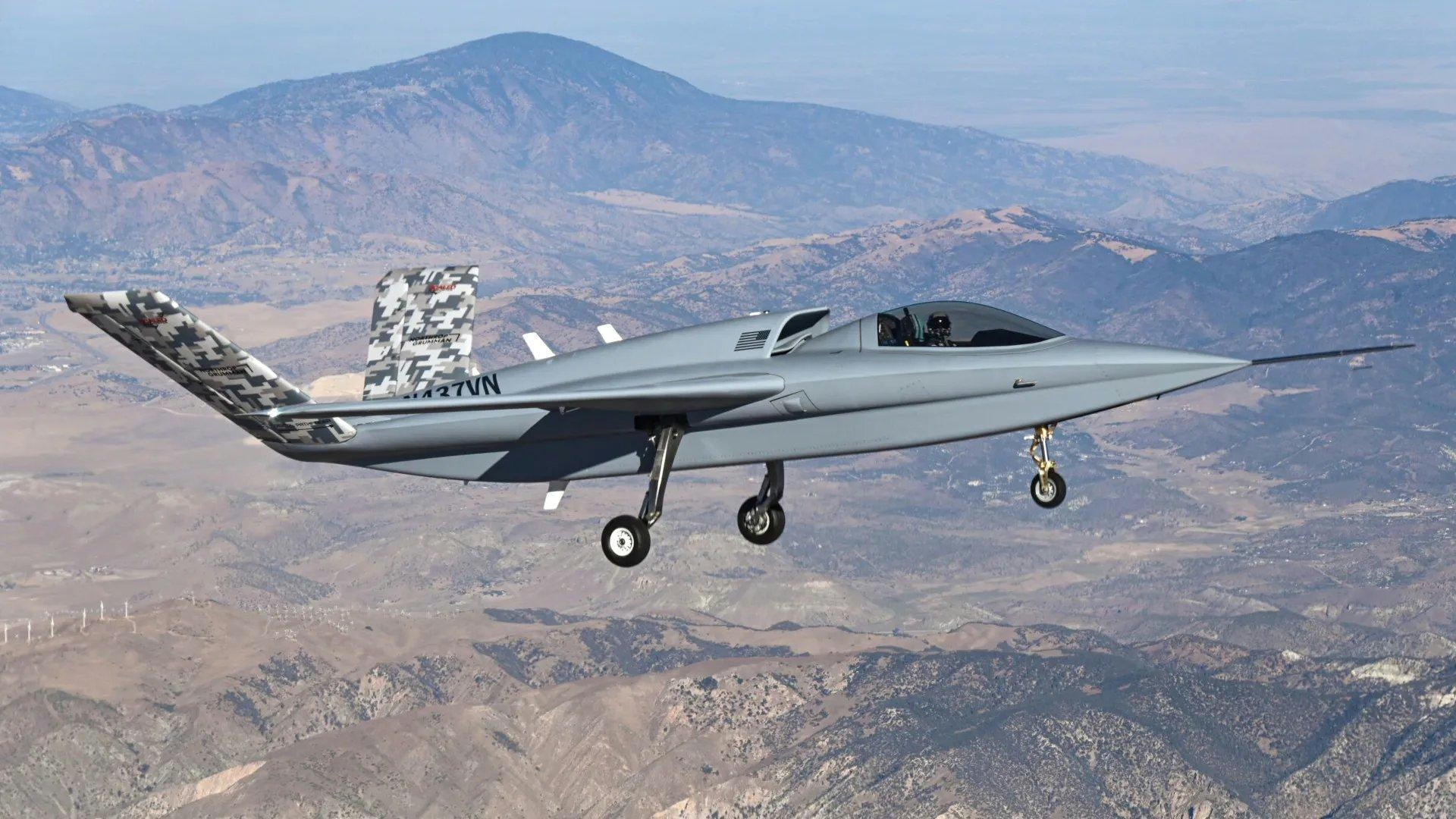
Pratt & Whitney PW500 Engine to Power Northrop Grumman YFQ-48 Autonomous Fighter
April 17, 2026By ePlane AI
Pratt & Whitney PW500 Engine to Power Northrop Grumman YFQ-48 Autonomous Fighter
0
0
Pratt & Whitney PW500
Northrop Grumman YFQ-48
Autonomous Fighter Aircraft

Pratt & Whitney PW500 Engine Selected for Northrop Grumman YFQ-48 Autonomous Fighter

Northrop Grumman has announced the selection of Pratt & Whitney’s PW500 turbofan engine to power its new YFQ-48A Talon Blue autonomous fighter. This marks the first instance of a Pratt & Whitney engine being integrated into an uncrewed fighter prototype. The announcement, made on April 17, underscores a growing trend among developers of Collaborative Combat Aircraft (CCA) to adopt business jet engines. This approach aims to meet the stringent cost and production targets set by the U.S. Air Force and other potential operators.

Adapting a Proven Engine for Military Use

The PW500 engine, widely recognized for its reliability in commercial aviation, has accumulated over 24 million flight hours powering small and mid-sized business jets. Pratt & Whitney undertook an extensive testing program to adapt the engine for military applications. Jill Albertelli, president of military engines at Pratt & Whitney, emphasized that the company leveraged a proven production engine, investing in key validation and capability enhancements to integrate it into the autonomous platform.

The first YFQ-48A prototype, registered as N444LX, is currently undergoing ground trials in preparation for its initial flight test campaign. Northrop Grumman, which self-funded the Talon Blue’s development after being excluded from a previous Air Force competition, received the YFQ-48A designation from the U.S. Air Force in recognition of the design’s potential. The company confirmed that the Talon Blue continues its progression toward first flight in collaboration with the Air Force.

The Growing Role of Business Jet Engines in Autonomous Combat Aircraft

The adoption of commercial business jet engines has become increasingly prevalent among CCA developers. These engines offer a cost-effective alternative to the expensive propulsion systems found in modern fourth- and fifth-generation fighters. This cost advantage is critical for the “optionally attritable” role envisioned for CCAs, which are designed to operate alongside manned fighters such as the Lockheed Martin F-22. These autonomous jets can be deployed on high-risk missions where their recovery is not assured.

Despite Pratt & Whitney’s early lead, the company faces significant competition in this emerging market. Other engine manufacturers, including Honeywell Aerospace and GE Aerospace, are developing new small turbofans in the 800 to 1,600-pound thrust range. The U.S. Air Force has recently awarded contracts for the SkyShot1600 and GEK1500 engines, intensifying the competitive landscape. Additionally, companies like Anduril Industries and General Atomics are advancing their own CCA prototypes, the YFQ-44A and YFQ-42A respectively, utilizing the Williams International FJ44 engine through existing partnerships.

Industry Challenges and Market Implications

The dynamics of the CCA propulsion market are further complicated by broader supply chain and production challenges. Recent disputes between engine manufacturers and airframers, such as ongoing issues between Airbus and Pratt & Whitney over engine delays and supply priorities, highlight the fragility of the supply chain. Moreover, CFM International’s LEAP engine represents another competitive factor as manufacturers vie for market share in this rapidly evolving sector.

As Northrop Grumman and Pratt & Whitney advance the YFQ-48A program, the market’s response will hinge on the ability of engine suppliers to deliver reliable and cost-effective propulsion solutions at scale. This capability is essential to fulfilling the U.S. Air Force’s vision for affordable, mass-produced autonomous combat aircraft.

More news
Hitachi Energy to Develop Power Grid for Flying Taxis

Hitachi Energy to Develop Power Grid for Flying Taxis

Hitachi Energy and Eve Air Mobility Collaborate to Power Flying Taxi Infrastructure Hitachi Energy and Eve Air Mobility have entered into a Memorandum of Understanding to jointly develop the electrical infrastructure critical to the advancement of urban air mobility. This partnership focuses on addressing the complex challenge of powering electric vertical takeoff and landing (eVTOL) aircraft—commonly referred to as flying taxis—by integrating sophisticated charging and grid solutions within urban environments. Eve Air Mobility, supported by aerospace leader Embraer, is at the forefront of designing eVTOL aircraft tailored for city use. Hitachi Energy, recognized globally for its expertise in grid integration and power electronics, will adapt its Grid-eMotion charging platform to meet the specific demands of eVTOL operations. This collaboration aims to bridge the technological gap between innovative aircraft and the reliable, high-capacity power supply essential for their operation. Developing the Foundation for Urban Air Mobility The partnership encompasses several key areas, including ensuring that vertiports—the designated takeoff and landing sites—have consistent and adequate access to electricity. It also involves the development of high-power charging systems capable of supporting the frequent and intensive charging cycles characteristic of urban air taxi services. Furthermore, the collaboration seeks to integrate these new energy demands seamlessly into existing power grids, which were not originally designed to accommodate such intensive and repetitive loads. As urban air mobility approaches commercial viability, attention is increasingly turning to the infrastructure that will support it. Reliable grid connections and rapid charging capabilities are vital for scaling operations, necessitating substantial investment and coordination among city planners, utility providers, and aviation regulators. Sustainability Initiatives and Market Strategy A significant element of the partnership is the plan to repurpose used aviation batteries for stationary energy storage once they are no longer fit for flight. This strategy aims to enhance the sustainability of the urban air mobility ecosystem by extending battery life and minimizing waste. In addition to technical collaboration, the companies will work together on joint business modeling and coordinated customer engagement, with the goal of scaling infrastructure on a global level rather than on a city-by-city basis. This comprehensive approach is essential as the eVTOL market expands and competition intensifies, with other industry players expected to develop or enhance similar infrastructure solutions. Industry Perspectives and Future Prospects While the concept of flying taxis is gaining traction, the path to widespread adoption involves significant challenges. The development of extensive infrastructure requires considerable investment and cross-sector collaboration. Initial responses from traditional aviation and energy sectors may be cautious, but optimism is anticipated to grow as urban air mobility demonstrates its operational and commercial feasibility. Eve Air Mobility, publicly traded on the New York Stock Exchange (NYSE: EVEX, EVEXW) and Brazil’s B3 (B3: EVEB31), projects certification and commercial operations by 2028. The company currently holds letters of intent for approximately 2,700 eVTOL aircraft worldwide. Meanwhile, Hitachi Energy is investing over $9 billion in research and development, manufacturing, and strategic partnerships to advance electrification and modernize power grids. Johann Bordais, CEO of Eve Air Mobility, emphasized the importance of cross-industry collaboration, stating, “Building a successful urban air mobility ecosystem requires collaboration across industries. As the sector moves toward commercial operations, it is increasingly important to understand how charging infrastructure, grid connectivity, and vertiport energy requirements will be integrated into existing networks. The collaboration with Hitachi Energy supports our ongoing efforts to help enable the infrastructure needed for safe, efficient, scalable, and economically sustainable eVTOL operations worldwide.”
Delta and Shell Launch Five-Year Partnership to Advance Sustainable Aviation Fuel

Delta and Shell Launch Five-Year Partnership to Advance Sustainable Aviation Fuel

Delta and Shell Launch Five-Year Partnership to Advance Sustainable Aviation Fuel Shell Aviation and Delta Air Lines have entered into a five-year partnership designed to accelerate the adoption of sustainable aviation fuel (SAF) across several major U.S. airports. This collaboration aims to increase both the availability and utilization of SAF at key hubs, including Los Angeles International Airport (LAX), Portland International Airport (PDX), John F. Kennedy International Airport (JFK), Logan International Airport (BOS), and Minneapolis-St. Paul International Airport (MSP). Expanding Infrastructure and Supply for Sustainable Aviation Fuel Central to the initiative is the development of infrastructure that can support a reliable, long-term supply of SAF, which is widely regarded as essential to the aviation industry’s decarbonization efforts. Both Shell and Delta have highlighted that this partnership builds upon their longstanding relationship and mutual commitment to reducing carbon emissions. Reema Bari, Head of Aviation Americas at Shell, emphasized that the collaboration addresses both current fuel demands and future aviation solutions. Despite the optimism surrounding the partnership, it emerges amid broader industry concerns regarding the capacity of SAF supplies to meet escalating demand and comply with tightening regulatory mandates. Airlines have expressed reservations about whether SAF production can keep pace with future requirements, citing uncertainties related to government initiatives such as the United Kingdom’s SAF fund and the European Union’s ReFuel EU mandate. While some carriers have welcomed these regulatory efforts, doubts persist about the ability of existing supply chains to deliver sufficient volumes of sustainable fuel. Industry Implications and Market Reactions Market responses to partnerships like that of Delta and Shell have been mixed. On one hand, such collaborations are viewed as constructive steps toward achieving industry-wide sustainability objectives. On the other, questions remain about the scalability of SAF production and the readiness of supply chains to support widespread adoption. Competitor reactions remain largely speculative, though ongoing consolidation among European aviation companies suggests a competitive environment increasingly focused on sustainability and market concentration. As Delta and Shell advance their partnership, its success will likely depend not only on infrastructure development and supply agreements but also on the broader industry’s ability to navigate supply constraints and regulatory challenges. The outcome of this collaboration could establish a significant precedent for how airlines and fuel providers work together to meet ambitious decarbonization targets in a rapidly evolving market.
Czech Air Force Receives First Embraer C-390 Transport Aircraft

Czech Air Force Receives First Embraer C-390 Transport Aircraft

Czech Air Force Receives First Embraer C-390 Transport Aircraft Embraer has officially delivered the first C-390 Millennium tactical transport aircraft to the Czech Air Force, marking a pivotal advancement in the modernization of the nation’s airlift capabilities. The handover ceremony took place at Prague Kbely Air Base, with the presence of key figures including Czech Minister of Defence Jaromír Zůna, Chief of the General Staff General Miroslav Hlaváč, Air Force Commander General Petr Tománek, and Bosco da Costa Junior, President and CEO of Embraer Defense & Security. Notably, the delivery was completed within 20 months of contract signing, underscoring the efficiency of the procurement process. Enhancing Strategic Airlift Capacity The introduction of the C-390 Millennium is set to significantly bolster the Czech Air Force’s strategic airlift capacity, facilitating the long-range transport of personnel, heavy cargo, and oversized equipment. Brigadier General Jaroslav Falta, Commander of the 24th Air Transportation Base, highlighted the aircraft’s dual role in supporting NATO missions as well as domestic emergency response operations. This capability enhancement aligns with the Czech Republic’s broader defense objectives and its commitments within the NATO alliance. Operational Integration and Market Implications Despite the promising capabilities of the C-390, the Czech Air Force faces several challenges in integrating the new platform. Initial operational phases will require addressing logistical complexities and ensuring comprehensive training for aircrew and maintenance personnel. Additionally, adapting existing infrastructure and procedures to accommodate the advanced systems of the C-390 will demand considerable time and resources. The Czech Republic’s acquisition also contributes to the growing footprint of the C-390 among European and NATO operators, potentially influencing regional defense procurement trends. Industry analysts suggest that this delivery may stimulate further interest in the C-390 from other military and defense sectors seeking modern airlift solutions. In response, competitors such as Lockheed Martin are expected to emphasize the capabilities of their own platforms, including the C-130J Hercules, which is slated to enter service with the Turkish Air Force. This dynamic is likely to intensify competition within the medium tactical airlift market, as manufacturers vie to demonstrate the advantages of their respective aircraft to prospective customers. By joining the expanding roster of C-390 operators in Europe, the Czech Air Force reinforces the aircraft’s strategic role in the region and signals a notable shift in the landscape of military transport aviation.
Pilots and Airlines Use AI to Optimize Seatbelt Sign Timing

Pilots and Airlines Use AI to Optimize Seatbelt Sign Timing

Pilots and Airlines Employ AI to Enhance Seatbelt Sign Timing Airline passengers frequently question the timing of the seatbelt sign, particularly why it is not always illuminated during turbulence or why it sometimes activates only after a sudden jolt. Captain Will Ware, a veteran US airline pilot with over four decades of experience, explains that the decision to turn the seatbelt sign on or off involves a complex balance of safety considerations, passenger comfort, and the logistical challenges of managing hundreds of individuals onboard. “We don’t want to just leave the seatbelt sign on for the entire flight; that’s not providing much hospitality,” Ware remarked. Challenges in Turbulence Prediction Turbulence remains a persistent and unpredictable hazard in aviation, capable of causing serious injuries when passengers or crew are unbuckled. Traditionally, pilots have relied on a combination of weather forecasts, reports from other aircraft, air traffic control updates, and their own experience to anticipate turbulence. However, these sources can be incomplete, subjective, or slow to reflect real-time conditions, complicating efforts to optimize seatbelt sign usage. Integration of AI and Real-Time Data In response to these challenges, airlines are increasingly turning to artificial intelligence and real-time data analytics to improve turbulence forecasting and refine the timing of seatbelt sign activation. Captain Ware is actively involved in the development and deployment of SkyPath, an AI-driven platform currently utilized by major carriers including United Airlines, Delta Air Lines, and Japan Airlines. SkyPath aggregates weather data collected from iPads equipped with sensors aboard aircraft already in flight, integrating this information with other sources to deliver pilots a comprehensive, real-time assessment of turbulence conditions ahead. The AI model underpinning SkyPath processes and analyzes this data, enabling predictions of turbulence up to 24 hours in advance with an accuracy rate reportedly around 90 percent. Ware described the system’s functionality: “My iPad gives me a little message that says, ‘You might have moderate turbulence in 13 minutes.’ So I can call the flight attendants and say, ‘Hey, I want you to be sitting down in 10 minutes.’ Then I can turn on the sign, and hopefully, before you hit it, everyone is safely seated.” He compared the platform to Google Maps, where individual vehicles contribute data to create a broader picture of traffic conditions. Industry Implications and Limitations While AI tools like SkyPath are bolstering pilots’ ability to forecast turbulence more accurately, several challenges remain. Scaling these AI solutions across entire fleets, addressing skill gaps among flight crews, and maintaining transparency regarding the use of AI-generated information are ongoing concerns. Additionally, some passengers may remain skeptical about the effectiveness of AI-driven seatbelt sign optimization, questioning whether such innovations truly enhance safety or comfort. The competitive landscape within the airline industry is evolving as more carriers adopt advanced AI systems, prompting rivals to accelerate their own technological initiatives. Concurrently, the Federal Aviation Administration (FAA) is exploring AI-supported solutions to improve the management of U.S. airspace, a development that could further influence industry dynamics. Nonetheless, analysts caution that widespread implementation of these technologies will require considerable time. Despite the growing role of AI, Captain Ware underscores that human judgment remains indispensable in the cockpit. “There’s never going to be a perfect tool that tells us exactly when turbulence is going to happen,” he said. “I think passengers think we have a radar for turbulence, but we’re really just using the best tools available to make the safest call.”
Cutter Aviation Delivers 100th Pilatus Aircraft

Cutter Aviation Delivers 100th Pilatus Aircraft

Cutter Aviation Celebrates Delivery of 100th Pilatus Aircraft Cutter Aviation has reached a significant milestone with the delivery of its 100th new Pilatus aircraft, highlighting the company’s rapid expansion since becoming an authorized Pilatus Sales and Service Center in 2018. The landmark delivery occurred on July 15 at Pilatus Aircraft’s U.S. facility in Broomfield, Colorado. This latest addition will join Cutter Aviation’s Phoenix-based shared ownership program, marking the 10th aircraft in that fleet. Will Cutter, president and CEO of Cutter Aviation, emphasized the achievement as a testament to the strength of the Pilatus product line, the solid partnership with Pilatus Aircraft, and the trust placed in the company by its customers. “To reach 100 new Pilatus aircraft deliveries in such a relatively short period of time says a lot about the strength of the Pilatus product line, the relationship we’ve built with Pilatus Aircraft, and the trust our customers place in our team every day,” he stated. Oliver Moehl, president and CEO of Pilatus Aircraft USA, also praised the collaboration, noting that Cutter Aviation has represented the Pilatus brand with professionalism, integrity, and a customer-first approach for nearly a decade—values that align closely with those of Pilatus Aircraft. Growth, Challenges, and Strategic Focus As Cutter Aviation approaches its centenary in 2028, it remains the oldest continuously family-owned and operated fixed-base operator (FBO) in the United States. The company operates 10 locations across the Southwest, including FBOs at Phoenix Sky Harbor, Phoenix Deer Valley, Prescott, Albuquerque, Colorado Springs, and Georgetown, Texas, establishing a strong regional footprint. The milestone of delivering 100 Pilatus aircraft brings new operational challenges. Maintaining high-quality service standards and managing the increased demands of a growing fleet and customer base will be essential. The achievement is expected to attract greater interest from business jet operators seeking reliable maintenance and modification services, potentially increasing demand for Cutter Aviation’s expertise. Industry analysts anticipate that competitors may respond by intensifying efforts to secure similar FAA Supplemental Type Certificates (STCs) or by forming new partnerships to enhance their service offerings. In light of these market dynamics, Cutter Aviation is strategically focusing on obtaining additional authorizations and expanding support for Global and Challenger business jet operators, according to recent company data. As Cutter Aviation celebrates this milestone, its leadership remains committed to sustaining growth while upholding the high standards that have defined the company for nearly 100 years.
AI and Biometrics Transform Aviation, Hospitality, and Corporate Travel in Thailand and the U.S.

AI and Biometrics Transform Aviation, Hospitality, and Corporate Travel in Thailand and the U.S.

AI and Biometrics Transform Aviation, Hospitality, and Corporate Travel in Thailand and the U.S. Technological innovation is rapidly reshaping the travel industry across Thailand, the United States, and beyond. Artificial intelligence (AI), biometrics, and digital platforms are redefining the sectors of aviation, hospitality, and corporate travel. Companies are increasingly investing in automation, real-time data integration, and connected ecosystems to streamline the entire travel experience—from initial search and booking to airport processing and hotel stays. Thailand’s Airport Modernization: Biometrics and Automation at the Forefront Thailand is undertaking a significant modernization of its aviation infrastructure through a new partnership involving Amadeus, Thai Aviation Industries (TAI), and Edgewater Solutions. This collaboration, formalized by a Memorandum of Understanding, aims to deploy advanced digital technologies such as biometric identification, automated bag drops, biometric e-Gates, and off-airport check-in services. These innovations are intended to accommodate Thailand’s growing passenger volume, which currently stands at approximately 140 million annually, by emphasizing software-driven solutions rather than physical expansion. A key element of this initiative is the implementation of an Airport Operational Database (AODB), designed to provide real-time visibility into aircraft movements, apron operations, and ground handling activities. The objective is to reduce passenger wait times and enhance operational efficiency at major hubs like Bangkok Suvarnabhumi Airport. This effort reinforces Thailand’s position as a leading aviation and tourism center in Southeast Asia. Expansion of the U.S. Travel Market Through Strategic Partnerships In the United States, the travel sector is entering a new phase of distribution innovation. Expedia Group and Allegiant Travel Company have announced an exclusive 12-month partnership, making Expedia the first authorized online travel agency to offer Allegiant’s full network of 566 nonstop routes across 124 U.S. cities. This collaboration enables travelers to seamlessly combine Allegiant flights with accommodations and packages available on Expedia, Hotels.com, and Vrbo. For Allegiant, which has traditionally depended on direct bookings, this partnership opens access to a broader leisure market. For Expedia, it completes its coverage of all U.S. commercial passenger airlines, further solidifying its position as a leading online travel marketplace. The Role of AI and Biometrics: Opportunities and Industry Challenges The integration of AI and biometrics is compressing the entire travel funnel into a single, conversational interface, challenging traditional search models and online travel agencies. AI-powered assistants are increasingly managing tasks ranging from flight selection to hotel sourcing. Industry data indicates that AI use in hotel requests for proposals (RFPs) is expected to rise sharply from 32% to 69%. This transformation is driving the convergence of marketing, revenue management, distribution, and public relations, as AI-driven search emerges as a critical new distribution channel. While there is broad agreement that AI will revolutionize hospitality distribution and operations, opinions vary regarding the associated costs, the future of brand identity, and the evolving role of human staff. Hotels and travel companies face the complex challenge of unifying data, integrating AI technologies, and orchestrating human expertise to convert technological and cost pressures into competitive advantages. As Thailand and the United States advance their digital transformations, the global travel industry finds itself at a pivotal juncture—balancing innovation with operational realities and redefining the traveler experience for a new era.
Joramco Supports Jordanian Youth Aviation Development Program

Joramco Supports Jordanian Youth Aviation Development Program

Joramco Supports Jordanian Youth Aviation Development Program Partnership to Foster Aviation Careers Amman-based aircraft maintenance, repair, and overhaul (MRO) provider Joramco, the engineering division of Dubai Aerospace Enterprise (DAE), has formalized a cooperation agreement with Jordan’s Ministry of Youth to promote aviation careers among young Jordanians and contribute to community development. The agreement was signed by Minister of Youth Dr. Raed Sami Al Adwan and Fraser Currie, DAE Engineering’s chief commercial and strategy officer. Under this partnership, Joramco will back youth-oriented programs and invest in local infrastructure, including the development of the Deir Alla Youth Center. The initiative aims to increase awareness of aviation career opportunities across Jordan’s governorates and provide young people with access to technical training relevant to the sector. Empowering Jordanian Youth Through Aviation Dr. Al Adwan underscored the importance of the collaboration in empowering Jordanian youth by opening pathways to employment in the aviation industry, which he described as offering promising prospects. He reaffirmed the Ministry’s dedication to expanding training and empowerment initiatives through cooperation with government entities as well as national and international organizations. Fraser Currie emphasized the strategic value of investing in youth development, stating, “Young people are the driving force behind Jordan’s future, and investing in their development is an investment in the country’s long-term growth.” He expressed hope that the partnership would inspire more young Jordanians to explore aviation opportunities while supporting projects that generate lasting benefits for local communities. Regional Context and Market Considerations Joramco’s initiative emerges amid a competitive regional aviation environment. For instance, national carrier Royal Jordanian is actively pursuing new partnerships in Asia through the Oneworld alliance and expanding its cargo operations with the addition of Airbus A330 freighters. Such developments by competitors may encourage other airlines to enhance their training programs or focus on strategic partnerships and fleet growth to maintain market position. Reactions to Joramco’s youth development program are expected to be varied. While many stakeholders welcome the initiative as a positive step toward youth employment and skills development in aviation, some express concerns regarding the financial sustainability of such programs and the potential risk of saturating the aviation workforce. The evolving strategies of regional airlines could further influence the program’s effectiveness and impact. Despite these challenges, the collaboration between Joramco and the Ministry of Youth represents a significant commitment to Jordan’s future workforce, aiming to equip young people with the skills and opportunities necessary to succeed in the aviation sector.
XeleratedFifty and Future Aero Lab Partner to Accelerate Aviation Innovation

XeleratedFifty and Future Aero Lab Partner to Accelerate Aviation Innovation

XeleratedFifty and Future Aero Lab Forge Strategic Partnership to Advance Aviation Innovation Farnborough, United Kingdom, July 17, 2026 — XeleratedFifty, a global innovation partner renowned for fostering breakthrough technologies across high-impact sectors, has entered into a strategic partnership with Future Aero Lab, a prominent European aviation innovation programme. This collaboration is designed to accelerate the transformation of the aviation industry by supporting startups that are developing cutting-edge solutions. Combining Expertise and Networks to Support Aviation Startups The partnership will harness XeleratedFifty’s extensive global investor network and expertise in scaling early-stage technologies alongside Future Aero Lab’s well-established community of founders, mentors, and investors. Together, the organisations intend to provide aviation startups with mentorship, access to capital, and strategic guidance, focusing on converting promising innovations into commercially viable products. Nichola Quinn, Founder and CEO of XeleratedFifty, emphasized the complementary strengths of the two organisations, stating, “What Stephan and the Future Aero Lab team have built over several years is exceptional — a community that founders trust and investors value. We share the belief that aviation’s transformation depends on the right startups receiving the right support at the right time, and together we can help make that happen faster.” Stephan Uhrenbacher, Founding CEO of Future Aero Lab, highlighted the added value of the partnership: “XeleratedFifty brings exactly what our founders and investors need most: global reach, serious capital relationships, and a team that knows how to move from pilot to scale in industries as complex as aviation. This partnership strengthens what Future Aero Lab has been building since 2020 and gives every founder in our community more resources and expertise, and a clearer path to investment and commercial partnerships.” Launch and Industry Context The partnership will be officially unveiled at the Future Aero Festival, a flagship two-day event scheduled for November 30 and December 1, 2026, at Munich Airport LabCampus. The festival will gather aviation startups, investors, policymakers, and industry leaders, with XeleratedFifty participating as a core partner to enhance investor engagement and activate the innovation ecosystem. A dedicated Startup Mentoring Programme will also be introduced, connecting high-potential ventures with the capital and expertise necessary to scale their operations. This collaboration emerges amid a highly competitive and rapidly evolving aviation landscape. Companies such as Aura Aero and Blue Spirit Aero are advancing hybrid-electric and hydrogen propulsion technologies, intensifying the race for technological leadership. While some investors remain optimistic about the potential for accelerated innovation, others express caution due to delays and safety concerns observed in projects like Wisk Aero’s eVTOL air taxis. Competitors are expected to respond by further differentiating their technologies and addressing safety challenges to secure market share. As the aviation sector navigates unprecedented opportunities and challenges, the partnership between XeleratedFifty and Future Aero Lab aims to equip startups with the necessary resources and support to thrive in this complex environment and drive the next wave of industry innovation.
British Airways Flight 9: The 747 That Lost All Four Engines

British Airways Flight 9: The 747 That Lost All Four Engines

British Airways Flight 9: The 747 That Lost All Four Engines On the night of 24 June 1982, British Airways Flight 9 was cruising steadily over the Indian Ocean when passengers observed an unusual glow along the wings accompanied by a sulphurous haze seeping into the cabin. In the cockpit, the crew witnessed St Elmo’s fire flickering across the windows. Within moments, the unthinkable occurred: all four engines of the Boeing 747-236B, carrying 263 people, failed in rapid succession. Encounter with the Invisible Hazard Flight 9 was en route from Kuala Lumpur to Perth, maintaining an altitude of 37,000 feet. Unbeknownst to the crew, Mount Galunggung in Indonesia had erupted, releasing a vast, invisible cloud of volcanic ash into their flight path. Unlike conventional storm clouds, volcanic ash is dry and abrasive, and it does not register on weather radar. The aircraft flew directly into this hazardous plume, which sandblasted the fuselage and infiltrated the engines, causing them to fail one after another. Despite the gravity of the situation, Captain Eric Moody addressed the passengers with remarkable calmness: “Ladies and gentlemen, this is your Captain speaking. We have a small problem. All four engines have stopped. We are doing our damnedest to get it under control. I trust you are not in too much distress.” Sixteen Minutes Without Power With all engines offline, the 747 transformed into the largest glider in the world, descending silently through the night sky. The flight crew calculated that the aircraft could glide approximately 15 kilometers for every kilometer of altitude lost, providing critical time to attempt engine restarts before a potential emergency water landing. Captain Moody later recounted, “We glided from 37,000 feet to 12,000 feet before we got them going again.” The engines had failed because volcanic ash had melted inside them, forming glass-like deposits that blocked airflow. As the powerless engines cooled during the descent, the glass cracked and flaked away. Once the aircraft descended below the ash cloud, the crew successfully restarted the engines and proceeded to land safely in Jakarta. Impact on Aviation Safety and Industry Practices The Flight 9 incident highlighted the severe dangers posed by volcanic ash to aviation, exposing vulnerabilities not only in aircraft operation but also in broader aspects of aviation safety and fuel supply chains. Around the same time, the closure of the Strait of Hormuz had revealed risks in global jet fuel logistics, intensifying concerns about the reliability of fuel delivery systems. Alongside other incidents, including a Ryanair engine failure and a Boeing 737 crash in the Arabian Sea, Flight 9 prompted increased scrutiny of safety protocols and supply chain resilience within the industry. In response, airlines and their competitors adopted more rigorous safety measures and contingency planning to mitigate similar risks in the future. The legacy of Flight 9 extends beyond its miraculous outcome, influencing industry standards and underscoring the critical importance of preparedness in global aviation. All 263 people aboard survived, a testament to extraordinary airmanship and the enduring lessons derived from this harrowing event.
Air New Zealand Achieves 86% On-Time Arrivals in Auckland, June 2026

Air New Zealand Achieves 86% On-Time Arrivals in Auckland, June 2026

Air New Zealand Achieves 86% On-Time Arrivals in Auckland, June 2026 Air New Zealand has marked a significant improvement in its operational reliability, achieving an 86% on-time arrival rate at Auckland Airport in June 2026. This performance, defined by flights arriving within 15 minutes of their scheduled time, represents an 8% increase compared to the same period in 2025. The milestone underscores the airline’s dedication to punctuality amid a dynamic and challenging aviation environment. Enhancing Punctuality Through Innovation Traditionally, airlines have concentrated on expanding their fleets or increasing airport capacity to improve service. However, Air New Zealand’s recent success highlights a strategic shift towards leveraging predictive technologies, smarter scheduling, and real-time operational decision-making. This approach reflects a broader transformation within the aviation industry, moving away from reactive delay management toward proactive disruption mitigation. Within its domestic network, Air New Zealand achieved an impressive 89% on-time arrival rate, while international services recorded approximately 78.8%. The lower punctuality in international operations is attributed to factors such as longer flight routes, complex aircraft rotations, global air traffic congestion, and weather-related disruptions. Despite these challenges, the airline’s improved performance has been met with positive market responses, bolstering passenger confidence and demonstrating consistent year-on-year operational progress. These gains are particularly noteworthy given the ongoing pressures of rising jet fuel prices and a significant portion of the fleet being temporarily grounded due to engine issues. The Role of Artificial Intelligence in Operational Excellence Central to Air New Zealand’s enhanced punctuality is the integration of artificial intelligence (AI) into its operational framework. While invisible to passengers, AI tools analyze vast amounts of data to predict potential delays before they escalate. These systems evaluate variables including late-arriving aircraft, crew availability, aircraft replacement requirements, airport operational conditions, and network scheduling pressures. By forecasting disruptions, the airline’s operations teams can make timely decisions that minimize passenger inconvenience. AI also facilitates more efficient aircraft assignments, enabling rapid responses to unforeseen issues and supporting more resilient scheduling practices. This represents a significant evolution from traditional airline management, which relied heavily on human judgment and reactive measures. The introduction of AI adds a predictive layer, allowing the airline to anticipate and mitigate disruptions before they propagate through the network. Air New Zealand has previously piloted AI applications in ground operations to streamline aircraft turnaround times, further contributing to improved punctuality. Industry Context and Competitive Implications Air New Zealand’s advancements come at a time when punctuality is becoming an increasingly critical factor in airline competitiveness. Passengers now consider reliability alongside ticket pricing and onboard amenities when selecting carriers. While Air New Zealand focuses on operational resilience through technology, the wider industry continues to grapple with similar challenges. In Europe, for example, consolidation among major airlines such as Lufthansa and Air France-KLM persists as they navigate high fuel costs and fleet limitations. The airline’s 86% on-time arrival rate in June 2026 not only represents a notable operational achievement but also signals a strategic pivot toward technology-driven management. As the aviation sector adapts to evolving challenges, the ability to anticipate and recover swiftly from disruptions may prove to be the defining competitive advantage, offering passengers more predictable and reliable travel experiences.
line









