
Превращайте аналитические выводы ИИ в реальные действия

В тренде
Categories
Preliminary Report Did Not Identify Engine Failure Before Skydiving Plane Crash That Killed 12
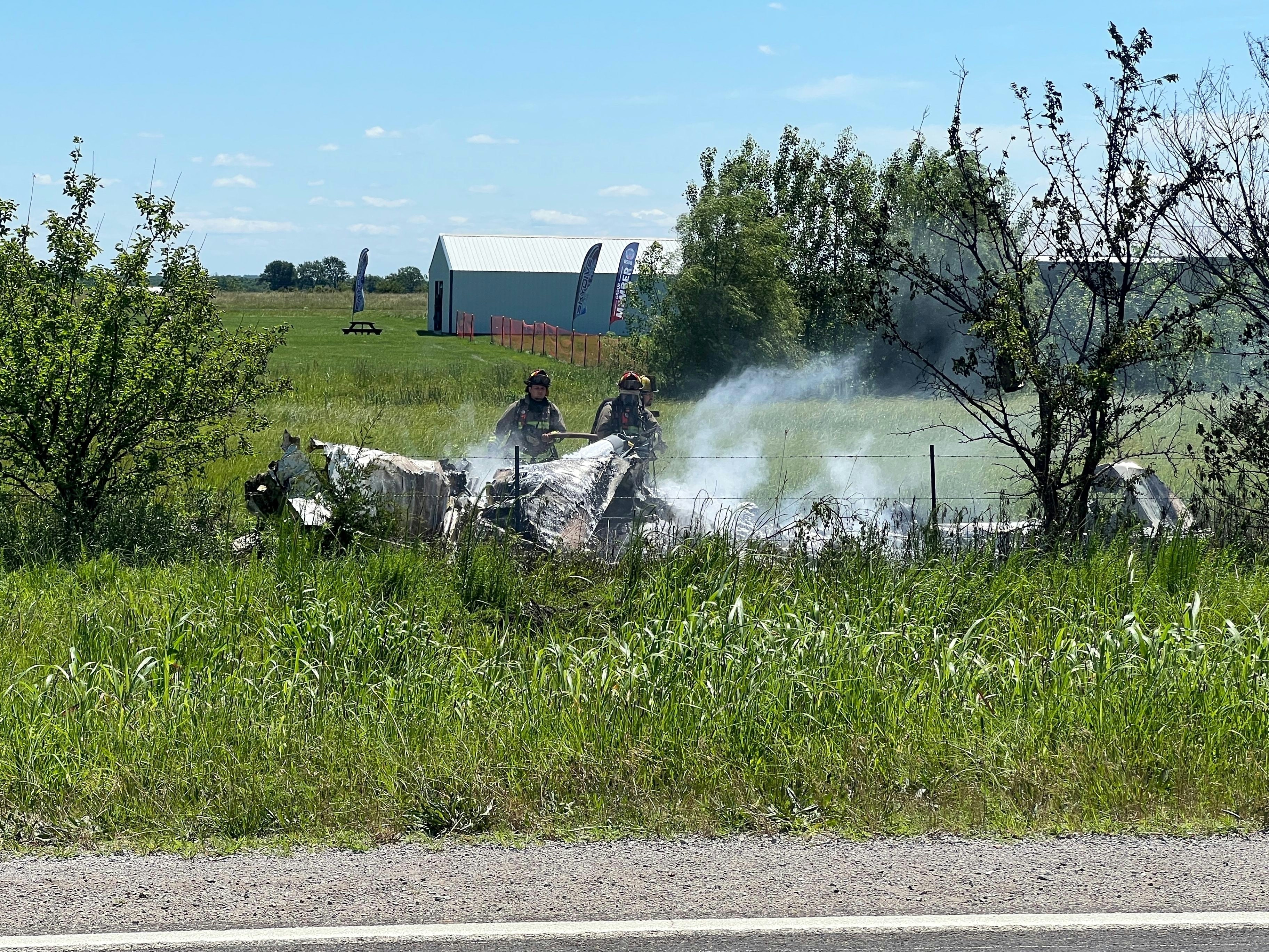
Preliminary Report Finds No Engine Failure Before Missouri Skydiving Plane Crash That Killed 12
A preliminary investigation by federal safety officials has found no evidence of engine failure or other significant mechanical issues preceding the fatal skydiving plane crash in Missouri that claimed the lives of all 12 individuals on board, including several experienced jumpers.
Investigation Details and Findings
The National Transportation Safety Board (NTSB) released its initial report on Thursday following an inspection of the wreckage from the June 14 crash near Butler, approximately an hour south of Kansas City. The report indicates that the aircraft’s engine showed no signs of malfunction or failure that would have impeded normal operation prior to the accident. Fuel samples taken from the truck used to refuel the plane were also found to be free of sediment or debris, ruling out contamination as a factor.
The aircraft, operated by Skydive Kansas City, had completed two flights earlier that day without incident. Weather conditions at the time of the crash were clear, and the pilot was described as having a safety-oriented approach. A review of the skydiving operator’s software confirmed that the plane complied with all weight and balance requirements for the flight.
Notably, the aircraft was not equipped with crashworthy voice or data recorders, devices commonly found on commercial planes that provide critical information about a flight’s final moments. The NTSB noted that such equipment was not required for this type of aircraft. However, investigators recovered damaged GoPro cameras from the wreckage, which may offer additional insights as the investigation continues.
Circumstances of the Crash and Ongoing Investigation
The crash occurred shortly after the plane took off from Butler Memorial Airport at 11:25 a.m. During the initial climb, the aircraft began a gradual left turn, with both wings eventually becoming nearly perpendicular to the ground before the plane impacted a field nose-first and ignited. The resulting fire caused extensive damage to the plane’s structure, cockpit, cabin, and fuel system.
Some family members of the victims were present at the airport to watch the jump and witnessed the tragedy. Among those killed was Jen Sharp, the technology director for the United States Parachute Association, the sport’s governing body.
Initial speculation from local officials suggested the plane might have been losing power and that the pilot was attempting an emergency landing on a nearby highway. However, the NTSB’s preliminary findings have not identified any mechanical or fuel-related issues that would support this theory.
Broader Safety Concerns and Regulatory Context
Previous skydiving plane crashes have been linked to poor maintenance, and the NTSB has expressed concerns about insufficient oversight of skydiving operators. Following a 2019 crash in Hawaii that resulted in 11 fatalities, the agency recommended stronger Federal Aviation Administration (FAA) regulations for skydiving flights. While the FAA has yet to adopt these recommendations, it established a committee in April to review and propose new safety measures.
The United States Parachute Association affirmed that Skydive Kansas City adheres to established safety standards. The NTSB’s investigation remains ongoing, with a final report expected to take a year or more to complete.

Etihad and Swissport Extend Global Partnership

Sepehran Airlines B737 Returns to Mashhad After Tyre and Engine Issues

Etihad Deploys Widebody Fleet to Meet Strong Demand

Korean Air Finalizes $36.2 Billion Deal with Boeing

Australia’s RFDS Queensland Section Orders Six King Air 260Cs

Korean Air Finalizes Order for 103 Boeing Jets and Engines

Embraer E195-E2 Features Distinctive Engine Placement Among Regional Jets

What Passengers Can Expect on Boeing’s New 777X Jet

How Ethiopian Airlines Became Africa’s Leading Carrier Amid Gulf Competition

Joby Aviation Extends Autonomous Flight Capabilities with Cross-Country Tour
