
Превращайте аналитические выводы ИИ в реальные действия

В тренде
Categories
Qantas to Close Jetstar Asia as Part of Strategic Restructuring
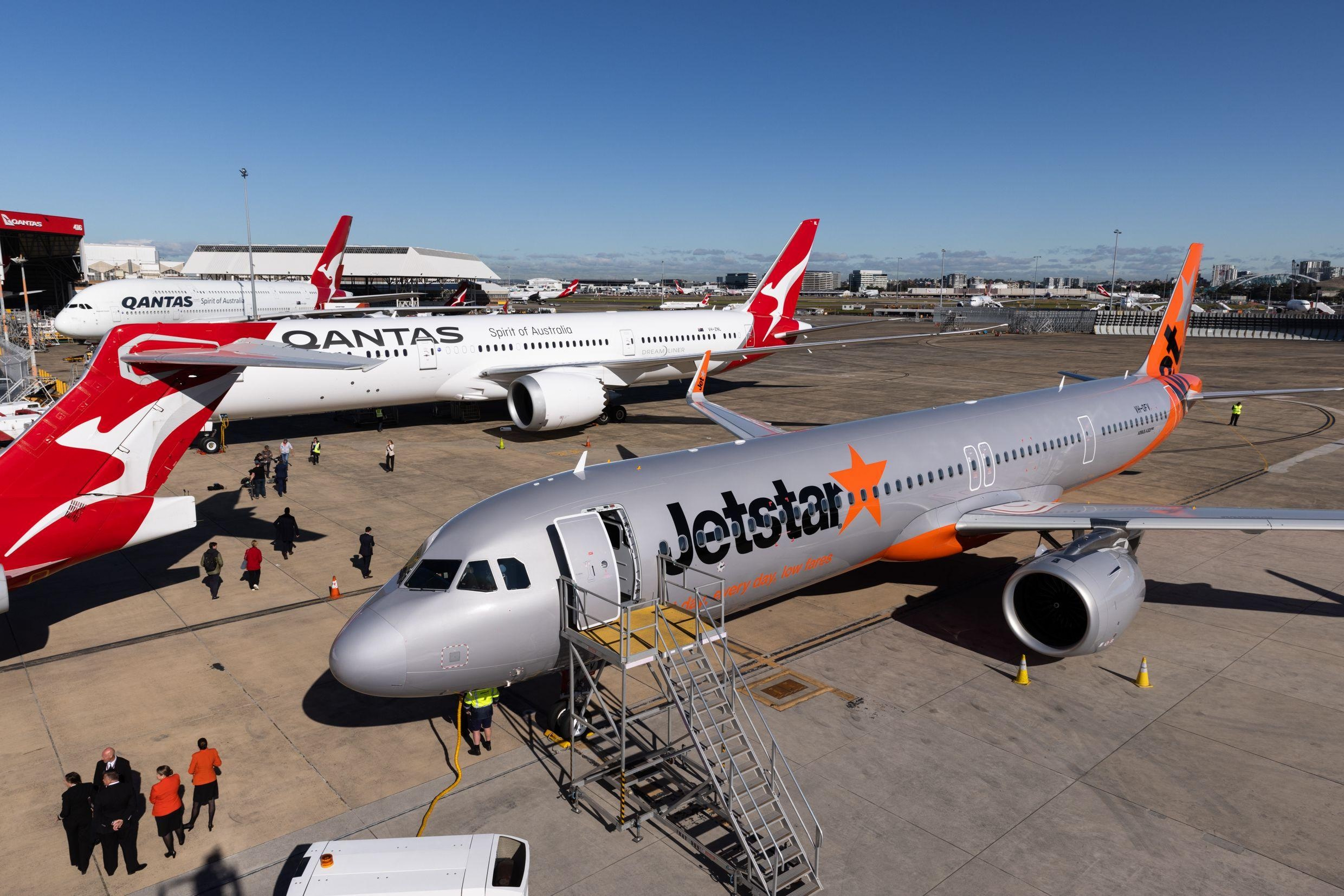
Qantas to Close Jetstar Asia as Part of Strategic Restructuring
Qantas Group has announced the closure of Jetstar Asia, its Singapore-based low-cost carrier, as part of a comprehensive strategic restructuring designed to support its historic fleet renewal and reinforce its core operations in Australia and New Zealand. This decision, made in collaboration with majority shareholder Westbrook Investments, responds to mounting financial pressures, including rising operational costs and intense competition within the Asian aviation market.
Operational and Financial Implications
Jetstar Asia is forecasted to incur an underlying EBIT loss of AU$35 million in the current year. The airline will cease operations on July 31, 2025, with a phased reduction in its flight schedule leading up to the closure. This move exclusively affects Jetstar Asia’s intra-Asia routes from Singapore and does not impact Jetstar’s operations in Australia, New Zealand, or Japan. Qantas has emphasized that Singapore will remain a vital hub for the Group, and all financial commitments to staff, customers, and suppliers will be fully honored.
Employees affected by the closure will be provided with redundancy support, and Qantas is actively seeking alternative employment opportunities within the Group or with partner airlines. The closure is expected to free up to AU$500 million in capital, allowing the redeployment of 13 Jetstar Asia aircraft to support fleet renewal efforts in Australia and New Zealand. This transition is projected to generate over 100 new jobs and contribute to a reduction in operational costs across the Group.
From a financial perspective, Qantas anticipates a total charge of AU$175 million over fiscal years 2025 and 2026 related to the closure, including a direct pre-tax cash cost of approximately AU$160 million in FY26. These expenses will be partially offset by working capital gains and tax benefits.
Market Context and Strategic Positioning
The decision to exit the Singapore-based low-cost carrier market occurs amid heightened competition among budget airlines in Asia. Industry analysts suggest that Qantas may face increased regulatory scrutiny and shifts in consumer preferences as a consequence of this move. Competitors are likely to adjust their strategies to capture the market share vacated by Jetstar Asia, potentially reshaping the regional low-cost carrier landscape.
Despite the closure, Qantas has reaffirmed that its other Jetstar operations will remain unaffected, preserving its strong domestic market presence in Australia and New Zealand. The Group reiterated its commitment to maintaining Singapore as a strategic hub and to supporting affected employees and customers throughout the transition period.

Etihad Airways Suspends Airbus A380 Flights on Key Route

Aditya Birla Group Seeks Approval for Aircraft Leasing in GIFT City

Qatar Airways Highlights Innovation and Connectivity at Arabian Travel Market 2026

Hong Kong's Five-Year Plan Includes Andrew Fan's Aircraft Parts Processing Hub Proposal

ACIA Aero Leasing Delivers ATR72-600 to Air Nostrum

RTX Appoints Jill Albertelli as Head of Pratt & Whitney

TAT Technologies Joins Beyond Aero Hydrogen Aircraft Program

AURAK Study Highlights Barriers to Air Taxi Adoption in Emerging Economies

Xiamen Air Selects Altitude for 787 Maintenance at Heathrow

Etihad and Swissport Extend Global Partnership
