
Превращайте аналитические выводы ИИ в реальные действия

В тренде
Categories
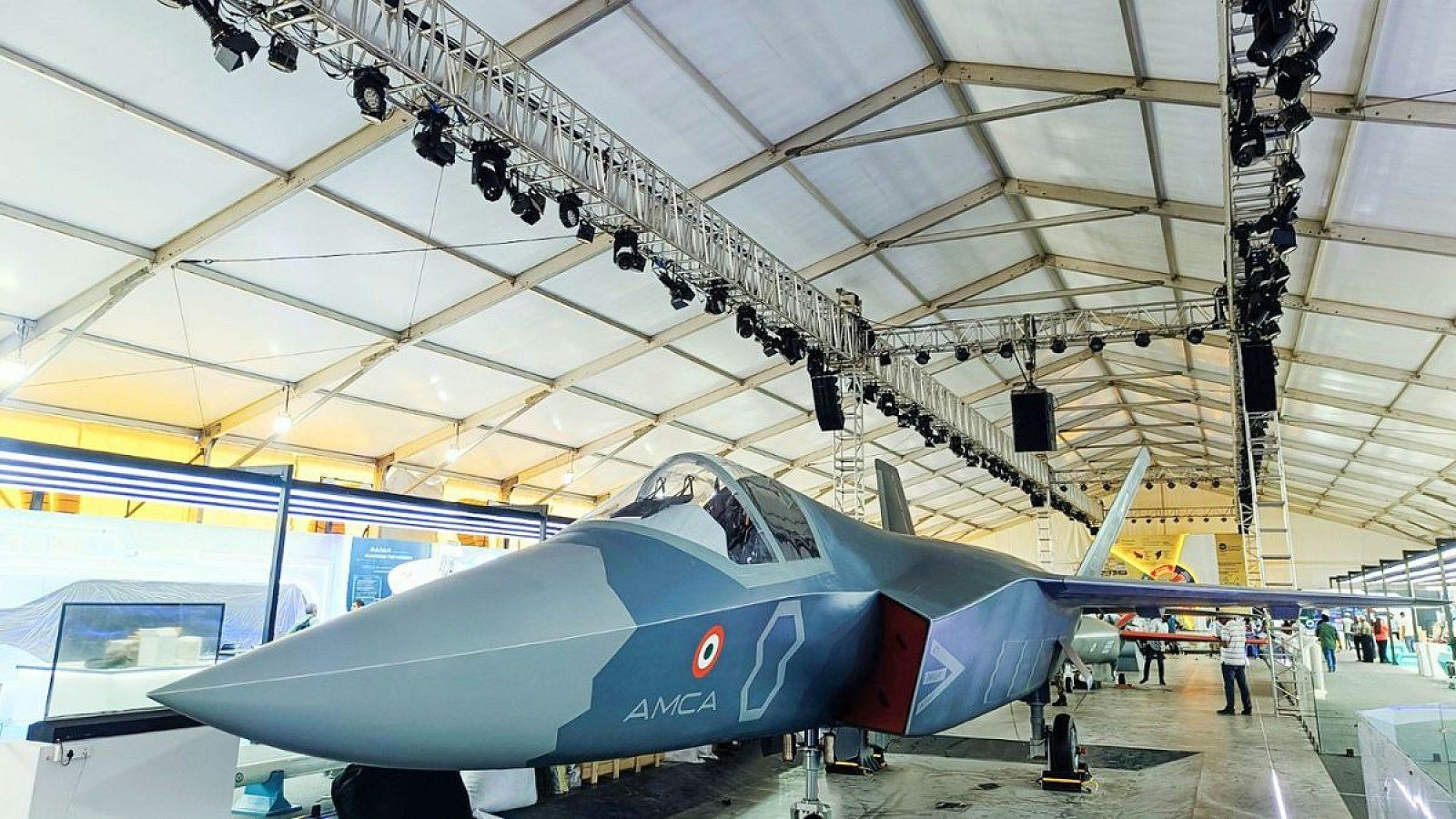
Reliance and Rolls-Royce Collaborate to Develop Engine for India's AMCA
Reliance and Rolls-Royce Collaborate to Develop Engine for India's AMCA
India has long demonstrated expertise in manufacturing fighter aircraft airframes but has struggled to develop an indigenous fighter jet engine, a critical shortfall that has constrained its air power capabilities for decades. In a significant development announced on August 14, 2026, Reliance Industries, led by billionaire Mukesh Ambani, has entered into a partnership with Britain’s Rolls-Royce to design, develop, and produce a homegrown engine for India’s Advanced Medium Combat Aircraft (AMCA). The AMCA is a stealth fighter that New Delhi aims to deploy by the end of this decade.
For Reliance, a conglomerate traditionally known for its dominance in oil, telecommunications, and retail, this venture represents a bold foray into one of the most technically demanding sectors of aerospace. The collaboration seeks to end India’s longstanding dependence on foreign engine suppliers, a reliance that has repeatedly impeded the country’s defense ambitions.
The Critical Need for an Indigenous Engine
Currently, all Indian fighter jets in service depend on imported engines. The indigenous Tejas light combat aircraft operates with American General Electric F404 and F414 engines, the Su-30MKI is powered by Russian AL-31 engines, and the Rafale uses French M88 engines. India’s own Kaveri engine program, initiated in the 1980s, failed to produce a viable powerplant for frontline fighters. This dependence on foreign technology has created a strategic vulnerability, as Indian-built jets cannot operate without the approval and supply of external engine manufacturers.
This vulnerability was starkly highlighted when deliveries of the latest Tejas Mk1A were delayed due to supply chain issues involving GE’s F404 engines, leaving new Indian fighters grounded and awaiting imported components. Developing a sovereign engine is therefore viewed as a crucial element of India’s “Atmanirbhar Bharat” (self-reliant India) initiative, aimed at achieving strategic autonomy in critical defense technologies.
Combining Expertise: Reliance and Rolls-Royce
The partnership leverages the complementary strengths of both companies. Rolls-Royce is one of the few global firms with the expertise to design military jet engines from the ground up. Reliance brings substantial capital, manufacturing capacity, and a proven track record in executing large-scale industrial projects. Together, they plan to establish a dedicated gas-turbine manufacturing complex in India, with ambitions to expand into broader defense, civil aerospace, and power system sectors.
Anant Ambani, Executive Director of Reliance Industries, emphasized the strategic importance of the collaboration, stating, “India’s strategic autonomy requires sovereign capability in critical technologies. Our intent with Rolls-Royce is to combine their world-leading expertise in advanced propulsion with Reliance’s technology, manufacturing, scale and execution capabilities to build an indigenous aero-engine ecosystem in India.”
Challenges and the Global Competitive Landscape
Despite the promise of this collaboration, the challenges ahead are formidable. Designing a modern fighter engine is widely regarded as more complex than building the aircraft itself. Neither company has disclosed detailed budgets or timelines, and the specific AMCA variant that will be equipped with the new engine has not been specified.
The AMCA is expected to enter a highly competitive global market by 2035, contending with established and emerging fifth-generation fighters such as the American F-35, South Korea’s KF-21 Boramae, Türkiye’s KAAN, and potential Chinese exports. The success of the AMCA may hinge on whether Reliance and Rolls-Royce can deliver a twin-engine stealth fighter at a price point more affordable than Western alternatives. Experts suggest that a cost-effective Indian fighter could attract countries unable to procure American or European jets due to high costs or political constraints. In response, established competitors are likely to accelerate their own technological advancements to maintain market dominance.
Project Overview
The partnership between Reliance Industries and Rolls-Royce Holdings aims to develop an indigenous combat engine for India’s AMCA stealth fighter. Plans include the establishment of a dedicated aerospace gas-turbine complex within India. The Indian government has earmarked approximately ₹15 billion (around $157 million) in funding for the AMCA program, with a prototype targeted for completion around 2028.
If successful, this collaboration could mark a pivotal moment in India’s aerospace ambitions, closing a decades-old gap in indigenous engine development and potentially reshaping the global fighter jet market.

Etihad Airways Suspends Airbus A380 Flights on Key Route

Aditya Birla Group Seeks Approval for Aircraft Leasing in GIFT City

Qatar Airways Highlights Innovation and Connectivity at Arabian Travel Market 2026

Hong Kong's Five-Year Plan Includes Andrew Fan's Aircraft Parts Processing Hub Proposal

ACIA Aero Leasing Delivers ATR72-600 to Air Nostrum

RTX Appoints Jill Albertelli as Head of Pratt & Whitney

TAT Technologies Joins Beyond Aero Hydrogen Aircraft Program

AURAK Study Highlights Barriers to Air Taxi Adoption in Emerging Economies

Xiamen Air Selects Altitude for 787 Maintenance at Heathrow

Etihad and Swissport Extend Global Partnership
