
Превращайте аналитические выводы ИИ в реальные действия

В тренде
Categories
Rolls-Royce Pursues Entry into Narrowbody Aircraft Market
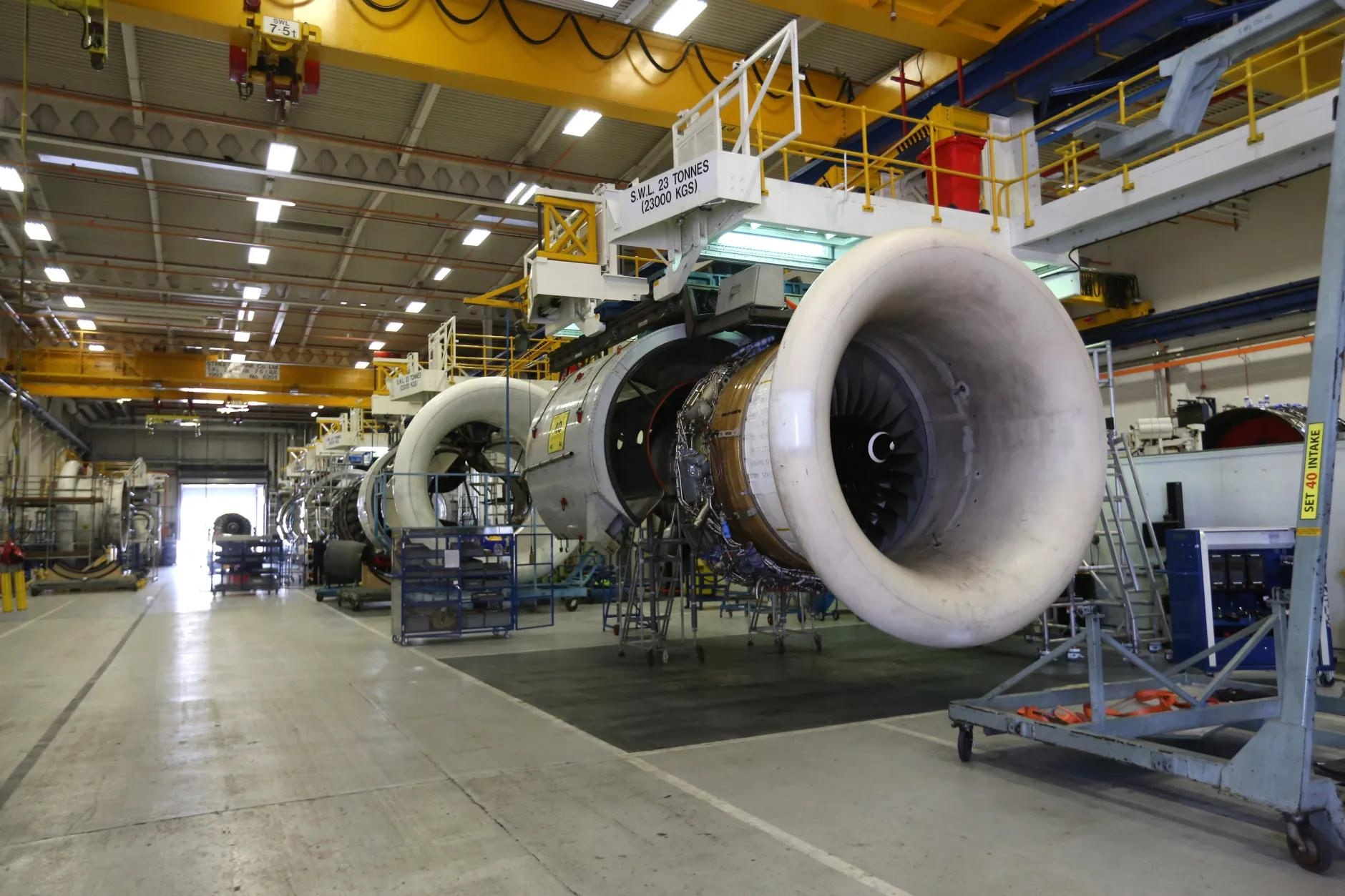
Rolls-Royce Pursues Entry into Narrowbody Aircraft Market
Ambitions and Strategic Partnerships
Rolls-Royce is actively seeking to enter the narrowbody aircraft market, a move announced by Chief Executive Tufan Erginbilgic at the Paris Airshow. The company is currently engaged in discussions with multiple potential partners to support this strategic ambition. However, Erginbilgic emphasized that any new narrowbody aircraft powered by Rolls-Royce technology is unlikely to enter service before 2035, underscoring the long-term nature of the project.
Central to this initiative is the commercial application of Rolls-Royce’s UltraFan engine technology, a next-generation propulsion system that the company regards as pivotal to its future in civil aviation. To advance these plans, Rolls-Royce is prepared to invest an additional £3 billion ($4.1 billion) into the UltraFan program, signaling a significant financial commitment to the development of this advanced engine.
Market Challenges and Competitive Landscape
The narrowbody segment is currently dominated by established engine manufacturers such as GE Aviation and Pratt & Whitney, making Rolls-Royce’s entry a formidable challenge. Industry analysts highlight the substantial development costs associated with new engine technologies. A recent McKinsey & Company survey revealed concerns among stakeholders regarding the scale of investment required, estimating a commitment of around $25 billion with a payback period spanning 10 to 12 years. These financial and technical risks have generated mixed reactions within the market, with skepticism persisting over the feasibility and timing of a next-generation narrowbody aircraft (NGSA).
In addition to financial hurdles, Rolls-Royce faces a competitive environment where incumbents are expected to accelerate their own engine development programs to protect market share. The company must also navigate complex regulatory and technical challenges inherent in introducing new propulsion systems to commercial aviation.
Progress and Industry Implications
Rolls-Royce’s recent success in certifying its Pearl 10X engine for Dassault’s Falcon 10X business jet illustrates its ongoing efforts to broaden its footprint in the aviation sector. Nonetheless, transitioning from business jet engines to powering commercial narrowbody aircraft represents a significant leap, demanding not only technological innovation but also substantial financial resources and rigorous certification processes.
As Rolls-Royce advances its strategy, industry observers, competitors, and investors will closely monitor the company’s ability to challenge established players in one of the most competitive sectors of aviation. The outcome of this endeavor will have far-reaching implications for the future dynamics of the narrowbody aircraft market.

Etihad Airways Suspends Airbus A380 Flights on Key Route

Aditya Birla Group Seeks Approval for Aircraft Leasing in GIFT City

Qatar Airways Highlights Innovation and Connectivity at Arabian Travel Market 2026

Hong Kong's Five-Year Plan Includes Andrew Fan's Aircraft Parts Processing Hub Proposal

ACIA Aero Leasing Delivers ATR72-600 to Air Nostrum

RTX Appoints Jill Albertelli as Head of Pratt & Whitney

TAT Technologies Joins Beyond Aero Hydrogen Aircraft Program

AURAK Study Highlights Barriers to Air Taxi Adoption in Emerging Economies

Xiamen Air Selects Altitude for 787 Maintenance at Heathrow

Etihad and Swissport Extend Global Partnership
