
Превращайте аналитические выводы ИИ в реальные действия

В тренде
Categories
Russia Turns to Vietnam for Aircraft Lease After Ethiopia Declines
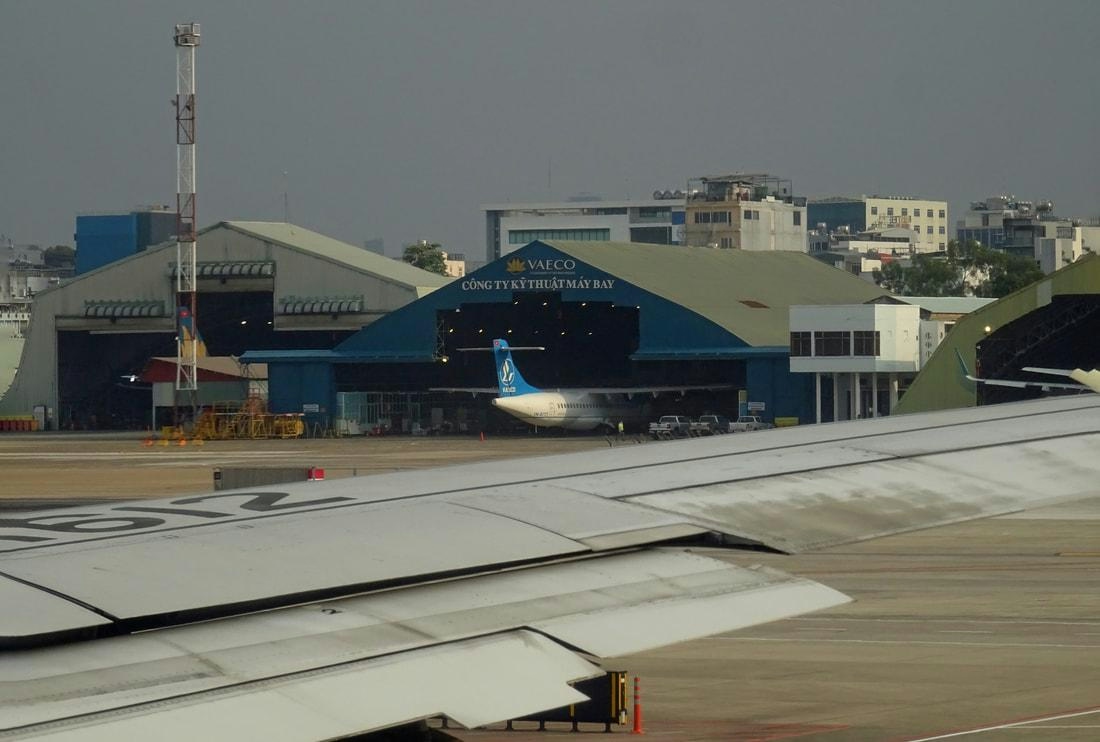
Russia Pursues Aircraft Lease Agreement with Vietnam Following Ethiopia’s Refusal
Russian authorities are actively seeking to lease aircraft from Vietnam after Ethiopia declined a similar proposal, according to a report by The Moscow Times on September 9. This initiative arises amid Russia’s ongoing difficulties in acquiring and maintaining aircraft due to comprehensive international sanctions imposed in response to its invasion of Ukraine.
Efforts to Secure Wet-Lease Arrangements
Andrei Nikitin, head of Russia’s Ministry of Transport, confirmed that a formal proposal for a wet-lease agreement has been submitted to Vietnamese officials. A wet lease involves the provision of aircraft along with crew and maintenance services. Speaking after bilateral talks in Moscow, Nikitin noted that Vietnamese counterparts are currently reviewing the proposal. He emphasized that such cooperation could enhance air travel connectivity and deepen bilateral relations between Russia and Vietnam.
The urgency of Russia’s search for wet-lease partners stems from the severe impact of sanctions on its civil aviation sector. Nearly 20% of the fleet operated by Russia’s largest airlines has been grounded due to the inability to legally access foreign aircraft and spare parts. Of the 673 aircraft across 11 major Russian carriers, 130 remained idle during the summer months, significantly exceeding the usual 10% downtime for routine maintenance. The situation is particularly acute for Boeing and Airbus jets, which constitute two-thirds of Russia’s civil aviation fleet and carry 90% of its passenger traffic.
Challenges and Regional Context
Russia’s previous attempts to secure wet-lease agreements with countries in Central Asia, as well as Qatar, Kuwait, and Ethiopia, have largely been unsuccessful. Ethiopian authorities rejected Russia’s request in 2025, citing a lack of jurisdiction over Ethiopian Airlines and concerns about potential secondary sanctions from the United States. It remains uncertain whether Russia has finalized any agreements with other nations.
Leasing aircraft from Vietnam presents distinct challenges. Russian aviation regulators have recently tightened compliance and financial health requirements for airlines operating international routes. Any arrangement with Vietnamese carriers would need to satisfy these stringent standards. Furthermore, market analysts are expected to scrutinize the safety and operational reliability of leased aircraft, particularly in light of a recent incident involving a Vietnam Airlines Boeing 787-9.
The competitive landscape may also be affected, as rival airlines could leverage the situation to underscore their own compliance and safety records, potentially intensifying market competition. Additionally, the escalation of military drone activity in Ukraine introduces new risks to Russian civil aviation, with possible repercussions for the broader regional aviation market.
As negotiations with Vietnam progress, the outcome could have significant implications for the aviation industries of both countries and the wider international sector.

Etihad Airways Suspends Airbus A380 Flights on Key Route

Aditya Birla Group Seeks Approval for Aircraft Leasing in GIFT City

Qatar Airways Highlights Innovation and Connectivity at Arabian Travel Market 2026

Hong Kong's Five-Year Plan Includes Andrew Fan's Aircraft Parts Processing Hub Proposal

ACIA Aero Leasing Delivers ATR72-600 to Air Nostrum

RTX Appoints Jill Albertelli as Head of Pratt & Whitney

TAT Technologies Joins Beyond Aero Hydrogen Aircraft Program

AURAK Study Highlights Barriers to Air Taxi Adoption in Emerging Economies

Xiamen Air Selects Altitude for 787 Maintenance at Heathrow

Etihad and Swissport Extend Global Partnership
