
Превращайте аналитические выводы ИИ в реальные действия

В тренде
Categories
Safran Opens New Subsidiary in Wallonia with €125 Million Investment
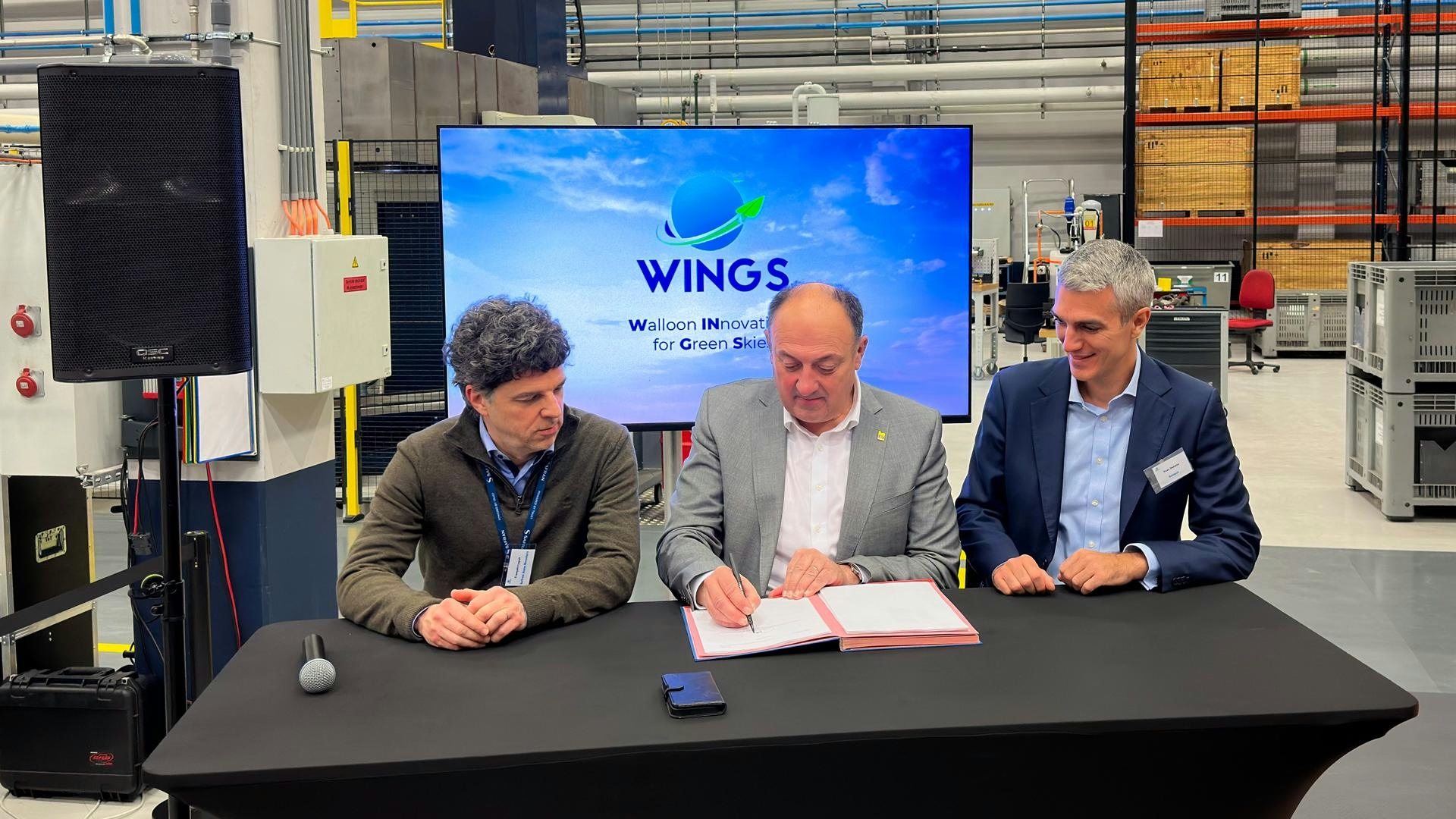
Safran Opens New Subsidiary in Wallonia with €125 Million Investment
Strategic Expansion in Wallonia
Safran Aero Boosters has announced the creation of a new subsidiary, Safran Booster Components, in Welkenraedt, Wallonia, Belgium, representing a €125 million investment designed to strengthen the region’s industrial base. The initiative, revealed by CEO François Lepot alongside Walloon Vice-President and Economy Minister Pierre-Yves Jeholet, aligns with Wallonia’s broader reindustrialisation strategy. The new facility will specialize in manufacturing compressor components for aircraft engines, thereby enhancing Safran Aero Boosters’ technical expertise and expanding its industrial presence in the region.
This project is supported through a public-private partnership involving Wallonie Entreprendre, which holds a 33% stake, the Belgian Federal Holding and Investment Company (SFPIM) with 11%, and Safran Aero Boosters retaining 56%. The collaboration underscores a shared commitment to regional economic development and industrial innovation.
Responding to Market Demand and Supply Chain Challenges
The expansion comes amid a surge in global demand for civil aircraft engines, particularly for models such as the LEAP engine—used in the Boeing 737 MAX, Airbus A320neo, and COMAC C919—as well as the GEnx for the Boeing 787 and the GE9X for the Boeing 777X. To accommodate rising production rates and reduce supply chain vulnerabilities, Safran is increasing its manufacturing capacity and duplicating production sources. This strategy aims to ensure a reliable supply for key clients, including Safran Aircraft Engines and GE Aerospace.
The Welkenraedt facility, scheduled to become operational in 2028, will occupy an 18,000 square meter building formerly used by Copeland, which is currently ceasing operations. By repurposing existing infrastructure, Safran minimizes additional land use and expedites the project timeline. The plant will incorporate advanced production technologies, digitalisation, and robotics, adhering to rigorous global standards. The development is also expected to generate approximately 100 new jobs, contributing to local employment growth.
Geopolitical Context and Industry Implications
The launch of Safran Booster Components occurs amid increased scrutiny of the company’s international partnerships, particularly its joint ventures in China. Recent concerns raised by a U.S. lawmaker highlight potential risks related to military applications and the inadvertent support of China’s defense sector. This geopolitical context introduces uncertainty, with market reactions likely to be mixed. While some investors may regard the €125 million investment as a strategic effort to consolidate Safran’s market position, others may remain cautious about the broader implications involving global supply chains and regulatory oversight.
Competitors are expected to closely observe Safran’s expansion, potentially prompting rival firms to increase their investments in similar regions to maintain competitive advantage. The new Welkenraedt site will complement Safran Aero Boosters’ existing facilities in Milmort, Liers, and Marchin, collectively supporting the company’s sustainable growth and reinforcing the resilience of its global supply chain.

Etihad Airways Suspends Airbus A380 Flights on Key Route

Aditya Birla Group Seeks Approval for Aircraft Leasing in GIFT City

Qatar Airways Highlights Innovation and Connectivity at Arabian Travel Market 2026

Hong Kong's Five-Year Plan Includes Andrew Fan's Aircraft Parts Processing Hub Proposal

ACIA Aero Leasing Delivers ATR72-600 to Air Nostrum

RTX Appoints Jill Albertelli as Head of Pratt & Whitney

TAT Technologies Joins Beyond Aero Hydrogen Aircraft Program

AURAK Study Highlights Barriers to Air Taxi Adoption in Emerging Economies

Xiamen Air Selects Altitude for 787 Maintenance at Heathrow

Etihad and Swissport Extend Global Partnership
