
Превращайте аналитические выводы ИИ в реальные действия

В тренде
Categories
Seventh Boeing 777-9 Enters Flight-Test Program
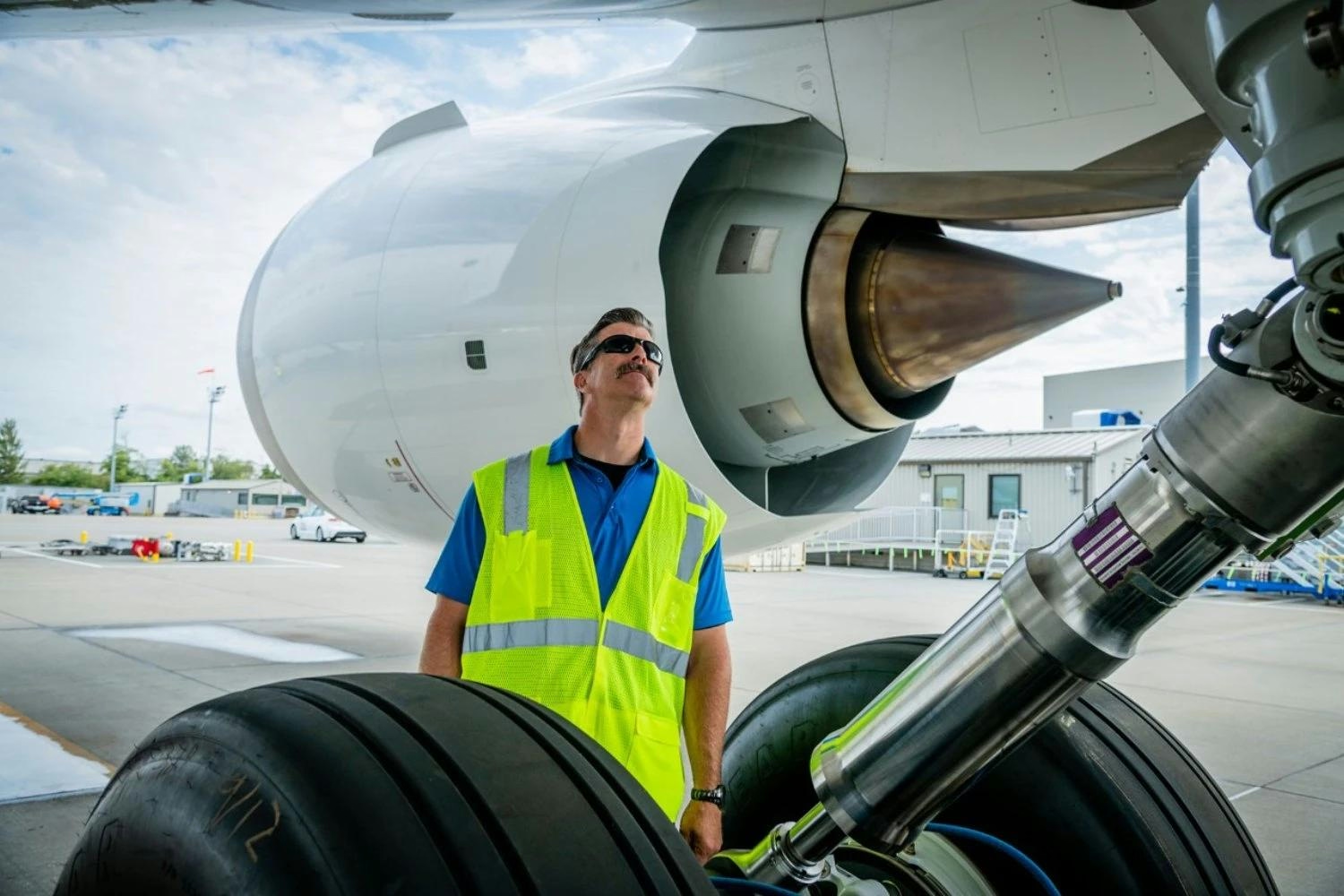
Seventh Boeing 777-9 Enters Final Phase of Flight-Test Program
A seventh Boeing 777-9 test aircraft has successfully completed its maiden flight, marking a significant advancement in the certification campaign for the long-delayed widebody jet. The approximately three-hour flight took place on July 24, departing from Paine Field in Everett, Washington. The aircraft traversed the skies over Washington, Idaho, and Oregon before returning to its point of origin, according to Boeing.
Progress in Certification Testing
This latest test aircraft will be dedicated to Extended-range Twin-engine Operational Performance Standards (ETOPS) and function-and-reliability testing, two of the final and most critical stages in the Federal Aviation Administration (FAA) certification process. ETOPS certification is vital for twin-engine jets to operate safely on long-haul routes that extend far from diversion airports, including transoceanic flights. Function-and-reliability testing requires manufacturers to demonstrate that the aircraft can perform dependably under conditions simulating daily airline operations.
With the addition of the seventh test aircraft, Boeing reports that the 777-9 test fleet has now accumulated more than 4,800 flight hours. Over 55 percent of the certification flight testing is complete, marking a key milestone as the program enters its final phase. In addition to dedicated test aircraft, production-standard airplanes are also participating in the certification effort.
Challenges and Financial Implications
Despite this progress, Boeing continues to face significant challenges. The 777X program, which encompasses the 777-9, the smaller 777-8, and the 777-8 Freighter, has experienced repeated delays due to evolving certification requirements, design modifications, and production issues. The company is conducting rigorous fatigue testing to validate the aircraft’s durability, but the extended certification timeline has intensified financial pressures. The cost of the 777X’s delayed certification is reported to have exceeded that of the entire Airbus A350 program.
These certification setbacks have broader ramifications for Boeing’s financial health. The company is simultaneously managing the long-delayed certifications of the 737-7, 737-10, and 777-9, contributing to a mounting long-term debt estimated at approximately $50 billion. Delays in the 777X program introduce execution risks, including additional costs and potential customer compensation. Boeing’s capacity to maintain uninterrupted cash flow and profitability from its production lines remains critical to funding future aircraft development and reducing its substantial debt burden.
Outlook for the 777X Program
Despite these hurdles, Boeing continues to target certification and first deliveries of the 777-9 in 2027, approximately seven years later than originally planned. The 777X family has attracted more than 650 orders from customers worldwide, underscoring the high stakes as the program moves closer to commercial service.

Etihad and Swissport Extend Global Partnership

Sepehran Airlines B737 Returns to Mashhad After Tyre and Engine Issues

Etihad Deploys Widebody Fleet to Meet Strong Demand

Korean Air Finalizes $36.2 Billion Deal with Boeing

Australia’s RFDS Queensland Section Orders Six King Air 260Cs

Korean Air Finalizes Order for 103 Boeing Jets and Engines

Embraer E195-E2 Features Distinctive Engine Placement Among Regional Jets

What Passengers Can Expect on Boeing’s New 777X Jet

How Ethiopian Airlines Became Africa’s Leading Carrier Amid Gulf Competition

Joby Aviation Extends Autonomous Flight Capabilities with Cross-Country Tour
