
Превращайте аналитические выводы ИИ в реальные действия

В тренде
Categories
‘Shark Skin’ film could help Vueling reduce carbon emissions
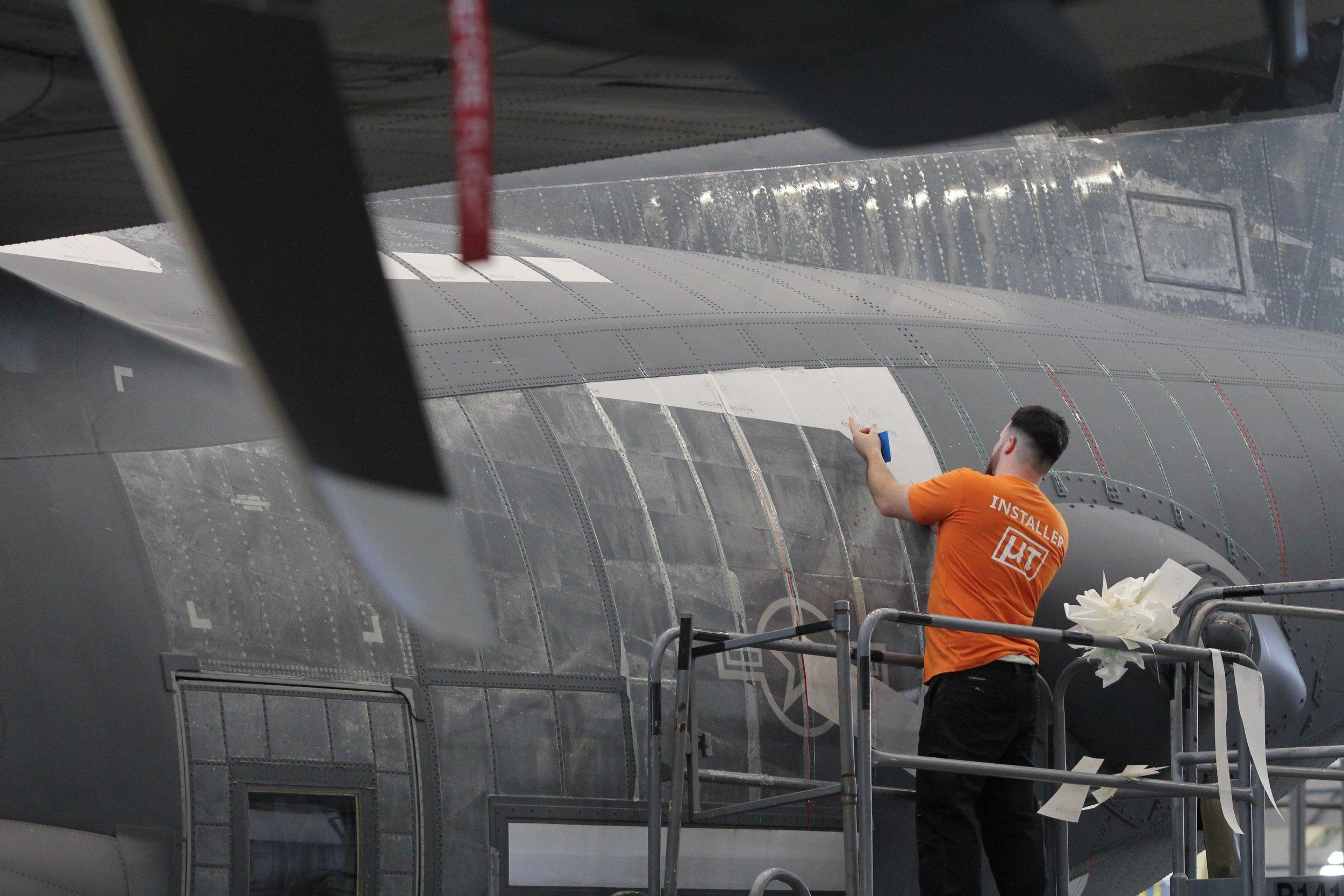
Vueling Partners with MicroTau to Trial ‘Shark Skin’ Film for Emission Reduction
Spanish low-cost carrier Vueling has entered into a Letter of Intent with Australian aerospace technology company MicroTau to become the first European airline to trial MicroTau’s innovative ‘shark skin’ Riblet Modification Package. This agreement supports the certification process of the technology, with plans to implement it across Vueling’s narrowbody fleet upon approval. The initiative forms a key part of Vueling’s broader strategy to reduce carbon emissions and enhance its environmental performance.
The Technology Behind the ‘Shark Skin’ Film
MicroTau’s Riblet Modification Package involves a high-technology film designed to mimic the microscopic texture of shark skin. When applied to an aircraft’s exterior surfaces, this texture reduces aerodynamic drag, which can lead to a reduction in carbon emissions by up to 4%. The technology offers a practical and near-term solution for airlines aiming to improve fuel efficiency without incurring the high costs or extended timelines typically associated with other decarbonization methods.
Commitment to Sustainable Aviation
Franc Sanmartí, Vueling’s director of sustainability, underscored the importance of the collaboration, stating that the adoption of MicroTau’s technology would represent a significant milestone in the airline’s pursuit of sustainable aviation. He highlighted that the innovation not only supports improved fuel efficiency but also reinforces Vueling’s commitment to lowering CO2 emissions through forward-looking solutions. Sanmartí further noted that the partnership with MicroTau will be instrumental in achieving both short- and long-term sustainability objectives, as the airline seeks to minimize its environmental footprint and set an industry benchmark.
Challenges and Industry Implications
Despite the promising benefits, the technology must undergo comprehensive validation and obtain regulatory approval before widespread adoption can occur. The aviation sector and environmental stakeholders are closely monitoring the trial, with expectations that successful implementation could prompt other carriers to adopt similar emissions-reducing technologies. Industry analysts suggest that Vueling’s pioneering efforts may accelerate the integration of such innovations across the sector.
MicroTau CEO Henry Bilinsky emphasized the urgency and practicality of the solution, noting that efficiency gains in aviation are difficult to achieve given that many decarbonization technologies remain years away or involve significant cost premiums. He expressed enthusiasm about partnering with Vueling, describing the airline as a key customer in delivering an end-to-end riblet solution that reduces emissions while lowering operational costs.
Integration Within a Broader Sustainability Framework
The ‘shark skin’ film initiative complements Vueling’s comprehensive environmental strategy, which also includes the use of sustainable aviation fuel (SAF), optimization of flight paths, and efforts to reduce aircraft weight. These combined measures reflect the airline’s commitment to driving meaningful environmental progress and advancing toward a more sustainable future for aviation.
As the airline industry faces increasing pressure to mitigate its environmental impact, Vueling’s collaboration with MicroTau positions it at the forefront of technological innovation, potentially setting a precedent for competitors and contributing to wider industry transformation.

Etihad Airways Suspends Airbus A380 Flights on Key Route

Aditya Birla Group Seeks Approval for Aircraft Leasing in GIFT City

Qatar Airways Highlights Innovation and Connectivity at Arabian Travel Market 2026

Hong Kong's Five-Year Plan Includes Andrew Fan's Aircraft Parts Processing Hub Proposal

ACIA Aero Leasing Delivers ATR72-600 to Air Nostrum

RTX Appoints Jill Albertelli as Head of Pratt & Whitney

TAT Technologies Joins Beyond Aero Hydrogen Aircraft Program

AURAK Study Highlights Barriers to Air Taxi Adoption in Emerging Economies

Xiamen Air Selects Altitude for 787 Maintenance at Heathrow

Etihad and Swissport Extend Global Partnership
