
Превращайте аналитические выводы ИИ в реальные действия

В тренде
Categories
Shifts in Maintenance, Repair, and Overhaul in the Asia-Pacific Region
Shifts in Maintenance, Repair, and Overhaul in the Asia-Pacific Region
As airline fleets across the Asia-Pacific (APAC) region continue to expand, the Maintenance, Repair, and Overhaul (MRO) sector is confronting mounting pressures and evolving challenges. Martynas Grigas, chief executive of FL Technics Indonesia and Avia Management Group Asia (AMGA), outlines emerging capability gaps, shifting investment priorities, and operational changes as the industry adapts to these new realities.
Engine Maintenance: Addressing Critical Capability Gaps
Engine maintenance remains a dominant concern within the APAC MRO landscape, particularly regarding LEAP and PW1100G engine models, which continue to account for a significant share of shop visits. Grigas identifies rapid top-case engine maintenance and light-fix engine work on narrowbody fleets as the most overlooked capabilities that regional MRO providers must develop by 2026 and beyond. He emphasizes the critical importance of performing these repairs locally to avoid the logistics delays and extended downtime associated with reliance on overseas facilities.
In response, FL Technics Indonesia is preparing to launch a dedicated top-case engine maintenance facility in 2027. This initiative aims to provide localized, short-cycle recovery options that reduce unnecessary shop inductions and enable faster engine turnarounds. With narrowbody fleets projected to grow through 2030, establishing this capability within the APAC region is expected to enhance fleet availability and operational resilience, thereby offering regional MROs a distinct competitive advantage.
Operational Efficiency: The Value of Infrastructure and Process
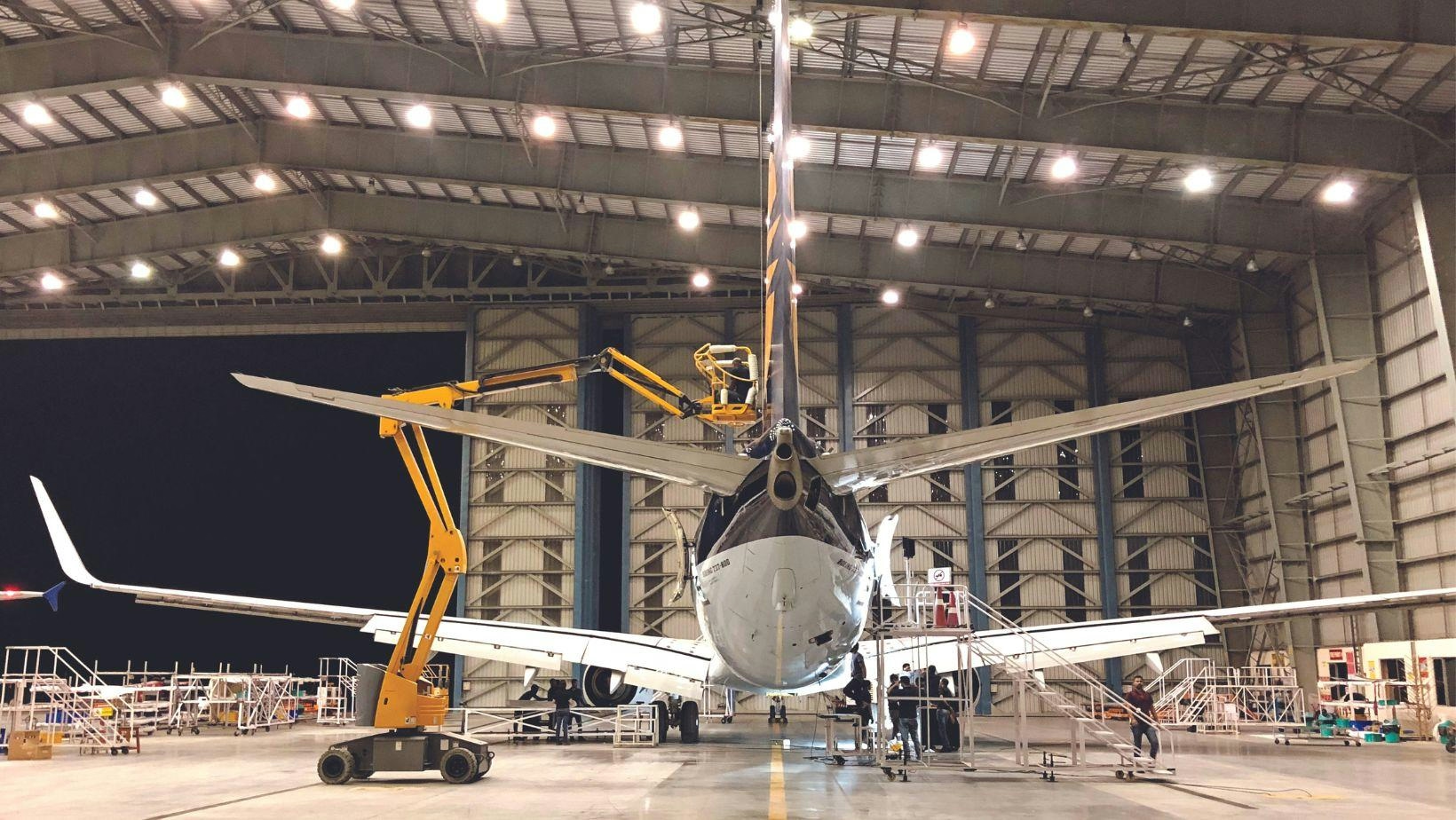
While recent approvals for component repairs on aircraft such as the B737 MAX and A320neo have garnered attention, Grigas highlights the company’s new Bali hangar as the asset delivering the most significant operational value to customers. He notes that predictable slot access, efficient induction processes, and the facility’s strategic location have proven more critical to operators than any single new repair approval.
The Bali facility incorporates advanced docking systems, optimized tool layouts, and streamlined workflows, enabling consistent turnaround times even during peak periods. Airlines, particularly ACMI and leisure carriers, utilize Bali as a stable and uncongested hub for scheduled maintenance checks, which reduces ferry times and minimizes operational disruptions. Furthermore, the ability to synchronize crew rotations with maintenance events at this location has emerged as a practical advantage, further enhancing operational efficiency.
Enhancing Efficiency Through People, Processes, and Supply Chain Management
As Southeast Asian operators demand faster turnaround times, Grigas underscores that personnel remain the sector’s most valuable asset in achieving efficiency gains. He stresses the importance of strong training programs, disciplined processes, and robust support frameworks in empowering staff to deliver exceptional results. However, he also points out that supply chain management requires greater attention to uphold agreed turnaround times, noting that digital planning tools alone cannot compensate for delays caused by parts shortages.
Market Pressures and Strategic Industry Responses
The APAC MRO sector is also grappling with constrained powerplant markets and limited availability of used serviceable materials and parts. These challenges are driving up engine maintenance costs for airlines and prompting pushback against rising part prices from original equipment manufacturers (OEMs). In response, some carriers are investing in developing in-house MRO capabilities to bolster operational resilience and exert greater control over maintenance expenses.
Looking forward, industry trends suggest a growing emphasis on supply chain resilience, expanded in-house MRO development, and increased demand for connectivity within the aviation aftermarket. As the region’s fleets continue to grow and operational demands intensify, the ability to adapt swiftly and invest strategically in both human capital and infrastructure will be essential for maintaining a competitive edge in the APAC MRO sector.

Etihad Airways Suspends Airbus A380 Flights on Key Route

Aditya Birla Group Seeks Approval for Aircraft Leasing in GIFT City

Qatar Airways Highlights Innovation and Connectivity at Arabian Travel Market 2026

Hong Kong's Five-Year Plan Includes Andrew Fan's Aircraft Parts Processing Hub Proposal

ACIA Aero Leasing Delivers ATR72-600 to Air Nostrum

RTX Appoints Jill Albertelli as Head of Pratt & Whitney

TAT Technologies Joins Beyond Aero Hydrogen Aircraft Program

AURAK Study Highlights Barriers to Air Taxi Adoption in Emerging Economies

Xiamen Air Selects Altitude for 787 Maintenance at Heathrow

Etihad and Swissport Extend Global Partnership
