
Превращайте аналитические выводы ИИ в реальные действия

В тренде
Categories
Six Airbus Aircraft That Shaped Modern Aviation
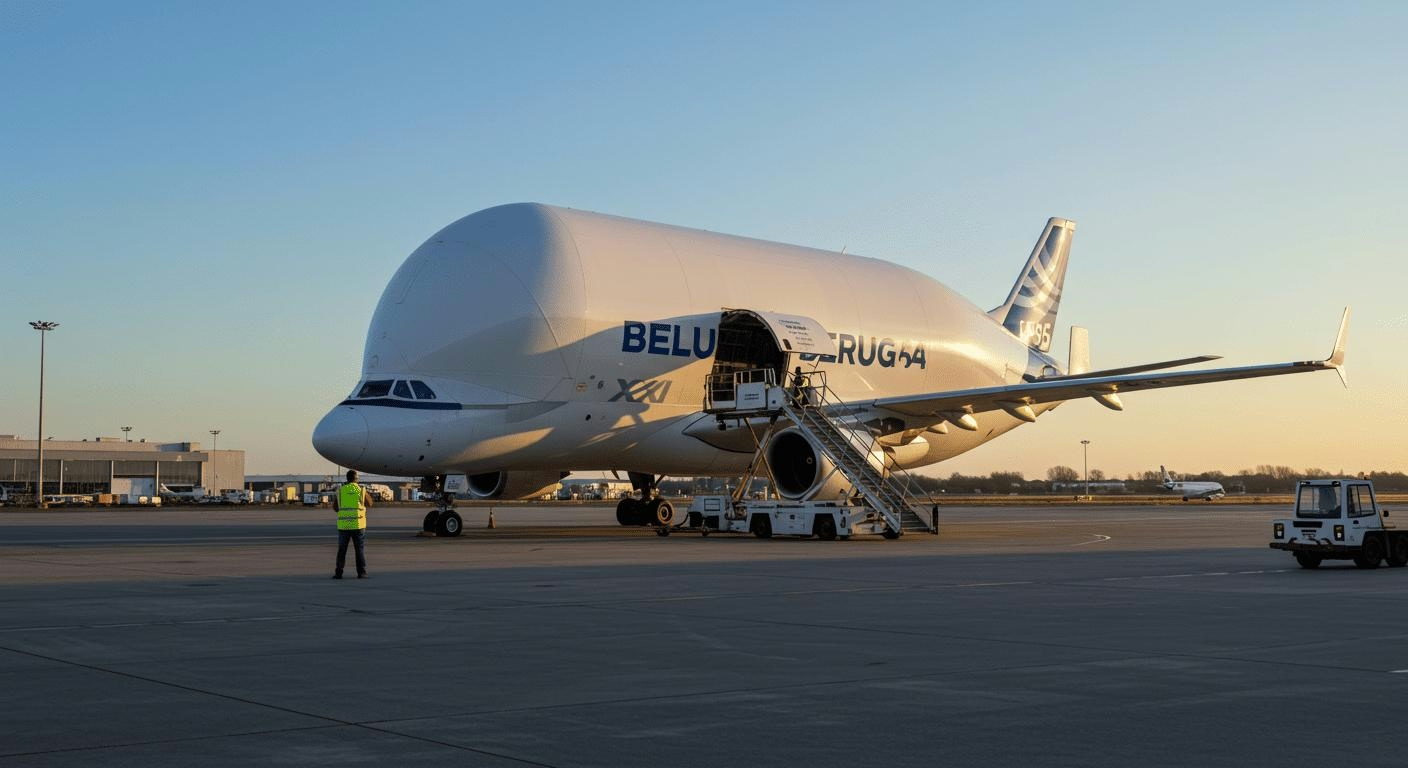
Six Airbus Aircraft That Shaped Modern Aviation
The trajectory of modern aviation has been profoundly influenced by Airbus, a European aerospace consortium that emerged to challenge the entrenched dominance of American manufacturers such as Boeing, McDonnell Douglas, and Lockheed. Entering a market resistant to change, Airbus has, over the past five decades, redefined global air travel through a combination of technological innovation and strategic risk-taking.
Despite facing recent challenges—including a reported decline in first-quarter deliveries for 2026, which has raised concerns about production efficiency and order backlogs—Airbus remains a pivotal force in the aviation industry. Its main competitor, Boeing, has capitalized on these difficulties, achieving a nine-year high in deliveries in February, thereby intensifying the competitive landscape. Airbus continues to push the boundaries of aerospace technology with developments such as the H160 helicopter designed for offshore operations and integrated firefighting systems. These innovations, while promising, also introduce regulatory and operational complexities. The market’s response to Airbus’s advancements, alongside Boeing’s progress in propulsion and urban drone technology, highlights the dynamic rivalry shaping the future of aviation.
Airbus A321XLR: Expanding the Reach of Narrowbody Jets
The Airbus A321XLR stands as the most transformative member of the A320 family, representing a significant evolution in narrowbody aircraft capabilities. By incorporating a permanent rear center fuel tank, Airbus has engineered a single-aisle jet capable of true long-haul missions, with a range of up to 4,700 nautical miles (8,704 kilometers) and flight durations reaching 11 hours. The aircraft accommodates up to 244 passengers, enabling airlines to establish direct connections between secondary cities without relying on traditional hub airports. This capability opens more than 1,000 new commercially viable routes, effectively democratizing long-haul travel. The A321XLR offers both low-cost and full-service carriers a quieter, more fuel-efficient alternative to aging fleets, enhancing operational flexibility and economic efficiency.
In comparison to its predecessors, the A321XLR extends the typical range from 3,000 nautical miles in the original A321ceo to 4,700 nautical miles, while increasing passenger capacity and reducing fuel burn by approximately 30%. This advancement marks a significant shift in the economics of air travel, enabling intercontinental routes previously inaccessible to narrowbody aircraft.
Airbus A350: A Leap Forward in Materials and Efficiency
The Airbus A350 represents a milestone in aerospace engineering, marking the company’s first airframe constructed primarily from carbon-fiber reinforced plastic. Over 70% of the aircraft’s structure utilizes these advanced materials, resulting in a 25% reduction in fuel consumption compared to earlier aluminum-based models. This clean-sheet design was developed to meet the growing global demand for efficient, long-range widebody aircraft, setting new benchmarks for performance, sustainability, and passenger comfort.
The A350’s innovative use of composite materials not only enhances fuel efficiency but also contributes to lower maintenance costs and improved operational reliability. Its introduction has had a profound impact on the economics of long-haul air travel, reinforcing Airbus’s position as a leader in sustainable aviation technology.
Each of these aircraft exemplifies a key chapter in Airbus’s ongoing narrative of innovation, resilience, and adaptation amid market pressures and intense competition. As the company continues to navigate production challenges and regulatory complexities, its legacy in shaping modern aviation remains firmly established, continually redefining global connectivity.

Etihad Airways Suspends Airbus A380 Flights on Key Route

Aditya Birla Group Seeks Approval for Aircraft Leasing in GIFT City

Qatar Airways Highlights Innovation and Connectivity at Arabian Travel Market 2026

Hong Kong's Five-Year Plan Includes Andrew Fan's Aircraft Parts Processing Hub Proposal

ACIA Aero Leasing Delivers ATR72-600 to Air Nostrum

RTX Appoints Jill Albertelli as Head of Pratt & Whitney

TAT Technologies Joins Beyond Aero Hydrogen Aircraft Program

AURAK Study Highlights Barriers to Air Taxi Adoption in Emerging Economies

Xiamen Air Selects Altitude for 787 Maintenance at Heathrow

Etihad and Swissport Extend Global Partnership
