Изображение

Превращайте аналитические выводы ИИ в реальные действия

Присоединяйтесь к списку ожидания AeroGenie уже сегодня!

В тренде

Categories

SR-71 Pilot Recalls Single-Engine Emergency While Flying the U-2 and Blackbird
May 17, 2026By ePlane AI
SR-71 Pilot Recalls Single-Engine Emergency While Flying the U-2 and Blackbird
0
0
SR-71 Blackbird
U-2 Spy Plane
Single-Engine Emergency

SR-71 Pilot Reflects on Single-Engine Emergency Experience in U-2 and Blackbird

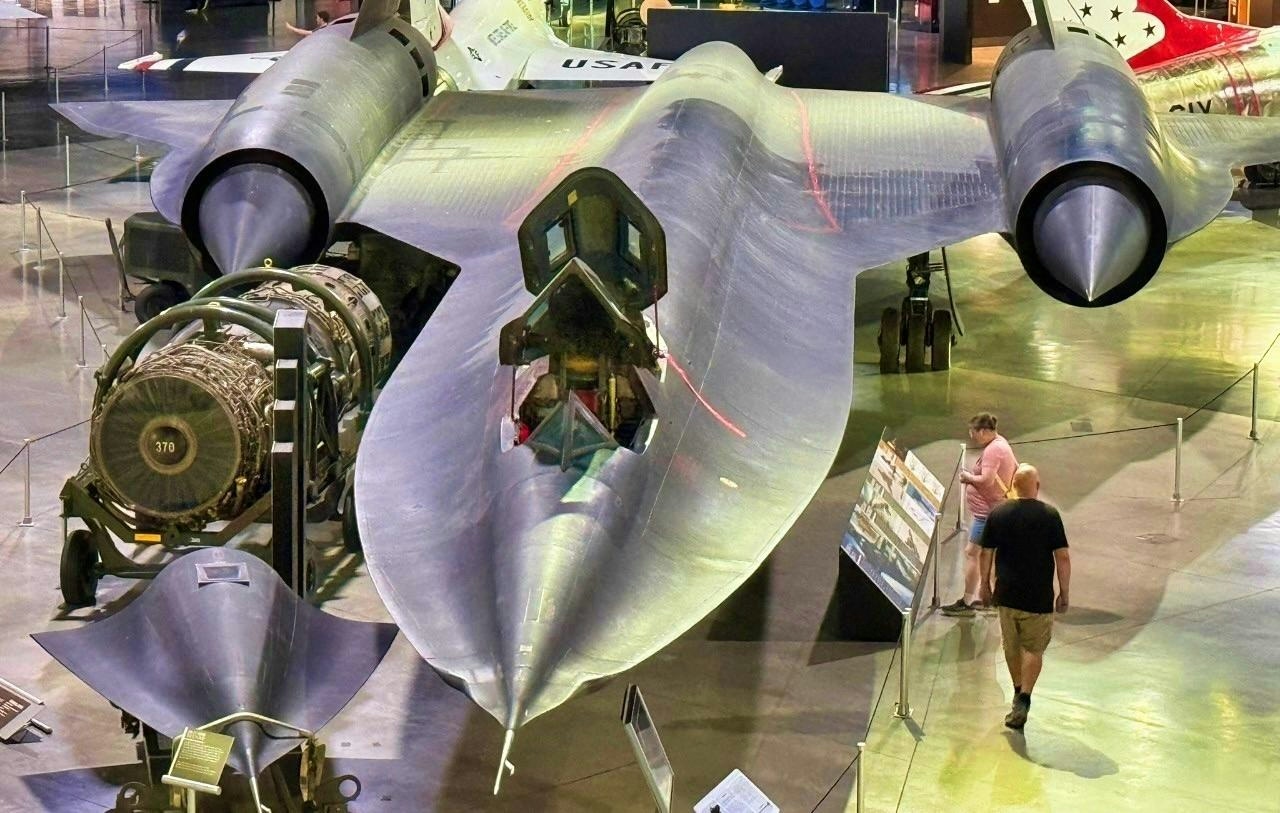
Lionel “Stormy” Boudreaux, among a select group of pilots who flew operational missions in both the U-2 and the SR-71 Blackbird, recently provided a detailed account of a critical aspect of Cold War aviation. In an in-depth interview, Boudreaux recounted the complexities of managing single-engine emergencies in the world’s fastest reconnaissance aircraft, offering a rare and insightful perspective on the technical challenges and human factors involved in operating these legendary spy planes.

Managing Single-Engine Emergencies in the SR-71

Boudreaux described a well-known photograph depicting an SR-71 climbing out with one engine in full afterburner while the other remained at idle. This image, he explained, captures a practice single-engine go-around maneuver, which requires exceptional precision and control. “In this photo, the left engine is at idle, the right engine is in full afterburner. The pilot has applied full left rudder and is beginning a right bank, all to keep the aircraft straight,” Boudreaux said. He emphasized that the landing gear was already retracted, a crucial factor in controlling the aircraft’s yaw during such emergencies.

The SR-71’s design featured a unique dual hydraulic system—left and right—that allowed either system to retract the landing gear, a capability uncommon in most aircraft. Boudreaux highlighted the importance of this feature during single-engine failures, especially at low speeds. “With the nose gear down and the aircraft in a significant yaw, the nose gear acted like a fin in the airflow, worsening the yaw and making recovery nearly impossible,” he explained. The dual hydraulic setup ensured that the landing gear could be raised even if one engine failed, underscoring the advanced engineering that characterized the Blackbird.

The SR-71’s Role in Cold War Aviation

Boudreaux’s reflections come amid the broader context of Cold War tensions, during which the SR-71’s extraordinary capabilities were frequently tested. He recalled an incident in which the Blackbird successfully evaded a missile launched by a Soviet MiG-25, highlighting both the threat posed by advanced Soviet interceptors and the imperative for the United States to maintain technological superiority. The SR-71’s sophisticated defensive electronic systems were instrumental in such encounters, enabling it to outpace and outmaneuver threats that few other aircraft could withstand.

The Blackbird’s record-breaking coast-to-coast flights and its critical role in reconnaissance missions solidified its place in aviation history. Its technological innovations not only shaped U.S. intelligence-gathering efforts during the Cold War but also spurred advancements in reconnaissance and interceptor programs worldwide. The legacy of the SR-71 continues to influence modern aviation and defense strategies as nations strive to meet or exceed the standards set by this iconic aircraft.

For Boudreaux, the choice between flying the U-2 or the SR-71 was straightforward: “Whichever one I was in—I love to fly!” His recollections stand as a testament to the skill, innovation, and high-stakes environment that defined an era of aerial espionage.

More news
Travel Industry Adapts to AI While Preserving Unique Experiences

Travel Industry Adapts to AI While Preserving Unique Experiences

Travel Industry Adapts to AI While Preserving Unique Experiences The global travel and tourism sector is experiencing a significant transformation as artificial intelligence (AI) increasingly influences how travelers search for, book, and engage with their journeys. Industry strategist Jacqueline Nunley highlights a shifting competitive landscape, where the contest extends beyond traditional rivalries among airlines and hotels to a broader challenge between the efficiency of machine logic and the irreplaceable value of human experience. Across prominent destinations such as London, Paris, Dubai, and Sydney, AI-powered tools are playing a growing role in travel decision-making. Recent data indicates that up to 40% of travelers now utilize AI platforms for planning, with 25% comfortable entrusting AI to manage their bookings entirely. While these systems excel at optimizing price and efficiency, there is mounting concern that travel risks becoming a purely transactional process, devoid of the unique moments that render journeys memorable. The Pricing Arms Race Hospitality revenue managers in key cities have observed a new dynamic emerging from AI integration: agents powered by AI are exploiting dynamic pricing models by booking discounted rates during off-peak hours, often between 2:00 AM and 4:00 AM. This behavior has sparked a pricing arms race, where providers compete primarily on algorithmic speed rather than the quality or distinctiveness of their offerings. Consequently, even unique experiences—such as cultural tours or boutique accommodations—face the danger of being overlooked if they do not fit neatly into the structured data frameworks that AI systems depend upon. The Risk of Losing the Human Touch A fundamental challenge arises as AI optimizes for measurable factors like price, amenities, and ratings but struggles to capture the emotional resonance and contextual nuances that define meaningful travel experiences. For instance, a boutique guesthouse renowned for its live music or local expertise may be bypassed in favor of a large hotel chain that better aligns with AI search parameters. This trend threatens the industry’s most valuable asset: the ability to create memorable, authentic experiences that foster customer loyalty and generate word-of-mouth recommendations. Industry Responses and Strategic Shifts The potential over-reliance on automation has elicited varied responses within the travel sector. Some market observers express skepticism toward AI-driven services that fail to deliver the authenticity travelers desire. In response, certain competitors are enhancing AI capabilities to provide more tailored and immersive experiences, while others emphasize human-led services to distinguish themselves from fully automated platforms. Recent developments illustrate this strategic balancing act. Indian online travel companies are expanding beyond simple ticket sales by integrating AI to offer comprehensive, personalized travel experiences that cater to diverse consumer preferences. Trip.com Group’s international expansion strategy focuses on leveraging AI alongside hyperlocalization to establish itself as the leading local player in each market, combining innovative technology with regional insights. Similarly, HBX Group’s acquisition of AI startup Bridgify aims to automate operations and improve cross-selling of travel experiences, signaling a commitment to operational efficiency without compromising customer engagement. Navigating the AI Era As AI continues to reshape the travel industry, the central challenge remains how airlines, hotels, and destinations can maintain visibility, relevance, and appeal in an AI-mediated environment. The solution may lie in striking an appropriate balance—employing AI to streamline logistics and personalize offerings while preserving the human touch and unique experiences that make travel truly unforgettable.
Canada Joins UK, Australia, and Japan in Issuing Travel Warnings Amid Middle East Fuel Shortages

Canada Joins UK, Australia, and Japan in Issuing Travel Warnings Amid Middle East Fuel Shortages

Canada Joins UK, Australia, and Japan in Issuing Travel Warnings Amid Middle East Fuel Shortages As the 2026 northern hemisphere summer travel season approaches, Canada has joined the United Kingdom, Australia, and Japan in issuing urgent travel warnings in response to severe fuel shortages in the Middle East. This crisis stems from the effective closure of the Strait of Hormuz earlier this year, a critical maritime passage for crude oil and refined petroleum products. The disruption has sent shockwaves through the global aviation and tourism industries, threatening to significantly impact international travel. The closure of this vital corridor has precipitated a global jet fuel shortage, with prices surging by nearly 84% since the conflict began. Airlines worldwide are contending with supply chain disruptions and escalating operational costs. These challenges have already manifested in higher ticket prices, increased flight cancellations, and unpredictable scheduling. Ryanair’s CEO has cautioned that the ongoing volatility severely hampers long-term planning for carriers. In response, major governments—including Canada, the United States, the UK, Australia, Japan, and the European Union—have issued coordinated advisories highlighting the risks facing summer travelers. These warnings emphasize the potential for sudden flight cancellations, rerouted itineraries, and significant delays, even on routes that do not directly traverse the Middle East. The International Air Transport Association (IATA) has recommended sourcing jet fuel from the United States to mitigate shortages, yet the industry’s heavy reliance on Middle Eastern supplies remains a critical vulnerability. Canada: Comprehensive Warnings and Policy Adjustments On May 12, 2026, Global Affairs Canada released a comprehensive advisory urging citizens to reconsider summer travel plans regardless of destination. The warning underscored that fuel shortages could result in last-minute delays, rerouting, or outright cancellations. Travelers were also cautioned that local fuel rationing at destinations might disrupt public transportation, rideshare services, and access to essential amenities, potentially diminishing the overall quality of their travel experience. Financial risks were also highlighted, as major insurers such as Manulife have begun excluding coverage for cancellations linked to regional fuel shortages. Travelers were advised to carefully review their insurance policies and prepare for possible out-of-pocket expenses arising from extended stays or alternative arrangements. United States: Infrastructure Strain and Transit Hub Disruptions The U.S. Department of State maintained its Worldwide Caution, warning of deteriorating infrastructure and strained transportation systems abroad. Fuel shortages have contributed to rolling blackouts, reduced public transit availability, and increased costs for rideshares and rental vehicles. Major transit hubs in Dubai, Abu Dhabi, and Doha are experiencing operational disruptions, with rerouted flights to Europe and Asia facing delays of up to three hours. American travelers are encouraged to register with the Smart Traveler Enrollment Program (STEP) and to verify airport statuses prior to departure. Industry Faces Unprecedented Challenges This crisis has exposed the aviation sector’s deep dependence on Middle Eastern fuel supplies, jeopardizing the reliability of summer holiday travel and compelling airlines and governments to urgently seek alternative sources. As the situation continues to evolve, travelers are urged to remain informed, review their insurance coverage, and prepare for a summer marked by uncertainty and operational complexity.
Kazakhstan and Luxembourg Strengthen Cooperation in Technology, Aviation, and Logistics

Kazakhstan and Luxembourg Strengthen Cooperation in Technology, Aviation, and Logistics

Kazakhstan and Luxembourg Strengthen Cooperation in Technology, Aviation, and Logistics During a working visit to Luxembourg, Roman Vassilenko, Ambassador of Kazakhstan to Belgium and Luxembourg, engaged in a series of high-level discussions with executives from prominent Luxembourgish and international companies specializing in digital technology, aviation logistics, and innovation. The meetings focused on advancing collaborative high-tech projects, improving transport and logistics connectivity, and expanding investment cooperation between the two nations. Advancing Digital Connectivity and Space Infrastructure At the headquarters of SES, Ambassador Vassilenko met with CEO Adel Al-Saleh to discuss the European Union’s “Team Europe Initiative on Digital Connectivity in Central Asia.” The dialogue emphasized the development of satellite communications in Kazakhstan and explored opportunities for Luxembourg’s involvement in modernizing Kazakhstan’s national space infrastructure. These discussions underscore the shared ambition of both countries to harness cutting-edge technology to foster regional development. Enhancing Aviation and Transport Links In the aviation sector, Vassilenko held talks with Cargolux President Richard Forson and CFO Maxime Strauss. The discussions examined the potential for Cargolux to resume operations in Kazakhstan and the airline’s participation in initiatives aimed at establishing Kazakhstan as a regional air cargo hub. The transformation of global transit routes and Kazakhstan’s emerging role as a critical transport corridor between Europe and Asia were highlighted, with particular attention to the strategic significance of the Trans-Caspian International Transport Route amid evolving international logistics chains. Cooperation in Sustainable Technologies and Climate Solutions Ambassador Vassilenko also met with Royce Dalby, President and Co-Founder of Hydrosat, to explore collaboration in satellite-based water resource monitoring, digital agriculture, and climate solutions. Prospects for joint projects with JSC “NC Kazakhstan Gharysh Sapary” were discussed, reflecting a growing emphasis on sustainable development and technological innovation. Challenges and Prospects for Future Collaboration While both parties reaffirmed their commitment to expanding investment, technological, and logistics cooperation, they acknowledged several challenges. Navigating regulatory differences, aligning strategic objectives, and managing competition from other international partners remain key considerations. Market responses to the strengthened collaboration have included increased investor interest in both countries, while competitors may respond by enhancing their own regional partnerships or intensifying competition in the technology, aviation, and logistics sectors. Recent data indicates that although such collaborations often face initial obstacles, they can deliver significant long-term benefits if effectively managed. Since 2005, Luxembourg’s cumulative direct investment in Kazakhstan has surpassed $3.8 billion, demonstrating sustained interest from Luxembourg’s financial and technological institutions in the Kazakh market. As the partnership deepens, it is expected to drive further innovation and connectivity across Eurasia.
China Opens Low-Altitude Rail Transport Hub at Shenzhen North Station Connecting Air Taxis, High-Speed Rail, and Metro

China Opens Low-Altitude Rail Transport Hub at Shenzhen North Station Connecting Air Taxis, High-Speed Rail, and Metro

China Launches Integrated Low-Altitude Rail Transport Hub at Shenzhen North Station Shenzhen North Station has unveiled China’s first integrated low-altitude rail transport hub, seamlessly connecting air taxis with high-speed rail and metro services. This pioneering initiative represents a major advancement in urban mobility, positioning Shenzhen at the forefront of transport innovation. The new hub offers travelers enhanced options for navigating both the city and the broader Greater Bay Area, combining efficiency with convenience. Multimodal Connectivity and Passenger Experience Traditionally a key interchange for high-speed rail and metro lines, Shenzhen North Station now features dedicated boarding zones for air taxis. This integration allows passengers arriving by train or metro to transfer swiftly to low-altitude flights, significantly reducing transfer times and alleviating congestion on conventional transport routes. The design aims to streamline daily commutes and improve the overall travel experience, making aerial transport a viable and practical alternative for both residents and tourists. Aerial Routes Highlighting Shenzhen’s Urban and Natural Landscapes The air taxi network offers passengers unique aerial views of Shenzhen’s prominent districts and landmarks. These include the bustling Futian Central Business District, the technology-driven Nanshan District, and the culturally rich Luohu District. Additionally, routes extend over Yantian Port, providing panoramic vistas of the city’s major shipping hub, as well as natural attractions such as Wutong Mountain and the coastal beaches of Dameisha and Xiaomeisha. By combining efficient transit with sightseeing opportunities, the service appeals to a diverse range of users, from daily commuters to photography enthusiasts and visitors. Enhancing Regional Integration Across the Greater Bay Area Beyond Shenzhen’s city limits, the hub facilitates connections to other major urban centers within the Greater Bay Area, including Zhuhai and Zhongshan. This network supports the creation of a “one-hour living circle,” dramatically reducing travel times compared to road or traditional rail options. The expanded connectivity is expected to bolster business activities, tourism, and regional integration, reinforcing the Greater Bay Area’s status as a dynamic economic zone. Market Implications and Challenges Ahead The launch of this integrated transport hub is anticipated to influence commuter preferences, encouraging a shift toward multimodal travel solutions. It may also stimulate increased investment in air taxi services and related infrastructure. In response, competing regions with similar ambitions are likely to accelerate upgrades to their transport networks to maintain competitiveness. Nevertheless, the rollout faces several challenges, including regulatory complexities, technological integration issues, and competition from established transport modes. The ongoing development of autonomous electric vertical takeoff and landing (eVTOL) aircraft and high-speed rail projects in other areas will also play a critical role in shaping the future market landscape. Setting a New Standard for Urban Mobility By providing a fast, efficient, and scenic alternative to congested roads and traditional public transport, Shenzhen’s low-altitude rail transport hub establishes a new benchmark for urban mobility. As the city continues to innovate, its integrated approach may serve as a model for other metropolitan regions seeking to enhance connectivity and alleviate urban congestion.
Cathay United Bank Co-Leads $3.7 Billion Financing for SMBC Aviation Capital

Cathay United Bank Co-Leads $3.7 Billion Financing for SMBC Aviation Capital

Cathay United Bank Co-Leads $3.7 Billion Financing for SMBC Aviation Capital TAIPEI, May 18, 2026 – Cathay United Bank’s Singapore Branch has solidified its position in the international syndicated loan market by serving as joint lead arranger in a landmark $3.7 billion financing deal for SMBC Aviation Capital, one of the world’s largest aircraft leasing companies. Details of the Financing Transaction The transaction initially secured $2 billion in commitments from mandated lead arrangers and bookrunners but was subsequently upsized to $3.7 billion in response to strong market demand. Ultimately, 40 Taiwanese and international financial institutions participated, resulting in an oversubscription rate of 85%. This robust response underscores Cathay United Bank’s syndication capabilities and its growing reputation in global finance. The financing package consists of a seven-year tranche of approximately $1.4 billion and a five-year tranche of about $2.3 billion. The proceeds are intended to support SMBC Aviation Capital’s business development and strategic investments, including its recent acquisition of a stake in Sumisho Air Lease, thereby reinforcing its global aircraft leasing operations. Strategic Implications and Market Impact As joint lead arranger, Cathay United Bank’s Singapore Branch coordinated participation from relationship banks across Asia and Europe, reflecting broad confidence in SMBC Aviation Capital’s strategic direction and long-term growth prospects. Notably, this deal marks SMBC Aviation Capital’s first unsecured seven-year syndicated financing, representing a significant milestone in strengthening its long-term capital structure. The high-profile nature of this financing may elicit varied market reactions. While some investors may interpret the transaction as a strong endorsement of SMBC Aviation Capital’s financial stability and growth potential, others might express caution regarding Cathay United Bank’s increased exposure to the inherently volatile aviation sector. Competitors within the banking and aviation finance industries may respond by expanding their own financing capabilities, offering comparable packages, or forming strategic alliances to counterbalance Cathay United Bank’s expanding influence in this sector. Cathay United Bank emphasized that the transaction highlights its expertise in large-scale cross-border financing and aviation finance, further reinforcing its strategic position in international syndicated lending and transportation finance. The bank intends to leverage this experience to support SMBC Aviation Capital’s global expansion and to enhance its regional capabilities amid the ongoing recovery of the aviation market and rising demand for fleet renewal. SMBC Aviation Capital described the financing as a significant milestone that deepens its cooperation with core banking partners. The company expressed gratitude for the support from Cathay United Bank and the broader syndicate, noting that the funds will underpin the continued expansion of its global aircraft leasing business and provide a strong, flexible capital foundation. As the aviation sector continues its recovery, Cathay United Bank’s participation in this major syndicated loan through its Singapore Branch further cements its role as a trusted financial partner for corporations pursuing international growth, even as it navigates the competitive and dynamic landscape of aviation finance.
Experts Say Southeast Asia Is Better Suited for Smaller Narrowbody Jets, Benefiting AirBorneo

Experts Say Southeast Asia Is Better Suited for Smaller Narrowbody Jets, Benefiting AirBorneo

Southeast Asia’s Aviation Market Favors Smaller Narrowbody Jets KUALA LUMPUR — The distinctive geography and market characteristics of Southeast Asia are increasingly aligning with the operational advantages of smaller narrowbody jets, such as the Airbus A220 and Embraer E2 family. These aircraft, typically seating fewer than 100 passengers, are proving well-suited to the region’s network of secondary cities and short-haul routes, which often experience lower passenger volumes. Aviation analyst Shukor Yusof of Endau Analytics emphasized that the region’s dispersed urban centers and numerous thin routes create a strong demand for aircraft that balance capacity with frequency. Shukor highlighted the significance of AirAsia X Bhd’s recent order for 150 Airbus A220-300 aircraft, valued at approximately US$19 billion at list prices. This landmark deal, the largest single firm order for the A220 programme to date, also includes options for an additional 150 jets. Announced in Canada, the agreement underscores the growing recognition among Southeast Asian carriers of the benefits offered by smaller regional jets. Industry experts note that these aircraft enable airlines to optimize capacity on less dense routes by prioritizing flight frequency over sheer seat numbers, thereby enhancing connectivity between secondary cities. One aviation specialist, speaking on condition of anonymity, explained that this approach represents a “right-sizing” strategy that fills a critical gap between turboprops like the ATR and larger single-aisle jets such as the Airbus A320 or Boeing 737. This middle ground is particularly relevant in ASEAN markets, where demand often falls between the operational scales of these aircraft categories. Opportunities for Regional Carriers and Strategic Considerations Shukor pointed to Sarawak-owned AirBorneo as a prime beneficiary of this trend, especially for intra-Borneo operations. He described Borneo as “a fantastic place for regional jets,” noting that the island’s size and the prevalence of smaller airports make large aircraft unnecessary. The lower operating costs and suitability for serving smaller population centers position regional jets as a logical choice for AirBorneo’s network development. Despite the advantages, experts caution that airlines must carefully evaluate operating economics, fleet strategies, and technical requirements before integrating smaller jets into their fleets. Shukor observed that the cost differential between larger narrowbody jets like the A320 and B737 and smaller regional jets is often marginal, which can lead airlines to favor the larger aircraft for their greater capacity and flexibility. Furthermore, smaller jets tend to be most effective when incorporated into a broader network strategy rather than deployed solely on point-to-point routes. The anonymous expert cited Singapore Airlines’ use of its budget subsidiary Scoot as an example, where regional jets serve as feeders to the mainline network, enhancing overall connectivity and operational efficiency. The regional preference for smaller jets also presents challenges for larger carriers such as Singapore Airlines, which continues to support Air India amid ongoing difficulties. With elevated fuel prices and speculation about industry consolidation favoring larger airlines, smaller carriers may face increased vulnerability. Meanwhile, Airbus’s strategic pivot toward expanding the business jet market in India reflects shifting market dynamics that could further advantage regional players like AirBorneo as Southeast Asia’s aviation landscape continues to evolve.
GE Aerospace’s Korean Crew Supports Japanese Cargo Carrier’s Operations

GE Aerospace’s Korean Crew Supports Japanese Cargo Carrier’s Operations

GE Aerospace’s Korean Crew Supports Japanese Cargo Carrier’s Operations A Critical Mission at Narita Airport In August, Wooyoung Kim, the youngest member of GE Aerospace’s On Wing Support (OWS) team from South Korea, arrived at Tokyo’s Narita International Airport to undertake a high-stakes repair on a Nippon Cargo Airlines (NCA) Boeing 747-8 freighter. The task involved replacing a vital fuel manifold on a GEnx engine, a component responsible for delivering fuel to the engine’s nozzles. While the technical procedure was straightforward in principle, Japanese aviation regulations mandated that the repair be conducted “off-wing,” requiring the removal of the 5.6-ton engine from the aircraft—a complex and demanding operation. Navigating Technical and Regulatory Challenges The Korean crew faced several immediate challenges, including adapting to unfamiliar equipment such as a hoisting crane that differed significantly from the machinery they typically used in Gimpo, near Seoul. With NCA eager to minimize downtime and no opportunity for rehearsal, the pressure to complete the repair within a strict timeframe was intense. Wooyoung Kim recalled the urgency, noting, “The pressure was on to complete the replacement within the fixed schedule.” Beyond the technical demands, the team had to carefully navigate international labor regulations and ensure compliance with local workforce training standards. The operation also required sensitivity to the broader geopolitical context of the region, necessitating careful coordination and cultural awareness to maintain smooth collaboration. Coordination and Execution Preparation was swift and thorough. Within hours of receiving the assignment, the OWS team coordinated with GE Aerospace’s materials and maintenance divisions to assemble specialized tools and ship necessary equipment to Japan. Upon arrival, they conducted detailed engine and kit inspections, working closely alongside NCA engineers who possessed expertise in off-wing maintenance procedures. Together, the combined teams carefully lowered the GEnx engine using the unfamiliar crane. Wooyoung emphasized their meticulous approach: “We made an extra effort to work carefully and perfectly without any mistakes.” Their diligence ensured the engine was safely removed, the fuel manifold replaced, and the engine reinstalled without incident. The Korean team returned to Seoul within a week, having successfully completed the mission. Recognition and Industry Implications NCA promptly reinstalled the engine, completed all required testing, and resumed cargo operations without delay, thereby avoiding costly disruptions to its delivery schedule. In recognition of their technical skill and responsiveness, NCA presented the Korean OWS team with a special plaque. Wooyoung accepted the award on behalf of his colleagues, underscoring the collective nature of the achievement: “The award is for everyone in the Korean OWS team. We’re improving our ability to deliver to customers with greater speed and certainty.” This successful cross-border operation not only reinforced GE Aerospace’s standing as a dependable global partner but also attracted attention from industry observers. Investors are increasingly focused on the company’s capacity to manage complex international assignments, while competitors may seek to capitalize on their own regional advantages. As the aviation industry becomes ever more interconnected, seamless collaboration across borders—despite regulatory, operational, and geopolitical challenges—remains critical to maintaining schedule integrity and sustaining customer trust.
Nigeria to Host Airbus Aviation Hub and Expedite Apache Helicopter Delivery Amid Security Reforms

Nigeria to Host Airbus Aviation Hub and Expedite Apache Helicopter Delivery Amid Security Reforms

Nigeria to Host Airbus Aviation Hub and Expedite Apache Helicopter Delivery Amid Security Reforms Strategic Partnership with Airbus Nigerian President Bola Ahmed Tinubu has endorsed a proposal from Airbus to establish aircraft maintenance and hangar facilities within Nigeria, signaling a major advancement in the country’s aviation and defense capabilities. This agreement emerged from discussions between President Tinubu and Thierry Cloutet, Airbus’ Head of Regional Business Growth for Africa and the Middle East, held on the sidelines of the Africa CEO Forum in Kigali, Rwanda, according to presidential spokesperson Bayo Onanuga. President Tinubu emphasized Nigeria’s pressing need for modern helicopters and fixed-wing aircraft to confront escalating security challenges nationwide. He specifically called for the expedited delivery of three Apache helicopters previously ordered as part of the government’s counterterrorism strategy, underscoring the critical importance of acquiring sufficient attack helicopters to effectively counter terrorist threats. Expanding Nigeria’s Aviation Sector Beyond immediate defense needs, the talks addressed broader ambitions to develop Nigeria’s domestic aviation industry. The government expressed interest in procuring the Airbus C-295, a versatile twin-turboprop tactical military transport aircraft valued for its operational flexibility in military missions, tactical airlift, and maritime patrol. President Tinubu also highlighted innovative financing mechanisms, such as sale-and-lease-back arrangements, aimed at improving access to aircraft for domestic airlines. Plans are underway to explore the establishment of a dedicated aviation leasing company in Nigeria, which the President believes could unlock significant economic opportunities and stimulate sector growth. Challenges and Market Implications Despite the promising outlook, the proposed initiatives face considerable challenges. Securing adequate funding for the Airbus aviation hub and ensuring the effective implementation of security reforms remain critical obstacles. The evolving security environment, coupled with the United States’ proposed stricter oversight of aid to Nigeria, may complicate efforts to finance and execute these modernization plans. Market reactions to the announcement have been largely positive, with expectations of increased international investor interest in Nigeria’s aviation sector. This development is likely to intensify competition, as other countries may seek comparable aviation and defense contracts. Boeing, a key competitor, could face pressure to adjust its delivery schedules for Apache helicopters in response to Nigeria’s urgent demands. Thierry Cloutet praised President Tinubu’s ongoing economic reforms and proposed a “360-degree engagement” model, advocating for multi-sectoral collaboration that extends beyond transactional partnerships. He reaffirmed Airbus’ commitment to supporting Nigeria’s long-term aerospace and aviation ambitions. As Nigeria advances these strategic partnerships and reforms, the success of these initiatives will hinge on overcoming financial and regulatory challenges while leveraging growing investor interest and international cooperation.
Restoring an Etihad Airways Airbus A380 After Six Years in Storage

Restoring an Etihad Airways Airbus A380 After Six Years in Storage

Restoring Etihad Airways’ Airbus A380s After Six Years in Storage Etihad Airways is preparing to return two Airbus A380 aircraft, registered as A6-APC and A6-APB, to commercial service after nearly six years in long-term storage. This move highlights the ongoing challenges posed by the global shortage of available aircraft. Reactivating these superjumbos involves a complex and time-consuming process that extends far beyond simply restarting parked jets. It requires months of rigorous inspections, structural assessments, software updates, engine preservation procedures, and extensive flight testing before the aircraft can safely carry passengers once again. This decision comes amid widespread delivery delays and a backlog exceeding 17,000 commercial aircraft orders worldwide. Faced with long wait times for new jets from manufacturers such as Airbus and Boeing, airlines are increasingly opting to extend the operational life of their existing fleets to sustain long-haul capacity. For Etihad, restoring its A380s is now economically viable despite the aircraft’s traditionally high operating costs, particularly as demand on premium international routes continues to recover. However, this strategy carries inherent risks. The aviation sector is under significant financial strain, exemplified by recent developments such as JetBlue securing $500 million in financing by using Airbus jets as collateral. The looming 2026 global fuel crisis has seen jet fuel prices double within eight weeks, sharply increasing operational expenses and compelling airlines to reevaluate their financial strategies. Etihad’s commitment to maintaining the A380 fleet until at least 2032 represents a long-term investment in the superjumbo’s continued relevance in modern air travel. Yet, with competitors like Emirates planning rapid expansion in the post-conflict environment following the Iran war, market conditions remain volatile. This may invite scrutiny from investors and analysts concerned about the financial sustainability and operational efficiency of Etihad’s approach. The Complex Process of Reactivating a Stored Superjumbo Reactivating an Airbus A380 after extended storage is a formidable engineering challenge. Many of the world’s superjumbos were parked in desert storage during the pandemic, with some airlines initially assuming these aircraft would never return to service. However, as global travel demand rebounded more quickly than expected, carriers began the painstaking process of bringing these planes back online to meet growing capacity needs on busy long-haul routes. The restoration process involves far more than routine maintenance. Aircraft stored for prolonged periods require thousands of hours of inspections, testing, and component replacements to ensure airworthiness. Engineers typically replace critical parts such as wheels, brakes, and oxygen systems, while conducting thorough checks of landing gear, avionics, hydraulics, and engines. Prior to leaving storage, the aircraft undergoes engine runs and comprehensive operational testing. Industry experts estimate that reactivating a single A380 demands approximately 4,500 hours of labor before the aircraft can even be flown to a dedicated maintenance facility. Even after departing storage, substantial work remains before the aircraft is fully prepared to carry passengers. Financial Implications of Restoration Although airlines seldom disclose precise restoration costs, industry estimates indicate that the total expense can reach tens of millions of dollars per aircraft. These costs encompass labor, replacement parts, engine servicing, testing, and cabin refurbishment. For instance, Qantas reported that returning one of its final stored A380s to service required over 100,000 hours of engineering work, marking the largest maintenance project in the airline’s history. While this figure is modest compared to the A380’s original purchase price of approximately $445 million, it nonetheless represents a significant financial commitment, especially in an environment of soaring fuel prices and intensifying competition. As Etihad advances with its A380 restoration program, the airline is making a calculated decision to balance the urgent need for increased capacity against the challenges posed by rising costs and an uncertain competitive landscape.
Cairo Hosts 2026 IATA Ground Handling Conference Highlighting AI and Operational Advances

Cairo Hosts 2026 IATA Ground Handling Conference Highlighting AI and Operational Advances

Cairo Hosts 2026 IATA Ground Handling Conference Highlighting AI and Operational Advances From May 19 to 21, 2026, Cairo, Egypt, emerged as a pivotal hub for the global aviation sector by hosting the 38th International Air Transport Association (IATA) Ground Handling Conference (IGHC). Centered on the theme “Adapting Ground Operations in an Era of AI,” the event convened senior airline executives, airport operators, regulators, and technology experts to explore the transformative impact of artificial intelligence and digital innovation on airport ground operations. Hosted by EgyptAir at the InterContinental Citystars Cairo, the conference emphasized the critical integration of advanced technologies with human expertise to enhance safety, efficiency, and operational resilience. The 2026 IGHC distinguished itself through a concentrated focus on AI-driven transformation, predictive analytics, and automation—solutions increasingly vital as airports contend with growing passenger volumes and complex logistical challenges. AI and the Evolution of Ground Operations A principal focus of the conference was the practical deployment of AI within ground handling processes. Participants examined how AI technologies are being applied to predictive scheduling, resource allocation, aircraft turnaround, baggage handling, and the optimization of ground support equipment. These innovations are designed to streamline workflows, mitigate operational risks, and maintain rigorous safety standards. Despite the promise of AI, the conference acknowledged significant challenges in scaling these technologies from pilot phases to full operational implementation, particularly in baggage handling systems. Discussions underscored that AI should serve as a complement to, rather than a replacement for, human expertise. By integrating automation with skilled personnel, airlines and ground handlers can more effectively anticipate disruptions, allocate resources, and improve overall operational reliability. Cairo’s Strategic Role and Industry Implications Egypt’s successful hosting of the IGHC reinforced Cairo’s position as a strategic aviation gateway linking Africa, the Middle East, and global air transport networks. The city’s selection highlighted its expanding influence in the aviation sector, combining historical significance with modern infrastructure and technological progress. Egyptian authorities and EgyptAir ensured that the conference facilities met international standards, providing delegates with a firsthand experience of the synergy between operational efficiency and innovation. The conference’s emphasis on AI has already influenced market dynamics, prompting industry players to accelerate investments in AI-driven solutions. Companies such as Schneider Electric exemplify this trend by leveraging AI and automation to transform operational challenges into competitive advantages. In response, competitors are adopting similar technologies to sustain their market positions, particularly as agentic AI—already disrupting sectors like hospitality—demonstrates potential to reshape ground handling operations. Addressing Operational Challenges and Future Preparedness Over the course of three days, the conference addressed critical issues facing ground operations, with workforce transformation emerging as a central theme. Sessions highlighted the importance of managing human factors such as fatigue, decision-making, and coordination amid increasing reliance on digital tools. Discussions on capacity management, predictive analytics, and efficiency optimization equipped delegates to better prepare for rising passenger numbers and evolving regulatory landscapes. Preparation for the European Union’s Ground Handling Regulation of 2028 featured prominently on the agenda, emphasizing the necessity for global alignment in standards and compliance. Additional sessions focused on enhancing baggage handling processes, improving data sharing, and mitigating risks associated with mobility aids and hazardous materials. The 2026 IGHC in Cairo reaffirmed the strategic significance of ground operations in driving airline performance, positioning AI and operational innovation at the forefront of the industry’s future development.
line









