
Превращайте аналитические выводы ИИ в реальные действия

В тренде
Categories
Tata Sons Highlights AI, Semiconductors, Aviation, and Advanced Manufacturing in FY26 Report
Tata Sons Prioritizes AI, Semiconductors, Aviation, and Advanced Manufacturing in FY26 Amid Global Challenges
Tata Sons, the holding company of the Tata Group, has reaffirmed its commitment to sustainable growth, innovation, and nation-building in its Annual Report for the fiscal year 2025-26. Chairman N. Chandrasekaran identified artificial intelligence (AI), semiconductors, aviation, and advanced manufacturing as the conglomerate’s primary focus areas, even as the group navigated global economic uncertainties and sector-specific challenges. Despite these headwinds, Tata Sons reported robust financial performance across its core businesses.
Financial Performance and Strategic Focus
Chandrasekaran highlighted that all of the Group’s core businesses achieved strong revenue and profit growth during FY26. However, Jaguar Land Rover (JLR) experienced a significant disruption when a cyberattack in the second quarter forced a five-week production halt. Despite this setback, Tata Sons outperformed benchmark equity markets, delivering total shareholder returns of 287%, compared to the Nifty 50’s 253% over the same period. Excluding Tata Consultancy Services (TCS), shareholder returns surged to 575%, even amid ongoing concerns about AI-driven disruption in the global IT sector.
Describing AI as a “profound, civilisational shift,” Chandrasekaran emphasized the strategic advantage held by enterprise technology companies in capitalizing on AI adoption. He stressed the importance of integrating AI extensively into legacy systems and data infrastructure, a domain where TCS benefits from its longstanding customer relationships and expertise in enterprise transformation.
Growth in Electronics and Digital Ventures
The report singled out Tata Electronics as one of the fastest-growing businesses within the Group, with revenues reaching ₹1.31 lakh crore in FY26. This milestone positioned Tata Electronics as the fourth-largest Tata company by revenue, achieving operating profit breakeven. The company is spearheading India’s first high-volume semiconductor fabrication plant in Gujarat and expanding into advanced chip packaging and indigenous semiconductor technologies. Chandrasekaran described these investments as vital to enhancing India’s technological self-reliance.
Conversely, Tata Digital continued to report losses, with a ₹4,974 crore deficit in FY26, despite achieving a gross merchandise value (GMV) of ₹46,515 crore within four years. The Group intends to reposition Tata Neu, its digital platform, focusing on financial services and loyalty programs while expanding its payments, lending, and insurance businesses.
Aviation and Advanced Manufacturing Initiatives
Air India’s transformation remained a key priority for Tata Sons. The airline improved its Net Promoter Score from -35 in FY23 to +42 by June 2026 and recorded India’s best on-time arrival performance during that month. Nevertheless, Chandrasekaran acknowledged that FY26 was one of Air India’s most challenging years, citing airspace disruptions, fuel price volatility, foreign exchange fluctuations, and the AI171 crash. He reiterated that rebuilding Air India would require a sustained five-to-ten-year effort involving fleet renewal, service upgrades, and operational transformation.
The report also highlighted ongoing investments in battery manufacturing through Agratas and defence manufacturing, including military aircraft, drones, and radar systems, underscoring Tata Sons’ commitment to advanced manufacturing sectors.
Navigating Challenges and Market Dynamics
Chandrasekaran recognized the broader challenges confronting Tata Sons’ strategic focus areas, including geopolitical conflicts, global investment cycles, and supply chain risks that could influence market dynamics. Market reactions have been mixed; some investors remain optimistic about the long-term potential of these investments, while others express concern over financial losses in segments such as Air India and Tata Digital. Competitors are intensifying their activities in semiconductor and AI technologies, and the aviation sector is expected to experience further shifts as Tata Sons advances its strategic initiatives.
“We need to execute well by managing costs and efficiency levels; adapt and pivot based on technological and market shifts,” Chandrasekaran stated, emphasizing that disciplined execution and long-term investments will position the Tata Group to play a leading role in India’s next phase of industrial growth.

Hong Kong's Five-Year Plan Includes Andrew Fan's Aircraft Parts Processing Hub Proposal

ACIA Aero Leasing Delivers ATR72-600 to Air Nostrum

RTX Appoints Jill Albertelli as Head of Pratt & Whitney

TAT Technologies Joins Beyond Aero Hydrogen Aircraft Program

AURAK Study Highlights Barriers to Air Taxi Adoption in Emerging Economies

Xiamen Air Selects Altitude for 787 Maintenance at Heathrow

Etihad and Swissport Extend Global Partnership
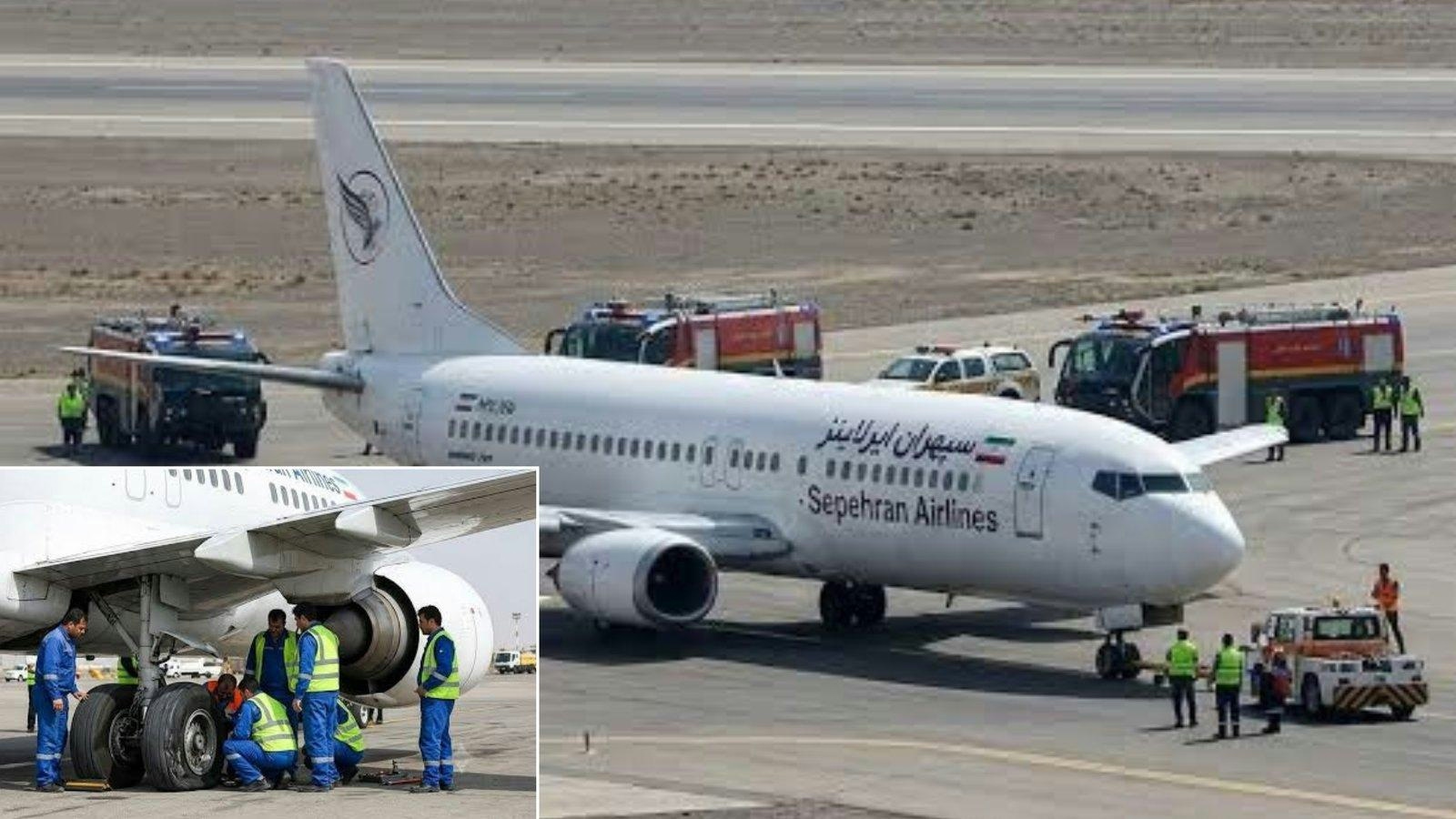
Sepehran Airlines B737 Returns to Mashhad After Tyre and Engine Issues

Etihad Deploys Widebody Fleet to Meet Strong Demand

Korean Air Finalizes $36.2 Billion Deal with Boeing
