
Превращайте аналитические выводы ИИ в реальные действия

В тренде
Categories
Thailand Aims to Become Global Aviation Hub Through MRO and Cargo Upgrades Amid Fuel Crisis
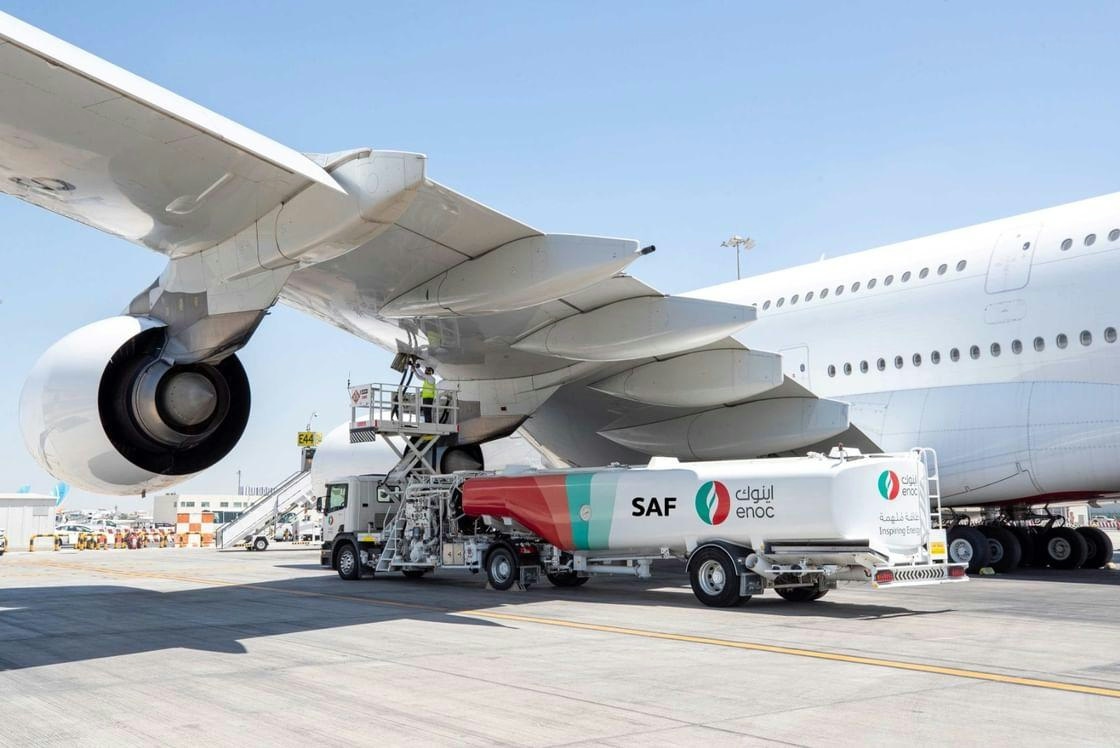
Thailand Accelerates Aviation Sector Upgrades Amid Global Fuel Crisis
Strategic Expansion of MRO and Cargo Facilities
BANGKOK — The Civil Aviation Authority of Thailand (CAAT) is intensifying efforts to establish the country as a premier regional aviation hub by advancing significant expansions in maintenance, repair, and overhaul (MRO) services alongside comprehensive upgrades to air cargo infrastructure. This strategic initiative emerges as the global aviation industry contends with persistent fuel price volatility and ongoing supply chain disruptions.
At a recent press briefing, Air Chief Marshal Manat Chavanaprayoon, director general of CAAT, detailed a dual-focused policy designed to enhance Thailand’s long-term competitiveness in the aviation sector. Central to this strategy are two flagship projects: the development of a world-class MRO hub and a thorough modernization of the national air cargo network.
The planned MRO hub, integrated within the Airports of Thailand (AOT) master plan, will occupy designated northern and southern zones at Suvarnabhumi Airport. This facility aims to attract substantial foreign direct investment and enable both domestic and international airlines to reduce maintenance expenses through regional service consolidation. Nevertheless, the global tightening of aircraft parts supply, which has intensified Aircraft on Ground (AOG) challenges during peak travel seasons, presents a potential obstacle to the hub’s operational effectiveness.
Concurrently, CAAT is addressing critical logistics bottlenecks in the freight sector. Cargo volumes at Suvarnabhumi Airport have surged by 110 percent, prompting the regulator to expedite customs and clearance procedures for shipments originating from trusted sources. This overhaul targets the high-value market segment, particularly components such as semiconductors and advanced electronics, which are vital to Thailand’s growing role in global supply chains.
Navigating Industry Turbulence Amid Fuel Price Volatility
Thailand’s aviation ambitions unfold against a backdrop of significant industry-wide challenges. The ongoing global energy crisis, intensified by geopolitical tensions in the Middle East, has driven jet fuel prices from pre-crisis levels of US$85–90 per barrel to peaks exceeding US$200, before stabilizing around US$127. These elevated fuel costs have severely impacted airline profitability, exemplified by Korean Air’s recent financial difficulties and prompting carriers like Cathay Pacific to adjust fuel surcharges in response to fluctuating oil prices.
Air Chief Marshal Manat highlighted the disruption caused by the conflict, noting that initial recovery projections anticipating a return to pre-pandemic 2019 levels by 2026 have been upended. The International Air Transport Association (IATA) has consequently revised its global net profit forecast downward from US$41 billion to US$23 billion. While Thailand has experienced a rebound in passenger traffic during peak seasons, CAAT officials caution that ongoing fuel price instability remains the sector’s foremost risk.
In response, CAAT is collaborating with government agencies to implement immediate cost-relief measures for domestic carriers. These include reductions in landing, parking, and air navigation fees, intended to alleviate operational expenses and help prevent fare increases for travelers.
Embracing Next-Generation Aviation Technologies
Looking forward, Thailand is also advancing its position in emerging aviation technologies. CAAT is finalizing its Unmanned Aircraft Systems (UAS) Master Plan, aligning with global trends toward sustainability and innovation. This initiative parallels international efforts such as Brisbane Airport’s upgrades to accommodate sustainable aviation fuel, which may provide Thailand with a competitive advantage in the evolving aviation landscape.
As Thailand pursues its vision of becoming a global aviation hub, the interplay between infrastructure development, fuel market dynamics, and sustainability initiatives will be critical in shaping the country’s trajectory amid ongoing uncertainty in the aviation industry.

Hong Kong's Five-Year Plan Includes Andrew Fan's Aircraft Parts Processing Hub Proposal

ACIA Aero Leasing Delivers ATR72-600 to Air Nostrum

RTX Appoints Jill Albertelli as Head of Pratt & Whitney

TAT Technologies Joins Beyond Aero Hydrogen Aircraft Program

AURAK Study Highlights Barriers to Air Taxi Adoption in Emerging Economies

Xiamen Air Selects Altitude for 787 Maintenance at Heathrow

Etihad and Swissport Extend Global Partnership

Sepehran Airlines B737 Returns to Mashhad After Tyre and Engine Issues

Etihad Deploys Widebody Fleet to Meet Strong Demand

Korean Air Finalizes $36.2 Billion Deal with Boeing
