
Превращайте аналитические выводы ИИ в реальные действия

В тренде
Categories
Thailand to Lift Age Restrictions on Commercial Aircraft
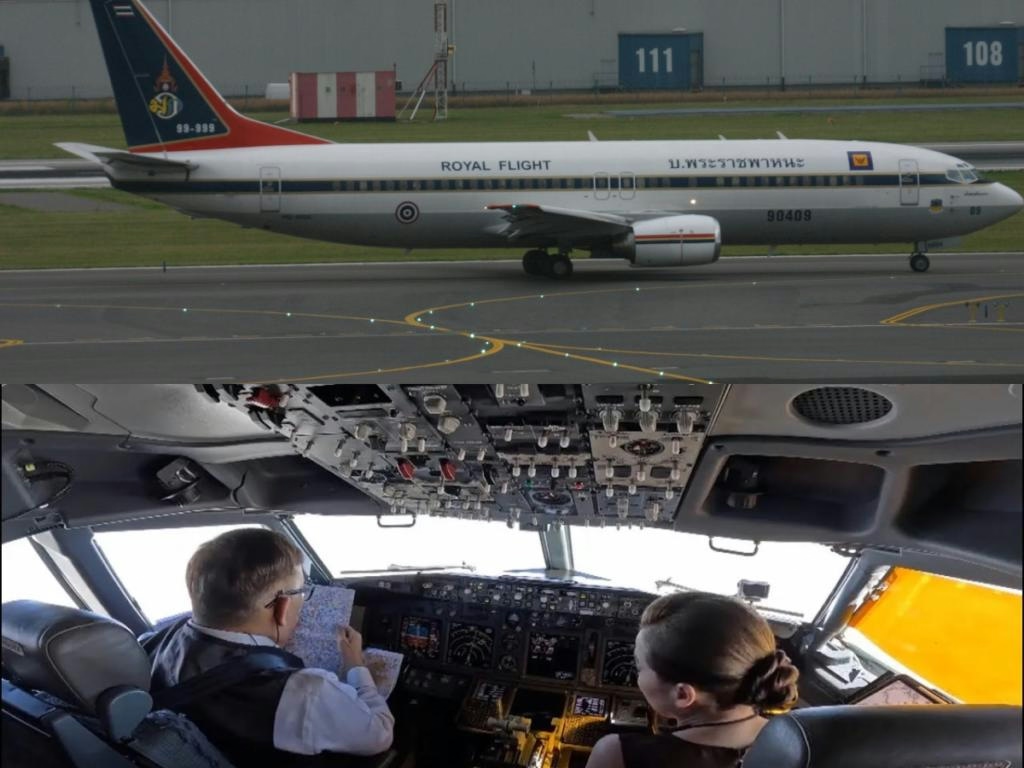
Thailand Removes Age Limits on Commercial Aircraft
Thailand’s Civil Aviation Authority (CAAT) has announced the removal of age restrictions on commercial aircraft registered in the country, marking a significant shift in regulatory policy. Moving away from fixed age limits, the CAAT will now focus on assessing the airworthiness of each aircraft through established evaluation processes. Operators will continue to bear responsibility for maintaining compliance under the Air Navigation Act to ensure ongoing safety standards are met.
Aligning with International Standards
This regulatory update brings Thailand in line with international aviation practices, which prioritize rigorous maintenance and inspection regimes over arbitrary age caps. Under the new framework, mid-life and older aircraft operating in Thailand will be subject to enhanced inspection requirements and more frequent oversight by the CAAT. Aircraft lessors, particularly those managing older fleets, are advised to review and update maintenance and inspection clauses in their agreements with Thai lessees to reflect these changes.
Implications for Thailand’s Aviation and Tourism Sectors
The timing of this policy change is critical for Thailand’s aviation and tourism industries, both of which are navigating recovery challenges. In 2025, the country experienced a 7.23% decline in foreign tourist arrivals alongside a 4.7% drop in tourism revenue, prompting calls for strategies aimed at attracting higher-spending and longer-stay visitors. Concurrently, Thai airlines, still recovering from the financial and operational impacts of the COVID-19 pandemic, have struggled to renew and expand their fleets amid global supply constraints on new aircraft deliveries.
By removing age restrictions, the CAAT aims to provide airlines with greater flexibility to acquire or lease mid-life aircraft, thereby mitigating delays and shortages associated with new aircraft procurement. Industry analysts suggest this could open new opportunities for lessors specializing in mid-life planes, as Thai carriers may increasingly consider older aircraft to meet operational needs. However, this potential is tempered by a global trend of airlines retaining mid-life aircraft longer than initially planned, reducing the availability of such planes for lease or sale.
Future Outlook for the Aviation Market
Looking ahead, Thailand’s aviation sector faces intensifying competition, with premium travel demand projected to outpace economy class growth in 2026. Additionally, anticipated major airline mergers are expected to reshape the competitive landscape. While the removal of aircraft age restrictions offers Thai airlines enhanced operational flexibility and supports sector recovery, industry experts emphasize that broader economic conditions, tourism trends, and market consolidation will ultimately influence the policy’s impact on the industry.
Comments

Etihad Airways Suspends Airbus A380 Flights on Key Route

Aditya Birla Group Seeks Approval for Aircraft Leasing in GIFT City

Qatar Airways Highlights Innovation and Connectivity at Arabian Travel Market 2026

Hong Kong's Five-Year Plan Includes Andrew Fan's Aircraft Parts Processing Hub Proposal

ACIA Aero Leasing Delivers ATR72-600 to Air Nostrum

RTX Appoints Jill Albertelli as Head of Pratt & Whitney

TAT Technologies Joins Beyond Aero Hydrogen Aircraft Program

AURAK Study Highlights Barriers to Air Taxi Adoption in Emerging Economies

Xiamen Air Selects Altitude for 787 Maintenance at Heathrow

Etihad and Swissport Extend Global Partnership
