
Превращайте аналитические выводы ИИ в реальные действия

В тренде
Categories
The Emerging Role of Drones and AI in Combat Aviation
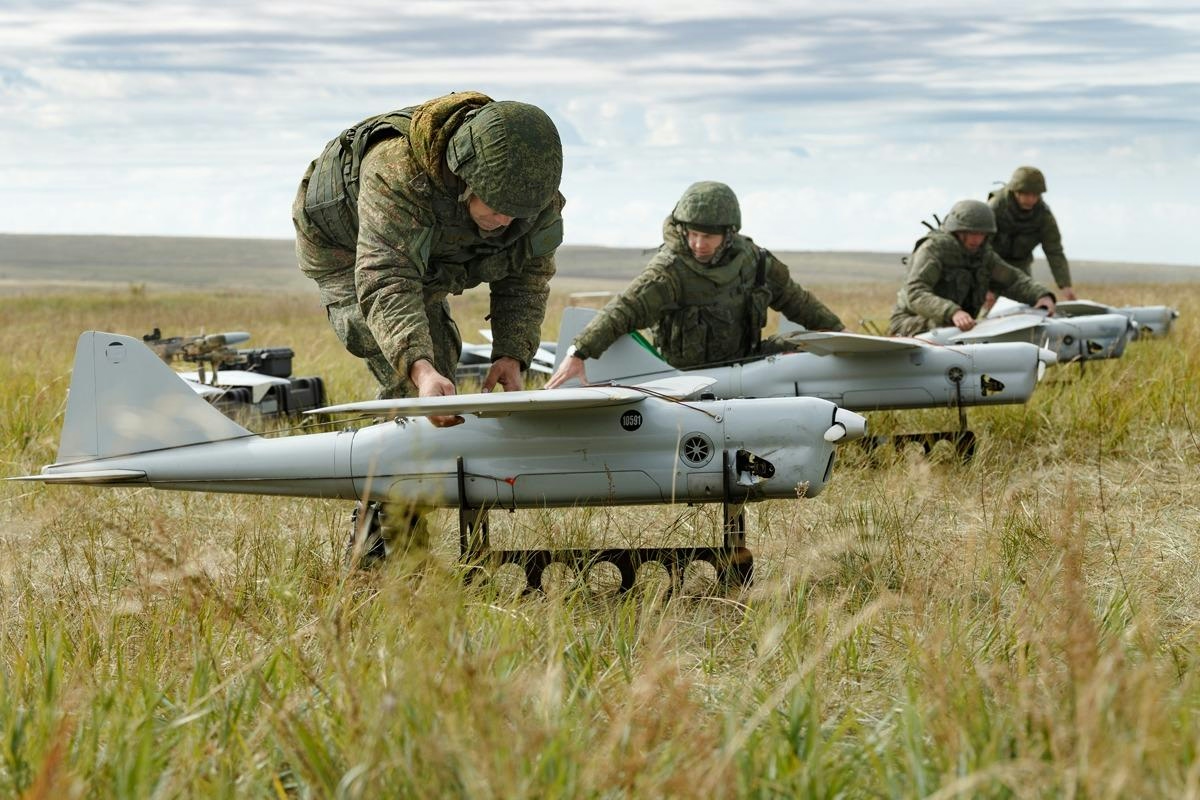
The Emerging Role of Drones and AI in Combat Aviation
The landscape of combat aviation is undergoing a profound transformation, driven by the increasing prominence of Remotely Piloted Aircraft (RPAs), commonly known as drones or UAVs, alongside advancements in artificial intelligence (AI). At the recent seminar titled Army Aviation in Decade of Transformation—Runway Round Table First Edition, held at the Combat Army Aviation Training School in Nashik, Major General Abhinaya Rai challenged the conventional perception that RPAs are confined to peacetime roles. He underscored their growing importance in contemporary warfare, as military leaders outlined a strategic roadmap to recalibrate Army aviation in response to evolving conflict dynamics.
Advancements and Strategic Vision
The seminar featured extensive discussions on doctrinal evolution, organizational restructuring, and the integration of AI-enabled technologies, all aimed at revolutionizing decision-making processes and combat training methodologies. Participants explored emerging concepts such as ‘air littoral’ control, a tactical domain gaining critical relevance for commanders operating in complex battlefield environments. Central to the event was the unveiling of Vision @ 2047, a forward-looking framework emphasizing AI-driven precision and continuous technological innovation as cornerstones for the future of Army aviation.
Challenges in Integration and Operational Readiness
Despite the promising potential of drones and AI, their integration into combat aviation presents significant challenges. The rapid pace of technological development necessitates an accelerated acquisition process, compelling both military institutions and private industry to adapt swiftly. Responding to this imperative, companies like Shield AI have introduced autonomous vertical takeoff and landing (VTOL) fighter jets, heralding a new era of unmanned aerial capabilities.
Nevertheless, concerns persist regarding operational readiness and the effective incorporation of drones within existing military units. Leaders from formations such as the U.S. Army’s 25th Infantry Division have highlighted the risk of overburdening smaller units with the additional responsibilities associated with drone operation. This underscores the critical need for careful planning and tactical integration to ensure that new technologies enhance rather than complicate battlefield effectiveness.
The Path Forward in Autonomous Warfare
The U.S. Army’s ongoing development of Collaborative Combat Aircraft further exemplifies the commitment to advancing autonomous warfare capabilities. However, current technological constraints and necessary tradeoffs indicate that progress will require sustained adaptation and strategic foresight. As military forces and industry partners collaborate to address these challenges, the overarching vision remains focused on fully harnessing the capabilities of drones and AI to prepare for the complexities of future combat environments.
Man Ingested by Frontier Airlines Engine Marks Denver’s Sixth Airfield Security Breach in Three Years
Former Spirit Employees Express Concerns Over AI Partnership With Google
China Certifies Pilotless Air Taxi for Export; Sri Lanka First Buyer
US Pilot Hourly Pay Ranges from $90 for Regional to $465 for Widebody Flights
NASA Chooses University Teams to Support Aviation Research

Airbus Conducts Freighter First Flight as Delivery Figures Influence Stock

Hypersonic blast converts diamond to graphite, could aid defense armor
Achieving the AMES Rating in a Lockwood AirCam

Oneworld on Digital Transformation and Passenger Experience in Airport Technology
CALC and HAECO Establish Aircraft Engine Maintenance Center in Hong Kong
