
Превращайте аналитические выводы ИИ в реальные действия

В тренде
Categories
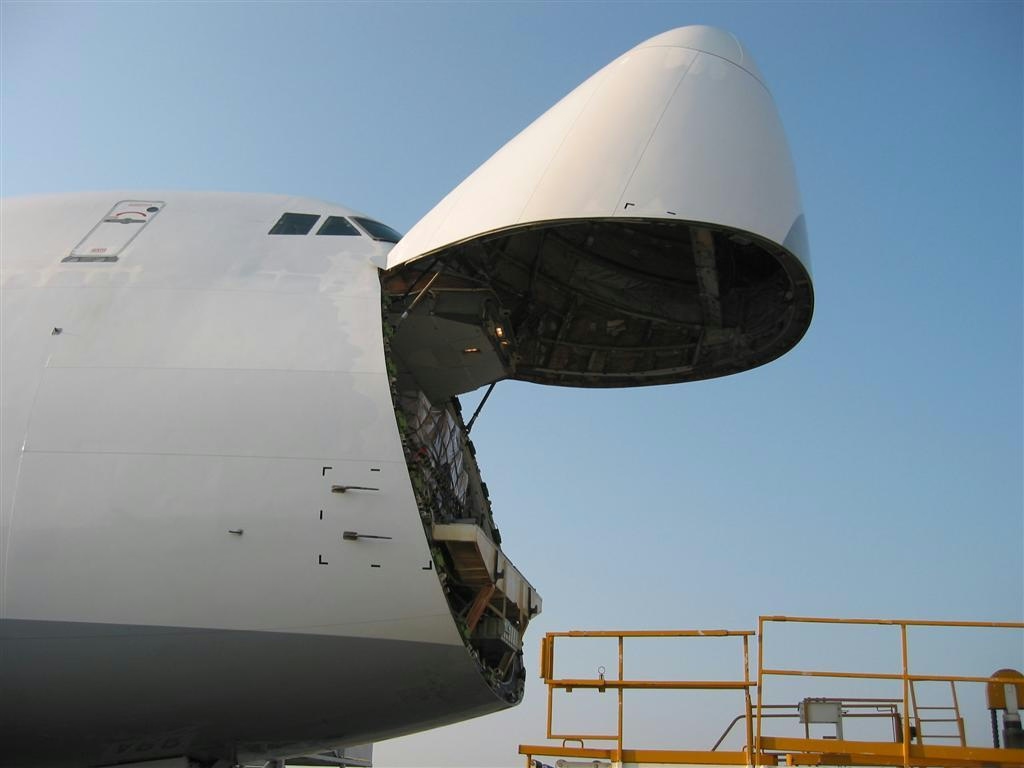
The Purpose of the Large Nose Door on the Boeing 747 Freighter
The Purpose of the Large Nose Door on the Boeing 747 Freighter
While modern twin-engine jets dominate airport taxiways, the Boeing 747 Freighter remains a distinctive giant in global aviation, largely due to its signature upward-swinging nose door. This unique feature allows the aircraft to load oversized cargo—ranging from industrial turbines to 40-foot pipes—directly into its expansive hold. The nose door has become an essential asset in the global supply chain, providing a capability that few other airframes can match.
Engineering Origins and the Iconic Hump
The concept of the 747’s nose door dates back to the mid-1960s, when Boeing engineers anticipated that supersonic passenger jets would soon surpass subsonic travel. With this foresight, Joe Sutter and his team designed the 747 with a cargo-first philosophy, ensuring the aircraft could transition seamlessly from passenger service to freight operations if necessary.
To optimize cargo efficiency, engineers concluded that front-loading was crucial for accommodating long, indivisible shipments. However, incorporating a door at the nose required relocating the cockpit above the main deck, resulting in the 747’s distinctive upper-deck “hump.” This innovative design allowed the entire nose to hinge upward, creating a direct and unobstructed path for large cargo. This feature distinguished the 747 from the narrow-body freighters of its era, which relied on more restrictive side doors.
A Lasting Impact on Air Freight
The decision to include the nose door proved invaluable in ways Boeing had not fully anticipated. Although the supersonic revolution faltered due to high costs and noise regulations, the 747’s front-loading capability became a cornerstone of the heavy-lift sector. In industries where the rapid export of massive precision machinery is critical, the nose door has been indispensable. It transformed the 747 from a widebody workhorse into a specialized logistics tool that has outlasted many contemporaries, including the supersonic jets it was originally designed to outlive.
Engineering Marvel and Market Realities
The nose door itself is an engineering marvel, designed to withstand the immense pressure differentials encountered during high-altitude flight while remaining operable on the ground. Unlike standard passenger doors, the 747’s nose is a motorized, heavy-duty component that hinges upward to create an opening approximately 10 feet high. This mechanism relies on a complex system of actuators and locking pins to maintain the structural integrity of the pressurized nose cone during flight.
This design offers significant advantages in markets where traditional side-loading methods are less efficient, streamlining the loading and unloading of oversized cargo. However, the complexity of the nose door mechanism also introduces challenges, including higher maintenance and operational costs. Consequently, market reactions to the 747 Freighter have been mixed: some operators value its unmatched cargo flexibility, while others prefer more cost-effective alternatives.
Competition and Industry Trends
Competitors have introduced their own large cargo door designs, but none have matched the 747’s established reputation and widespread use in the freight market. The aircraft’s enduring presence is also influenced by broader industry trends, including the ongoing rivalry between Boeing and Airbus, which shapes demand and purchasing decisions across the aerospace sector.
Despite evolving market dynamics and technological advancements, the Boeing 747 Freighter’s nose door remains a symbol of engineering ingenuity and a cornerstone of global heavy-lift logistics—demonstrating that a bold design choice from the 1960s continues to shape the industry today.

Etihad Airways Suspends Airbus A380 Flights on Key Route

Aditya Birla Group Seeks Approval for Aircraft Leasing in GIFT City

Qatar Airways Highlights Innovation and Connectivity at Arabian Travel Market 2026

Hong Kong's Five-Year Plan Includes Andrew Fan's Aircraft Parts Processing Hub Proposal

ACIA Aero Leasing Delivers ATR72-600 to Air Nostrum

RTX Appoints Jill Albertelli as Head of Pratt & Whitney

TAT Technologies Joins Beyond Aero Hydrogen Aircraft Program

AURAK Study Highlights Barriers to Air Taxi Adoption in Emerging Economies

Xiamen Air Selects Altitude for 787 Maintenance at Heathrow

Etihad and Swissport Extend Global Partnership
