
Превращайте аналитические выводы ИИ в реальные действия

В тренде
Categories
The Secret Horsepower Race: Fighter Engine Development on the Western Front
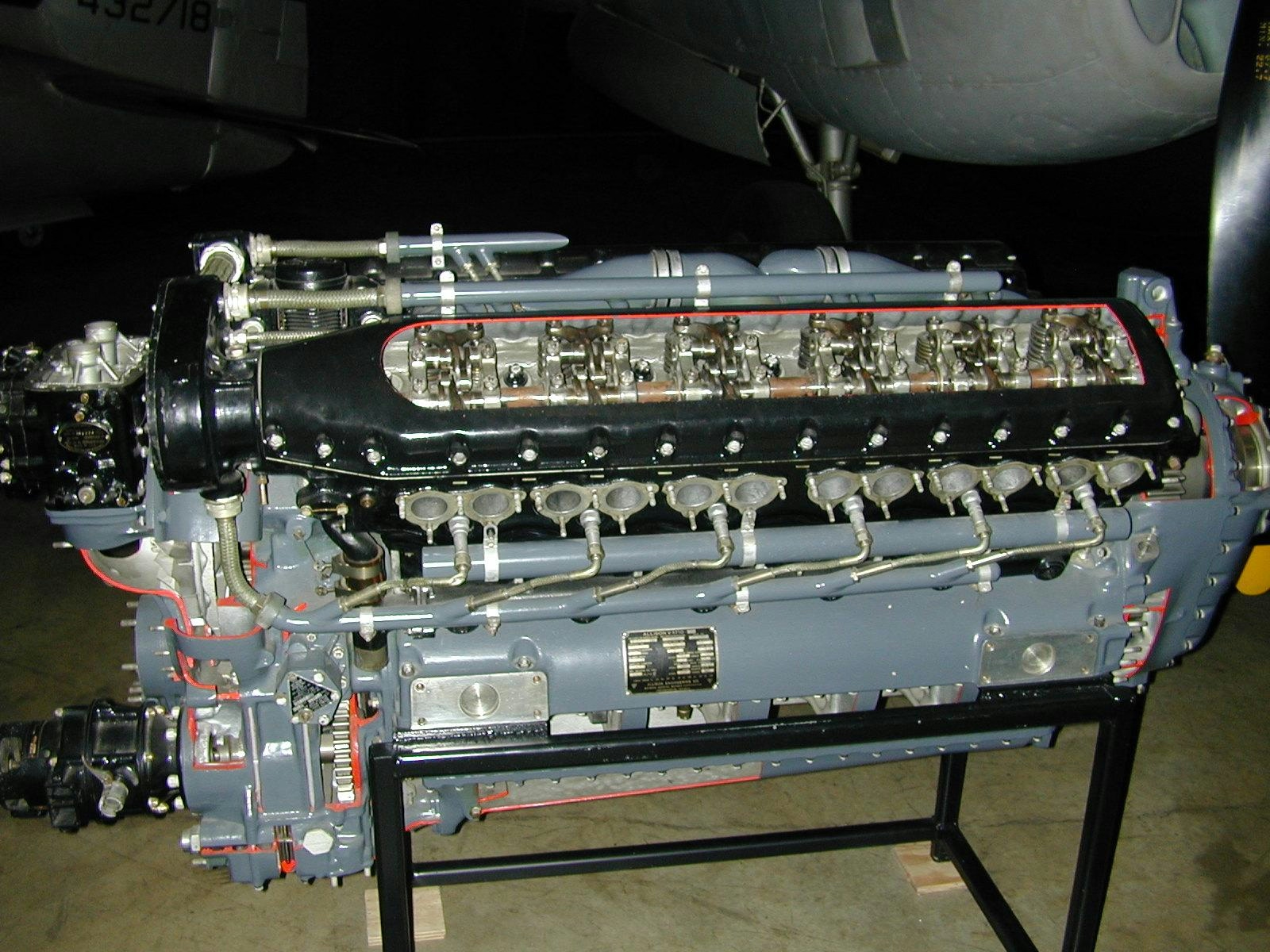
The Secret Horsepower Race: Fighter Engine Development on the Western Front
Calum Douglas’s The Secret Horsepower Race: Western Front Fighter Engine Development provides a detailed and compelling examination of the intense technological competition that defined air combat during World War II. Drawing on his background as a mechanical engineer with advanced studies in Formula 1 engine technology and experience at Toyota, Douglas combines technical expertise with engaging storytelling to shed light on a largely overlooked aspect of wartime innovation. His fluency in German and mentorship under Cosworth’s Geoff Goddard further deepen the book’s insights.
A High-Stakes Technological Contest
The narrative begins with a vivid account of an RAF Mosquito daylight raid aimed at humiliating Hermann Göring, immediately immersing readers in the high-pressure environment that drove rapid advancements in fighter engine design. Douglas chronicles the efforts of five nations—France, Italy, Germany, Great Britain, and the United States—as they vied to develop increasingly powerful engines. While France was quickly sidelined following its invasion and Italy’s early promise faded, the competition ultimately centered on Germany, the UK, and the USA, each pushing engineering boundaries to achieve air superiority.
Douglas’s approach emphasizes “showing, not telling,” transforming what might have been a dense technical study into an accessible and engaging narrative. The book is richly illustrated and offers clear explanations that make complex engineering concepts understandable without compromising accuracy. Chapter Two, though technically dense, is crucial for readers seeking a thorough understanding of internal combustion aero engine design, testing, and production processes.
Strategic Resources and Wartime Impact
A central theme of the book is how the distinct strengths and limitations of each country influenced their engine development strategies. From Chapter Three onward, the narrative gains momentum by tracing the evolution of various engine models and their impact on wartime operations. Douglas highlights the strategic significance of resource access, noting how Operation Torch effectively denied Nazi Germany access to cobalt, a vital rare earth metal used in corrosion-resistant valves. As the war progressed, Germany’s dwindling supplies of critical metals such as nickel and cobalt severely constrained its engine production capabilities. In contrast, the Allies benefited from abundant resources, incorporating rare materials like indium, silver, and gold into bearing fabrication to enhance performance.
Douglas’s analysis also draws parallels to contemporary challenges in military engine development. He notes ongoing skepticism about commercial vehicle manufacturers’ willingness to produce limited-run combat vehicles under programs like the XM30, reflecting persistent tensions between commercial priorities and military requirements. In the North American aviation engine market, reactions to new developments remain mixed, with some analysts forecasting a decline in demand for industrial gas turbines. The competitive dynamics continue to be intense, as exemplified by the Future Combat Air System (FCAS) dispute, where Dassault’s CEO has openly criticized Airbus’s approach, and Airbus has proposed splitting Europe’s troubled fighter jet program into two separate warplanes to resolve leadership conflicts.
The Secret Horsepower Race thus not only illuminates the technical and strategic battles of the past but also resonates with the ongoing complexities and rivalries that continue to shape military aviation today. Douglas’s work stands as both a riveting historical account and a timely reflection on the enduring competition in fighter engine development.

Etihad Airways Suspends Airbus A380 Flights on Key Route

Aditya Birla Group Seeks Approval for Aircraft Leasing in GIFT City

Qatar Airways Highlights Innovation and Connectivity at Arabian Travel Market 2026

Hong Kong's Five-Year Plan Includes Andrew Fan's Aircraft Parts Processing Hub Proposal

ACIA Aero Leasing Delivers ATR72-600 to Air Nostrum

RTX Appoints Jill Albertelli as Head of Pratt & Whitney

TAT Technologies Joins Beyond Aero Hydrogen Aircraft Program

AURAK Study Highlights Barriers to Air Taxi Adoption in Emerging Economies

Xiamen Air Selects Altitude for 787 Maintenance at Heathrow

Etihad and Swissport Extend Global Partnership
