
Превращайте аналитические выводы ИИ в реальные действия

В тренде
Categories
The SR-71 Blackbird Overcame Unprecedented Engineering Challenges
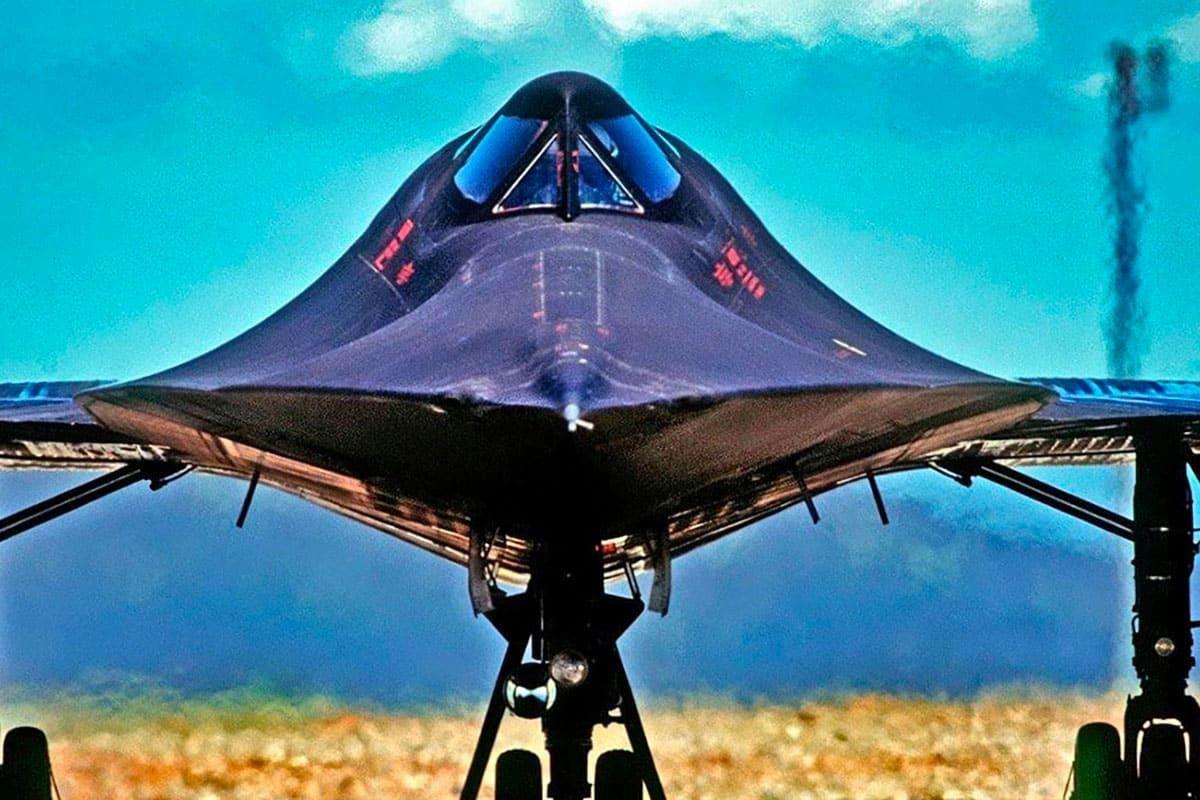
The SR-71 Blackbird: A Triumph of Engineering Innovation
The SR-71 Blackbird remains one of the most iconic aircraft in American military history, emerging from the CIA’s A-12 Oxcart program during a period of intense technological competition and strategic uncertainty. Its sleek, futuristic design continues to captivate visitors at institutions such as the National Museum of the U.S. Air Force and the Smithsonian, standing as a testament to the radical engineering ambitions of its era.
Strategic Context and Technological Rivalry
In the early 1960s, the future of the Blackbird was far from assured. The newly established National Reconnaissance Office had begun deploying the CORONA satellite program, which by 1960 was delivering actionable intelligence on Soviet missile installations. This advancement sparked a critical debate within U.S. defense circles: whether to continue investing in high-risk, manned reconnaissance flights or to rely increasingly on satellite technology, which offered intelligence gathering without endangering pilots.
The 1960 downing of a U-2 spy plane over Soviet territory intensified these concerns, revealing that altitude alone no longer guaranteed immunity from sophisticated surface-to-air missile systems. Secretary of Defense Robert McNamara repeatedly questioned the rationale behind funding both the CIA’s A-12 and the Air Force’s SR-71 programs, especially as satellite reconnaissance capabilities rapidly matured and began to fulfill strategic intelligence requirements.
Engineering Challenges at the Frontier of Technology
Beyond strategic debates, the SR-71’s development confronted unprecedented engineering challenges. The A-12’s maiden flight in April 1962 utilized interim engines, as the intended powerplants were not yet operational. Engineers grappled with problems that had no prior solutions, including the need for materials capable of withstanding extreme temperatures generated at speeds exceeding Mach 3, and fuel systems that could reliably ignite at high altitudes.
The complexity of the Blackbird’s design paralleled challenges in other cutting-edge fields, such as the development of 3D bioprinted in vitro models in biomedical engineering. Just as researchers strive to replicate hierarchical, biomimetic structures with precise cellular diversity and multi-organ interactions, aerospace engineers had to integrate advanced alloys, complex avionics, and innovative airframe designs to ensure performance under conditions never before encountered. Both disciplines demanded the synthesis of diverse components to achieve unprecedented fidelity and functionality.
Impact and Enduring Legacy
The successful development of the SR-71 Blackbird catalyzed increased interest in advanced aerospace technologies both within the United States and internationally. Its capabilities prompted other nations to accelerate research into high-speed, high-altitude aircraft and missile systems, seeking to match or counter the Blackbird’s performance. The aircraft set a new standard in aerospace innovation, much as breakthroughs in other engineering domains drive rapid technological progress and regulatory adaptation.
Despite early setbacks, including crashes and ongoing debates over cost and survivability, the SR-71 ultimately overcame its formidable challenges. Its legacy endures as a symbol of Cold War ingenuity and as a powerful example of pushing the boundaries of technological possibility, demonstrating that the most significant advances often emerge from confronting the most daunting obstacles.

Etihad Airways Suspends Airbus A380 Flights on Key Route

Aditya Birla Group Seeks Approval for Aircraft Leasing in GIFT City

Qatar Airways Highlights Innovation and Connectivity at Arabian Travel Market 2026

Hong Kong's Five-Year Plan Includes Andrew Fan's Aircraft Parts Processing Hub Proposal

ACIA Aero Leasing Delivers ATR72-600 to Air Nostrum

RTX Appoints Jill Albertelli as Head of Pratt & Whitney

TAT Technologies Joins Beyond Aero Hydrogen Aircraft Program

AURAK Study Highlights Barriers to Air Taxi Adoption in Emerging Economies

Xiamen Air Selects Altitude for 787 Maintenance at Heathrow

Etihad and Swissport Extend Global Partnership
