
Превращайте аналитические выводы ИИ в реальные действия

В тренде
Categories
The Widebody Jet That Once Dominated Transatlantic Travel Now Serves as a Cargo Workhorse
The Widebody Jet That Once Dominated Transatlantic Travel Now Serves as a Cargo Workhorse
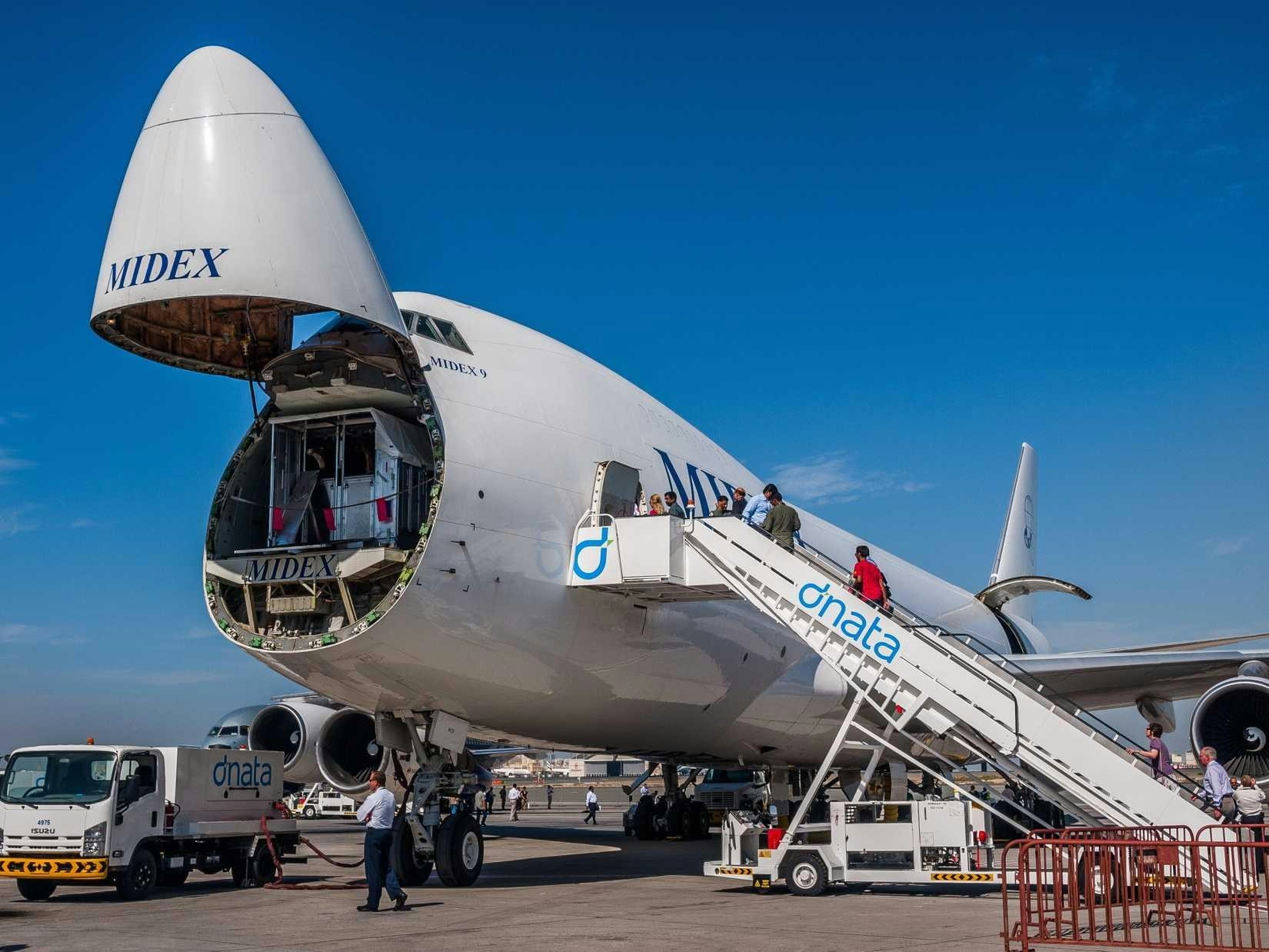
The Boeing 747 continues to play a pivotal role in global cargo aviation in 2026, despite its diminished presence as a passenger aircraft. Over 300 Boeing 747 freighters, including the technologically advanced 747-8F model introduced in 2011, remain active across major long-haul trade routes. This enduring relevance is largely attributed to the aircraft’s distinctive design, notably its hinged nose door. Positioned above the main deck, the cockpit allows the nose to swing open, facilitating the loading of oversized freight that conventional cargo planes cannot accommodate.
This innovative feature was a cornerstone of the 747’s original design in the late 1960s. Boeing engineers crafted the jet’s iconic upper-deck “hump” specifically to enable the nose to open, a design choice that later proved invaluable for cargo operations. The evolution of the 747 can be traced through three significant phases: its initial dominance in long-haul passenger travel following its 1970 debut, the introduction of specialized freighter variants such as the 747-200F and 747-400F, and the current role of the 747-8F as a critical component of global logistics networks operated by carriers including Atlas Air and Cargolux.
From Passenger Icon to Cargo Mainstay
At its inception, the Boeing 747 was developed to meet airlines’ growing demand for higher passenger capacity over longer distances while reducing operational costs. As the world’s first widebody commercial airliner, it featured a double-aisle cabin capable of seating more than 350 passengers, significantly surpassing earlier jets like the Boeing 707. The 747’s entry into service with Pan Am on the New York–London route in 1970 revolutionized international air travel, making long-haul flights more accessible and affordable to a broader audience.
Throughout the 1970s and 1980s, the 747 became the flagship aircraft for many global airlines, dominating transatlantic and transpacific routes. Its expansive fuselage not only transformed passenger travel but also laid the foundation for its future as a high-capacity freighter. Even during its peak years as a passenger jet, airlines and logistics companies recognized the jumbo jet’s potential for cargo transport.
Evolving Roles Amid Industry Challenges
Over the past five decades, the 747 has undergone multiple iterations, each enhancing its performance, efficiency, or capacity. The original 747-100 established the fundamental design, while subsequent models, culminating in the 747-8F, solidified its reputation as a cargo workhorse. Today, the 747 remains indispensable to international freight operations, particularly for U.S.-based carriers and manufacturers.
Nevertheless, the aircraft’s continued prominence in global logistics faces new challenges. The International Air Transport Association (IATA) has highlighted ongoing difficulties in freighter manufacturing supply chains, which threaten the timely delivery and maintenance of large cargo aircraft like the 747. Concurrently, the transatlantic market is undergoing shifts. JetBlue’s expansion has slowed due to fleet limitations, airport slot constraints, and intensifying competition from airlines deploying premium narrowbody jets on routes traditionally served by widebodies.
In emerging markets, structural obstacles persist. For instance, Azul’s CEO in Brazil has pointed to disproportionate global passenger lawsuits and underdeveloped aviation infrastructure as significant barriers, despite the country’s considerable growth potential.
As the aviation industry navigates these evolving dynamics, the Boeing 747’s legacy endures—not as the queen of the passenger skies, but as an indispensable workhorse within the world’s cargo networks.

Etihad Airways Suspends Airbus A380 Flights on Key Route

Aditya Birla Group Seeks Approval for Aircraft Leasing in GIFT City

Qatar Airways Highlights Innovation and Connectivity at Arabian Travel Market 2026

Hong Kong's Five-Year Plan Includes Andrew Fan's Aircraft Parts Processing Hub Proposal

ACIA Aero Leasing Delivers ATR72-600 to Air Nostrum

RTX Appoints Jill Albertelli as Head of Pratt & Whitney

TAT Technologies Joins Beyond Aero Hydrogen Aircraft Program

AURAK Study Highlights Barriers to Air Taxi Adoption in Emerging Economies

Xiamen Air Selects Altitude for 787 Maintenance at Heathrow

Etihad and Swissport Extend Global Partnership
