
Превращайте аналитические выводы ИИ в реальные действия

В тренде
Categories
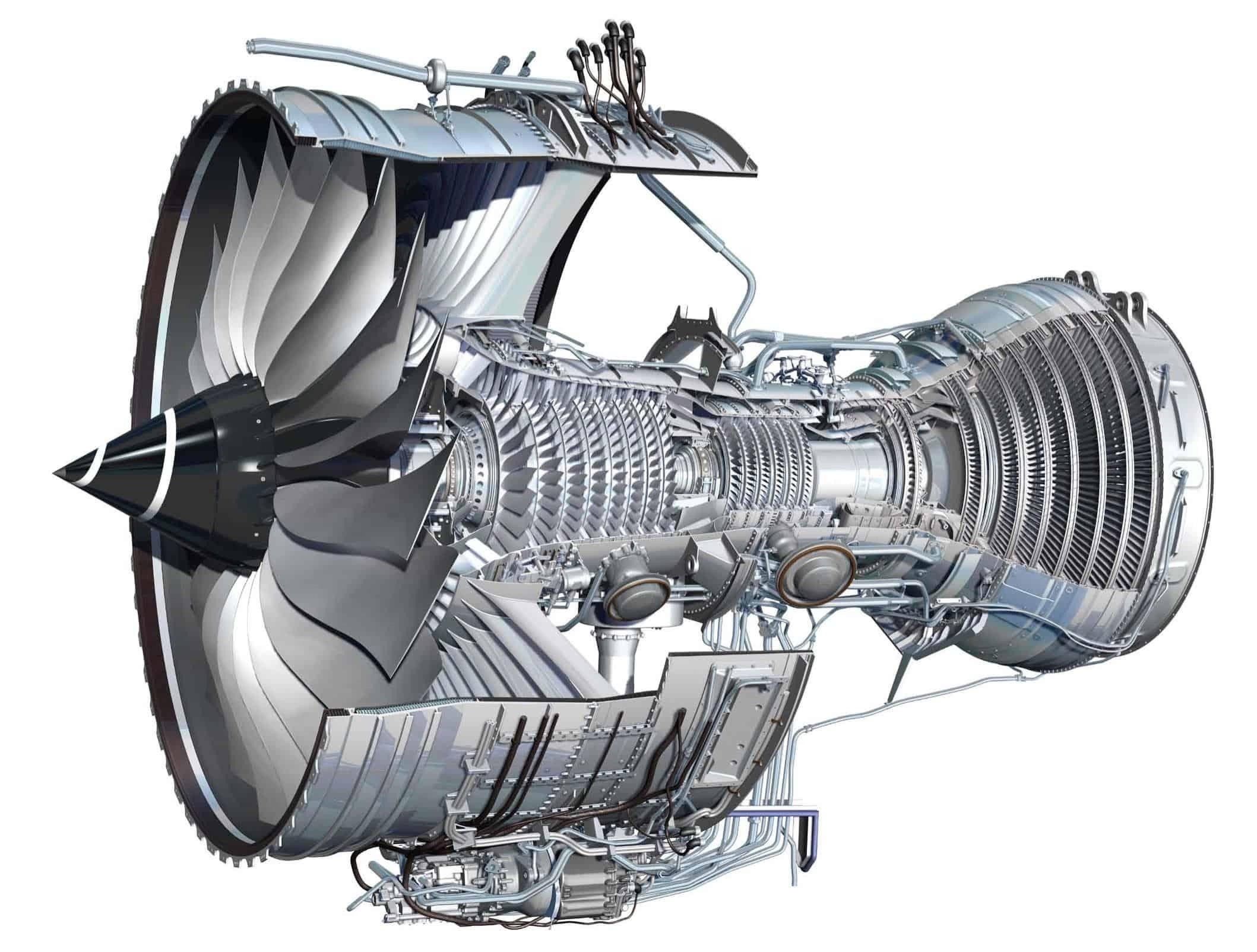
Thirty Years of Rolls-Royce Trent Engines: A Legacy of Durability
Thirty Years of Rolls-Royce Trent Engines: A Legacy of Durability
This year marks the 30th anniversary of the Rolls-Royce Trent 700 engine’s entry into service on the Airbus A330 in 1995, a milestone that laid the groundwork for one of the most successful families of large aero engines in aviation history. Over the past three decades, the Trent series has expanded to encompass the Trent 700, Trent 800, Trent 500, Trent 900, Trent 1000, Trent XWB, and Trent 7000 models. From a fleet of approximately 1,500 engines in 2010, the global number of Trent engines in operation has surged to nearly 6,000 today. The frequency of Rolls-Royce-powered aircraft taking off or landing every three seconds highlights the enduring reliability and widespread confidence that customers place in the Trent family.
Commitment to Continuous Improvement
Central to the Trent family’s success is a philosophy of continuous enhancement. Each engine is built upon a robust and proven three-shaft architecture, designed to be both scalable and adaptable. This engineering approach enables Rolls-Royce to tailor each new Trent variant to meet specific thrust requirements while integrating the latest advancements in materials, components, and subsystem design. Crucially, mature technologies are retrofitted into earlier engines already in service, ensuring that the entire fleet benefits from ongoing innovation and performance improvements.
Enhancements and Environmental Leadership
The ongoing upgrades to the Trent engines have yielded significant gains in efficiency, reliability, and durability. Since the introduction of the Trent family, fuel consumption has been reduced by 15 percent, with the Trent XWB now recognized as the most efficient large aero engine currently in operation. Reliability has improved eightfold, markedly reducing the risk of flight delays or cancellations and enhancing the passenger experience.
Environmental stewardship has also been a central focus for Rolls-Royce. The entire Trent family is now fully compatible with 100 percent sustainable aviation fuel (SAF), supporting the aviation industry’s transition toward net zero emissions. This commitment not only advances operational efficiency but also positions Rolls-Royce as a leader in sustainable aviation, actively contributing to the reduction of carbon emissions and shaping the future of air travel.
Navigating Challenges and Market Dynamics
Despite these achievements, Rolls-Royce continues to confront challenges, particularly with ongoing technical issues affecting the Trent 1000 engine. The company is actively implementing upgrades to address these problems and restore confidence among customers and stakeholders. Meanwhile, competitors remain vigilant, seeking to capitalize on any vulnerabilities. Market responses have been cautious as Rolls-Royce works to resolve these issues and reinforce its competitive position.
Looking Ahead
As the Trent engine family commemorates three decades of innovation and service, Rolls-Royce remains committed to continuous improvement and sustainability. While current challenges persist, the company’s legacy of engineering excellence and dedication to a greener future ensure that the Trent family continues to set the benchmark for performance, reliability, and environmental responsibility within the aerospace industry.

Etihad Airways Suspends Airbus A380 Flights on Key Route

Aditya Birla Group Seeks Approval for Aircraft Leasing in GIFT City

Qatar Airways Highlights Innovation and Connectivity at Arabian Travel Market 2026

Hong Kong's Five-Year Plan Includes Andrew Fan's Aircraft Parts Processing Hub Proposal

ACIA Aero Leasing Delivers ATR72-600 to Air Nostrum

RTX Appoints Jill Albertelli as Head of Pratt & Whitney

TAT Technologies Joins Beyond Aero Hydrogen Aircraft Program

AURAK Study Highlights Barriers to Air Taxi Adoption in Emerging Economies

Xiamen Air Selects Altitude for 787 Maintenance at Heathrow

Etihad and Swissport Extend Global Partnership
