
Превращайте аналитические выводы ИИ в реальные действия

В тренде
Categories
University of Tokyo and Narita Airport to Establish Aviation Innovation Hub
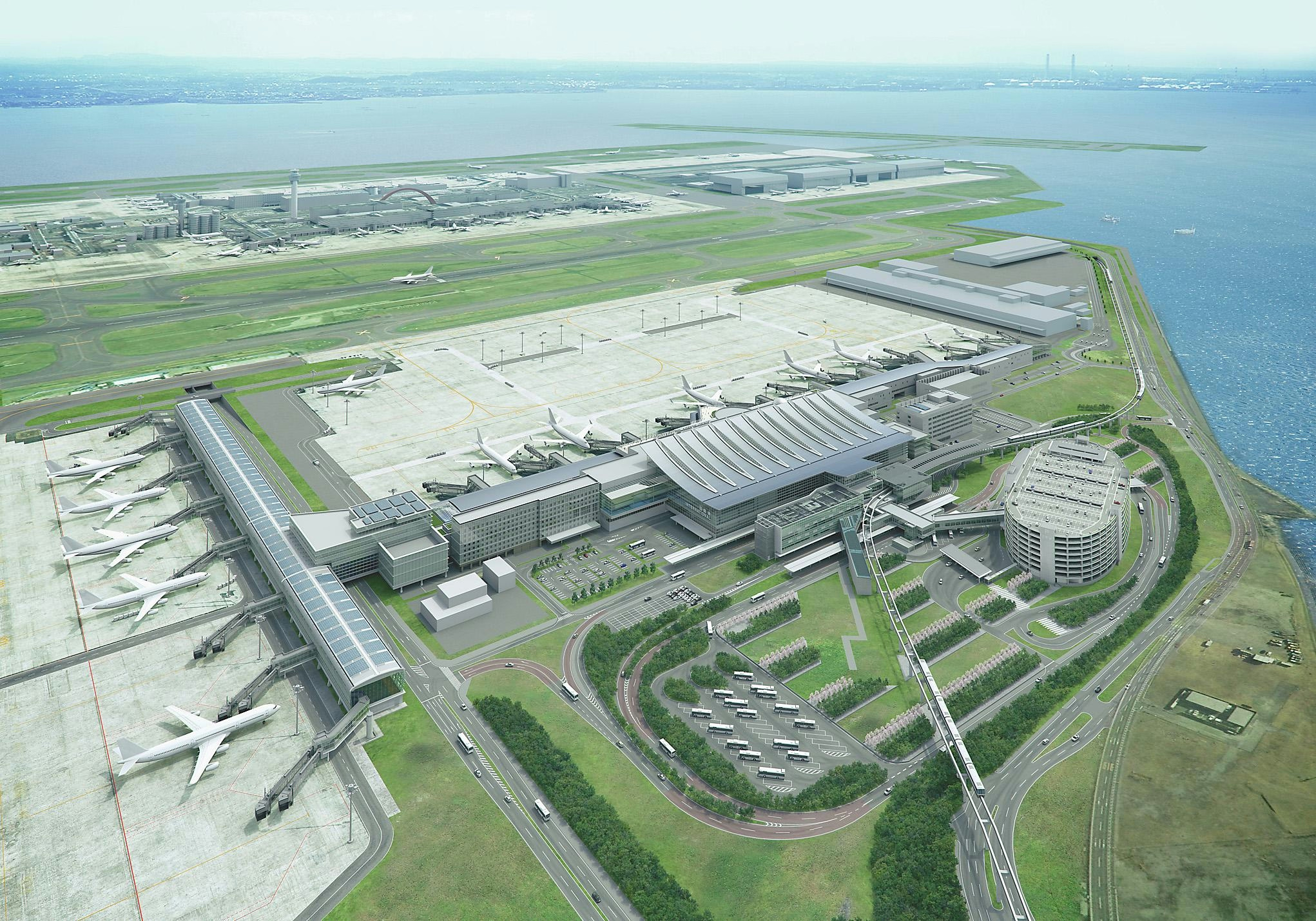
University of Tokyo and Narita Airport to Establish Aviation Innovation Hub
The University of Tokyo’s Research Centre for Advanced Science and Technology (RCAST) has formalized a comprehensive collaboration with Narita International Airport Corporation (NAA) to create an aviation innovation hub at Narita International Airport. This strategic partnership seeks to enhance industry–academia cooperation and transform the airport into the nucleus of a future “Airport City,” thereby promoting technological progress and economic growth within Japan.
Objectives and Collaborative Initiatives
The agreement outlines a series of concrete initiatives aimed at accelerating the development and practical application of advanced science and technology in the aviation sector. These include joint research projects, the establishment of a social collaboration research division, and the encouragement of co-creation with supporting companies. Through these efforts, the collaboration intends to reinforce Narita Airport’s position as a critical transportation hub while evolving it into a center for innovation.
Central to the partnership is the creation of an academia-driven innovation ecosystem within the Airport City, designed to foster collaboration among academic institutions, industry stakeholders, and government entities. Research activities will focus on sustainable aviation, next-generation air traffic management, and the optimization of airport operations through field experiments conducted in real airport environments. Additionally, the initiative aims to advance science-based airport design by developing automation technologies and improving ground handling processes.
The integration of airport management, aircraft operations, and air traffic control systems is another key area of focus, intended to facilitate seamless operational coordination. Furthermore, the project envisions the realization of the Airport City concept as a regional co-creation hub that leverages aviation networks, geopolitical considerations, and supply chains to benefit both national and regional economies in Japan.
Challenges and Industry Implications
Despite the promising outlook, the partnership faces significant challenges. Securing adequate funding and developing the necessary infrastructure to support cutting-edge research and development will be essential. Moreover, the collaboration must navigate complex regulatory frameworks related to aviation safety and environmental sustainability, which could complicate the implementation of new technologies.
The announcement has already attracted interest from global aviation companies eager to participate in pioneering projects at the new hub. However, this initiative is expected to intensify competition within the sector, as other airports and academic institutions may establish similar research centers, potentially sparking a race for technological innovation and top-tier talent in aviation.
Nonetheless, the alliance between RCAST and NAA represents a deliberate and strategic effort to position Narita International Airport at the forefront of aviation innovation, with the potential to drive significant advancements in the industry and contribute meaningfully to Japan’s economic development.

Etihad Airways Suspends Airbus A380 Flights on Key Route

Aditya Birla Group Seeks Approval for Aircraft Leasing in GIFT City

Qatar Airways Highlights Innovation and Connectivity at Arabian Travel Market 2026

Hong Kong's Five-Year Plan Includes Andrew Fan's Aircraft Parts Processing Hub Proposal

ACIA Aero Leasing Delivers ATR72-600 to Air Nostrum

RTX Appoints Jill Albertelli as Head of Pratt & Whitney

TAT Technologies Joins Beyond Aero Hydrogen Aircraft Program

AURAK Study Highlights Barriers to Air Taxi Adoption in Emerging Economies

Xiamen Air Selects Altitude for 787 Maintenance at Heathrow

Etihad and Swissport Extend Global Partnership
