
Превращайте аналитические выводы ИИ в реальные действия

В тренде
Categories
UPS Boeing 767 Lands Safely in Denver After Instrument Failure
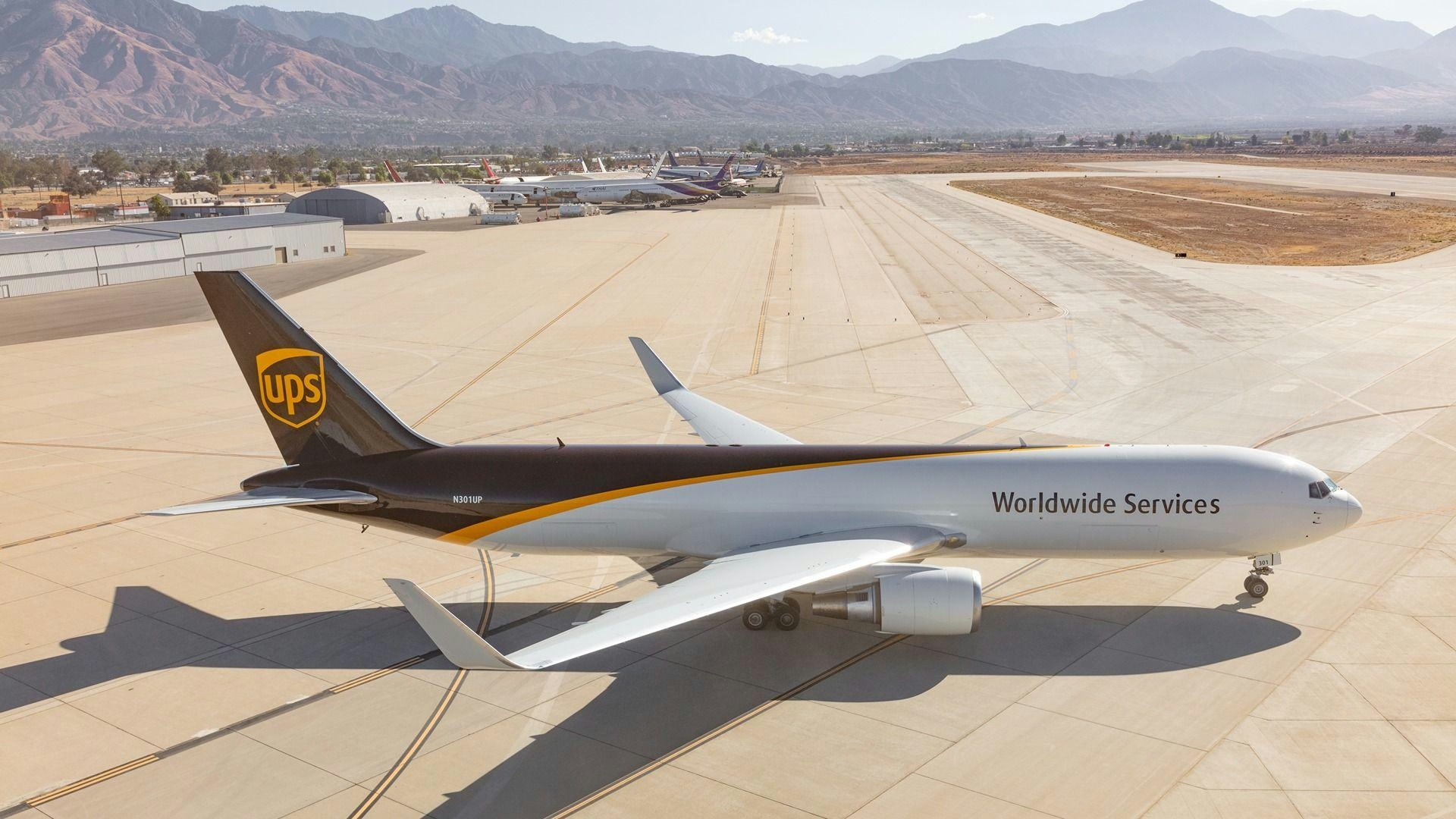
UPS Boeing 767 Lands Safely in Denver Following Instrument Failure
A UPS Airlines Boeing 767-300 Freighter successfully landed at Denver International Airport after experiencing a complete failure of its primary flight instruments during approach. The incident, which occurred on the evening of August 15, 2026, underscores both the proficiency of the flight crew and raises important considerations for safety within the cargo aviation sector.
Incident Overview and Flight Details
The aircraft, registered as N312UP, was operating flight 5X5806 from Will Rogers International Airport in Oklahoma City to Denver. Departing at 8:19 PM, the flight arrived at 8:59 PM after following a longer-than-usual routing. As the aircraft neared Denver, all primary display systems—including the Primary Flight Display, Navigation Display, and Engine Indicating and Crew Alerting System—ceased functioning. The pilots were compelled to rely exclusively on standby instruments to guide the aircraft safely to the ground. Despite the loss of critical avionics, the crew managed a controlled landing on runway 35L without incident.
Aircraft Status and Operational Context
Following the event, the Boeing 767 remains grounded in Denver pending thorough inspection, reflecting the gravity of the instrument failure. Prior to the incident, the aircraft had completed three flights that day, consistent with UPS’s typical operational tempo. Although the 767-300 Freighter is among the older aircraft in UPS’s cargo fleet, it remains one of the newer models within the carrier’s overall inventory, which continues to receive ongoing deliveries.
Industry Implications and Safety Considerations
This episode highlights the vital importance of human factors, pilot training, and safety protocols in the demanding environment of cargo aviation, where operations run continuously around the clock. The crew’s ability to manage a high-pressure situation without primary flight displays demonstrates the effectiveness of rigorous training, adherence to crew rest policies, and the necessity of robust cross-checking procedures.
The incident is likely to prompt increased scrutiny from regulatory authorities and industry stakeholders regarding airline safety standards. It may accelerate efforts to enhance fatigue management and training programs aimed at mitigating risks associated with instrument failures. Competitors within the cargo sector may also respond by emphasizing their safety records and investing in new technologies or operational procedures to improve reliability.
Within the broader aviation community, this event is expected to stimulate discussions on strengthening safety culture and operational resilience, potentially leading to industry-wide reforms.
Investigation Status
UPS Airlines has yet to issue an official statement concerning the incident. The aircraft remains out of service as investigations and inspections continue. Further updates will be provided as additional information becomes available.

Etihad Airways Suspends Airbus A380 Flights on Key Route

Aditya Birla Group Seeks Approval for Aircraft Leasing in GIFT City

Qatar Airways Highlights Innovation and Connectivity at Arabian Travel Market 2026

Hong Kong's Five-Year Plan Includes Andrew Fan's Aircraft Parts Processing Hub Proposal

ACIA Aero Leasing Delivers ATR72-600 to Air Nostrum

RTX Appoints Jill Albertelli as Head of Pratt & Whitney

TAT Technologies Joins Beyond Aero Hydrogen Aircraft Program

AURAK Study Highlights Barriers to Air Taxi Adoption in Emerging Economies

Xiamen Air Selects Altitude for 787 Maintenance at Heathrow

Etihad and Swissport Extend Global Partnership
