
Превращайте аналитические выводы ИИ в реальные действия

В тренде
Categories
US Attorney Seeks FDR Data in AI-171 Crash Investigation, Cites Possible Water Leak
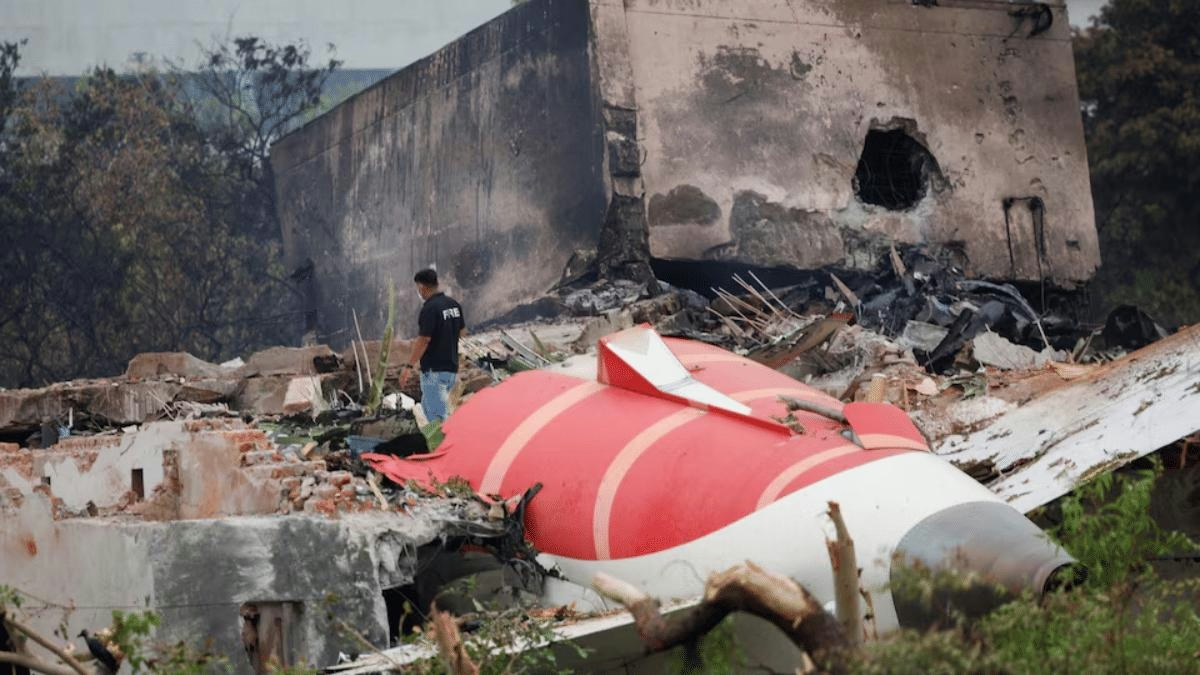
US Attorney Seeks Flight Data Recorder in Air India 171 Crash Investigation
Mike Andrews, the lead US attorney representing the majority of families affected by the Air India 171 crash, has formally requested access to the flight data recorder (FDR), commonly known as the black box, through a Freedom of Information Act (FOIA) application. This move comes amid emerging evidence suggesting that a water leak-induced electrical short circuit may have been the primary cause of the crash, challenging earlier theories that attributed the disaster to pilot error.
Water Leak Theory Gains Traction
In his request to US authorities, Andrews highlights growing indications that a leak from the aircraft’s potable water system could have triggered a short circuit, leading to critical system failures aboard AI-171. Investigators are increasingly focused on whether water ingress compromised redundant safety mechanisms, a concern that resonates with previous aviation incidents where water contamination played a pivotal role. This theory has gained momentum as experts scrutinize the vulnerabilities of modern aircraft systems, particularly in advanced models such as the Boeing 787.
Legal and Procedural Challenges in Accessing Data
Efforts to obtain the FDR data have underscored the complex legal and procedural hurdles involved in accessing sensitive crash information. Families of the victims have also submitted Right to Information (RTI) applications, reflecting the broader struggle for transparency in aviation accident investigations. The release of flight recorder data is often constrained by legal precedents and data privacy regulations, which complicate the balance between public interest and confidentiality.
Broader Implications for Aviation Safety and Transparency
The focus on water leaks as a potential factor in the AI-171 crash echoes similar incidents in the aviation sector. For instance, a recent F-35 crash was linked to water contamination in the landing gear fluid, which resulted in a loss of control. Such cases have intensified scrutiny on how water ingress can affect critical aircraft systems, raising important questions about maintenance protocols and design safeguards.
The ongoing investigation into AI-171 also highlights broader issues surrounding data transparency and the responsibilities of aviation companies and regulatory bodies. Advocates emphasize that timely and open access to flight data is crucial for identifying the root causes of accidents and preventing future tragedies. However, the legal and operational ramifications of releasing such data continue to provoke debate.
As the inquiry progresses, the outcome of Andrews’ FOIA request and the wider campaign for access to the FDR data may have significant consequences for the families seeking closure and for the aviation industry’s approach to accident investigation and data management.

Etihad Airways Suspends Airbus A380 Flights on Key Route

Aditya Birla Group Seeks Approval for Aircraft Leasing in GIFT City

Qatar Airways Highlights Innovation and Connectivity at Arabian Travel Market 2026

Hong Kong's Five-Year Plan Includes Andrew Fan's Aircraft Parts Processing Hub Proposal

ACIA Aero Leasing Delivers ATR72-600 to Air Nostrum

RTX Appoints Jill Albertelli as Head of Pratt & Whitney

TAT Technologies Joins Beyond Aero Hydrogen Aircraft Program

AURAK Study Highlights Barriers to Air Taxi Adoption in Emerging Economies

Xiamen Air Selects Altitude for 787 Maintenance at Heathrow

Etihad and Swissport Extend Global Partnership
