
Превращайте аналитические выводы ИИ в реальные действия

В тренде
Categories
U.S. Blocks Sale of CFM Aircraft Engine to China
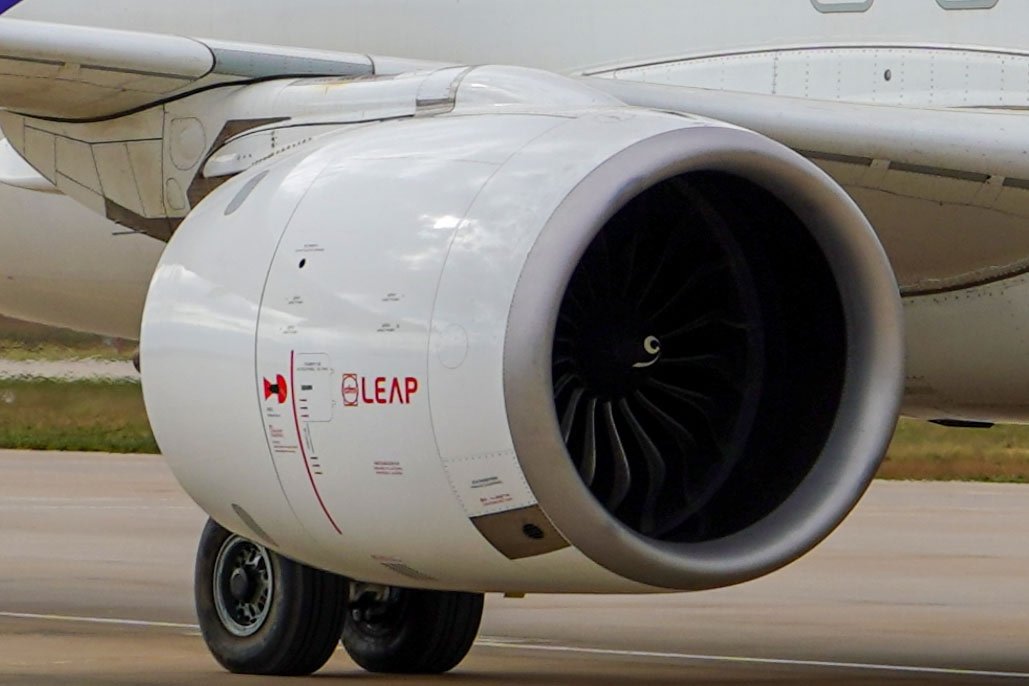
U.S. Blocks Sale of CFM Aircraft Engine to China
Escalation in Technology Tensions
The United States has taken decisive action to block the export of critical aerospace technology to China by suspending the sale of jet engines produced by CFM International. These engines were intended for use in passenger jets manufactured by the Chinese state-owned company Comac. This move represents a significant escalation in the ongoing technology rivalry between Washington and Beijing, with potential repercussions for the global aviation industry.
CFM International, a joint venture between General Electric (GE) and France’s Safran, has been supplying engines for Comac’s C919 narrow-body aircraft, which is China’s strategic response to Western manufacturers Boeing and Airbus. The U.S. government’s decision to halt these sales is driven by national security concerns and a desire to maintain a technological advantage over China.
Impact on Comac and the Aviation Market
Industry experts warn that this suspension could severely disrupt Comac’s production and certification timelines for the C919, as the company has heavily depended on Western technology to develop its commercial aircraft. The absence of CFM engines may delay China’s efforts to establish itself as a significant competitor in the global aviation market.
The export ban also creates opportunities for other international engine manufacturers, particularly from Europe and Russia, to fill the void left by CFM. However, these potential suppliers may encounter their own regulatory and technical challenges. The broader market is expected to respond with caution, as competitors and suppliers reassess their strategies amid shifting U.S.-China relations.
Broader Context and Industry Implications
This decision aligns with a wider U.S. strategy to restrict China’s access to advanced technologies, including semiconductors and telecommunications equipment, reflecting growing concerns over China’s rapid technological progress and its implications for economic and national security.
As the global aviation sector continues to recover from the pandemic and manage ongoing supply chain disruptions, the U.S. export ban introduces additional uncertainty. For Comac, the immediate challenge will be to accelerate the development of indigenous capabilities or secure alternative suppliers. More broadly, the move signals a new phase in the competition for technological leadership within the aerospace industry.

Etihad Airways Suspends Airbus A380 Flights on Key Route

Aditya Birla Group Seeks Approval for Aircraft Leasing in GIFT City

Qatar Airways Highlights Innovation and Connectivity at Arabian Travel Market 2026

Hong Kong's Five-Year Plan Includes Andrew Fan's Aircraft Parts Processing Hub Proposal

ACIA Aero Leasing Delivers ATR72-600 to Air Nostrum

RTX Appoints Jill Albertelli as Head of Pratt & Whitney

TAT Technologies Joins Beyond Aero Hydrogen Aircraft Program

AURAK Study Highlights Barriers to Air Taxi Adoption in Emerging Economies

Xiamen Air Selects Altitude for 787 Maintenance at Heathrow

Etihad and Swissport Extend Global Partnership
