
Превращайте аналитические выводы ИИ в реальные действия

В тренде
Categories
US Export Controls Delay but Do Not Halt China’s Aircraft Engine Development
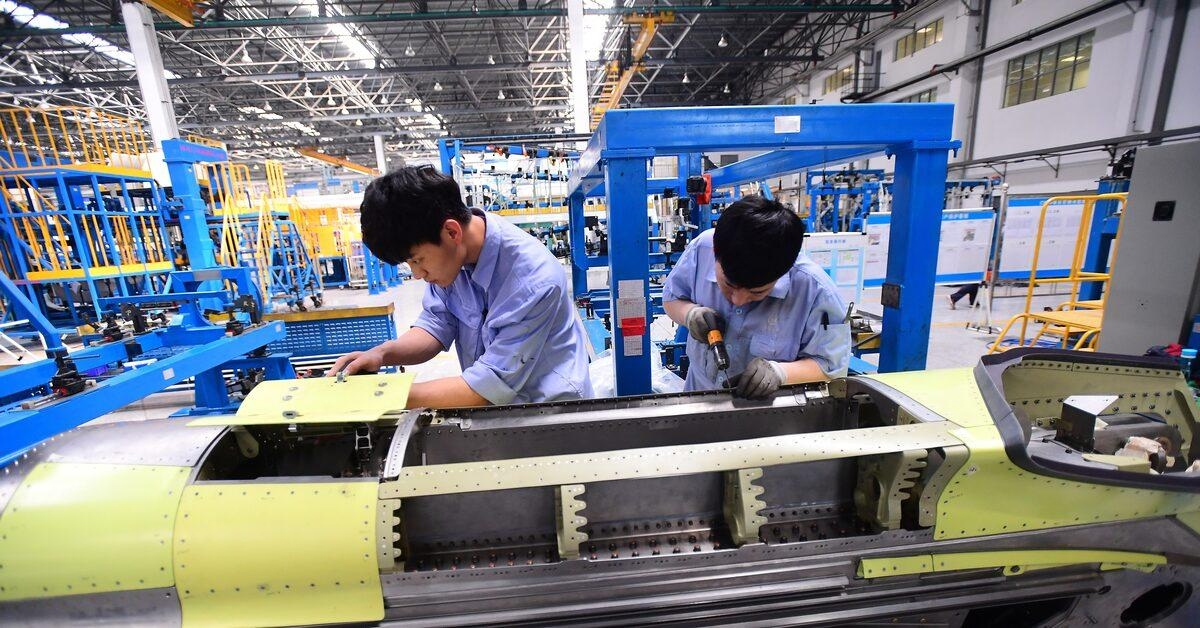
US Export Controls Delay but Do Not Halt China’s Aircraft Engine Development
Impact of New Export Restrictions
The United States has recently imposed stringent technology-export restrictions targeting Chinese aerospace manufacturers, specifically the state-owned Commercial Aircraft Corporation of China (Comac). These measures, which include suspensions on the export of critical aerospace technologies related to jet engines, aim to curb China’s growing ambitions in the global aviation market. While these controls are expected to slow China’s progress, analysts emphasize that they will not stop the country’s efforts to develop indigenous aircraft engines.
China’s Ministry of Foreign Affairs swiftly condemned the US actions, with spokesman Lin Jian accusing Washington of “maliciously blocking and suppressing China.” At a regular briefing, Lin pledged that Beijing would “resolutely safeguard our legitimate rights and interests,” signaling a firm stance against the restrictions.
Consequences for China’s Aviation Industry
The export controls are likely to delay Comac’s production schedules, particularly affecting the C919, China’s first domestically produced single-aisle passenger jet, which has been in commercial operation for only two years. Analysts anticipate that, in response to these setbacks, China will intensify its investment in domestic engine development over the next two to three years. This strategic shift underscores Beijing’s broader objective of achieving technological self-reliance in critical aerospace components.
Market reactions to the US restrictions have been mixed. Some sectors express concern over potential disruptions to supply chains, especially for companies dependent on US-made components. Conversely, others view the controls as an impetus for China to strengthen its domestic aerospace industry and reduce reliance on foreign technology.
Industry Responses and Long-Term Outlook
Within the global aviation sector, competitors are adopting varied strategies to navigate the new landscape. Some firms are actively seeking alternative technologies and suppliers to sustain production, while others face considerable challenges in adjusting their supply chains amid the tightening restrictions.
Despite these near-term difficulties, analysts concur that the US export controls are unlikely to derail China’s long-term ambitions in aerospace. Instead, the measures may reinforce Beijing’s determination to achieve self-sufficiency in critical technologies, ultimately positioning Comac as a credible competitor to established industry leaders such as Airbus and Boeing.

Etihad Airways Suspends Airbus A380 Flights on Key Route

Aditya Birla Group Seeks Approval for Aircraft Leasing in GIFT City

Qatar Airways Highlights Innovation and Connectivity at Arabian Travel Market 2026

Hong Kong's Five-Year Plan Includes Andrew Fan's Aircraft Parts Processing Hub Proposal

ACIA Aero Leasing Delivers ATR72-600 to Air Nostrum

RTX Appoints Jill Albertelli as Head of Pratt & Whitney

TAT Technologies Joins Beyond Aero Hydrogen Aircraft Program

AURAK Study Highlights Barriers to Air Taxi Adoption in Emerging Economies

Xiamen Air Selects Altitude for 787 Maintenance at Heathrow

Etihad and Swissport Extend Global Partnership
