
Превращайте аналитические выводы ИИ в реальные действия

В тренде
Categories
US FAA Considers Recognizing Foreign Maintenance Certificates
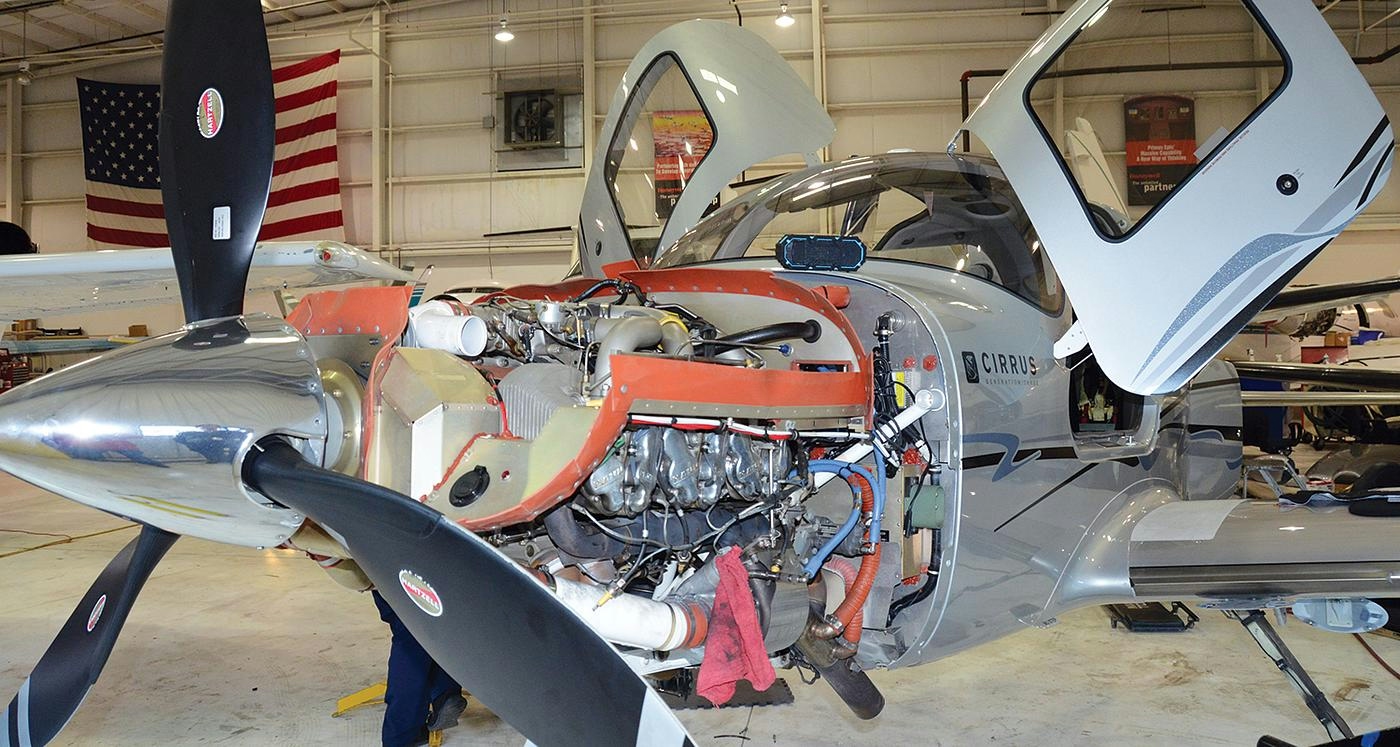
US FAA Considers Recognition of Foreign Maintenance Certificates
The United States Federal Aviation Administration (FAA) has embarked on a rulemaking process that could lead to the recognition of foreign maintenance organization certificates through bilateral agreements. This initiative, confirmed in a statement to ch-aviation, responds to industry petitions seeking to simplify the current certification procedures for foreign repair stations operating within the US aviation sector.
Current Framework and Proposed Changes
At present, the United States maintains a mutual recognition agreement solely with Canada, requiring all other foreign maintenance providers to obtain separate FAA approval before conducting work on US-registered aircraft. The proposed regulatory changes aim to allow foreign repair stations to be recognized under US standards without the need for duplicative certification processes. Such a shift is expected to reduce both costs and administrative burdens for airlines, potentially streamlining maintenance operations across international boundaries.
Industry Support and Safety Considerations
Industry groups, notably the Virginia-based Aeronautical Repair Station Association, have strongly advocated for these reforms. They contend that eliminating redundant audits and certifications would not only lower expenses but also improve operational efficiency, all while preserving the stringent safety standards that govern aviation maintenance. Nonetheless, the FAA acknowledges that ensuring foreign maintenance providers meet US safety requirements remains paramount. The agency must carefully evaluate compliance mechanisms to maintain the integrity of its regulatory framework.
Challenges and Market Implications
Implementing foreign certificate recognition presents several challenges, including the negotiation of complex bilateral agreements with other countries. Additionally, domestic maintenance organizations may resist these changes due to concerns over increased competition and potential impacts on US employment within the sector. Market reactions could be significant: airlines stand to benefit from cost savings by accessing recognized foreign maintenance services, while foreign providers may gain expanded opportunities in the US market. Conversely, domestic competitors might seek to leverage the recognition of foreign certificates to enhance their own market presence or push for stringent mutual recognition standards to protect domestic interests.
The FAA has emphasized that the rulemaking process will involve comprehensive data analysis and extensive stakeholder engagement to address these multifaceted concerns. Striking a balance between operational efficiency and uncompromising safety standards will be central to the agency’s final determinations.

Etihad Airways Suspends Airbus A380 Flights on Key Route

Aditya Birla Group Seeks Approval for Aircraft Leasing in GIFT City

Qatar Airways Highlights Innovation and Connectivity at Arabian Travel Market 2026

Hong Kong's Five-Year Plan Includes Andrew Fan's Aircraft Parts Processing Hub Proposal

ACIA Aero Leasing Delivers ATR72-600 to Air Nostrum

RTX Appoints Jill Albertelli as Head of Pratt & Whitney

TAT Technologies Joins Beyond Aero Hydrogen Aircraft Program

AURAK Study Highlights Barriers to Air Taxi Adoption in Emerging Economies

Xiamen Air Selects Altitude for 787 Maintenance at Heathrow

Etihad and Swissport Extend Global Partnership
