
Превращайте аналитические выводы ИИ в реальные действия

В тренде
Categories
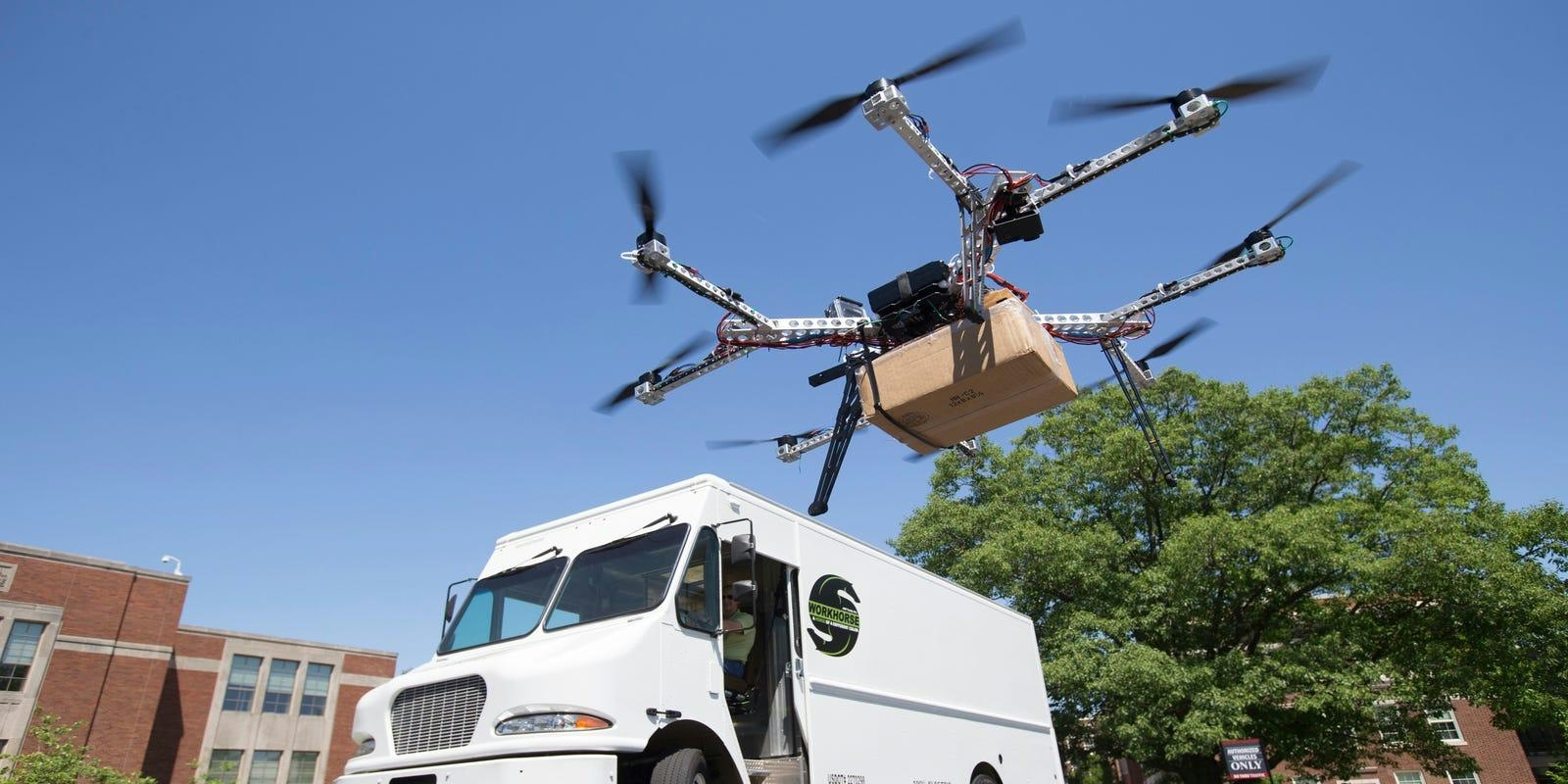
U.S. Moves to Tighten Regulations on Drone Deliveries
U.S. Moves to Tighten Regulations on Drone Deliveries
The U.S. Department of Transportation has introduced a comprehensive proposal aimed at standardizing regulations for drone deliveries, signaling a significant shift in the country’s management of unmanned aerial operations. Announced on August 5, 2025, by Secretary of Transportation Sean Duffy, the new Federal Aviation Administration (FAA) framework specifically targets "Beyond Visual Line of Sight" (BVLOS) operations—flights conducted by drones beyond the direct sight of their operators.
Reforming a Fragmented Regulatory Landscape
Until now, companies seeking to deploy drones for commercial purposes, including the delivery of packages, food, and medicine, have been hindered by a fragmented regulatory environment. This system required individual waivers and case-by-case approvals, creating a cumbersome process that slowed innovation and limited the scalability of drone services. An FAA spokesperson acknowledged these challenges, emphasizing the necessity for reform to streamline operations and foster growth in the sector.
The proposed overhaul seeks to replace this patchwork of regulations with clear, standardized rules. The FAA’s programmatic document outlines a comprehensive set of requirements encompassing aircraft manufacturing standards, operational safety procedures, systems to maintain safe separation from other aircraft, cybersecurity protocols, as well as registration and data-sharing obligations.
Secretary Duffy highlighted the strategic importance of the initiative, stating, “We are eliminating the complicated patchwork of drone regulations that stifles innovation in commercial aviation. Our new regulatory framework will unleash the American drone domain.” This move is not merely a bureaucratic simplification but also a key element of U.S. industrial and technological policy, particularly as the nation aims to compete with China’s rapidly advancing drone industry.
Industry Response and Ongoing Challenges
The proposal has been met with approval from industry leaders. Amazon, a pioneer in drone logistics through its "Prime Air" program, described the initiative as a fundamental step toward enabling more companies to offer safe and efficient drone delivery services. The establishment of standardized rules is expected to provide a stable foundation for investment and operational planning, accelerating the adoption of drone deliveries that promise enhanced speed, efficiency, and environmental benefits.
Despite this optimism, significant challenges remain. The implementation of the new framework will require careful navigation of complex regulatory landscapes, ensuring safety and privacy, and addressing national security concerns. Market reactions have included skepticism from some consumers and regulatory bodies regarding the readiness and reliability of drone technology. Meanwhile, major corporations such as Amazon and Walmart are anticipated to intensify lobbying efforts to expedite the regulatory process, while others may resist what they perceive as potential overregulation.
The administration’s push to ease restrictions underscores the strategic importance of drone technology in maintaining U.S. technological leadership. However, despite the regulatory momentum, the timeline for widespread adoption of drone deliveries remains uncertain as stakeholders strive to balance innovation with safety and public trust.
As the FAA’s proposal advances, the prospect of routine package deliveries by drone draws nearer, heralding a new era in American logistics that will demand careful management of both technological and regulatory challenges.

Etihad Airways Suspends Airbus A380 Flights on Key Route

Aditya Birla Group Seeks Approval for Aircraft Leasing in GIFT City

Qatar Airways Highlights Innovation and Connectivity at Arabian Travel Market 2026

Hong Kong's Five-Year Plan Includes Andrew Fan's Aircraft Parts Processing Hub Proposal

ACIA Aero Leasing Delivers ATR72-600 to Air Nostrum

RTX Appoints Jill Albertelli as Head of Pratt & Whitney

TAT Technologies Joins Beyond Aero Hydrogen Aircraft Program

AURAK Study Highlights Barriers to Air Taxi Adoption in Emerging Economies

Xiamen Air Selects Altitude for 787 Maintenance at Heathrow

Etihad and Swissport Extend Global Partnership
