
Превращайте аналитические выводы ИИ в реальные действия

В тренде
Categories
USS John F. Kennedy Begins Acceptance Trials Ahead of Delivery
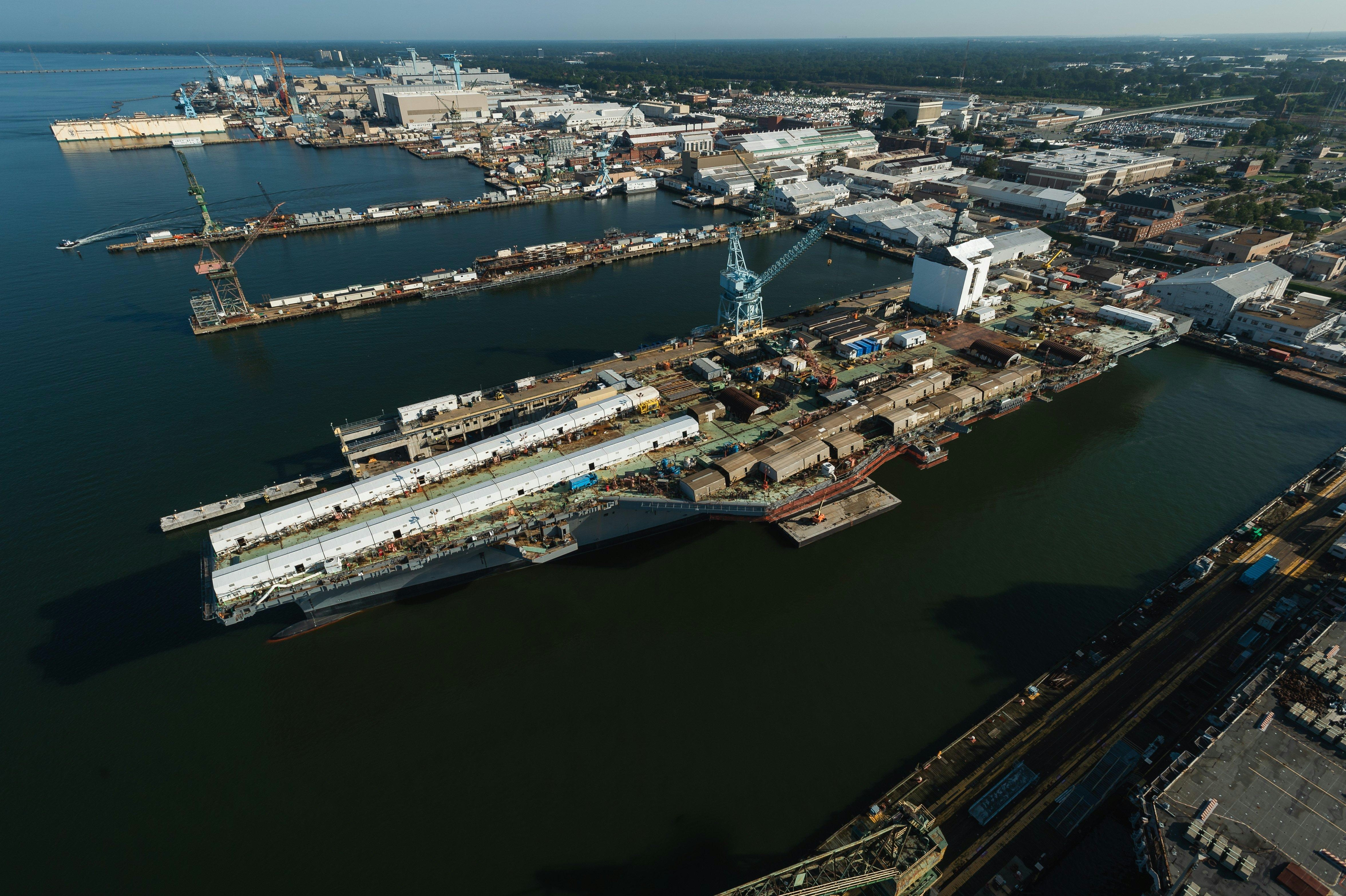
USS John F. Kennedy Begins Acceptance Trials Ahead of Delivery
The John F. Kennedy, the second nuclear-powered aircraft carrier in the Gerald R. Ford class, departed Newport News on August 12 to commence acceptance trials, a pivotal phase preceding its official delivery to the U.S. Navy. Identified as Pre-Commissioning Unit (PCU) John F. Kennedy, the vessel—soon to be commissioned as USS John F. Kennedy (CVN 79)—will undergo rigorous evaluations of its systems and equipment during these final manufacturer-led sea trials to verify compliance with Navy standards.
Delays and Technical Challenges
Originally scheduled for delivery in 2025, the 100,000-ton carrier experienced significant delays due to technical difficulties with its Advanced Arresting Gear (AAG) and Advanced Weapons Elevators (AWE). The Kennedy embarked on its initial manufacturer trials in January 2026, with the current acceptance trials marking its second major sea voyage. In the interim, Navy personnel have conducted extensive drills and readiness exercises aboard the ship to prepare both crew and vessel for operational deployment.
A key milestone in the ship’s preparation was the deadload testing of its Electromagnetic Aircraft Launch System (EMALS) on June 26, 2026, showcasing the carrier’s advanced launch capabilities. Unlike its predecessor, USS Gerald R. Ford, the Kennedy will be delivered fully equipped to operate the F-35C Lightning II stealth fighter. This capability was secured following Congressional intervention and schedule adjustments, necessitating modifications such as reinforced jet blast deflectors and specialized maintenance systems tailored for the fifth-generation aircraft.
Strategic Implications and Future Deployment
The Kennedy’s acceptance trials occur amid ongoing challenges within the U.S. naval shipbuilding sector, which has struggled with delivering vessels on time, within budget, and meeting required standards. These delays have elicited skepticism from industry observers and market analysts regarding the Navy’s ability to maintain delivery schedules. Meanwhile, international competitors have cited these setbacks as evidence of their own efficiencies and technological progress in shipbuilding.
Upon commissioning, the Kennedy is slated to be homeported at Naval Base Kitsap-Bremerton in Washington, becoming the first Ford-class carrier stationed on the U.S. West Coast. This strategic location will facilitate regular deployments to the Indian and Pacific Oceans. The carrier is expected to arrive at its new homeport no earlier than 2029, following a $145 million upgrade to the base’s electrical infrastructure that commenced in May 2025.
The Kennedy will replace the aging USS Nimitz (CVN 68), which is approaching decommissioning. However, the Nimitz will remain in service temporarily to help the Navy fulfill its legal obligation to operate at least eleven aircraft carriers, although it is unlikely to undertake extended deployments again.
As the Kennedy progresses through its final trials, its development is closely monitored within the Navy and by industry stakeholders, given the broader implications for U.S. naval readiness and the credibility of the nation’s shipbuilding industry.

Etihad Airways Suspends Airbus A380 Flights on Key Route

Aditya Birla Group Seeks Approval for Aircraft Leasing in GIFT City

Qatar Airways Highlights Innovation and Connectivity at Arabian Travel Market 2026

Hong Kong's Five-Year Plan Includes Andrew Fan's Aircraft Parts Processing Hub Proposal

ACIA Aero Leasing Delivers ATR72-600 to Air Nostrum

RTX Appoints Jill Albertelli as Head of Pratt & Whitney

TAT Technologies Joins Beyond Aero Hydrogen Aircraft Program

AURAK Study Highlights Barriers to Air Taxi Adoption in Emerging Economies

Xiamen Air Selects Altitude for 787 Maintenance at Heathrow

Etihad and Swissport Extend Global Partnership
