
Превращайте аналитические выводы ИИ в реальные действия

В тренде
Categories
What Aviation Teaches Us About Trustworthy AI
What Aviation Teaches Us About Trustworthy AI
Artificial intelligence is swiftly evolving from experimental applications to integral components of critical operations, where errors can have profound consequences. Today, AI systems assist in diagnosing diseases, authorizing financial transactions, managing infrastructure, detecting cybersecurity threats, and supporting decisions that affect millions of lives. As the adoption of AI accelerates, organizations confront a vital challenge: how to uphold accountability when machines increasingly influence high-stakes decisions.
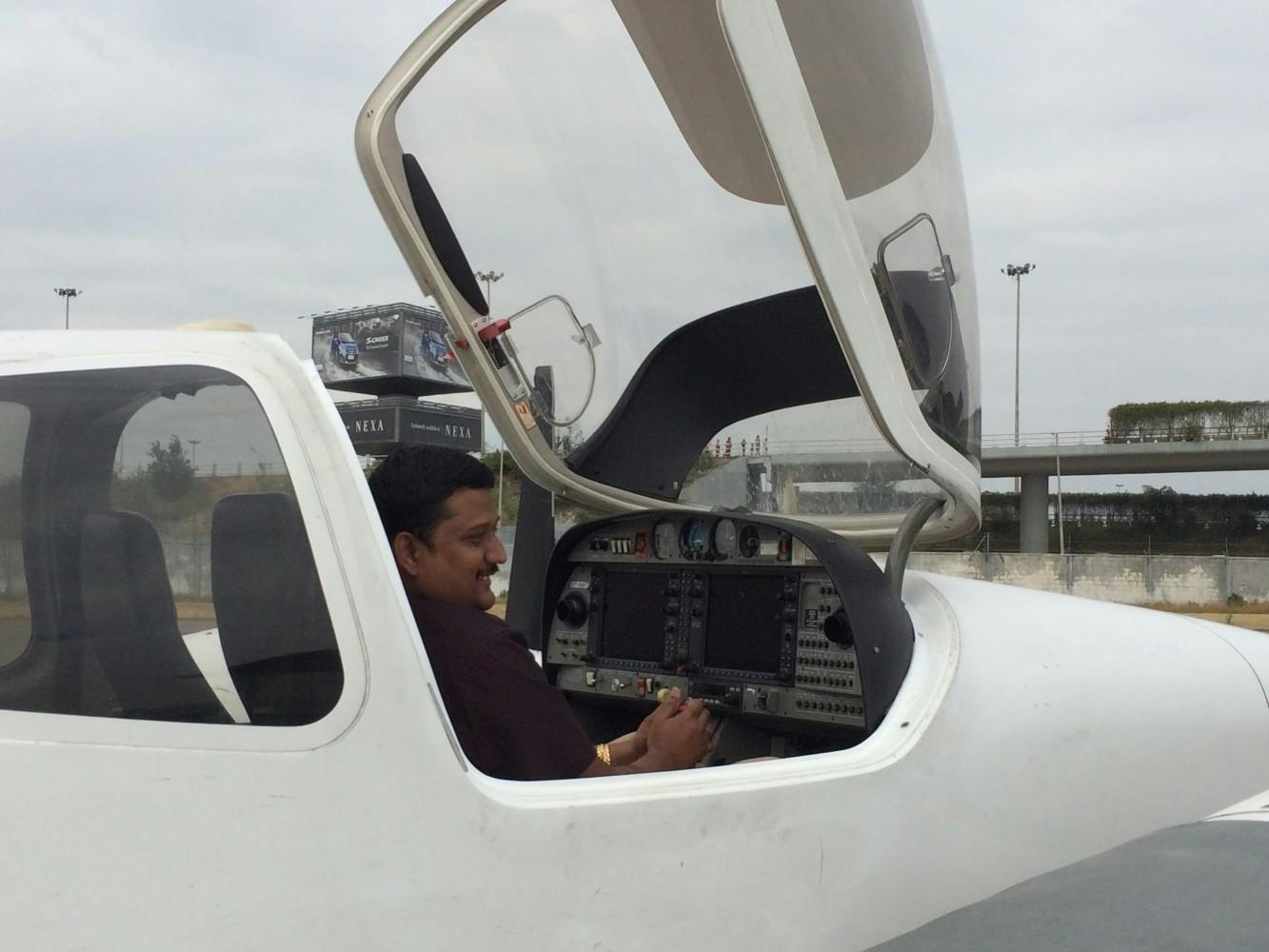
The commercial aviation industry offers a valuable model. For decades, it has operated some of the most advanced automated systems globally. Modern aircraft depend on sophisticated software, predictive analytics, and autonomous functions. Yet, aviation has never relinquished human accountability. Instead, it has developed a governance framework that integrates automation with human oversight, transparency, rigorous training, and clearly defined responsibilities.
This model is particularly instructive as organizations across various sectors establish AI governance frameworks. The future of responsible AI may hinge less on full autonomy and more on the “human-in-the-loop” principles that have contributed to making aviation one of the safest industries worldwide.
Automation Supports, But Does Not Replace, Human Judgment
A widespread misconception is that modern aircraft essentially operate themselves. In truth, while automation reduces pilot workload and enhances consistency, pilots remain responsible for monitoring systems, validating decisions, and intervening when conditions deviate from expectations. Aviation regulations and procedures are designed to support—not supplant—human decision-making. Ultimate accountability invariably rests with trained professionals.
This principle translates directly to enterprise AI. Although automation can improve efficiency, the most consequential decisions—those involving safety, security, finance, healthcare, or regulatory compliance—demand human judgment, contextual understanding, and ethical consideration. AI may identify patterns or generate recommendations, but responsibility for critical outcomes must remain with accountable human operators.
The essential question is not whether humans can be removed from the process, but whether organizations have clearly defined when human intervention is necessary and who bears accountability when automated systems provide recommendations.
Transparency, Trust, and Brand Visibility in the Age of AI
Aviation’s approach also underscores challenges that extend beyond the cockpit. As AI-generated information becomes increasingly prevalent, ensuring transparency and control over these outputs is paramount. Recent data reveals significant consumer skepticism toward AI-generated content, driven by a lack of transparency and clear source attribution. This distrust highlights the necessity for organizations to openly disclose their use of AI and to maintain brand visibility and credibility in AI-driven search results.
Market dynamics are evolving accordingly. Brands that prioritize transparency and provide clear, verifiable sources for AI-generated content are poised to gain greater consumer trust and demand. Meanwhile, competitors are refining digital content strategies to ensure their information is incorporated into AI-generated answers, thereby preserving visibility and authority in a rapidly changing landscape.
Lessons for Responsible AI Deployment
The aviation industry’s experience illustrates that trustworthy AI depends on more than technical sophistication. It requires transparent systems, clear accountability, and a steadfast commitment to human oversight. As organizations deploy AI in contexts where decisions carry significant consequences, embracing these principles—and proactively addressing transparency and trust—will be essential to fostering confidence in AI-powered systems.

Hong Kong's Five-Year Plan Includes Andrew Fan's Aircraft Parts Processing Hub Proposal

ACIA Aero Leasing Delivers ATR72-600 to Air Nostrum

RTX Appoints Jill Albertelli as Head of Pratt & Whitney

TAT Technologies Joins Beyond Aero Hydrogen Aircraft Program

AURAK Study Highlights Barriers to Air Taxi Adoption in Emerging Economies

Xiamen Air Selects Altitude for 787 Maintenance at Heathrow

Etihad and Swissport Extend Global Partnership

Sepehran Airlines B737 Returns to Mashhad After Tyre and Engine Issues

Etihad Deploys Widebody Fleet to Meet Strong Demand

Korean Air Finalizes $36.2 Billion Deal with Boeing
