Изображение

AeroGenie — Ваш интеллектуальный второй пилот.

Спрашивайте что угодно. Анализируйте все. Действуйте незамедлительно.

В тренде

Categories

What Will Follow the Boeing 777X in Commercial Aviation?
August 23, 2025By ePlane AI
What Will Follow the Boeing 777X in Commercial Aviation?
0
0
Boeing 777X
Boeing 797
Widebody Aircraft

What Will Follow the Boeing 777X in Commercial Aviation?

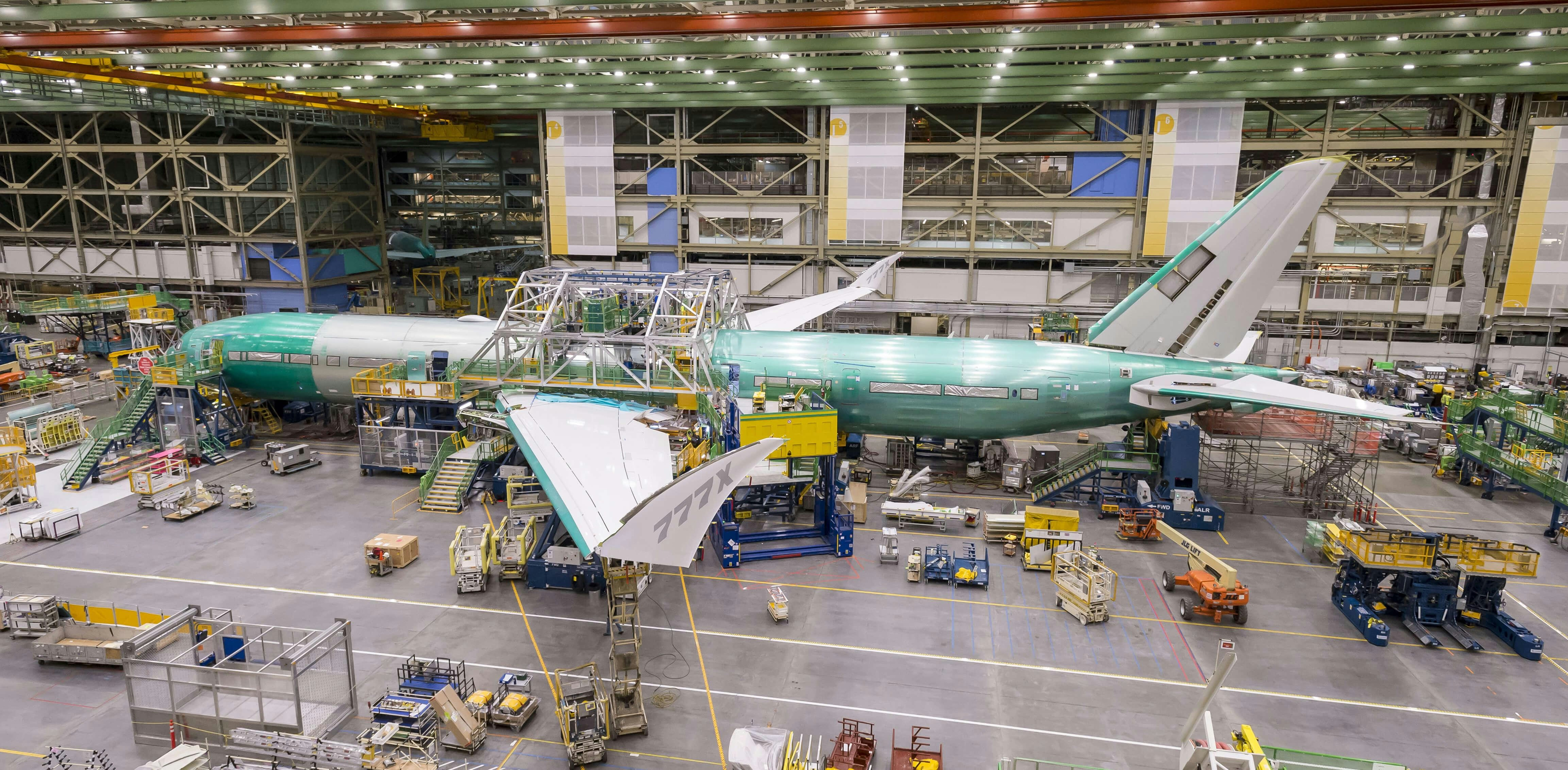
As the long-delayed Boeing 777X approaches entry into service, the aviation industry is already anticipating Boeing’s next move. Despite ongoing delivery delays, the 777X program remains robust, underscored by Cathay Pacific’s recent order for 14 additional jets. Alongside this, Boeing is advancing the development of the 777-8 Freighter, a new cargo variant that underscores the company’s commitment to maintaining its leadership in the widebody market amid sustained global demand for air freight.

Beyond the 777X family, attention is increasingly focused on Boeing’s prospective New Midsize Airplane (NMA), often referred to as the Boeing 797. Although the NMA remains unconfirmed and largely speculative, industry experts view it as a critical model designed to bridge the gap between the Boeing 757 and 767. This segment, positioned between narrowbody and widebody aircraft, is strategically important as Airbus continues to expand its dominance in narrowbody deliveries and strengthen its presence in key markets such as China.

The Boeing NMA: Prospects and Specifications

While Boeing has not officially launched the NMA program, the company has neither dismissed the concept. Industry analysts and Boeing executives have suggested that the NMA could be offered in two primary variants: a high-range, lower-capacity model optimized for long-haul routes with moderate passenger loads, and a larger, shorter-range version designed for medium-haul operations with higher capacity. The smaller variant is expected to seat approximately 220 passengers—around 20% more than the 757—while the larger model could accommodate up to 270 passengers.

The NMA is anticipated to deliver significant improvements in operating efficiency, potentially reducing costs by up to 40% compared to older aircraft. This would be achieved through the use of advanced composite materials and aerodynamic technologies developed for the 787 Dreamliner and 777X programs. A key technological advancement is expected to be the integration of new engines producing around 50,000 pounds of thrust, likely supplied by either CFM International or Pratt & Whitney.

Projected specifications for the Boeing 797 include a range of 4,500 to 5,000 nautical miles and seating capacity between 220 and 270 passengers. The aircraft is intended to replace aging 757 and 767 models, with development costs estimated between $15 billion and $25 billion. Market forecasts suggest demand for approximately 4,000 aircraft over the next two decades.

Development Challenges and Market Competition

The NMA’s development timeline has faced multiple delays. Initial discussions began in 2017, with expectations for a formal program launch by 2020. However, the 737 MAX crisis compelled Boeing to prioritize crisis management, relegating the NMA to a lower priority. In the interim, Airbus capitalized on this delay by successfully launching the A321XLR, thereby consolidating its position in the midsize aircraft market.

Despite these setbacks, Boeing’s outlook has recently improved. The company is reportedly engaged in negotiations for a potential order of 500 aircraft from China, a deal that could significantly enhance its competitive standing. As Boeing contemplates its next strategic steps, the NMA remains central to its future ambitions, particularly as demand intensifies in Asia and the Middle East—regions where Boeing and Airbus continue to vie for market leadership.

While the Boeing 777X and its freighter variant will shape the near-term future of commercial aviation, industry focus is increasingly on the NMA as Boeing’s prospective next-generation aircraft. The company’s ability to regain ground lost to Airbus will largely depend on how swiftly and effectively it can bring this new model to market.

More news
COMAC Faces Delays as Supply Chains and Sanctions Restrict Output and Western Access

COMAC Faces Delays as Supply Chains and Sanctions Restrict Output and Western Access

COMAC Faces Delays as Supply Chains and Sanctions Restrict Output and Western Access At the recent Singapore Airshow, the Commercial Aircraft Corporation of China (COMAC) once again drew significant attention, highlighting Asia’s pivotal role in the company’s strategic ambitions. However, this prominence also underscored the complex geopolitical and economic challenges that continue to impede COMAC’s efforts to penetrate Western markets. The Chinese manufacturer’s presence at the event showcased both its technological advancements and the strategic limitations shaping its future trajectory. Challenges in Production and Market Expansion The C919 programme, COMAC’s flagship narrow-body aircraft, has seen steady progress with increasing domestic deliveries. Yet, the broader operating environment has become markedly more complicated. Rising political and economic tensions between the United States and China, coupled with COMAC’s ongoing dependence on Western suppliers for critical aircraft systems, have created significant obstacles. In 2025, production and delivery schedules were disrupted by supply chain interruptions, regulatory barriers, and intensifying trade disputes. These factors have exposed the vulnerabilities inherent in the globally integrated aerospace manufacturing ecosystem. Sanctions and export controls imposed by Western governments have further constrained COMAC’s access to essential components, complicating its pursuit of European certification. This limitation hampers the company’s ability to compete directly with established industry leaders such as Boeing and Airbus in international markets. COMAC’s ambitions to expand beyond the Asia-Pacific region are now tempered by these restrictions, alongside the looming risk that escalating geopolitical tensions—particularly those related to Taiwan—could deepen supply chain fragilities and restrict market access even further. Strategic Recalibration and Domestic Focus In light of these challenges, COMAC has been compelled to adjust its production targets and moderate its growth expectations. The company is reassessing its long-term industrial strategy, increasingly turning to domestic suppliers to reduce reliance on foreign components. This shift toward greater self-sufficiency represents a significant strategic pivot, though it introduces new difficulties. COMAC must carefully balance the pursuit of independence with the imperative to uphold stringent quality standards and secure international certifications necessary for global competitiveness. Despite these headwinds, COMAC benefits from the robust scale and resilience of China’s domestic aviation market, which provides a vital cushion against international uncertainties. As the company moves into 2026, its path reflects a nuanced balancing act: expanding production while mitigating vulnerabilities, advancing self-reliance without sacrificing quality, and consolidating its position within Asia while maintaining its long-term aspiration for global recognition.
Aviation Tariffs Shift Focus Amid Market Volatility

Aviation Tariffs Shift Focus Amid Market Volatility

Aviation Tariffs Shift Focus Amid Market Volatility The aviation industry is confronting renewed uncertainty following a landmark decision by the US Supreme Court, which invalidated tariffs imposed under the International Emergency Economic Powers Act (IEEPA) by the Trump administration. The ruling, issued on February 20, 2026, clarified that the IEEPA does not grant the president authority to impose tariffs. In response, US Customs and Border Protection announced it would cease collecting these duties and deactivate the associated tariff codes starting at 12:01 a.m. ET on February 24. Implications for the Aviation Sector For aviation executives, the challenge extends beyond the immediate cessation of tariffs to the broader unpredictability of trade policy shifts. The industry must now grapple with the difficulty of strategic planning amid rapidly changing tariff regimes. Although new aircraft acquisitions have largely avoided the most severe tariff impacts, the global aviation supply chain remains heavily dependent on thousands of imported components and materials. Airlines and maintenance providers, who typically schedule inspections and manage spare parts inventories months in advance, face heightened risks that sudden changes in customs codes could disrupt parts availability, inflate costs, and strain cash flow. In an effort to address the policy vacuum created by the Supreme Court’s decision, the White House has introduced a new proclamation under Section 122 of the Trade Act of 1974. This measure imposes a temporary import surcharge, initially set at 10 percent and scheduled to rise to 15 percent over 150 days, citing “international payments problems” as justification. Notably, this surcharge does not affect tariffs imposed under other statutory authorities, such as Sections 232 and 301, thereby adding further complexity to an already fragmented tariff environment. Operational and Financial Challenges These swift policy changes are generating significant operational and financial challenges for aviation companies. Airlines may encounter increased costs due to higher import duties on aircraft and parts, potentially resulting in fare hikes for consumers. Some carriers might consider rerouting flights to circumvent elevated tariffs, which could disrupt travel itineraries and global connectivity. In response, certain competitors may explore relocating production facilities closer to key markets to reduce dependence on imported aircraft and components—a strategy already observed in other sectors, exemplified by General Motors’ shift of manufacturing from China to the United States to mitigate tariff exposure. The uncertainty also complicates contract negotiations and inventory management, as companies struggle to provide accurate pricing and secure supply chains amid fluctuating duties. The issue of refunds for tariffs previously paid adds another layer of complexity. While the Supreme Court ruling may pave the way for substantial refunds, the government has yet to clarify the process by which importers can reclaim these funds, leaving businesses uncertain about the recovery of absorbed costs. Industry Response and Outlook Industry groups are closely monitoring these developments. The National Business Aviation Association (NBAA) is actively reviewing the ruling’s implications and tracking the administration’s response, underscoring the critical need for stable aerospace trade policy to support the sector’s intricate global supply chain. The NBAA has scheduled a member webinar on February 23 to discuss the decision and outline forthcoming steps, as companies prepare for the impending shift in tariff collection at midnight on February 24. As the aviation sector awaits further guidance, intensified lobbying efforts are anticipated to influence future trade policy and mitigate the impact of tariffs on international aviation and travel. With tariff regimes in flux, the industry faces a period marked by heightened volatility and strategic recalibration.
ATR Airlines Misses Targets Amid Aircraft Delivery Delays

ATR Airlines Misses Targets Amid Aircraft Delivery Delays

ATR Airlines Misses Targets Amid Aircraft Delivery Delays Delivery Shortfalls Amid Industry-Wide Supply Chain Disruptions France’s ATR Airlines has fallen short of its 2025 aircraft delivery targets, a setback largely attributed to ongoing supply chain disruptions affecting the global aviation sector. The Toulouse-based manufacturer had set an ambitious goal to deliver at least 35 aircraft this year but managed only 32, missing both its internal objectives and the minimum financial quota of 40 units. This shortfall occurred despite a strong order intake, with net orders reaching 50 aircraft and a backlog now totaling 160 units. ATR’s delivery challenges reflect a broader trend impacting major manufacturers worldwide. Industry leaders such as Boeing and Airbus have encountered similar difficulties, with Boeing’s delays in the 737 Max program notably affecting airlines like Allegiant Air, which have had to adjust their capacity plans accordingly. AerCap CEO Aengus Kelly recently highlighted that reliability issues across the sector are compelling airlines to expand their fleets to offset longer maintenance downtimes, thereby intensifying pressure on aircraft supply. At a press conference held on February 18 at ATR’s Blagnac headquarters, CEO Nathalie Tarnaud Laude acknowledged the difficulties but emphasized a measured approach to the year’s performance. She stated, “We do not measure the success of a transition year like 2025 on one number. We are determined to raise our delivery rate and have taken concrete steps to address the issues that limited our output. We have strengthened every part of our organisation and laid the groundwork for a safe, sustainable, and credible increase in production.” Strategic Market Focus and Financial Outlook Despite the delivery setbacks, ATR remains focused on growth, particularly in the Asia-Pacific region, which has emerged as a strategic priority. The company is also working to reestablish its presence in the competitive North American market, where rivals such as Embraer and Airbus continue to maintain strong positions amid persistent delivery challenges industry-wide. Financially, ATR reported revenues of €1.2 billion in 2025, supported by approximately 100 recorded transactions. The company described 2025 as a “transition year,” with CEO Tarnaud Laude expressing optimism about future prospects. ATR aims to increase production and delivery capacity by up to 20% in 2026, targeting around 60 aircraft deliveries annually in the years that follow. Commitment to Sustainability and Future Prospects In parallel with addressing supply chain issues, ATR is advancing its environmental initiatives. The company is progressing with the HERACLES programme and collaborating with the European Union’s Clean Aviation Joint Undertaking (CAJU) to develop low-emission, sustainable aircraft. These efforts align with a broader industry movement toward greener aviation solutions. As ATR and its competitors continue to navigate persistent supply chain and reliability challenges, the company’s initiatives to strengthen operations and expand in key markets will be crucial to achieving future delivery targets. The ongoing delays across the aviation industry underscore the importance of resilience and adaptability for both manufacturers and airlines in the near term.
Sen. Jerry Moran Proposes Bipartisan Bill to Improve FAA Certification for Advanced Air Mobility

Sen. Jerry Moran Proposes Bipartisan Bill to Improve FAA Certification for Advanced Air Mobility

Sen. Jerry Moran Introduces Bipartisan Bill to Reform FAA Certification for Advanced Air Mobility U.S. Senator Jerry Moran, in collaboration with a bipartisan group of lawmakers, has introduced the Aviation Innovation and Global Competitiveness Act, a legislative proposal aimed at reforming the Federal Aviation Administration’s (FAA) certification process for Advanced Air Mobility (AAM) aircraft. The bill seeks to enhance transparency and efficiency in the FAA’s type certification procedures, a development proponents argue is essential for preserving the United States’ leadership in the rapidly evolving aviation industry. Objectives and Industry Support The legislation sets forth several key objectives, including the establishment of clear timelines for FAA certification of AAM aircraft, improvements to the process for issuing compliance documentation, and updates to delegation guidance to better accommodate emerging aircraft technologies. These measures are intended to address current regulatory challenges and facilitate the timely approval of innovative aviation solutions such as electric vertical takeoff and landing (eVTOL) aircraft. The bill has garnered broad support from industry stakeholders who emphasize its potential to accelerate the deployment of next-generation aviation technologies. Senators Peter Welch and Cynthia Lummis, co-sponsors of the legislation, highlighted the necessity of modernizing certification processes to sustain U.S. competitiveness in aerospace. “Modernizing certification is essential for the U.S. to remain at the forefront of aerospace technology,” Sen. Lummis stated. Regulatory Challenges and Market Implications The push for reform arises amid growing concerns regarding the FAA’s capacity to effectively evaluate and certify new AAM technologies. Recent industry analyses indicate that resource constraints within the FAA could delay the approval of advanced aircraft, thereby impeding innovation. These challenges have prompted calls from both lawmakers and industry leaders for clearer regulatory guidelines and more predictable certification timelines. Market analysts observe that companies capable of successfully navigating the FAA’s certification process are likely to attract increased investor interest, as competition to commercialize AAM technologies intensifies. An analysis by CleanTechnica on eVTOL certification timelines suggests that regulatory clarity may prove decisive in determining which firms emerge as leaders in this burgeoning market. Broader Economic and Societal Impact In response to the evolving regulatory environment, stakeholders are already adapting their strategies. For instance, Ohio has submitted a proposal to the FAA’s eVTOL Integration Pilot Program (eIPP), aiming to harness advanced aviation technology to improve healthcare delivery. Such initiatives underscore the broader economic and societal implications tied to the modernization of aviation regulations. As the United States endeavors to maintain its competitive edge in aerospace, the Aviation Innovation and Global Competitiveness Act represents a concerted bipartisan effort to ensure that regulatory frameworks evolve in step with technological advancements. The bill’s progress will be closely monitored by industry participants, investors, and policymakers alike.
US Audit Identifies FAA Oversight Gaps at United Maintenance

US Audit Identifies FAA Oversight Gaps at United Maintenance

US Audit Identifies FAA Oversight Gaps at United Maintenance Federal Audit Reveals Deficiencies in FAA Supervision A recent audit conducted by the U.S. Department of Transportation’s Office of Inspector General (OIG) has exposed significant deficiencies in the Federal Aviation Administration’s (FAA) oversight of United Airlines’ maintenance operations. The report highlights concerns about the FAA’s capacity to ensure airline safety amid persistent staffing shortages and inadequate training within its inspection workforce. The audit, which examined FAA activities from May 2024 through December 2025, found that the agency has not fully implemented prior recommendations aimed at strengthening oversight. Key issues identified include insufficient workforce planning, limited inspector capacity, and ineffective training programs. These shortcomings have resulted in inadequate evaluation of safety risks associated with United’s extensive and complex fleet. Impact of Staffing Shortages and Inspection Practices The OIG report points to chronic staffing shortages and high turnover rates at FAA inspection offices as primary factors contributing to reduced inspections and diminished surveillance of maintenance operations. Inspectors reported being instructed by front-line managers to conduct certain reviews virtually, despite agency policies mandating on-site inspections when remote assessments are deemed inappropriate. The reliance on virtual inspections raises safety concerns, as it increases the likelihood that inspectors may overlook or misidentify critical maintenance issues that would be more apparent during in-person evaluations. Additionally, inspectors face challenges in accessing United Airlines’ safety data systems, limiting the FAA’s ability to analyze maintenance trends and detect emerging risk patterns. The report underscores that ineffective workforce training and restricted data access further impair the agency’s oversight capabilities. Context of Recent Maintenance-Related Incidents These oversight gaps come against the backdrop of several high-profile maintenance-related incidents involving United Airlines. In March 2024, passengers were evacuated after a United jet rolled off a runway in Houston. The following day, another United aircraft lost a tire during takeoff from San Francisco but managed to land safely in Los Angeles. More recently, in December 2025, a United flight experienced an engine failure during takeoff from Washington Dulles but returned safely to the airport. Recommendations and Responses The OIG report calls for a comprehensive reevaluation of FAA staffing models and regulatory rules, alongside an independent workplace survey to assess inspector workload and organizational culture. It also recommends enhanced training focused on accessing and analyzing United’s safety data systems to improve oversight effectiveness. In response, the FAA acknowledged agreement with most of the recommendations and outlined plans to implement corrective measures by the end of the year. These include strengthening training programs and reassessing workforce needs to address the identified deficiencies. United Airlines emphasized its ongoing collaboration with the FAA and reaffirmed its commitment to maintaining a robust internal safety management system. The airline also highlighted the necessity of adequate regulatory resources to support effective oversight. The FAA declined further comment beyond its letter to the inspector general’s office. The audit’s findings underscore persistent challenges in federal oversight of airline maintenance, particularly as the aviation industry contends with increasing operational complexity and heightened safety demands.
The Impact of Agentic AI on Airport Operations

The Impact of Agentic AI on Airport Operations

The Impact of Agentic AI on Airport Operations As airports around the globe pursue modernization, agentic artificial intelligence (AI) is emerging as a pivotal technology with the potential to transform fragmented operational tools into integrated, goal-oriented systems. In anticipation of the International Airport Review’s breakfast briefing in London during PTE on 18 March, Jordi Valls, Global Director at SITA Labs, outlined how agentic AI could fundamentally reshape airport operations, contingent upon the establishment of robust data infrastructures, governance frameworks, and sustained human oversight. Advancing Beyond Traditional AI Traditional AI applications in airports have predominantly centered on predictive analytics, dashboards, and alert systems. According to Valls, agentic AI represents a significant evolution beyond these capabilities. Unlike conventional AI, which primarily forecasts delays or assists with isolated tasks, agentic AI is designed to reason across multiple objectives, constraints, and operational roles. It can propose or autonomously execute coordinated actions by evaluating options and balancing trade-offs across various systems and teams. This transition from isolated, assistive tools to systems exhibiting goal-driven behavior is particularly consequential in the complex and time-sensitive environment of airport operations. Partial Autonomy Within Operational Domains While the concept of fully autonomous airports remains a distant prospect—complicated by regulatory, labor union, and safety considerations—agentic AI is expected to introduce partial autonomy in targeted operational areas. Functions such as disruption management, resource reallocation, and interdepartmental coordination stand to benefit from streamlined processes, with agentic AI serving as the integrative mechanism linking disparate systems. Valls emphasizes that progress over the coming decade will be measured not by fully unmanned operations but by reductions in operational friction and accelerated recovery times. The Imperative of Unified Data Architecture A critical prerequisite for the effective deployment of agentic AI is the establishment of a unified operational data architecture. Consistent and shared data regarding flight statuses, resource availability, and passenger flows are essential to prevent decision-making based on incomplete or conflicting information—a risk that could have severe consequences in safety-critical airport environments. Valls clarifies that a common operational data layer is not about centralizing data but about achieving alignment across systems. Neglecting this foundational step could lead to fragile automation, undetected errors, and erosion of trust among operational personnel, thereby exacerbating fragmentation rather than resolving it. Immediate Applications and Benefits In the short term, agentic AI is poised to deliver significant improvements in disruption recovery, turnaround coordination, and baggage exception handling. These operational areas are data-rich but often suffer from delayed or suboptimal decision-making under pressure. Agentic AI can integrate inputs from airlines, ground handlers, and airport operations to generate prioritized, real-time action plans, thereby reducing coordination delays and enabling more informed decisions even when data is incomplete. For instance, during severe weather disruptions, agentic AI can continuously reassess priorities related to aircraft scheduling, crew legality, gate assignments, and passenger connections. Rather than relying on static contingency plans, the system can dynamically adjust operations by reallocating gates, resequencing services, alerting relevant teams, and flagging critical issues as they emerge. Emerging Challenges and Industry Implications The adoption of agentic AI also introduces new challenges for airports and airlines. Increased competition from AI-enabled rivals may compel industry players to reevaluate their strategic approaches and accelerate the development of advanced AI capabilities. Additionally, the growing reliance on AI heightens exposure to data scraping and cybersecurity threats, raising concerns about operational vulnerabilities and potential liabilities, particularly when third-party AI solutions are involved. As agentic AI becomes more deeply embedded in airport operations, the sector must address these risks through comprehensive governance, enhanced cybersecurity protocols, and clearly defined accountability mechanisms. Agentic AI holds considerable promise for enabling smarter, faster, and more resilient airport operations. However, realizing these benefits will depend on meticulous attention to data integrity, sustained human oversight, and proactive management of emerging risks within an increasingly competitive and complex operational landscape.
West Star Aviation Announces Expansion in Chattanooga

West Star Aviation Announces Expansion in Chattanooga

West Star Aviation Expands Chattanooga Facility to Meet Growing Demand West Star Aviation has announced a significant expansion of its Chattanooga Airport campus, responding to increasing demand for aircraft maintenance services and aiming to solidify its competitive standing in the regional market. Scheduled for completion by February 2027, the project will enlarge the facility to approximately 400,000 square feet, incorporating substantial upgrades across two primary areas of the campus. Facility Enhancements and Operational Upgrades Central to the expansion is the construction of Hangar 26, which will provide 40,000 square feet of hangar space alongside 15,000 square feet allocated for shop and office use. This new space will accommodate customer and program offices as well as climate-controlled storage designed to protect aircraft interiors and property during maintenance operations. The facility will also feature enhanced safety and operational improvements, including an overhead crane, fall-protection systems, fire-rated document storage, and an upgraded customer lounge, all intended to boost efficiency and enhance the client experience. In addition, the existing Hangar 27 will be extended with a new two-story, 30,000-square-foot addition. This expansion will house a larger Aircraft Service Department, Accessories Shop, Composites Shop, and Sheet Metal Shop, consolidating critical functions to streamline workflows and reduce turnaround times. Mike Ditmeyer, Vice President and General Manager of the Chattanooga location, emphasized the significance of the development: “This is a very exciting time for West Star Aviation as we continue to grow here at Chattanooga Airport. The site expansion strengthens our foundation to support our customers’ maintenance needs and further develop our team’s expertise. The pride, quality, and teamwork of this group are at the heart of this facility.” Economic Impact and Regional Market Dynamics The expansion is expected to generate up to 200 skilled jobs over the next five years, augmenting the company’s existing workforce of more than 500 employees in Chattanooga. This growth reflects West Star Aviation’s commitment to bolstering Tennessee’s workforce and contributing to the regional economy. The announcement comes amid intensifying competition within the regional maintenance, repair, and operations (MRO) sector. Established providers such as Sheltair, which is actively pursuing a major maintenance provider in Tampa, and Baykar’s new Piaggio MRO facility in Oklahoma, are expanding their presence. Industry analysts note that West Star’s capacity to integrate new mission systems and maintain its growth trajectory will be closely observed, particularly as the broader aviation industry faces challenges impacting major manufacturers like Airbus and Boeing. Competitors in the Chattanooga area may respond by enhancing their own service offerings to retain or attract clients, potentially fostering a more dynamic and competitive market environment. West Star’s Chattanooga facility, as a full-service location, enables customers to complete all necessary work—from scheduled maintenance to avionics upgrades, interior refurbishment, and paint—under one roof, simplifying scheduling and minimizing aircraft downtime. Strategically located with convenient access across the Southeast, East Coast, and North Central United States, West Star Aviation is positioning its Chattanooga campus as a key hub for reliable maintenance support amid a rapidly evolving MRO landscape.
Signs Point to Easing of Aerospace M&A Backlog by 2026

Signs Point to Easing of Aerospace M&A Backlog by 2026

Signs Point to Easing of Aerospace M&A Backlog by 2026 The commercial aerospace mergers and acquisitions (M&A) landscape is expected to undergo a significant transformation by 2026, following a turbulent period marked by aggressive U.S. tariffs, shifting regulatory policies, and evolving market dynamics. According to Ryan Kirby, junior partner, and Joseph Lakaj, analyst at Alderman & Company, the sector experienced a fundamental shift in 2025 as protectionist policies under a new U.S. administration redirected capital inward and encouraged domestic consolidation. Concurrently, a more permissive U.S. Federal Trade Commission (FTC) began approving historic megadeals, including Union Pacific’s $85 billion acquisition of Norfolk Southern and Netflix’s $83 billion purchase of Warner Bros—transactions that would have been unimaginable just a few years earlier. Market Dynamics and Sector Performance in 2025 The Aerospace and Defense sector in 2025 exhibited a “K-shaped” recovery. Smaller financial buyers encountered liquidity constraints and extended holding periods, while well-capitalized strategic buyers advanced aggressively, driving premiums higher in the U.S. aviation market. This trend was exemplified by notable acquisitions from companies such as TransDigm, VSE, and HEICO. Despite a challenging start to the year, overall M&A activity reached record highs in both deal count and aggregate value. Within the commercial aviation segment, however, the situation was more complex. Although 398 transactions were completed across the broader aerospace and defense sector in 2025, this represented a 14% decline from 2024 and a 37% decrease from the 2021 peak. The annual total concealed a significant shift: the first half of 2025 was subdued due to tariff-related uncertainty, but the second half experienced a marked increase in deal volume compared to the same period in 2024. By late 2025, aerospace accounted for approximately 38% of all M&A activity, driven largely by industry-wide efforts to address aging fleets and persistent original equipment manufacturer (OEM) backlogs. Strategic Responses and Emerging Opportunities Market conditions for major aerospace players remain uneven. Airbus continues to dominate single-aisle aircraft sales, while Boeing struggles to regain its narrowbody market share. These disparities are prompting strategic decisions regarding production rates and backlog management, with consequential effects throughout the supply chain. Meanwhile, companies such as Honeywell report strong demand momentum and record backlogs, contributing to a cautiously optimistic outlook for the sector. The aftermarket and Maintenance, Repair, and Overhaul (MRO) segments are attracting growing interest from both financial and strategic buyers, as OEM backlogs extend for several years. This shift in focus is fueling a surge in the M&A platforms market, suggesting that the backlog of aerospace M&A deals may begin to ease by 2026. Despite ongoing challenges—including uneven recovery among buyers, evolving regulatory frameworks, and competitive pressures—the outlook for aerospace M&A is improving. As market participants adapt to new realities and seize emerging opportunities, indicators point toward a more active and balanced deal environment in the near future.
Airlines Accelerate Digital Transformation in Travel

Airlines Accelerate Digital Transformation in Travel

Airlines Accelerate Digital Transformation in Travel The aviation industry is experiencing a swift and profound digital transformation as airlines strive to modernize their operations. Legacy systems, inflexible loyalty programs, and fragmented processes are increasingly being replaced by integrated and scalable digital platforms tailored to the evolving demands of contemporary air travel. Early adopters of these innovations are positioned to establish industry benchmarks for the coming decade, harnessing technology to improve operational efficiency and enhance the passenger experience. The Emergence of Smart Airlines A recent report by Skift and Riyadh Air highlights the rise of "smart airlines," identifying five critical areas where digitization is poised to redefine the travel experience. This report functions as a strategic framework for airline executives, industry stakeholders, and policymakers, emphasizing that comprehensive system-wide innovation will be essential for maintaining competitiveness in an increasingly digital travel economy. Challenges in Implementation Despite the promising outlook, the journey toward digital transformation presents significant challenges. Integrating new digital platforms with entrenched legacy systems remains a complex and resource-intensive endeavor. Airlines must also place a strong emphasis on cybersecurity to defend against increasingly sophisticated cyber threats. Furthermore, the substantial costs associated with technology upgrades and extensive staff training can impose financial pressures and slow the pace of implementation. Industry and Market Responses Market reactions to these transformative efforts have been varied. Traditional investors often express reservations due to the considerable upfront capital required for digital overhauls. In response, competitors are adopting diverse strategies: some are accelerating their digital initiatives to enhance customer engagement, while others are forming partnerships with technology firms to co-develop innovative solutions. As airlines confront these obstacles, the ongoing shift toward digital transformation is expected to reshape not only internal operations but also the broader travel experience for passengers. The coming years are likely to witness increased collaboration, the deployment of smarter systems, and a reimagined approach to customer service, laying the groundwork for a more connected and resilient future in air travel.
Aviation Design Software Market Projected to Reach $2.8 Billion

Aviation Design Software Market Projected to Reach $2.8 Billion

Aviation Design Software Market Projected to Reach $2.8 Billion The global Aviation Design Software Market is on track for significant expansion, driven by increasing demand from commercial aerospace, defense modernization efforts, and the growing complexity of aircraft architectures. Verified Market Reports estimates the market was valued at $1.5 billion in 2024 and forecasts it will reach $2.8 billion by 2033, reflecting a compound annual growth rate (CAGR) of 7.5% between 2026 and 2033. Market Drivers and Technological Advancements The growth of the aviation design software sector is underpinned by advances in digital engineering, model-based design, and simulation optimization. These technologies facilitate faster aircraft development cycles, enhanced cost management, and more efficient regulatory compliance. Cutting-edge solutions incorporating cloud deployment, artificial intelligence (AI), and digital twin technologies have become indispensable for design validation, aerodynamic analysis, and systems integration. Additionally, the integration of additive manufacturing-ready design modules and adherence to global regulatory standards are accelerating time to market and enabling strategic program execution for original equipment manufacturers (OEMs) and Tier 1 suppliers. In 2025, global aerospace digital engineering expenditures surpassed $9 billion, with design-focused platforms representing nearly 30% of this investment. This surge is fueled by expanding aircraft order backlogs, which now exceed 15,000 units worldwide, alongside sustainability mandates and the imperative to shorten development timelines. OEMs and suppliers are increasingly shifting from fragmented software tools to integrated environments that support concurrent engineering, lifecycle traceability, and real-time collaboration. Defense modernization budgets across the United States, Europe, and the Asia-Pacific region are further propelling investments in digital design technologies. Emerging sectors such as urban air mobility and electric aircraft programs are also driving early adoption of advanced design tools. Cloud-enabled platforms are reducing upfront capital expenditures by up to 40% for mid-sized suppliers, while regulatory digitization initiatives by authorities like the Federal Aviation Administration (FAA) and the European Union Aviation Safety Agency (EASA) are streamlining software-driven certification processes. Market Trends and Competitive Landscape Several key trends are shaping the market’s trajectory. The demand for advanced modeling capabilities is rising, particularly in response to electric propulsion and hydrogen-powered aircraft concepts. Regulatory bodies are increasingly supporting digital thread adoption, which enhances traceability and safety throughout the design and manufacturing lifecycle. The shift toward recurring subscription revenue models is improving vendor margin stability, while digital collaboration across aerospace supply chains is helping to reduce program delays. Furthermore, increased venture capital funding is broadening the user base beyond traditional OEMs. AI-driven generative design techniques are demonstrating early success by reducing component weight by 10 to 20 percent, while automation in meshing and simulation processes is cutting engineering hours by up to 30 percent. Cloud-native architectures facilitate collaboration among global teams and enable remote certification reviews. Innovations in digital twin technology are also strengthening long-term customer relationships. Despite these positive developments, the market faces challenges in transitioning to cloud-based subscription models and integrating AI tools effectively. Dassault Systèmes recently experienced a 20 percent decline in market share following a weak outlook for 2026, highlighting the competitive pressures within the industry. The sector is witnessing a surge in mergers and acquisitions, with the U.S. M&A market increasing by 111 percent amid an AI-driven supercycle. In response, companies are pursuing strategic pivots: Saab has partnered with Divergent Technologies to develop software-defined fuselage solutions, while Embraer is focusing on E2 aircraft sales rather than launching new airliner programs. Major aerospace players such as Airbus and Boeing are managing increased production rates and making critical decisions regarding future aircraft development, underscoring the vital role of agile and innovative design software solutions in this rapidly evolving market. Outlook As the aviation industry continues its digital transformation, the Aviation Design Software Market is poised to play a central role in shaping the next generation of aircraft. This market will support both established manufacturers and emerging entrants as they navigate a highly competitive and technologically dynamic landscape.
line










