
Превращайте аналитические выводы ИИ в реальные действия

В тренде
Categories
Which Airlines Offer Lounge Access with Premium Economy?
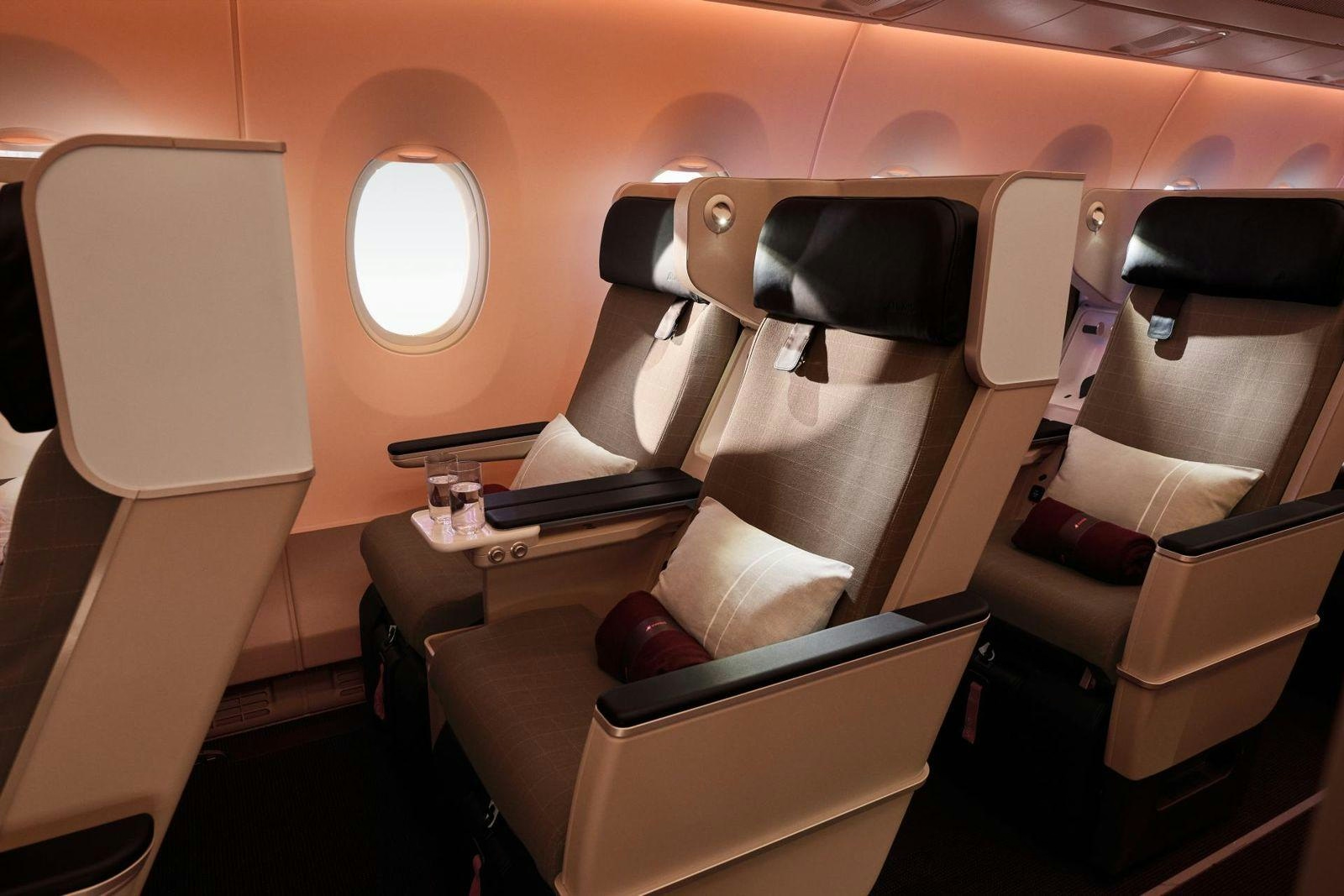
Which Airlines Offer Lounge Access with Premium Economy?
Premium economy has become a widely adopted cabin class on long-haul flights, yet the experience it offers varies significantly among airlines. While amenities such as extra legroom and priority boarding have become standard, the defining feature that distinguishes a true mid-tier product from a basic upgrade often lies in lounge access. Many travelers are surprised to discover that paying a premium over standard economy fares does not necessarily guarantee entry to airport lounges—facilities increasingly regarded as essential for comfort and productivity during travel.
Airlines Providing Lounge Access as a Standard Benefit
A select group of carriers incorporate lounge access as a core component of their premium economy offering. Leading this group are Japan’s flag carriers, Japan Airlines (JAL) and All Nippon Airways (ANA), alongside Scandinavian Airlines (SAS) and South America’s LATAM Airlines. These airlines grant business lounge access to premium economy passengers as a standard benefit, distinguishing themselves from major global carriers such as Emirates, Qantas, Lufthansa, and the principal US legacy airlines. The latter typically restrict lounge entry to business and first-class travelers or offer access only as a paid add-on.
Japan’s Benchmark for Premium Economy Lounges
JAL and ANA exemplify the integration of lounge access into the premium economy experience. Japan Airlines provides complimentary access to its Sakura Lounges at key Japanese airports including Haneda (HND) and Narita (NRT), as well as select partner lounges worldwide. This privilege extends even to full-fare Flex Y economy ticket holders, albeit with strict limitations: access is confined to the departure airport, guests are not permitted, and same-day airport upgrades are excluded.
Similarly, ANA admits premium economy passengers on its international flights to business lounges at Haneda, Narita, Osaka Kansai, and Honolulu, in addition to select partner lounges across Asia, Europe, and North America. By offering lounge access as a default perk, both airlines leverage ground services as a competitive advantage to attract discerning international travelers.
Despite these generous policies, operational constraints are increasingly evident. To manage growing demand and maintain service quality, airlines are imposing tighter entry conditions. Common restrictions now include prohibitions on guest access and the exclusion of passengers who have upgraded their seats at the airport.
Industry Trends and Global Exceptions
Outside of Japan, only a few airlines, notably SAS and LATAM, include lounge access with premium economy fares. In most other cases, lounge entry remains a privilege reserved for higher classes or elite frequent flyers, often requiring additional payment.
The airline industry is responding to evolving passenger expectations and rising demand through several measures. Stricter access controls are being implemented to regulate lounge occupancy and preserve the premium environment. Partnerships with banks, credit card companies, and independent lounge operators are expanding, sometimes resulting in new lounges that blur traditional class distinctions. Concurrently, many airlines are adjusting fare structures by reducing included perks in base premium economy tickets, making lounge access an optional extra. Competition among carriers to offer superior lounge experiences continues, although delays in certifying new premium products and resistance to standardization have slowed the introduction of enhanced offerings.
For travelers, lounge access with premium economy remains the exception rather than the norm. While JAL, ANA, SAS, and LATAM set a high standard, most airlines maintain lounges as exclusive spaces, leaving mid-cabin passengers to navigate a complex landscape of restrictions, additional fees, and shifting industry practices.

Etihad Airways Suspends Airbus A380 Flights on Key Route

Aditya Birla Group Seeks Approval for Aircraft Leasing in GIFT City

Qatar Airways Highlights Innovation and Connectivity at Arabian Travel Market 2026

Hong Kong's Five-Year Plan Includes Andrew Fan's Aircraft Parts Processing Hub Proposal

ACIA Aero Leasing Delivers ATR72-600 to Air Nostrum

RTX Appoints Jill Albertelli as Head of Pratt & Whitney

TAT Technologies Joins Beyond Aero Hydrogen Aircraft Program

AURAK Study Highlights Barriers to Air Taxi Adoption in Emerging Economies

Xiamen Air Selects Altitude for 787 Maintenance at Heathrow

Etihad and Swissport Extend Global Partnership
